• Wyszukiwanie zaawansowane
  • Kategorie
  • Kategorie BISAC
  • Książki na zamówienie
  • Promocje
  • Granty
  • Książka na prezent
  • Opinie
  • Pomoc
  • Załóż konto
  • Zaloguj się

Biosensing Using Nanomaterials » książka


zaloguj się | załóż konto
Logo Krainaksiazek.pl

koszyk

konto

szukaj
topmenu
Księgarnia internetowa
Szukaj
Książki na zamówienie
Promocje
Granty
Książka na prezent
Moje konto
Pomoc
 
 
Wyszukiwanie zaawansowane
Pusty koszyk
Bezpłatna dostawa dla zamówień powyżej 20 złBezpłatna dostawa dla zamówień powyżej 20 zł

Kategorie główne

• Nauka
 [2946350]
• Literatura piękna
 [1816154]

  więcej...
• Turystyka
 [70666]
• Informatyka
 [151172]
• Komiksy
 [35576]
• Encyklopedie
 [23172]
• Dziecięca
 [611458]
• Hobby
 [135995]
• AudioBooki
 [1726]
• Literatura faktu
 [225763]
• Muzyka CD
 [378]
• Słowniki
 [2917]
• Inne
 [444280]
• Kalendarze
 [1179]
• Podręczniki
 [166508]
• Poradniki
 [469467]
• Religia
 [507199]
• Czasopisma
 [496]
• Sport
 [61352]
• Sztuka
 [242330]
• CD, DVD, Video
 [3348]
• Technologie
 [219391]
• Zdrowie
 [98638]
• Książkowe Klimaty
 [124]
• Zabawki
 [2382]
• Puzzle, gry
 [3525]
• Literatura w języku ukraińskim
 [259]
• Art. papiernicze i szkolne
 [7107]
Kategorie szczegółowe BISAC

Biosensing Using Nanomaterials

ISBN-13: 9780470183090 / Angielski / Twarda / 2009 / 520 str.
A. Merkoci
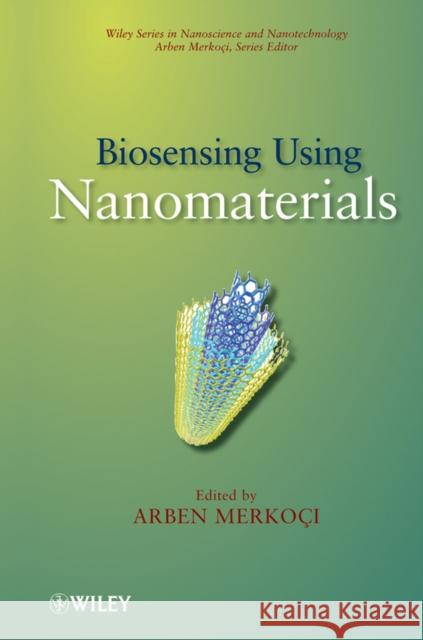
Biosensing Using Nanomaterials A. Merkoci 9780470183090 Wiley-Interscience - książkaWidoczna okładka, to zdjęcie poglądowe, a rzeczywista szata graficzna może różnić się od prezentowanej.

Biosensing Using Nanomaterials

ISBN-13: 9780470183090 / Angielski / Twarda / 2009 / 520 str.

A. Merkoci
cena 871,02
(netto: 829,54 VAT:  5%)

Najniższa cena z 30 dni: 860,38
Termin realizacji zamówienia:
ok. 30 dni roboczych.

Darmowa dostawa!

An interdisciplinary approach to one of the hottest topics in nanotechnology and nanoscience Biosensing Using Nanomaterials introduces novel concepts in the area of bioanalysis based on nanomaterials, opening new opportunities for basic research and new tools for real bioanalytical applications. In fifteen chapters, readers are introduced to the most successful nanomaterials used so far in biosensing, including carbon nanotubes, nanoparticles, and nanochannels. Each chapter provides a theoretical overview of the topic, a discussion of the published data relating to the bioanalytical system, and a selected list of references for further investigation. The result is a book that provides a comprehensive forum of interest to scientists, engineers, researchers, manufacturers, teachers, and students. Biosensing Using Nanomaterials is an important resource for a broad audience involved in the research, teaching, learning, and practice of integrating nanomaterials into biosensing systems for clinical, environmental, and industrial applications.


Kategorie:
Nauka, Medycyna
Kategorie BISAC:
Science > Biotechnology
Medical > Family & General Practice
Wydawca:
Wiley-Interscience
Język:
Angielski
ISBN-13:
9780470183090
Rok wydania:
2009
Ilość stron:
520
Waga:
0.81 kg
Wymiary:
23.62 x 15.49 x 2.79
Oprawa:
Twarda
Wolumenów:
01
Dodatkowe informacje:
Bibliografia
Wydanie ilustrowane

CONTRIBUTORS.

SERIES PREFACE.

PREFACE.

PART I CARBON NANOTUBES.

1. Carbon Nanotube Based Sensors and Biosensors (Richard G. Compton, Gregory G. Wildgoose, and Elicia L. S. Wong).

1.1. Introduction to the Structure of Carbon Nanotubes.

1.2. Electroanalysis Using CNT–Modified Electrodes.

1.3. Advantageous Application of CNTs in Sensors: pH Sensing.

1.4. Carbon Nanotube Based Biosensors.

1.5. Using CNTs in Biosensor Production for Medical Diagnostics and Environmental Applications.

References.

2. Isotropic Display of Biomolecules on CNT–Arrayed Nanostructures (Mark R. Contarino, Gary Withey, and Irwin Chaiken).

2.1. Introduction: CNT Arrays for Biosensing.

2.2. Functionalization of CNTs: Controlling Display Through Covalent Attachment.

2.3. Self–Assembling Interfaces: Anchor–Probe Approach.

2.4. Molecular Wiring of Redox Enzymes.

2.5. Multiplexing Biomolecules on Nanoscale CNT Arrays.

2.6. Conclusions.

References.

3. Interaction of DNA with CNTs: Properties and Prospects for Electronic Sequencing (Sheng Meng and Efthimios Kaxiras).

3.1. Introduction.

3.2. Structural Properties of Combined DNA CNT Systems.

3.3. Electronic Structure.

3.4. Optical Properties.

3.5. Biosensing and Sequencing of DNA Using CNTs.

3.6. Summary.

References.

PART II NANOPARTICLES.

4. Improved Electrochemistry of Biomolecules Using Nanomaterials (Jianxiu Wang, Andrew J. Wain, Xu Zhu, and Feimeng Zhou).

4.1. Introduction.

4.2. CNT–Based Electrochemical Biosensors.

4.3. Nanoparticle–Based Electrochemical Biosensors.

4.4. Quantum Dot Based Electrochemical Biosensors.

4.5. Conclusions and Outlook.

References.

5. The Metal Nanoparticle Plasmon Band as a Powerful Tool for Chemo– and Biosensing (Audrey Moores and Pascal Le Floch).

5.1. Introduction.

5.2. The SPB: An Optical Property of Metal NPs.

5.3. Plasmon Band Variation Upon Aggregation of Nanoparticles.

5.4. Plasmon Band Variation on the Environment or Ligand Alteration.

5.5. Metal Nanoparticles as Labels.

5.6. Conclusions.

References.

6. Gold Nanoparticles: A Versatile Label for Affinity Electrochemical Biosensors (Adriano Ambrosi, Alfredo de la Escosura–Mun iz, Maria Teresa Castaneda, and Arben Merkoci).

6.1. Introduction.

6.2. Synthesis of AuNPs.

6.3. Characterization of AuNPs.

6.4. AuNPs as Detecting Labels for Affinity Biosensors.

6.5. Conclusions.

References.

7. Quantum Dots for the Development of Optical Biosensors Based on Fluorescence (W. Russ Algar and Ulrich J. Krull).

7.1. Introduction.

7.2. Quantum Dots.

7.3. Basic Photophysics and Quantum Confinement.

7.4. Quantum Dot Surface Chemistry and Bioconjugation.

7.5. Bioanalytical Applications of Quantum Dots as Fluorescent Labels.

7.6. Fluorescence Resonance Energy Transfer and Quantum Dot Biosensing.

7.7. Summary.

References.

8. Nanoparticle–Based Delivery and Biosensing Systems: An Example (Almudena Mun oz Javier, Pablo del Pino, Stefan Kudera, and Wolfgang J. Parak).

8.1. Introduction.

8.2. Functional Colloidal Nanoparticles.

8.3. Polyelectrolyte Capsules as a Functional Carrier System.

8.4. Uptake of Capsules by Cells.

8.5. Delivery and Sensing with Polyelectrolyte Capsules.

8.6. Conclusions.

References.

9. Luminescent Quantum Dot FRET–Based Probes in Cellular and Biological Assays (Lifang Shi, Nitsa Rosenzweig, and Zeev Rosenzweig).

9.1. Introduction.

9.2. Luminescent Quantum Dots.

9.3. Fluorescence Resonance Energy Transfer.

9.4. Quantum Dot FRET–Based Protease Probes.

9.5. Summary and Conclusions.

References.

10. Quantum Dot Polymer Bead Composites for Biological Sensing Applications (Jonathan M. Behrendt and Andrew J. Sutherland).

10.1. Introduction.

10.2. Quantum Dot Composite Construction.

10.3. Applications of QD Composites.

10.4. Future Directions.

References.

11. Quantum Dot Applications in Biomolecule Assays (Ying Xu, Pingang He, and Yuzhi Fang).

11.1. Introduction to QDs and Their Applications.

11.2. Preparation of QDs for Conjugation with Biomolecules and Cells.

11.3. Special Optoelectronic Properties in the Bioemployment of QDs.

11.4. Employment of QDs as Biosensing Indicators.

References.

12. Nanoparticles and Inductively Coupled Plasma Mass Spectroscopy Based Biosensing (Arben Merkoc¸i, Roza Allabashi, and Alfredo de la Escosura–Muniz).

12.1. ICP–MS and Application Possibilities.

12.2. Detection of Metal Ions.

12.3. Detection of Nanoparticles.

12.4. Analysis of Metal–Containing Biomolecules.

12.5. Bioanalysis Based on Labeling with Metal Nanoparticles.

12.6. Conclusions.

References.

PART III NANOSTRUCTURED SURFACES.

13. Integration Between Template–Based Nanostructured Surfaces and Biosensors (Walter Vastarella, Jan Maly, Mihaela Ilie, and Roberto Pilloton).

13.1. Introduction.

13.2. Nanosphere Lithography.

13.3. Nanoelectrodes Ensemble for Biosensing Devices.

13.4. Concluding Remarks.

References.

14. Nanostructured Affinity Surfaces for MALDI–TOF–MS Based Protein Profiling and Biomarker Discovery (R. M. Vallant, M. Rainer, M. Najam–Ul–Haq, R. Bakry, C. Petter, N. Heigl, G. K. Bonn, and C. W. Huck).

14.1. Proteomics and Biomarkers.

14.2. MALDI in Theory and Practice.

14.3. Carbon Nanomaterials.

14.4. Near–Infrared Diffuse Reflection Spectroscopy of Carbon Nanomaterials.

References.

PART IV NANOPORES.

15. Biosensing with Nanopores (Ivan Vlassiouk and Sergei Smirnov).

15.1. Nanoporous Materials in Sensing.

15.2. Nanochannel and Nanopore Fabrication.

15.3. Surface Modification Chemistry

15.4. Nonelectrical Nanoporous Biosensors.

15.5. Electrical Nanoporous Biosensors.

15.6. Summary.

References.

INDEX.

Arben Merkoçi, PhD, is ICREA Research Professor and Group Leader of Nanobioelectronics & Biosensors Group at Institut Català de Nanotecnologia in Spain.?His research is aimed at the integration of biological molecules into micro– and nanostructures, with state–of–the–art bioelectronic read–out systems, extracting useful analytical signals with interest for various fields. Professor Merkoçi is the author of more than 200 refereed journal or conference papers, two books, five book chapters, and the editor of special international journal issues on nanomaterials. He has one patent in the field of nanomaterials–based biosensing systems.

An interdisciplinary approach to one of the hottest topics in nanotechnology and nanoscience

Biosensing Using Nanomaterials introduces novel concepts in the area of bioanalysis based on nanomaterials, opening new opportunities for basic research and new tools for real bioanalytical applications.

In fifteen chapters, readers are introduced to the most successful nanomaterials used so far in biosensing, including carbon nanotubes, nanoparticles, and nanochannels. Each chapter provides a theoretical overview of the topic, a discussion of the published data relating to the bioanalytical system, and a selected list of references for further investigation. The result is a book that provides a comprehensive forum of interest to scientists, engineers, researchers, manufacturers, teachers, and students.

Biosensing Using Nanomaterials is an important resource for a broad audience involved in the research, teaching, learning, and practice of integrating nanomaterials into biosensing systems for clinical, environmental, and industrial applications.




Udostępnij

Facebook - konto krainaksiazek.pl


Opinie o Krainaksiazek.pl na Opineo.pl

Partner Mybenefit

Krainaksiazek.pl w programie rzetelna firma Krainaksiaze.pl - płatności przez paypal

Czytaj nas na:

Facebook - krainaksiazek.pl
  • książki na zamówienie
  • granty
  • książka na prezent
  • kontakt
  • pomoc
  • opinie
  • regulamin
  • polityka prywatności

Zobacz:

  • Księgarnia czeska

  • Wydawnictwo Książkowe Klimaty

1997-2026 DolnySlask.com Agencja Internetowa

© 1997-2022 krainaksiazek.pl
     
KONTAKT | REGULAMIN | POLITYKA PRYWATNOŚCI | USTAWIENIA PRYWATNOŚCI
Zobacz: Księgarnia Czeska | Wydawnictwo Książkowe Klimaty | Mapa strony | Lista autorów
KrainaKsiazek.PL - Księgarnia Internetowa

Polityka prywatnosci - link
Krainaksiazek.pl - płatnośc Przelewy24
Przechowalnia Przechowalnia




