Bioremediation Technology for Plastic Waste » książka





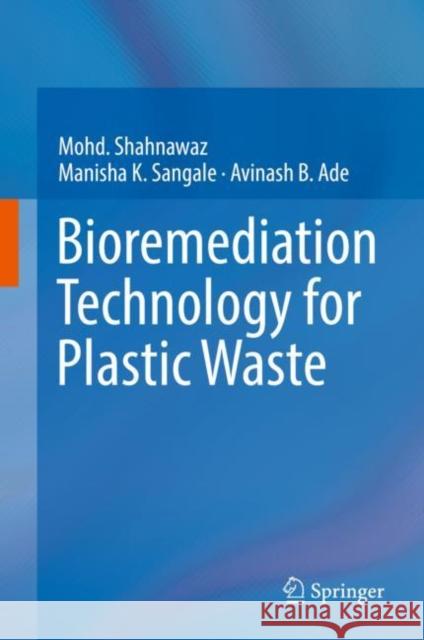
Bioremediation Technology for Plastic Waste
ISBN-13: 9789811374913 / Angielski / Twarda / 2019 / 130 str.
Bioremediation Technology for Plastic Waste
ISBN-13: 9789811374913 / Angielski / Twarda / 2019 / 130 str.
(netto: 575,06 VAT: 5%)
Najniższa cena z 30 dni: 578,30
ok. 22 dni roboczych.
Darmowa dostawa!
Chapter 1. Introduction.- Chapter 1.1. Bioremediation.- Chapter 1.2. Natural or induced.- Chapter 1.3. Purpose of bioremediation.- Chapter 1.4. Types of environmental waste.- Chapter 1.5. Plastic waste.- Chapter 1.6. Discovery of Plastic.- Chapter 1.7. Different types of plastic.- Chapter 1.8. Application of the plastic.- Chapter 1.9. Lacunae in the literature.- Chapter 1.10. Need of the present book.- Chapter 2. Microplastic.- Chapter 2.1. Primary microplastics.- Chapter 2.2. Secondary microplastics.- Chapter 2.3. Sources of microplastics.- Chapter 2.4. Potential impacts of microplastics.- Chapter 3. Plastic waste disposal and re-use of plastic waste.- Chapter 3.1. Most dangerous environmental wastes.- Chapter 3.2. Percentage of plastic in total environmental waste at global level.- Chapter 3.3. Methods employed to tackle the plastic waste.- Chapter 3.4. Photodegradation.- Chapter 3.5. Oxy-photodegradation.- Chapter 3.6. Landfilling.- Chapter 3.7. Incineration.- Chapter 3.8. Recycling.- Chapter 3.9. Construction of roads.- Chapter 3.10. Production of petrol.- Chapter 4. Case studies and recent update of plastic waste degradation.- Chapter 4.1. Types of plastic targetted.- Chapter 4.2. First report of plastic degradation.- Chapter 4.3. Types of plastic degradation (Photodegradation, Oxy-photodegradation, bioremediation) .- Chapter 4.4. Microbes (Algae, Actinimycetes, bacteria, fungi etc) with plastic degradation potential.- Chapter 5. Bacteria as key players of Plastic Bioremediation.- Chapter 5.1. Biodegradation.- Chapter 5.2. Source of plastic degrading bacteria.- Chapter 5.3. Methods of biodegradation.- Chapter 5.4. Incubation time.- Chapter 5.5. Percent weight loss.- Chapter 5.6. Percent loss in tensile strength (TS) .- Chapter 5.7. Fourier Transform-Infrared Spectroscopy (FTIR) .- Chapter 5.8. Other methods.- Chapter 5.9. Most efficient method.- Chapter 6. In situ remediation technology for plastic degradation.- Chapter 6.1. Introduction.- Chapter 6.2. Reports of in situ plastic degradation (with all methods cited in the previous chapters) .- Chapter 6.3. Most efficient study.- Chapter 6.4. Conclusion.- Chapter 7. Ex- situ remediation technology for plastic degradation.- Chapter 7.1. Introduction.- Chapter 7.2. Reports of plastic degradation (with all methods cited in the previous chapters) .- Chapter 7.3. Field trials of the most efficnet polythene degrading microbes at in situ level.- Chapter 7.4. Identification of the localities for in situ studies.- Chapter 7.5. Preparation of pots for polythene degradation assay.- Chapter 7.6. Preparation of the polythene for degrdation assay.- Chapter 7.7. Preparation of bacterial and fungal inoculum.- Chapter 7.8. Inoculation of the bacterial and fungal cultures in to the pots with dumped polythene strips.- Chapter 7.9. Incubation of the inoculated pots at garden under ambient temperature for a period of 2 months.- Chapter 7.10. Analysis of polythene degradation.- Chapter 7.11.Most efficient method.- Chapter 7.12. Conclusion.- Chapter 8. Social awareness of plastic waste threat.- Chapter 8.1. Total amount of plastic waste generated worldwide.- Chapter 8.2. Effect of plastic waste on marine and terrestrial animals.- Chapter 8.3. Effect of plastic waste on soil fertility.- Chapter 8.4. Effect of plastic waste on the environment.- Chapter 8.5. Alternate to plastic.- Chapter 8.6.Recomendendation to minimize the use of plastic.- Chapter 9. Analysis of the plastic degradation products.- Chapter 9.1. Methods of analysis.- Chapter 9.2. Dilution of the plastic degradation products.- Chapter 9.3. Solvent for the plastic degradation products.- Chapter 9.4. Reports.- Chapter 9.5. Conclusions.- Chapter 10. Toxicity testing of plastic degrading products.- Chapter 10.1. Methods of testing the toxicity level.- Chapter 10.2. Effect of plastic degradation products on plants.- Chapter 10.3. Effect of plastic degradation products on animals.- Chapter 10.4. Reports.- Chapter 10.5. Conclusions.- Chapter 11. Policy and legislation/regulations of plastic waste around the globe.- Chapter 11.1. Policies and regulations of Maharashtra Govt. to tackle with the plastic waste.- Chapter 11.2. Policies and regulations of Govt. Of India to manage plastic waste.- Chapter 11.3. Policies and regulations to address the plastic waste in European countries.- Chapter 11.4. Policies and regulations followed by United states to control the plastic waste.- Chapter 11.5. Impact of policies and regulations on the practical plastic waste management.- Chapter 12. Conclusions and future needs.
Dr. Mohd. Shahnawaz is a DST-SERB National Post-doctoral Fellow at Plant Biotechnology Division, CSIR-Indian Institute of Integrative Medicine, Jammu and Kashmir, India. Previously, he has worked as a Lecturer in Botany at Department of Botany, Govt. Degree College Kishtwar, Jammu and Kashmir, India (2016-2017). He has earned his M. Phil. and Ph. D. in Botany from Department of Botany, Savitribai Phule Pune University, Maharashtra, India. He is the recipient of various fellowships awarded by the Savitribai Phule Pune University, University Grants Commission (UGC), and Department of Science and Technology (DST)-Science Engineering and Research Board (SERB), India. His research interests are focused on ecology, microbiology, bioremediation, and plant biotechnology. He has served as a referee for the number of International journals. He has been actively involved in teaching Cell biology, microbiology and plant biotechnology to the undergraduates students. Till now, he has published more than 15 research articles in the peer-reviewed international journals and authored or co-authored 5 books. He is also academic Editor of Asian Journal of Biology, SCIENCE DOMAIN international.
Dr. Manisha K. Sangale is an Assistant Professor in Botany at Department of Botany Rayat Shikshan Sanstha's S. M. Joshi College, Hadapsar, Maharashtra, India. Previously, she has served as an Assistant Professor at Department of Botany, Rayat Shikshan Sanstha's Yashvantarao Chavan Institute of Science, Satara, Maharashtra, India. She has earned her M. Phil. and Ph. D. in Botany from Department of Botany, Savitribai Phule Pune University, Maharashtra, India. She is a recipient of various fellowships and awards conferred by the Savitribai Phule Pune University and University Grants Commission (UGC), India. Her research interests are focused on the Phycology, Mycology, Ecology, Microbiology, and Bioremediation. She has served as the referee for a number of International journals. She teaches Phycology, Mycology, and Microbiology and Plant Biotechnology to the post-graduate students. Till now, she has published more than 15 research articles in various peer-reviewed international journals and authored a book.
Plastic is one of the widely used polymers around the globe since its discovery. It is highly impossible to think the ease of life without the aid of plastic. Every year billion tons of plastic waste gets accumulated in the environment and leads to death of both marine and terrestrial animals. Plastic is very durable and needs around 1000 years to degrade under the natural environment. The present book illustrates the importance and significance of the bioremediation to tackle the problem of plastic waste. Previously, we have reported elite rhizobacterial isolates (Lysinibacillus fusiformis strain VASB14/WL and Bacillus cereus strain VASB1/TS) of Avicennia marina Vierh (Forsk.) from the West Coast of India with the potential to degrade plastic (polythene). The present book attempted to address the bioremediation scenario of plastic waste (including micro plastic) using microbes with bacteria in particular. Various strategies used to tackle with the plastic waste were highlighted with case studies of plastic waste management, including in vitro, in situ and ex situ with a special reference to biodegradation technology. After the biodegradation of the plastic using microbes, the generated plastic (polythene) degradation products (PE-DPs) were also documented using GC-MS technique followed by their deleterious effect on both animal and plant systems. The book also enhances the awareness of the plastic-free society and also suggests some alternative materials to be used instead of plastic. Lastly, the book suggests/recommends the strategies to be followed by the lawmakers in the government organizations/non-government organizations/social organizations to frame the regulations and guidelines to implement at mass level to reduce the generation of plastic waste.




Czytaj nas na:
1997-2026 DolnySlask.com Agencja Internetowa
KrainaKsiazek.PL - Księgarnia Internetowa


