• Wyszukiwanie zaawansowane
  • Kategorie
  • Kategorie BISAC
  • Książki na zamówienie
  • Promocje
  • Granty
  • Książka na prezent
  • Opinie
  • Pomoc
  • Załóż konto
  • Zaloguj się

Biomedical Visualisation: Volume 14 ‒ Covid-19 Technology and Visualisation Adaptations for Biomedical Teaching » książka


zaloguj się | załóż konto
Logo Krainaksiazek.pl

koszyk

konto

szukaj
topmenu
Księgarnia internetowa
Szukaj
Książki na zamówienie
Promocje
Granty
Książka na prezent
Moje konto
Pomoc
 
 
Wyszukiwanie zaawansowane
Pusty koszyk
Bezpłatna dostawa dla zamówień powyżej 20 złBezpłatna dostawa dla zamówień powyżej 20 zł

Kategorie główne

• Nauka
 [2946912]
• Literatura piękna
 [1852311]

  więcej...
• Turystyka
 [71421]
• Informatyka
 [150889]
• Komiksy
 [35717]
• Encyklopedie
 [23177]
• Dziecięca
 [617324]
• Hobby
 [138808]
• AudioBooki
 [1671]
• Literatura faktu
 [228371]
• Muzyka CD
 [400]
• Słowniki
 [2841]
• Inne
 [445428]
• Kalendarze
 [1545]
• Podręczniki
 [166819]
• Poradniki
 [480180]
• Religia
 [510412]
• Czasopisma
 [525]
• Sport
 [61271]
• Sztuka
 [242929]
• CD, DVD, Video
 [3371]
• Technologie
 [219258]
• Zdrowie
 [100961]
• Książkowe Klimaty
 [124]
• Zabawki
 [2341]
• Puzzle, gry
 [3766]
• Literatura w języku ukraińskim
 [255]
• Art. papiernicze i szkolne
 [7810]
Kategorie szczegółowe BISAC

Biomedical Visualisation: Volume 14 ‒ Covid-19 Technology and Visualisation Adaptations for Biomedical Teaching

ISBN-13: 9783031171345 / Angielski / Twarda / 2022 / 228 str.
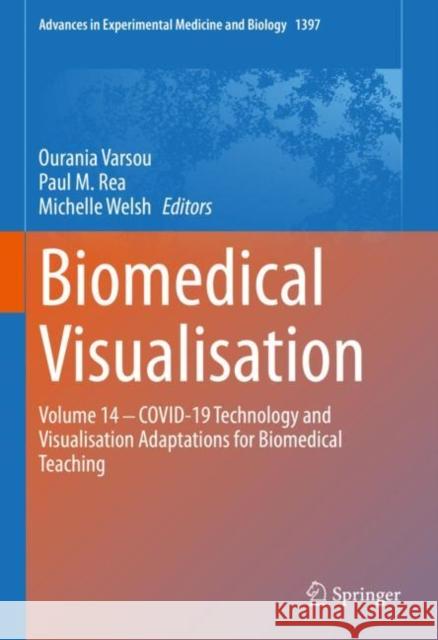
Ourania Varsou; Paul M. Rea; Michelle Welsh
Biomedical Visualisation: Volume 14 ‒ Covid-19 Technology and Visualisation Adaptations for Biomedical Teaching Varsou, Ourania 9783031171345 Springer - książkaWidoczna okładka, to zdjęcie poglądowe, a rzeczywista szata graficzna może różnić się od prezentowanej.

Biomedical Visualisation: Volume 14 ‒ Covid-19 Technology and Visualisation Adaptations for Biomedical Teaching

ISBN-13: 9783031171345 / Angielski / Twarda / 2022 / 228 str.

Ourania Varsou; Paul M. Rea; Michelle Welsh
cena 605,23
(netto: 576,41 VAT:  5%)

Najniższa cena z 30 dni: 578,30
Termin realizacji zamówienia:
ok. 22 dni roboczych
Bez gwarancji dostawy przed świętami

Darmowa dostawa!
inne wydania

This book focuses on the challenges to biomedical education posed by the lockdowns and restrictions to on campus teaching brought about by the COVID-19 pandemic and highlights the tools and digital visualization technologies that have been successfully developed and used for remote teaching.Biomedical education for science, medical, dental and allied health professionals relies on teaching visual and tactile knowledge using practice-based approaches. This has been delivered for decades via on-campus lectures, workshops and laboratories, teaching practical skills as well as fundamental knowledge and understanding. However, the arrival of the COVID-19 pandemic meant that education across the globe had to pivot very quickly to be able to deliver these skills and knowledge in a predominantly online environment. This brought with it many challenges, as Higher Education staff, had to adapt to deliver these visual subjects remotely.This book addresses the challenges and solutions faced by Higher Education staff in teaching visual content in distance education. Chapters include literature reviews, original research, and pedagogical reflections for a wide range of biomedical subjects, degrees such as medicine, dentistry and veterinary sciences with examples from undergraduate and postgraduate settings. The goal of the book is to provide a compendium of expertise based on evidence gathered during the COVID-19 pandemic, as well as reflections on the challenges and lessons learned from this dramatic shift in teaching. It also presents new examples of best practices that have emerged from this experience to ensure that they are not lost as we return to on-campus learning in a new era of biomedical teaching.This book will be of interest to anyone looking for a helpful reference point when designing online or blended teaching for visual practice-based subjects.


This book focuses on the challenges to biomedical education posed by the lockdowns and restrictions to on campus teaching brought about by the COVID-19 pandemic and highlights the tools and digital visualization technologies that have been successfully developed and used for remote teaching. Biomedical education for science, medical, dental and allied health professionals relies on teaching visual and tactile knowledge using practice-based approaches. This has been delivered for decades via on-campus lectures, workshops and laboratories, teaching practical skills as well as fundamental knowledge and understanding. However, the arrival of the COVID-19 pandemic meant that education across the globe had to pivot very quickly to be able to deliver these skills and knowledge in a predominantly online environment. This brought with it many challenges, as Higher Education staff, had to adapt to deliver these visual subjects remotely. This book addresses the challenges and solutions faced by Higher Education staff in teaching visual content in distance education. Chapters include literature reviews, original research, and pedagogical reflections for a wide range of biomedical subjects, degrees such as medicine, dentistry and veterinary sciences with examples from undergraduate and postgraduate settings. The goal of the book is to provide a compendium of expertise based on evidence gathered during the COVID-19 pandemic, as well as reflections on the challenges and lessons learned from this dramatic shift in teaching. It also presents new examples of best practices that have emerged from this experience to ensure that they are not lost as we return to on-campus learning in a new era of biomedical teaching. This book will be of interest to anyone looking for a helpful reference point when designing online or blended teaching for visual practice-based subjects.

Kategorie:
Nauka, Medycyna
Kategorie BISAC:
Medical > Anatomia
Education > General
Computers > Artificial Intelligence - Computer Vision & Pattern Recognition
Wydawca:
Springer
Seria wydawnicza:
Advances in Experimental Medicine and Biology
Język:
Angielski
ISBN-13:
9783031171345
Rok wydania:
2022
Dostępne języki:
Numer serii:
000253056
Ilość stron:
228
Waga:
0.63 kg
Wymiary:
25.4 x 17.78 x 1.42
Oprawa:
Twarda
Dodatkowe informacje:
Wydanie ilustrowane


Dr Ourania Varsou is a Lecturer in Anatomy at the University of Glasgow and holds a BSc (Hons), MBChB, PgCert in Mentoring and Coaching and PhD in Neuroscience. She is an Associate Fellow of Advance HE and a University of Glasgow RET Fellow. Ourania teaches anatomy to science, medical and dental students with her specialist areas including the head and neck and imaging. She also develops and delivers bespoke teaching on medical humanities at the University of Glasgow and several international institutions. Ourania’s research includes imaging with a focus on ultrasound, clinically-applied anatomy and scholarship of teaching and learning. She is also a strong advocate of medical humanities, writing her own poetry, and is passionate about sustainability and alternative approaches to teaching in Higher Education.

Paul M. Rea - Paul is Professor of Digital and Anatomical Education at the University of Glasgow. He is Director of Innovation, Engagement and Enterprise within the School of Medicine, Dentistry and Nursing. He is also a Senate Assessor for Student Conduct, Council Member on Senate and coordinates the day-to-day running of the Body Donor Program and is a Licensed Teacher of Anatomy, licensed by the Scottish Government.

He is qualified with a medical degree (MBChB), a MSc (by research) in craniofacial anatomy/surgery, a PhD in neuroscience, the Diploma in Forensic Medical Science (DipFMS), and an MEd with Merit (Learning and Teaching in Higher Education). He is a Senior Fellow of the Higher Education Academy, Fellow of the Institute of Medical Illustrators (MIMI) and a registered medical illustrator with the Academy for Healthcare Science.

Paul has published widely and presented at many national and international meetings, including invited talks. He has been the lead Editor for Biomedical Visualisation over 13 published volumes and is the founding editor for this book series. This has resulted in almost 90,000 downloads across these volumes, with contributions from over 450 different authors, across approximately 100 institutions from 20 countries across the globe. He is Associate Editor for the European Journal of Anatomy and has reviewed for 25 different journals/publishers.

He is the Public Engagement and Outreach lead for anatomy coordinating collaborative projects with the Glasgow Science Centre, NHS and Royal College of Physicians and Surgeons of Glasgow. Paul is also a STEM ambassador and has visited numerous schools to undertake outreach work.

His research involves a long-standing strategic partnership with the School of Simulation and Visualisation, The Glasgow School of Art. This has led to multi-million-pound investment in creating world leading 3D digital datasets to be used in undergraduate and postgraduate teaching to enhance learning and assessment. This successful collaboration resulted in the creation of the world's first taught MSc Medical Visualisation and Human Anatomy combining anatomy and digital technologies. The Institute of Medical Illustrators also accredits it. It has created college-wide, industry, multi-institutional and NHS research linked projects for students. 

Dr Michelle Welsh is a Senior Lecturer and deputy head of Anatomy at the University of Glasgow and holds a BSc (hons) degree in Anatomy, a PhD in Reproductive Medicine and PgCert in Academic Practice. Michelle is also a Fellow of the Higher Education Academy and runs the Network for Scottish Anatomists. Michelle coordinates and teaches on several courses within Life Sciences from pre-honours to postgraduate levels and is the lead for learning and teaching in anatomy across the College of Medicine, Dentistry and Nursing. Michelle’s specialist areas including reproduction, embryology and histology. Michelle teaches both science and medical students with a focus on delivering transferable skills. Michelle’s research currently centres on scholarship of teaching and learning, with a particular interest in ensuring undergraduate education is equal, diverse, and inclusive.


This book focuses on the challenges to biomedical education posed by the lockdowns and restrictions to on campus teaching brought about by the COVID-19 pandemic and highlights the tools and digital visualization technologies that have been successfully developed and used for remote teaching.


Biomedical education for science, medical, dental and allied health professionals relies on teaching visual and tactile knowledge using practice-based approaches. This has been delivered for decades via on-campus lectures, workshops and laboratories, teaching practical skills as well as fundamental knowledge and understanding. However, the arrival of the COVID-19 pandemic meant that education across the globe had to pivot very quickly to be able to deliver these skills and knowledge in a predominantly online environment. This brought with it many challenges, as Higher Education staff, had to adapt to deliver these visual subjects remotely.

This book addresses the challenges and solutions faced by Higher Education staff in teaching visual content in distance education. Chapters include literature reviews, original research, and pedagogical reflections for a wide range of biomedical subjects, degrees such as medicine, dentistry and veterinary sciences with examples from undergraduate and postgraduate settings. The goal of the book is to provide a compendium of expertise based on evidence gathered during the COVID-19 pandemic, as well as reflections on the challenges and lessons learned from this dramatic shift in teaching. It also presents new examples of best practices that have emerged from this experience to ensure that they are not lost as we return to on-campus learning in a new era of biomedical teaching.

This book will be of interest to anyone looking for a helpful reference point when designing online or blended teaching for visual practice-based subjects.




Udostępnij

Facebook - konto krainaksiazek.pl


Opinie o Krainaksiazek.pl na Opineo.pl

Partner Mybenefit

Krainaksiazek.pl w programie rzetelna firma Krainaksiaze.pl - płatności przez paypal

Czytaj nas na:

Facebook - krainaksiazek.pl
  • książki na zamówienie
  • granty
  • książka na prezent
  • kontakt
  • pomoc
  • opinie
  • regulamin
  • polityka prywatności

Zobacz:

  • Księgarnia czeska

  • Wydawnictwo Książkowe Klimaty

1997-2025 DolnySlask.com Agencja Internetowa

© 1997-2022 krainaksiazek.pl
     
KONTAKT | REGULAMIN | POLITYKA PRYWATNOŚCI | USTAWIENIA PRYWATNOŚCI
Zobacz: Księgarnia Czeska | Wydawnictwo Książkowe Klimaty | Mapa strony | Lista autorów
KrainaKsiazek.PL - Księgarnia Internetowa

Polityka prywatnosci - link
Krainaksiazek.pl - płatnośc Przelewy24
Przechowalnia Przechowalnia



