• Wyszukiwanie zaawansowane
  • Kategorie
  • Kategorie BISAC
  • Książki na zamówienie
  • Promocje
  • Granty
  • Książka na prezent
  • Opinie
  • Pomoc
  • Załóż konto
  • Zaloguj się

Biomedical Visualisation: Volume 11 » książka


zaloguj się | załóż konto
Logo Krainaksiazek.pl

koszyk

konto

szukaj
topmenu
Księgarnia internetowa
Szukaj
Książki na zamówienie
Promocje
Granty
Książka na prezent
Moje konto
Pomoc
 
 
Wyszukiwanie zaawansowane
Pusty koszyk
Bezpłatna dostawa dla zamówień powyżej 20 złBezpłatna dostawa dla zamówień powyżej 20 zł

Kategorie główne

• Nauka
 [2946912]
• Literatura piękna
 [1852311]

  więcej...
• Turystyka
 [71421]
• Informatyka
 [150889]
• Komiksy
 [35717]
• Encyklopedie
 [23177]
• Dziecięca
 [617324]
• Hobby
 [138808]
• AudioBooki
 [1671]
• Literatura faktu
 [228371]
• Muzyka CD
 [400]
• Słowniki
 [2841]
• Inne
 [445428]
• Kalendarze
 [1545]
• Podręczniki
 [166819]
• Poradniki
 [480180]
• Religia
 [510412]
• Czasopisma
 [525]
• Sport
 [61271]
• Sztuka
 [242929]
• CD, DVD, Video
 [3371]
• Technologie
 [219258]
• Zdrowie
 [100961]
• Książkowe Klimaty
 [124]
• Zabawki
 [2341]
• Puzzle, gry
 [3766]
• Literatura w języku ukraińskim
 [255]
• Art. papiernicze i szkolne
 [7810]
Kategorie szczegółowe BISAC

Biomedical Visualisation: Volume 11

ISBN-13: 9783030877811 / Angielski / Miękka / 2023 / 343 str.
Paul M. Rea
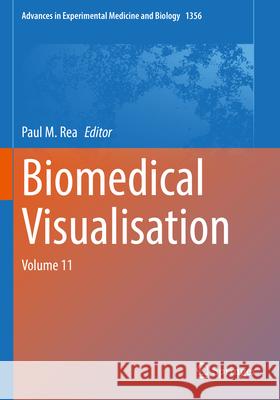
Biomedical Visualisation: Volume 11 Paul M. Rea 9783030877811 Springer - książkaWidoczna okładka, to zdjęcie poglądowe, a rzeczywista szata graficzna może różnić się od prezentowanej.

Biomedical Visualisation: Volume 11

ISBN-13: 9783030877811 / Angielski / Miękka / 2023 / 343 str.

Paul M. Rea
cena 645,58
(netto: 614,84 VAT:  5%)

Najniższa cena z 30 dni: 616,85
Termin realizacji zamówienia:
ok. 22 dni roboczych
Bez gwarancji dostawy przed świętami

Darmowa dostawa!
inne wydania

This edited book explores the use of technology to enable us to visualise the life sciences in a more meaningful and engaging way. It will enable those interested in visualisation techniques to gain a better understanding of the applications that can be used in visualisation, imaging and analysis, education, engagement and training. The reader will also be able to learn about the use of visualisation techniques and technologies for the historical and forensic settings.The chapters presented in this volume cover such a diverse range of topics, with something for everyone. We present here chapters on 3D visualising novel stent grafts to aid treatment of aortic aneuryms; confocal microscopy constructed vascular models in patient education; 3D patient specific virtual reconstructions in surgery; virtual reality in upper limb rehabilitation in patients with multiple sclerosis and virtual clinical wards. In addition, we present chapters in artificial intelligence in ultrasound guided regional anaesthesia; carpal tunnel release visualisation techniques; visualising for embryology education and artificial intelligence data on bone mechanics. Finally we conclude with chapters on visualising patient communication in a general practice setting; digital facial depictions of people from the past; instructor made cadaveric videos, novel cadaveric techniques for enhancing visualisation of the human body and finally interactive educational videos and screencasts.This book explores the use of technologies from a range of fields to provide engaging and meaningful visual representations of the biomedical sciences. It is therefore an interesting read for researchers, developers and educators who want to learn how visualisation techniques can be used successfully for a variety of purposes, such as educating students or training staff, interacting with patients and biomedical procedures in general.


This edited book explores the use of technology to enable us to visualise the life sciences in a more meaningful and engaging way. It will enable those interested in visualisation techniques to gain a better understanding of the applications that can be used in visualisation, imaging and analysis, education, engagement and training. The reader will also be able to learn about the use of visualisation techniques and technologies for the historical and forensic settings.The chapters presented in this volume cover such a diverse range of topics, with something for everyone. We present here chapters on 3D visualising novel stent grafts to aid treatment of aortic aneuryms; confocal microscopy constructed vascular models in patient education; 3D patient specific virtual reconstructions in surgery; virtual reality in upper limb rehabilitation in patients with multiple sclerosis and virtual clinical wards. In addition, we present chapters in artificial intelligence in ultrasound guided regional anaesthesia; carpal tunnel release visualisation techniques; visualising for embryology education and artificial intelligence data on bone mechanics. Finally we conclude with chapters on visualising patient communication in a general practice setting; digital facial depictions of people from the past; instructor made cadaveric videos, novel cadaveric techniques for enhancing visualisation of the human body and finally interactive educational videos and screencasts. This book explores the use of technologies from a range of fields to provide engaging and meaningful visual representations of the biomedical sciences. It is therefore an interesting read for researchers, developers and educators who want to learn how visualisation techniques can be used successfully for a variety of purposes, such as educating students or training staff, interacting with patients and biomedical procedures in general. 

Kategorie:
Nauka, Medycyna
Kategorie BISAC:
Education > Computers & Technology
Medical > Anatomia
Computers > Artificial Intelligence - Computer Vision & Pattern Recognition
Wydawca:
Springer
Seria wydawnicza:
Advances in Experimental Medicine and Biology
Język:
Angielski
ISBN-13:
9783030877811
Rok wydania:
2023
Dostępne języki:
Ilość stron:
343
Waga:
0.68 kg
Wymiary:
25.4 x 17.8
Oprawa:
Miękka
Dodatkowe informacje:
Wydanie ilustrowane


Chapter 1

 Creating Interactive Three-Dimensional Applications to Visualise Novel Stent Grafts That Aid in the Treatment of Aortic Aneurysms 


Sara Bakalchuk, Caroline Walker, Craig Daly, Louise Hill, Matthieu Poyade


Chapter 2


Using Confocal Microscopy to Generate an Accurate Vascular Model for use in Patient Education Animation 


Angela Douglass, Gillian Moffat, Craig Daly


Chapter 3


Methods and applications of 3D patient specific virtual reconstructions in Surgery 


Jordan Fletcher


Chapter 4


Proof of concept for the use of immersive virtual reality in upper limb rehabilitation of Multiple Sclerosis patients


Rachel-Anne Hollywood, Matthieu Poyade, Lorna Paul and Amy Webster  


Chapter 5


Virtual Wards: a rapid adaptation to clinical attachments in MBChB during the COVID-19 pandemic 


Camille Huser, Kerra Templeton, Michael Stewart, Safiya Dhanani, Martin Hughes, James G Boyle 


Chapter 6


Artificial Intelligence: Innovation to Assist in the Identification of Sono-Anatomy on Ultrasound for Ultrasound-Guided Regional Anaesthesia 


James Lloyd, Robert Morse, Alasdair Taylor, David Phillips, Helen Higham, David Burkett-St Laurent, James Bowness


Chapter 7


A Systematic Review of Randomised Control Trials Evaluating the Efficacy and Safety of Open and Endoscopic Carpal Tunnel Release 


Eilidh Macdonald and Paul M. Rea 


Chapter 8


Exploring visualization for Embryology Education: A 21st Century Perspective 


Eiman M Abdel Meguid, Jane C Holland, Iain D. Keenan, Priti Mishall


Chapter 9


How artificial intelligence and machine learning is assisting us to extract meaning from data on bone mechanics? 


Saeed Mouloodi, Hadi Rahmanpanah, Colin Martin, Soheil Gohari, Helen M S Davies 


Chapter 10 


VISUAL COMMUNICATION AND CREATIVE PROCESSES WITHIN THE PRIMARY CARE CONSULTATION


Holly Quinton


 Chapter 11


Advances in Experimental Medicine and Biology: Biomedical Visualisation. Digital 2D, 2.5D and 3D methods for adding photo-realistic textures to 3D facial depictions of people from the past  


Mark Roughley  and Jessica Liu


Chapter 12


Teaching with Cadavers Outside of the Dissection Room Using Cadaveric Videos


 Danya Stone, Catherine M Hennessey, Claire F Smith


Chapter 13


A novel cadaveric embalming technique for enhancing visualisation of human anatomy


Brian Thompson, Emily Green, Kayleigh Scotcher, Iain D. Keenan


Chapter 14

Assessing the impact of interactive educational videos and screencasts within pre-clinical microanatomy and medical physiology teaching

Alistair Robson, Yarrow Scantling-Birch, Stuart Morton, Deepika Anbu, Scott Border


Paul M. Rea is a Professor of Digital and Anatomical Education at the University of Glasgow. He is qualified with a medical degree (MBChB), a MSc (by research) in craniofacial anatomy/surgery, a PhD in neuroscience, the Diploma in Forensic Medical Science (DipFMS), and an MEd with Merit (Learning and Teaching in Higher Education). He is an elected Fellow of the Royal Society for the encouragement of Arts, Manufactures and Commerce (FRSA), elected Fellow of the Royal Society of Biology (FRSB), Senior Fellow of the Higher Education Academy, professional member of the Institute of Medical Illustrators (MIMI) and a registered medical illustrator with the Academy for Healthcare Science.

Paul has published widely and presented at many national and international meetings, including invited talks. He sits on the Executive Editorial Committee for the Journal of Visual Communication in Medicine, is Associate Editor for the European Journal of Anatomy and reviews for 25 different journals/publishers.

He is the Public Engagement and Outreach lead for anatomy coordinating collaborative projects with the Glasgow Science Centre, NHS and Royal College of Physicians and Surgeons of Glasgow. Paul is also a STEM ambassador and has visited numerous schools to undertake outreach work.

His research involves a long-standing strategic partnership with the School of Simulation and Visualisation The Glasgow School of Art. This has led to multi-million pound investment in creating world leading 3D digital datasets to be used in undergraduate and postgraduate teaching to enhance learning and assessment. This successful collaboration resulted in the creation of the worlds first taught MSc Medical Visualisation and Human Anatomy combining anatomy and digital technologies. The Institute of Medical Illustrators also accredits it. It has created college-wide, industry, multi-institutional and NHS research linked projects for students. Paul is the Programme Director for this degree.

This edited book explores the use of technology to enable us to visualise the life sciences in a more meaningful and engaging way. It will enable those interested in visualisation techniques to gain a better understanding of the applications that can be used in visualisation, imaging and analysis, education, engagement and training. The reader will also be able to learn about the use of visualisation techniques and technologies for the historical and forensic settings.

The chapters presented in this volume cover such a diverse range of topics, with something for everyone. We present here chapters on 3D visualising novel stent grafts to aid treatment of aortic aneuryms; confocal microscopy constructed vascular models in patient education; 3D patient specific virtual reconstructions in surgery; virtual reality in upper limb rehabilitation in patients with multiple sclerosis and virtual clinical wards. In addition, we present chapters in artificial intelligence in ultrasound guided regional anaesthesia; carpal tunnel release visualisation techniques; visualising for embryology education and artificial intelligence data on bone mechanics. Finally we conclude with chapters on visualising patient communication in a general practice setting; digital facial depictions of people from the past; instructor made cadaveric videos, novel cadaveric techniques for enhancing visualisation of the human body and finally interactive educational videos and screencasts.

This book explores the use of technologies from a range of fields to provide engaging and meaningful visual representations of the biomedical sciences. It is therefore an interesting read for researchers, developers and educators who want to learn how visualisation techniques can be used successfully for a variety of purposes, such as educating students or training staff, interacting with patients and biomedical procedures in general.




Udostępnij

Facebook - konto krainaksiazek.pl


Opinie o Krainaksiazek.pl na Opineo.pl

Partner Mybenefit

Krainaksiazek.pl w programie rzetelna firma Krainaksiaze.pl - płatności przez paypal

Czytaj nas na:

Facebook - krainaksiazek.pl
  • książki na zamówienie
  • granty
  • książka na prezent
  • kontakt
  • pomoc
  • opinie
  • regulamin
  • polityka prywatności

Zobacz:

  • Księgarnia czeska

  • Wydawnictwo Książkowe Klimaty

1997-2025 DolnySlask.com Agencja Internetowa

© 1997-2022 krainaksiazek.pl
     
KONTAKT | REGULAMIN | POLITYKA PRYWATNOŚCI | USTAWIENIA PRYWATNOŚCI
Zobacz: Księgarnia Czeska | Wydawnictwo Książkowe Klimaty | Mapa strony | Lista autorów
KrainaKsiazek.PL - Księgarnia Internetowa

Polityka prywatnosci - link
Krainaksiazek.pl - płatnośc Przelewy24
Przechowalnia Przechowalnia




