• Wyszukiwanie zaawansowane
  • Kategorie
  • Kategorie BISAC
  • Książki na zamówienie
  • Promocje
  • Granty
  • Książka na prezent
  • Opinie
  • Pomoc
  • Załóż konto
  • Zaloguj się

Biology of Infectious Disease » książka


zaloguj się | załóż konto
Logo Krainaksiazek.pl

koszyk

konto

szukaj
topmenu
Księgarnia internetowa
Szukaj
Książki na zamówienie
Promocje
Granty
Książka na prezent
Moje konto
Pomoc
 
 
Wyszukiwanie zaawansowane
Pusty koszyk
Bezpłatna dostawa dla zamówień powyżej 20 złBezpłatna dostawa dla zamówień powyżej 20 zł

Kategorie główne

• Nauka
 [2948695]
• Literatura piękna
 [1824038]

  więcej...
• Turystyka
 [70868]
• Informatyka
 [151073]
• Komiksy
 [35227]
• Encyklopedie
 [23181]
• Dziecięca
 [621575]
• Hobby
 [138961]
• AudioBooki
 [1642]
• Literatura faktu
 [228651]
• Muzyka CD
 [371]
• Słowniki
 [2933]
• Inne
 [445341]
• Kalendarze
 [1243]
• Podręczniki
 [164416]
• Poradniki
 [479493]
• Religia
 [510449]
• Czasopisma
 [502]
• Sport
 [61384]
• Sztuka
 [243086]
• CD, DVD, Video
 [3417]
• Technologie
 [219673]
• Zdrowie
 [100865]
• Książkowe Klimaty
 [124]
• Zabawki
 [2168]
• Puzzle, gry
 [3372]
• Literatura w języku ukraińskim
 [260]
• Art. papiernicze i szkolne
 [7838]
Kategorie szczegółowe BISAC

Biology of Infectious Disease

ISBN-13: 9783031389405 / Twarda / 2023 / 338 str.

Michael G. Milgroom
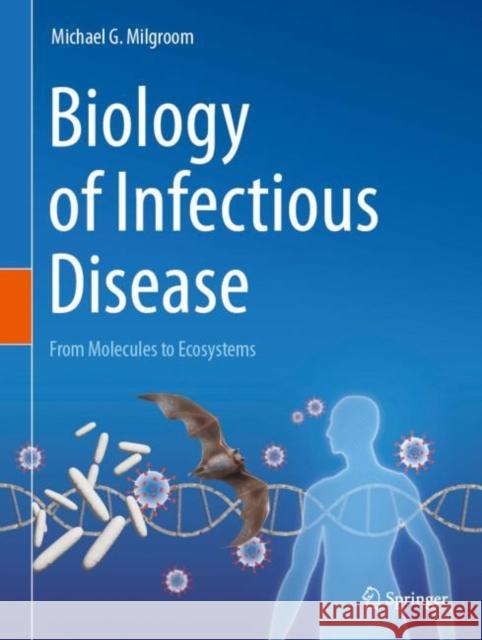
Biology of Infectious Disease Michael G. Milgroom 9783031389405 Springer International Publishing AG - książkaWidoczna okładka, to zdjęcie poglądowe, a rzeczywista szata graficzna może różnić się od prezentowanej.

Biology of Infectious Disease

ISBN-13: 9783031389405 / Twarda / 2023 / 338 str.

Michael G. Milgroom
cena 484,18
(netto: 461,12 VAT:  5%)

Najniższa cena z 30 dni: 424,07
Termin realizacji zamówienia:
ok. 22 dni roboczych.

Darmowa dostawa!
Kategorie:
Nauka, Medycyna
Kategorie BISAC:
Medical > Microbiology
Medical > Zdrowie publiczne
Medical > Immunology
Wydawca:
Springer International Publishing AG
ISBN-13:
9783031389405
Rok wydania:
2023
Ilość stron:
338
Wymiary:
27.9 x 21.0
Oprawa:
Twarda

​Chapter 1: Introduction to infectious disease

Current impact of human infectious diseases: the good news
Emergence and reemergence of human infectious diseases: the bad news
Infectious diseases in animals 
Infectious diseases in plants
Biology and the need for better understanding infectious diseases

Chapter 2. Historical background on germ theory
Perceptions of infectious diseases before the germ theory
Early contributions to germ theory
Acceptance of the germ theory: Louis Pasteur and Robert Koch
Major advancements after the acceptance of germ theory
Contributions of germ theory to combating disease
Water, sanitation, and hygiene (WASH)
Vector control
Vaccination
Antibiotics

Chapter 3. Host-microbe interactions and infectious disease
Microbes as pathogens
Basic concepts in host-microbe interactions 
Temporal progression of a host-microbe interaction
The diversity of host-microbe interactions
“What is a pathogen?”
Damage-response framework 
An interaction-centric perspective on disease
The environmental context of host-microbe interactions

Chapter 4. Viruses
Morphology
Viral genomes
Viral gene expression
Viral infection cycle
Positive-sense ssRNA viruses
Negative-sense ssRNA viruses
Bacteriophages
Retroviruses
Viral evolution
Reassortment in Influenza A virus
Evolutionary origin of viruses
Prions

Chapter 5. Bacteria
Morphology
Biofilms
Bacterial genomes
Horizontal gene transfer
Bacterial infection cycles
E. coli
Staphylococcus aureus
Mycobacterium tuberculosis
Bacterial plant pathogens

Chapter 6. Protozoa
Morphology
Reproduction
Genomics
Protozoan life cycles
Entamoeba histolytica
Plasmodium falciparum
Toxoplasma gondii
Trypanosoma brucei and Trypanosoma cruzi

Chapter 7. Fungi
Morphology
Reproduction
Genomics
Fungal pathogenesis
Aspergillosis
Fungal pathogens of plants
Fungal pathogens of insects
Microsporidia
Emerging fungal diseases of wildlife and trees
Oomycetes

Chapter 8. Helminths
Nematodes (roundworms)
Morphology
Reproduction
Genomics
Life cycles
Plant-parasitic nematodes
Insect-pathogenic nematodes
Platyhelminthes (flatworms)
Morphology
Reproduction
Life cycles
Cestode (tapeworms) life cycles
Trematode (flukes) life cycles

Chapter 9. Host defenses and immunity: Vertebrates
An overview of innate and acquired immunity 
Innate immunity
Acquired immunity
Innate immunity in humans
Destruction of invading microbes
Inflammatory responses
Surveillance by antigen-presenting cells
Adaptive immunity in humans
Overview of adaptive immunity
Structure of recognition molecules in adaptive immunity
Diversity of antigen detection
Activation of T cells and B cells
Humoral immunity
Cell-mediated immunity
Immunologic memory
Concluding remarks

Chapter 10. Host defenses and immunity: Invertebrates, plants, and prokaryotes
Innate immunity
Innate immunity in invertebrates
Innate immunity in plants
Innate immunity in prokaryotes
Acquired immunity in invertebrates, plants, and fungi: RNAi 
Acquired immunity in bacteria and archaea: Prokaryotic Argonaute (pAGO) proteins and CRISPR/Cas

Chapter 11. Microbial suppression and evasion of host defenses
Evasion of immunity
Survival inside immune cells
Antigenic variation
Suppression of immunity
Effectors to inactivate defenses
Suppression of RNAi

Chapter 12. Antimicrobial resistance
A brief history of antibiotic discovery
Genomic approaches to antibiotic discovery
Classification of antibiotics
Resistance to β-lactam antibiotics
Mechanisms of resistance 
Inactivation of antibiotics
Target site modification
Reduced antibiotic uptake
Increased efflux of antibiotics
Mobile genetic elements and horizontal gene transfer of antibiotic resistance  
Intracellular movement of antibiotic resistance genes
Intercellular movement of antibiotic resistance genes
Antibiotic resistance acquired by mutations in chromosomal genes
The Resistome
Selection for antibiotic resistance 
Antibiotic use selects for resistance 
Clinical use of antibiotics
Agricultural use of antibiotics
Resistance to other antimicrobial drugs
Antivirals
Antifungals
Antiprotozoals
Anthelmintics
Should you take the full course of antibiotics or other antimicrobials?
The outlook for a post-antibiotic era 

Chapter 13. Microbiomes
Microbiota in the development of immune systems
Functional diversity in the microbiome
The gut microbiome
Outside-in and inside-out perspectives
Effects on immunity outside the gut
Microbiomes: blurring the distinction between chronic and infectious disease
The hygiene hypothesis
Manipulating the microbiome
Fecal transplants
Microbiota therapy
Paradigm shift in infectious disease and immunity: the microbiome

Chapter 14. Vaccines, vaccination, and immunization
Passive immunity
Immune responses to vaccines
Types of vaccines
First-generation vaccines
Second-generation vaccines
Third-generation vaccines
Antigenic variation in the context of vaccines
Herd immunity and pathogen eradication
Vaccine testing and safety
Vaccine hesitancy and the anti-vax movement 

Chapter 15. Vector biology
Definition of a vector 
Vector-borne pathogens
Hematophagous arthropods
Mosquitoes
Anopheles
Aedes
Culex
Other hematophagous flies
Sand flies
Tsetse flies
Black flies and biting midges
Ticks
Fleas, lice, and true bugs 
Fleas
Lice
True bugs
Vectors of plant pathogens
Vector-microbe interactions
Vector competence and vectorial capacity
Vector control
Biological control of mosquitoes
Sterile insect technique
Incompatible insect technique
Genetic modification of vectors
Transgenic sterile insect techniques
Release of insects carrying a dominant lethal (RIDL)
RNA interference (RNAi)
Gene drive systems

Chapter 16. Epidemiology and SIR models 
An overview of models and their applications to infectious diseases
SIR models
Epidemic thresholds and the basic reproductive number, R0
Herd immunity
More complex SIR models
Demography—adding births and deaths
The SEIR model—modeling the latent period
Additional complexities in SIR models
Modeling COVID-19 

Chapter 17. Evolution of pathogenicity and virulence
Origins of virulence factors
Horizontal gene transfer of virulence factors
Conventional wisdom about virulence
Virulence-transmission tradeoff hypothesis
Coevolution of hosts and pathogens: the Red Queen

Chapter 18. Disease ecology and emergence 
Pathogen reservoirs
Zoonoses, spillovers, and emergence of new diseases
Historical disease emergence
Host specialization and switching
Old World pathogens in the New World
Biodiversity and infectious disease
Future pandemics and pandemic preparedness
Globalization and infectious disease
Climate change and disease emergence
One Health, a holistic view of disease ecology

Chapter 19. The COVID-19 pandemic: A case study
Virology of coronaviruses
The origin of SARS-CoV-2
Pathology and treatment of COVID-19
Epidemiology of the COVID-19 pandemic
Vaccine development and herd immunity
Virus variants and pandemic dynamics
The next coronavirus pandemic?

Michael Milgroom joined the faculty in the Plant Pathology and Plant-Microbe Biology section of the School of Integrative Plant Science at Cornell University in 1987. His research interests were in epidemiology, ecology, genetics, evolution, and population genetics of fungal plant pathogens. For most of his academic career, he taught graduate-level and undergraduate-level courses in plant pathology. In 2015, he published a textbook titled Population Biology of Plant Pathogens: Genetics, Ecology, and Evolution, aimed at graduate students in plant pathology, which combined his teaching and research interests. In 2012 his teaching broadened beyond plant pathology to offer courses of interest to general biology students, particularly pre-med and pre-public health students. He teamed up with a colleague to teach “Biology of infectious disease: From molecules to ecosystems”, which inspired this book. He also co-taught a course for two years titled, “Infectious disease ecology and evolution.” Milgroom retired from Cornell in January 2020—just as Covid-19 was being reported from Wuhan, China—and began writing this book based on his teaching experience.

This textbook provides a broad introduction to the biological processes underlying infectious diseases in a range of hosts and pathogens. The text covers topics at all levels of biological organization, from the molecular and cellular level, organismal level, and population and ecosystem level, and goes well beyond infectious diseases of humans. The details of how microbes interact with their hosts are unique for each interaction, but emphasis is on the common principles of host-pathogen interactions that result in disease. 


Biology of Infectious Disease: From Molecules to Ecosystems is aimed at undergraduate and early graduate-level students in biology or public health, including pre-medical and pre-public-health students, who are interested in a broad introduction to infectious disease but do not have any previous background in microbiology or immunology.


Udostępnij

Facebook - konto krainaksiazek.pl


Opinie o Krainaksiazek.pl na Opineo.pl

Partner Mybenefit

Krainaksiazek.pl w programie rzetelna firma Krainaksiaze.pl - płatności przez paypal

Czytaj nas na:

Facebook - krainaksiazek.pl
  • książki na zamówienie
  • granty
  • książka na prezent
  • kontakt
  • pomoc
  • opinie
  • regulamin
  • polityka prywatności

Zobacz:

  • Księgarnia czeska

  • Wydawnictwo Książkowe Klimaty

1997-2026 DolnySlask.com Agencja Internetowa

© 1997-2022 krainaksiazek.pl
     
KONTAKT | REGULAMIN | POLITYKA PRYWATNOŚCI | USTAWIENIA PRYWATNOŚCI
Zobacz: Księgarnia Czeska | Wydawnictwo Książkowe Klimaty | Mapa strony | Lista autorów
KrainaKsiazek.PL - Księgarnia Internetowa

Polityka prywatnosci - link
Krainaksiazek.pl - płatnośc Przelewy24
Przechowalnia Przechowalnia