• Wyszukiwanie zaawansowane
  • Kategorie
  • Kategorie BISAC
  • Książki na zamówienie
  • Promocje
  • Granty
  • Książka na prezent
  • Opinie
  • Pomoc
  • Załóż konto
  • Zaloguj się

Bioinformational Philosophy and Postdigital Knowledge Ecologies » książka


zaloguj się | załóż konto
Logo Krainaksiazek.pl

koszyk

konto

szukaj
topmenu
Księgarnia internetowa
Szukaj
Książki na zamówienie
Promocje
Granty
Książka na prezent
Moje konto
Pomoc
 
 
Wyszukiwanie zaawansowane
Pusty koszyk
Bezpłatna dostawa dla zamówień powyżej 20 złBezpłatna dostawa dla zamówień powyżej 20 zł

Kategorie główne

• Nauka
 [2949965]
• Literatura piękna
 [1857847]

  więcej...
• Turystyka
 [70818]
• Informatyka
 [151303]
• Komiksy
 [35733]
• Encyklopedie
 [23180]
• Dziecięca
 [617748]
• Hobby
 [139972]
• AudioBooki
 [1650]
• Literatura faktu
 [228361]
• Muzyka CD
 [398]
• Słowniki
 [2862]
• Inne
 [444732]
• Kalendarze
 [1620]
• Podręczniki
 [167233]
• Poradniki
 [482388]
• Religia
 [509867]
• Czasopisma
 [533]
• Sport
 [61361]
• Sztuka
 [243125]
• CD, DVD, Video
 [3451]
• Technologie
 [219309]
• Zdrowie
 [101347]
• Książkowe Klimaty
 [123]
• Zabawki
 [2362]
• Puzzle, gry
 [3791]
• Literatura w języku ukraińskim
 [253]
• Art. papiernicze i szkolne
 [7933]
Kategorie szczegółowe BISAC

Bioinformational Philosophy and Postdigital Knowledge Ecologies

ISBN-13: 9783030950088 / Angielski
Michael A. Peters; Petar Jandric; Sarah Hayes
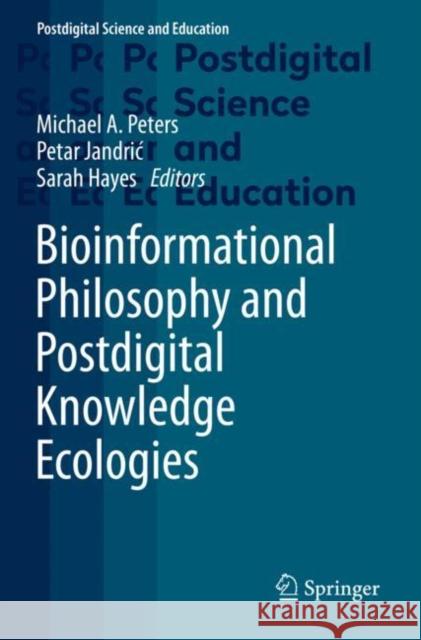
Bioinformational Philosophy and Postdigital Knowledge Ecologies Michael A. Peters Petar Jandric Sarah Hayes 9783030950088 Springer - książkaWidoczna okładka, to zdjęcie poglądowe, a rzeczywista szata graficzna może różnić się od prezentowanej.

Bioinformational Philosophy and Postdigital Knowledge Ecologies

ISBN-13: 9783030950088 / Angielski

Michael A. Peters; Petar Jandric; Sarah Hayes
cena 605,23
(netto: 576,41 VAT:  5%)

Najniższa cena z 30 dni: 539,74
Termin realizacji zamówienia:
ok. 22 dni roboczych
Bez gwarancji dostawy przed świętami

Darmowa dostawa!
inne wydania

The book presents a cross-disciplinary overview of critical issues at the intersections of biology, information, and society. Based on theories of bioinformationalism, viral modernity, the postdigital condition, and others, this book explores two inter-related questions: Which new knowledge ecologies are emerging? Which philosophies and research approaches do they require?The book argues that the 20thcentury focus on machinery needs to be replaced, at least partially, by a focus on a better understanding of living systems and their interactions with technology at all scales – from viruses, through to human beings, to the Earth’s ecosystem. This change of direction cannot be made by a simple relocation of focus and/or funding from one discipline to another. In our age of the Anthropocene, (human and planetary) biology cannot be thought of without (digital) technology and society. Today’s curious bioinformational mix of blurred and messy relationships between physics and biology, old and new media, humanism and posthumanism, knowledge capitalism and bio-informational capitalism defines the postdigital condition and creates new knowledge ecologies.The book presents scholarly research defining new knowledge ecologies built upon emerging forms of scientific communication, big data deluge, and opacity of algorithmic operations. Many of these developments can be approached using the concept of viral modernity, which applies to viral technologies, codes and ecosystems in information, publishing, education, and emerging knowledge (journal) systems. It is within these overlapping theories and contexts, that this book explores new bioinformational philosophies and postdigital knowledge ecologies.


The book presents a cross-disciplinary overview of critical issues at the intersections of biology, information, and society. Based on theories of bioinformationalism, viral modernity, the postdigital condition, and others, this book explores two inter-related questions: Which new knowledge ecologies are emerging? Which philosophies and research approaches do they require?The book argues that the 20th century focus on machinery needs to be replaced, at least partially, by a focus on a better understanding of living systems and their interactions with technology at all scales – from viruses, through to human beings, to the Earth’s ecosystem. This change of direction cannot be made by a simple relocation of focus and/or funding from one discipline to another. In our age of the Anthropocene, (human and planetary) biology cannot be thought of without (digital) technology and society. Today’s curious bioinformational mix of blurred and messy relationships between physics and biology, old and new media, humanism and posthumanism, knowledge capitalism and bio-informational capitalism defines the postdigital condition and creates new knowledge ecologies.The book presents scholarly research defining new knowledge ecologies built upon emerging forms of scientific communication, big data deluge, and opacity of algorithmic operations. Many of these developments can be approached using the concept of viral modernity, which applies to viral technologies, codes and ecosystems in information, publishing, education, and emerging knowledge (journal) systems. It is within these overlapping theories and contexts, that this book explores new bioinformational philosophies and postdigital knowledge ecologies.

Kategorie:
Podręczniki
Kategorie BISAC:
Education > Philosophy, Theory & Social Aspects
Social Science > Socjologia
Wydawca:
Springer
Seria wydawnicza:
Postdigital Science and Education
Język:
Angielski
ISBN-13:
9783030950088

"The book's organization is particularly useful to those who are not experts in these fields ... . Bioinformational Philosophy and Postdigital Knowledge Ecologies, Peters et al. (2022) provide a balanced range of authors arguments and analyses which shift between hope and pessimism for our postdigital futures. I would agree that this approach is very much needed for such a topic that is weaved throughout everything we do." (Greg William Misiaszek, Postdigital Science and Education, Vol. 4 (3), 2022)

Introduction: Bioinformational Philosophy and Postdigital Knowledge Ecologies.- Part I. Bioinformational Philosophy and Theory.- . Biodigital Philosophy, Technological Convergence, and Postdigital Knowledge Ecologies.- . Biodigital Becoming.- . Reconceiving The Digital Network: From Selves to Cells.- . On the Collective Algorithmic Unconscious.- . Acceleration of Technology in the Anthropocene: Stiegler, Maori and Exosomatic Memory.- Part II. Emerging Configurations and Practices.- . Biodigital technologies and the bioeconomy: The Global New Green Deal?.- . Agriculture 4.0: Bioinformationalism and Postdigital Hybrid Assemblages.- . Maps of Medical Reason: Applying Knowledge Graphs and Artificial Intelligence in Medical Education and Practice.- . Cycling In the Time of The Biodigital: Small Acts Towards a Conscious Uncoupling from Non-Regenerative Digitised Economies.- . From Dead Information to a Living Knowledge Ecology.- Part III. Teaching and Learning in Postdigital Knowledge Ecologies.- . Postdigital-Biodigital: An Emerging Configuration.- . Digital Culture, Media, and the Challenges of Contemporary Cyborg Youth.- . Spreading Stupidity: Disability and Anti-Imperialist Resistance to Bioinformational Capitalism.- . Decolonizing Racial Bioinformatics: Governing Education in Contagion and Dehiscence.- . Competing Pedagogies for The Biodigital Imaginary: What Will Happen to Teachers?.- . The Global Pandemic Did Not Take Place: Cancellation, Denial and The Normal New.

Michael A. Peters is Distinguished Professor of Education at Beijing Normal University and Emeritus Professor at the University of Illinois. He is the Editor-in-Chief (with Xudong Zhu) of The Beijing International Review of Education https://brill.com/view/journals/bire/bire-overview.xml and  Editor-in-Chief of Educational Philosophy and Theory https://www.tandfonline.com/loi/rept20. His interests are in education, philosophy and social policy, and he is the author of over 100 books. He has recently published The Chinese Dream: Educating the Future (2019), Wittgenstein: Anti-foundationalism, Technoscience and Philosophy of Education (2020), Wittgenstein, Education and the Problem of Rationality (2021), Moral Education and the Ethics of Self-Cultivation (2021), The Methodology and Philosophy of Collective Writing (2021), and is working on a book about civilizational cultures in a multipolar international system.

Petar Jandrić is Professor at the Zagreb University of Applied Sciences, Croatia, and Visiting Professor at the University of Wolverhampton, UK. Petar’s research interests are at the postdisciplinary intersections between technologies, pedagogies, and the society, and research methodologies of his choice are inter-, trans-, and antidisciplinarity. He is the Editor-in-Chief of Postdigital Science and Education journal https://www.springer.com/journal/42438 and book series https://www.springer.com/series/16439. His recent books include Postdigital Dialogues on Critical Pedagogy, Liberation Theology and Information Technology (2020), Knowledge Socialism. The Rise of Peer Production: Collegiality, Collaboration, and Collective Intelligence (2020), and The Methodology and Philosophy of Collective Writing (2021). Personal website: http://petarjandric.com/.

Sarah Hayes is Professor of Higher Education Policy in the Education Observatory at the University of Wolverhampton, UK. Previously Sarah worked at Aston University, where she led programmes in Education and Sociology and is now an Honorary Professor. Sarah has also taught at the University of Worcester, at international partner institutions, and has led a range of research projects. Sarah’s research spans sociology, education and policy, technological and social change and she has published in a variety of related journals. Her recent books include The Labour of Words in Higher Education: Is it Time to Reoccupy Policy? (2019) and Postdigital Positionality: Developing Powerful Inclusive Narratives for Learning, Teaching, Research and Policy in Higher Education (2021). Sarah is an Associate Editor for Postdigital Science and Education (Springer). Personal website: https://researchers.wlv.ac.uk/sarah.hayes.


The book presents a cross-disciplinary overview of critical issues at the intersections of biology and information science. Based on theories of bioinformationalism, viral modernity, the postdigital condition, and others, this book explores two inter-related questions: Which new knowledge ecologies are emerging? Which philosophies and research approaches do they require?


The book argues that the 20th century focus on machinery needs replaced, at least partially, by a focus on a better understanding of living systems and their interactions with technology at all scales – from viruses, through human beings, to Earth’s ecosystem. This change of direction cannot be made by simple relocation of focus and/or funding from one discipline to another. In our age of the Anthropocene, (human and planetary) biology cannot be thought of without (digital) technology. Today’s curious bioinformational mix of blurred and messy relationships between physics and biology, old and new media, humanism and posthumanism, knowledge capitalism and bio-informational capitalism defines the postdigital condition and creates new knowledge ecologies.

The book presents scholarly research defining new knowledge ecologies built upon emerging forms of scientific communication, big data deluge, or opacity of algorithmic operations. Many of these developments can be approached using the concept of viral modernity, which applies to viral technologies, codes and ecosystems in information, publishing, education, and emerging knowledge (journal) systems. It is within these overlapping theories and contexts, that this book explores new bioinformational philosophies and postdigital knowledge ecologies.



Udostępnij

Facebook - konto krainaksiazek.pl


Opinie o Krainaksiazek.pl na Opineo.pl

Partner Mybenefit

Krainaksiazek.pl w programie rzetelna firma Krainaksiaze.pl - płatności przez paypal

Czytaj nas na:

Facebook - krainaksiazek.pl
  • książki na zamówienie
  • granty
  • książka na prezent
  • kontakt
  • pomoc
  • opinie
  • regulamin
  • polityka prywatności

Zobacz:

  • Księgarnia czeska

  • Wydawnictwo Książkowe Klimaty

1997-2025 DolnySlask.com Agencja Internetowa

© 1997-2022 krainaksiazek.pl
     
KONTAKT | REGULAMIN | POLITYKA PRYWATNOŚCI | USTAWIENIA PRYWATNOŚCI
Zobacz: Księgarnia Czeska | Wydawnictwo Książkowe Klimaty | Mapa strony | Lista autorów
KrainaKsiazek.PL - Księgarnia Internetowa

Polityka prywatnosci - link
Krainaksiazek.pl - płatnośc Przelewy24
Przechowalnia Przechowalnia



