• Wyszukiwanie zaawansowane
  • Kategorie
  • Kategorie BISAC
  • Książki na zamówienie
  • Promocje
  • Granty
  • Książka na prezent
  • Opinie
  • Pomoc
  • Załóż konto
  • Zaloguj się

Bioequivalence Studies in Drug Development: Methods and Applications » książka


zaloguj się | załóż konto
Logo Krainaksiazek.pl

koszyk

konto

szukaj
topmenu
Księgarnia internetowa
Szukaj
Książki na zamówienie
Promocje
Granty
Książka na prezent
Moje konto
Pomoc
 
 
Wyszukiwanie zaawansowane
Pusty koszyk
Bezpłatna dostawa dla zamówień powyżej 20 złBezpłatna dostawa dla zamówień powyżej 20 zł

Kategorie główne

• Nauka
 [2946600]
• Literatura piękna
 [1856966]

  więcej...
• Turystyka
 [72221]
• Informatyka
 [151456]
• Komiksy
 [35826]
• Encyklopedie
 [23190]
• Dziecięca
 [619653]
• Hobby
 [140543]
• AudioBooki
 [1577]
• Literatura faktu
 [228355]
• Muzyka CD
 [410]
• Słowniki
 [2874]
• Inne
 [445822]
• Kalendarze
 [1744]
• Podręczniki
 [167141]
• Poradniki
 [482898]
• Religia
 [510455]
• Czasopisma
 [526]
• Sport
 [61590]
• Sztuka
 [243598]
• CD, DVD, Video
 [3423]
• Technologie
 [219201]
• Zdrowie
 [101638]
• Książkowe Klimaty
 [124]
• Zabawki
 [2473]
• Puzzle, gry
 [3898]
• Literatura w języku ukraińskim
 [254]
• Art. papiernicze i szkolne
 [8170]
Kategorie szczegółowe BISAC

Bioequivalence Studies in Drug Development: Methods and Applications

ISBN-13: 9780470094754 / Angielski / Twarda / 2007 / 304 str.
Dieter Hauschke; Volker Steinijans; Iris Pigeot
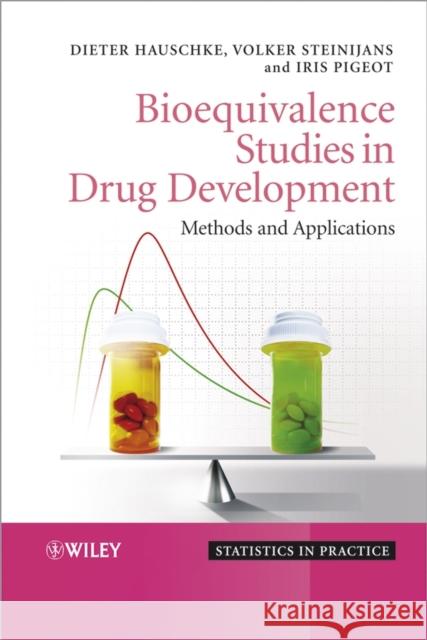
Bioequivalence Studies in Drug Development: Methods and Applications Hauschke, Dieter 9780470094754 John Wiley & Sons - książkaWidoczna okładka, to zdjęcie poglądowe, a rzeczywista szata graficzna może różnić się od prezentowanej.

Bioequivalence Studies in Drug Development: Methods and Applications

ISBN-13: 9780470094754 / Angielski / Twarda / 2007 / 304 str.

Dieter Hauschke; Volker Steinijans; Iris Pigeot
cena 455,78 zł
(netto: 434,08 VAT:  5%)

Najniższa cena z 30 dni: 452,05 zł
Termin realizacji zamówienia:
ok. 30 dni roboczych
Bez gwarancji dostawy przed świętami

Darmowa dostawa!

Studies in bioequivalence are the commonly accepted method to demonstrate therapeutic equivalence between two medicinal products. Savings in time and cost are substantial when using bioequivalence as an established surrogate marker of therapeutic equivalence. For this reason the design, performance and evaluation of bioequivalence studies have received major attention from academia, the pharmaceutical industry and health authorities. Bioequivalence Studies in Drug Development focuses on the planning, conducting, analysing and reporting of bioequivalence studies, covering all aspects required by regulatory authorities. This text presents the required statistical methods, and with an outstanding practical emphasis, demonstrates their applications through numerous examples using real data from drug development.

  • Includes all the necessary pharmacokinetic background information.
  • Presents parametric and nonparametric statistical techniques.
  • Describes adequate methods for power and sample size determination.
  • Includes appropriate presentation of results from bioequivalence studies.
  • Provides a practical overview of the design and analysis of bioequivalence studies.
  • Presents the recent developments in methodology, including population and individual bioequivalence.
  • Reviews the regulatory guidelines for such studies, and the existing global discrepancies.
  • Discusses the designs and analyses of drug-drug and food-drug interaction studies.
Bioequivalence Studies in Drug Development is written in an accessible style that makes it ideal for pharmaceutical scientists, clinical pharmacologists, and medical practitioners, as well as biometricians working in the pharmaceutical industry. It will also be of great value for professionals from regulatory bodies assessing bioequivalence studies.

Kategorie:
Nauka, Matematyka
Kategorie BISAC:
Medical > Biostatistics
Medical > Farmacja
Wydawca:
John Wiley & Sons
Seria wydawnicza:
Statistics in Practice
Język:
Angielski
ISBN-13:
9780470094754
Rok wydania:
2007
Ilość stron:
304
Waga:
0.75 kg
Wymiary:
25.15 x 17.4 x 2.41
Oprawa:
Twarda
Wolumenów:
01
Dodatkowe informacje:
Bibliografia
Wydanie ilustrowane

"The book provides an excellent introduction for researchers approaching the concept of bioequivalence and is a complete and useful compendium for experienced statisticians." ( Biometrical Journal, April 2009)

"The book provides an important reference providing many worked examples with real data from drug development. Professionals from the harmaceutical industry and regulatory bodies will particularly appreciate the emphasis made on regulatory guidelines." (Statistical Methods in Medical Research, February 2009)

"Bioequivalence Studies in Drug Development: Methods and Applications is an informative, timely, and easy–to–read contribution to bioequivalence and drug–drug/food–drug interaction literature." (Journal of the American Statistical Association, September 2008)

" those statisticians working in this area of research will find that this book will serve as an excellent reference for their work..." (Journal of Biopharmaceutical Statistics, January 2008)

"This book would be beneficial to both pharmaceutical scientists/researchers and biostatisticians " (Biometrics, September 2007)

"For anyone interested in any aspect of bioequivalence, the book is a very valuable reference." (International Statistical Review, 2007)

" my pleasure to review I would like to add this book to my book collection of pharmaceutical research and development." (Biometrics, September 2007)

Preface.

1 Introduction.

1.1 Definitions.

1.2 When are bioequivalence studies performed.

1.3 Design and conduct of bioequivalence studies.

1.4 Aims and structure of the book.

References.

2 Metrics to characterize concentration–time profiles in single– and multiple–dose bioequivalence studies.

2.1 Introduction.

2.2 Pharmacokinetic characteristics (metrics) for single–dose studies.

2.3 Pharmacokinetic rate and extent characteristics (metrics) for multiple–dose studies.

2.4 Conclusions.

References.

3 Basic statistical considerations.

3.1 Introduction.

3.2 Additive and multiplicative model.

3.3 Hypotheses testing.

3.4 The RT/TR crossover design assuming an additive model.

References.

4 Assessment of average bioequivalence in the RT/TR design.

4.1 Introduction.

4.2 The RT/TR crossover design assuming a multiplicative model.

4.3 Test procedures for bioequivalence assessment.

4.4 Conclusions.

References.

5 Power and sample size determination for testing average bioequivalence in the RT/TR design.

5.1 Introduction.

5.2 Challenging the classical approach.

5.3 Exact power and sample size calculation.

5.4 Modified acceptance ranges.

5.5 Approximate formulas for sample size calculation.

5.6 Exact power and sample size calculation by nQuery®.

References.

Appendix.

6 Presentation of bioequivalence studies.

6.1 Introduction.

6.2 Results from a single–dose study.

6.3 Results from a multiple–dose study.

6.4 Conclusions.

References.

7 Designs with more than two formulations.

7.1 Introduction.

7.2 Williams designs.

7.3 Example: Dose linearity study.

7.4 Multiplicity.

7.5 Conclusions.

References.

8 Analysis of pharmacokinetic interactions.

8.1 Introduction.

8.2 Pharmacokinetic drug–drug interaction studies.

8.3 Pharmacokinetic food–drug interactions.

8.4 Goal posts for drug interaction studies including no effect boundaries.

8.5 Labeling.

8.6 Conclusions.

References.

9 Population and individual bioequivalence.

9.1 Introduction.

9.2 Brief history.

9.3 Study designs and statistical models.

9.4 Population bioequivalence.

9.5 Individual bioequivalence.

9.6 Disaggregate criteria.

9.7 Other approaches.

9.8 Average bioequivalence in replicate designs.

9.9 Example: The anti–hypertensive patch dataset.

9.10 Conclusions.

References.

10 Equivalence assessment in case of clinical endpoints.

10.1 Introduction.

10.2 Design and testing procedure.

10.3 Power and sample size calculation.

10.4 Conclusions.

Apendix.

References.

Index.

Dieter Hauschke, ALTANA Pharma, Konstanz, Germany. Well–respected statistician working in the pharmaceutical industry, specializing in bioequivalence studies, with over 60 publications in leading journals.

Volker Steinijans, ALTANA Pharma, Konstanz, Germany. Head of the Department of Biometry and Clinical Data Management at ALTANA.

Iris Pigeot, Institute for Statistics, University of Bremen, Germany. Has over 50 published papers, and also written a number of books in German.

Studies in bioequivalence are the commonly accepted method to demonstrate therapeutic equivalence between two medicinal products. Savings in time and cost are substantial when using bioequivalence as an established surrogate marker of therapeutic equivalence. For this reason the design, performance and evaluation of bioequivalence studies have received major attention from academia, the pharmaceutical industry and health authorities.

Bioequivalence Studies in Drug Development focuses on the planning, conducting, analysing and reporting of bioequivalence studies, covering all aspects required by regulatory authorities. This text presents the required statistical methods, and with an outstanding practical emphasis, demonstrates their applications through numerous examples using real data from drug development.

  •  Includes all the necessary pharmacokinetic background information.
  •  Presents parametric and nonparametric statistical techniques.
  •  Describes adequate methods for power and sample size determination.
  •  Includes appropriate presentation of results from bioequivalence studies.
  •  Provides a practical overview of the design and analysis of bioequivalence studies.
  •  Presents the recent developments in methodology, including population and individual bioequivalence.
  •  Reviews the regulatory guidelines for such studies, and the existing global discrepancies.
  •  Discusses the designs and analyses of drug–drug and food–drug interaction studies.

Bioequivalence Studies in Drug Development is written in an accessible style that makes it ideal for pharmaceutical scientists, clinical pharmacologists, and medical practitioners, as well as biometricians working in the pharmaceutical industry. It will also be of great value for professionals from regulatory bodies assessing bioequivalence studies.


Udostępnij

Facebook - konto krainaksiazek.pl


Opinie o Krainaksiazek.pl na Opineo.pl

Partner Mybenefit

Krainaksiazek.pl w programie rzetelna firma Krainaksiaze.pl - płatności przez paypal

Czytaj nas na:

Facebook - krainaksiazek.pl
  • książki na zamówienie
  • granty
  • książka na prezent
  • kontakt
  • pomoc
  • opinie
  • regulamin
  • polityka prywatności

Zobacz:

  • Księgarnia czeska

  • Wydawnictwo Książkowe Klimaty

1997-2025 DolnySlask.com Agencja Internetowa

© 1997-2022 krainaksiazek.pl
     
KONTAKT | REGULAMIN | POLITYKA PRYWATNOŚCI | USTAWIENIA PRYWATNOŚCI
Zobacz: Księgarnia Czeska | Wydawnictwo Książkowe Klimaty | Mapa strony | Lista autorów
KrainaKsiazek.PL - Księgarnia Internetowa

Polityka prywatnosci - link
Krainaksiazek.pl - płatnośc Przelewy24
Przechowalnia Przechowalnia






