• Wyszukiwanie zaawansowane
  • Kategorie
  • Kategorie BISAC
  • Książki na zamówienie
  • Promocje
  • Granty
  • Książka na prezent
  • Opinie
  • Pomoc
  • Załóż konto
  • Zaloguj się

Biochar-Based Nanocomposites for Contaminant Management: Synthesis, Contaminants Removal, and Environmental Sustainability » książka


zaloguj się | załóż konto
Logo Krainaksiazek.pl

koszyk

konto

szukaj
topmenu
Księgarnia internetowa
Szukaj
Książki na zamówienie
Promocje
Granty
Książka na prezent
Moje konto
Pomoc
 
 
Wyszukiwanie zaawansowane
Pusty koszyk
Bezpłatna dostawa dla zamówień powyżej 20 złBezpłatna dostawa dla zamówień powyżej 20 zł

Kategorie główne

• Nauka
 [2946600]
• Literatura piękna
 [1856966]

  więcej...
• Turystyka
 [72221]
• Informatyka
 [151456]
• Komiksy
 [35826]
• Encyklopedie
 [23190]
• Dziecięca
 [619653]
• Hobby
 [140543]
• AudioBooki
 [1577]
• Literatura faktu
 [228355]
• Muzyka CD
 [410]
• Słowniki
 [2874]
• Inne
 [445822]
• Kalendarze
 [1744]
• Podręczniki
 [167141]
• Poradniki
 [482898]
• Religia
 [510455]
• Czasopisma
 [526]
• Sport
 [61590]
• Sztuka
 [243598]
• CD, DVD, Video
 [3423]
• Technologie
 [219201]
• Zdrowie
 [101638]
• Książkowe Klimaty
 [124]
• Zabawki
 [2473]
• Puzzle, gry
 [3898]
• Literatura w języku ukraińskim
 [254]
• Art. papiernicze i szkolne
 [8170]
Kategorie szczegółowe BISAC

Biochar-Based Nanocomposites for Contaminant Management: Synthesis, Contaminants Removal, and Environmental Sustainability

ISBN-13: 9783031288722 / Angielski
Disha Mishra; Rishikesh Singh; Puja Khare
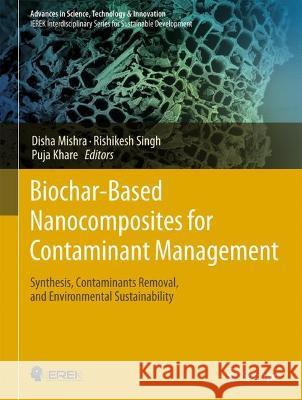
Biochar-Based Nanocomposites for Contaminant Management: Synthesis, Contaminants Removal, and Environmental Sustainability Disha Mishra Rishikesh Singh Puja Khare 9783031288722 Springer - książkaWidoczna okładka, to zdjęcie poglądowe, a rzeczywista szata graficzna może różnić się od prezentowanej.

Biochar-Based Nanocomposites for Contaminant Management: Synthesis, Contaminants Removal, and Environmental Sustainability

ISBN-13: 9783031288722 / Angielski

Disha Mishra; Rishikesh Singh; Puja Khare
cena 685,93 zł
(netto: 653,27 VAT:  5%)

Najniższa cena z 30 dni: 655,41 zł
Termin realizacji zamówienia:
ok. 22 dni roboczych
Bez gwarancji dostawy przed świętami

Darmowa dostawa!
inne wydania

This book helps the readers get a holistic understanding of the emergence of biochar-nanocomposite research. The low and long-term exposure of persistent hazardous pollutants in environment is well known for damaging the water, soil, sediments, and living biota. Thus, it is a crucial step to eliminate these pollutants from environment regimes to prevent the on-site destruction or the transfer into the food chain. Biochar is a carbon-rich solid material generated through pyrolysis of biomass, and currently, it is covering the hotspot in environmental management of pollutants.  It is being utilized for the efficient immobilization and sorption of organic pollutants, heavy metals, dyes, improvement of soil redox conditions, aggregate stabilization, photocatalytic degradation, and for carbon sequestration. The fascinating properties like surface area, porous structures, functional groups, and mineral components turn it into suitable candidate for the removal of various class of pollutants from environmental matrices. Different reactions like sorption, reduction, precipitation, solidification, and degradation are mainly responsible for the effective cleaning of xenobiotics from environment through biochar application. However, rapidly evolving contaminants in the environment have made the remediation more complex, expensive, and challenging. In view of these aspects, the modification of biochar through the doping of nanometals/metal oxides/surfactants/ or chemical entities will result in modified biochar with high surface area, more functional entities, improved physical, chemical, thermal, and mechanical characteristics with more adsorptive sites. Inclusion of these exclusive properties can be done through magnetic modification, impregnation of nanometals/ metal oxides/surfactants, amination, acid/base reactions, steam activation, etc. The resulted biochar-based nanocomposites have demonstrated a vital role in remediation of persistent organic pollutants, radionuclei, and heavy metals through the various interaction mechanisms like surface complexation, π–π interaction, electrostatic interaction, hydrogen bonding, Fenton process, and photocatalytic degradation. Currently, advanced research work has been carried out for the designing of modified composites of biochar to achieve maximum removal efficiency, reusability, biotoxicity, and sustainability. Hence, for selective removal of pollutants through designed biochar surface with the focused experimentation toward optimization of feedstocks, process variables, appropriate impregnation of nanomaterials, interaction with secondary pollutants, physical environment, longevity, and regeneration will definitely pave the way for safe and commercial application of biochar-based nanocomposites.


This book helps the readers get a holistic understanding of the emergence of biochar-nanocomposite research. The low and long-term exposure of persistent hazardous pollutants in environment is well known for damaging the water, soil, sediments, and living biota. Thus, it is a crucial step to eliminate these pollutants from environment regimes to prevent the on-site destruction or the transfer into the food chain. Biochar is a carbon-rich solid material generated through pyrolysis of biomass, and currently, it is covering the hotspot in environmental management of pollutants.  It is being utilized for the efficient immobilization and sorption of organic pollutants, heavy metals, dyes, improvement of soil redox conditions, aggregate stabilization, photocatalytic degradation, and for carbon sequestration. The fascinating properties like surface area, porous structures, functional groups, and mineral components turn it into suitable candidate for the removal of various class of pollutants from environmental matrices. Different reactions like sorption, reduction, precipitation, solidification, and degradation are mainly responsible for the effective cleaning of xenobiotics from environment through biochar application. However, rapidly evolving contaminants in the environment have made the remediation more complex, expensive, and challenging. In view of these aspects, the modification of biochar through the doping of nanometals/metal oxides/surfactants/ or chemical entities will result in modified biochar with high surface area, more functional entities, improved physical, chemical, thermal, and mechanical characteristics with more adsorptive sites. Inclusion of these exclusive properties can be done through magnetic modification, impregnation of nanometals/ metal oxides/surfactants, amination, acid/base reactions, steam activation, etc. The resulted biochar-based nanocomposites have demonstrated a vital role in remediation of persistent organic pollutants, radionuclei, and heavy metals through the various interaction mechanisms like surface complexation, π–π interaction, electrostatic interaction, hydrogen bonding, Fenton process, and photocatalytic degradation. Currently, advanced research work has been carried out for the designing of modified composites of biochar to achieve maximum removal efficiency, reusability, biotoxicity, and sustainability. Hence, for selective removal of pollutants through designed biochar surface with the focused experimentation toward optimization of feedstocks, process variables, appropriate impregnation of nanomaterials, interaction with secondary pollutants, physical environment, longevity, and regeneration will definitely pave the way for safe and commercial application of biochar-based nanocomposites.

Kategorie:
Nauka, Biologia i przyroda
Kategorie BISAC:
Technology & Engineering > Environmental - Pollution Control
Science > Environmental Science (see also Chemistry - Environmental)
Technology & Engineering > Agriculture - General
Wydawca:
Springer
Seria wydawnicza:
Advances in Science, Technology & Innovation
Język:
Angielski
ISBN-13:
9783031288722

A Biochar-nanocomposite type and preparation methods

B Biochar-nanocomposite application for pollutants removal from soil and sediments

C Biochar-nanocomposite application for pollutant removal from water

D Biochar-nanocomposite application in agriculture

E Biochar-nanocomposite: Research Outlook

Dr. Disha Mishra has received her doctorate from CSIR-Central Institute of Medicinal and Aromatic Plants, Lucknow, India. Her research interest is synthesis of nano-bioformulation, nano-biocomposite preparation, biochar production, and its application for remediation of pollutants from soil, soil chemistry, and solid waste management. She is an emerging researcher and has published several research articles and book chapters in peer-reviewed journals. Dr. Mishra has 23 Scopus publications with 263 citations and a Scopus h-index 7.


Dr. Rishikesh Singh has completed his Ph.D. from Institute of Environment & Sustainable Development (IESD), Banaras Hindu University, Varanasi, India. He is a budding environmental scientist with his research interests in soil carbon dynamics, land-use change and management, waste management, environmental contaminants, biochar, and carbon sequestration. He has published several research and review articles, and is a reviewer of several international journals of Elsevier, Wiley, Taylor and Francis, Frontiers, PLoS, and Springer Nature groups. He has published six books in leading international publishers such as Elsevier, Springer Nature, Wiley and NOVA publishers. Dr. Singh has 56 Scopus publications with 886 citations and a Scopus h-index 18.   


Dr. Puja Khare is working as a principal scientist in the Plant Production and Protection Division at CSIR-Central Institute of Medicinal and Aromatic Plants, Lucknow, India. She has obtained her doctorate from Dayalbagh Educational Institute (DEI), Agra, India. She has research experience of more than 25 years and published more than 100 peer-reviewed publications. She is a member of various national and international scientific bodies. Apart from this, Dr. Khare has received many prestigious awards and honors for her contribution in the growth of science. Her research interests include nanoformulation for agricultural purposes, application of biochar on problematic soils, abiotic stress and medicinal plants, and environmental chemistry. Her research on the production of biochar from waste and its application as soil amendment is widely recognized

This book helps the readers get a holistic understanding of the emergence of biochar-nanocomposite research. The low and long-term exposure of persistent hazardous pollutants in environment is well known for damaging the water, soil, sediments, and living biota. Thus, it is a crucial step to eliminate these pollutants from environment regimes to prevent the on-site destruction or the transfer into the food chain. Biochar is a carbon-rich solid material generated through pyrolysis of biomass, and currently, it is covering the hotspot in environmental management of pollutants.  It is being utilized for the efficient immobilization and sorption of organic pollutants, heavy metals, dyes, improvement of soil redox conditions, aggregate stabilization, photocatalytic degradation, and for carbon sequestration. The fascinating properties like surface area, porous structures, functional groups, and mineral components turn it into suitable candidate for the removal of various class of pollutants from environmental matrices. Different reactions like sorption, reduction, precipitation, solidification, and degradation are mainly responsible for the effective cleaning of xenobiotics from environment through biochar application. However, rapidly evolving contaminants in the environment have made the remediation more complex, expensive, and challenging. In view of these aspects, the modification of biochar through the doping of nanometals/metal oxides/surfactants/ or chemical entities will result in modified biochar with high surface area, more functional entities, improved physical, chemical, thermal, and mechanical characteristics with more adsorptive sites. Inclusion of these exclusive properties can be done through magnetic modification, impregnation of nanometals/ metal oxides/surfactants, amination, acid/base reactions, steam activation, etc. The resulted biochar-based nanocomposites have demonstrated a vital role in remediation of persistent organic pollutants, radionuclei, and heavy metals through the various interaction mechanisms like surface complexation, π–π interaction, electrostatic interaction, hydrogen bonding, Fenton process, and photocatalytic degradation. Currently, advanced research work has been carried out for the designing of modified composites of biochar to achieve maximum removal efficiency, reusability, biotoxicity, and sustainability. Hence, for selective removal of pollutants through designed biochar surface with the focused experimentation toward optimization of feedstocks, process variables, appropriate impregnation of nanomaterials, interaction with secondary pollutants, physical environment, longevity, and regeneration will definitely pave the way for safe and commercial application of biochar-based nanocomposites.




Udostępnij

Facebook - konto krainaksiazek.pl


Opinie o Krainaksiazek.pl na Opineo.pl

Partner Mybenefit

Krainaksiazek.pl w programie rzetelna firma Krainaksiaze.pl - płatności przez paypal

Czytaj nas na:

Facebook - krainaksiazek.pl
  • książki na zamówienie
  • granty
  • książka na prezent
  • kontakt
  • pomoc
  • opinie
  • regulamin
  • polityka prywatności

Zobacz:

  • Księgarnia czeska

  • Wydawnictwo Książkowe Klimaty

1997-2025 DolnySlask.com Agencja Internetowa

© 1997-2022 krainaksiazek.pl
     
KONTAKT | REGULAMIN | POLITYKA PRYWATNOŚCI | USTAWIENIA PRYWATNOŚCI
Zobacz: Księgarnia Czeska | Wydawnictwo Książkowe Klimaty | Mapa strony | Lista autorów
KrainaKsiazek.PL - Księgarnia Internetowa

Polityka prywatnosci - link
Krainaksiazek.pl - płatnośc Przelewy24
Przechowalnia Przechowalnia



