• Wyszukiwanie zaawansowane
  • Kategorie
  • Kategorie BISAC
  • Książki na zamówienie
  • Promocje
  • Granty
  • Książka na prezent
  • Opinie
  • Pomoc
  • Załóż konto
  • Zaloguj się

Big Data, Algorithms and Food Safety » książka

zaloguj się | załóż konto
Logo Krainaksiazek.pl

koszyk

konto

szukaj
topmenu
Księgarnia internetowa
Szukaj
Książki na zamówienie
Promocje
Granty
Książka na prezent
Moje konto
Pomoc
 
 
Wyszukiwanie zaawansowane
Pusty koszyk
Bezpłatna dostawa dla zamówień powyżej 20 złBezpłatna dostawa dla zamówień powyżej 20 zł

Kategorie główne

• Nauka
 [2952079]
• Literatura piękna
 [1850969]

  więcej...
• Turystyka
 [71058]
• Informatyka
 [151066]
• Komiksy
 [35579]
• Encyklopedie
 [23181]
• Dziecięca
 [620496]
• Hobby
 [139036]
• AudioBooki
 [1646]
• Literatura faktu
 [228729]
• Muzyka CD
 [379]
• Słowniki
 [2932]
• Inne
 [445708]
• Kalendarze
 [1409]
• Podręczniki
 [164793]
• Poradniki
 [480107]
• Religia
 [510956]
• Czasopisma
 [511]
• Sport
 [61267]
• Sztuka
 [243299]
• CD, DVD, Video
 [3411]
• Technologie
 [219640]
• Zdrowie
 [100984]
• Książkowe Klimaty
 [124]
• Zabawki
 [2281]
• Puzzle, gry
 [3363]
• Literatura w języku ukraińskim
 [258]
• Art. papiernicze i szkolne
 [8020]
Kategorie szczegółowe BISAC

Big Data, Algorithms and Food Safety

ISBN-13: 9783031093692 / Angielski / Miękka / 2023
Salvatore Sapienza
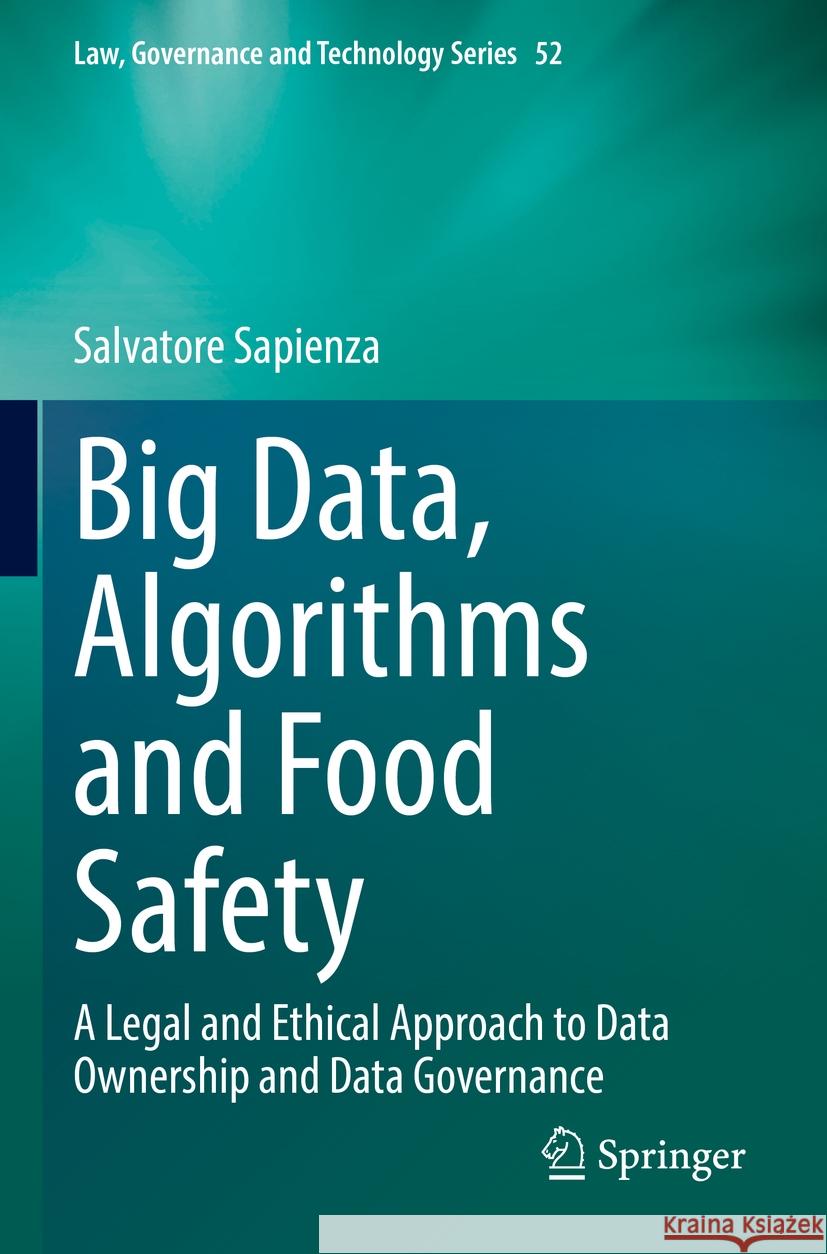
Big Data, Algorithms and Food Safety Salvatore Sapienza 9783031093692 Springer International Publishing - książkaWidoczna okładka, to zdjęcie poglądowe, a rzeczywista szata graficzna może różnić się od prezentowanej.

Big Data, Algorithms and Food Safety

ISBN-13: 9783031093692 / Angielski / Miękka / 2023

Salvatore Sapienza
cena 402,53
(netto: 383,36 VAT:  5%)

Najniższa cena z 30 dni: 385,52
Termin realizacji zamówienia:
ok. 22 dni roboczych
Dostawa w 2026 r.

Darmowa dostawa!
inne wydania

This book identifies the principles that should be applied when processing Big Data in the context of food safety risk assessments. Food safety is a critical goal in the protection of individuals’ right to health and the flourishing of the food and feed market. Big Data is fostering new applications capable of enhancing the accuracy of food safety risk assessments. An extraordinary amount of information is analysed to detect the existence or predict the likelihood of future risks, also by means of machine learning algorithms. Big Data and novel analysis techniques are topics of growing interest for food safety agencies, including the European Food Safety Authority (EFSA). This wealth of information brings with it both opportunities and risks concerning the extraction of meaningful inferences from data. However, conflicting interests and tensions among the parties involved are hindering efforts to find shared methods for steering the processing of Big Data in a sound, transparent and trustworthy way. While consumers call for more transparency, food business operators tend to be reluctant to share informational assets. This has resulted in a considerable lack of trust in the EU food safety system. A recent legislative reform, supported by new legal cases, aims to restore confidence in the risk analysis system by reshaping the meaning of data ownership in this domain. While this regulatory approach is being established, breakthrough analytics techniques are encouraging thinking about the next steps in managing food safety data in the age of machine learning.

The book focuses on two core topics – data ownership and data governance – by evaluating how the regulatory framework addresses the challenges raised by Big Data and its analysis in an applied, significant, and overlooked domain. To do so, it adopts an interdisciplinary approach that considers both the technological advances and the policy tools adopted in the European Union, while also assuming an ethical perspective when exploring potential solutions. The conclusion puts forward a proposal: an ethical blueprint for identifying the principles – Security, Accountability, Fairness, Explainability, Transparency and Privacy – to be observed when processing Big Data for food safety purposes, including by means of machine learning. Possible implementations are then discussed, also in connection with two recent legislative proposals, namely the Data Governance Act and the Artificial Intelligence Act.


Kategorie:
Nauka, Prawo i administracja
Kategorie BISAC:
Law > General
Computers > Artificial Intelligence - General
Computers > Database Administration & Management
Wydawca:
Springer International Publishing
Seria wydawnicza:
Law, Governance and Technology Series
Język:
Angielski
ISBN-13:
9783031093692
Rok wydania:
2023
Waga:
0.36 kg
Wymiary:
23.5 x 15.5
Oprawa:
Miękka
Dodatkowe informacje:
Wydanie ilustrowane

Chapter 1:Food, Big Data, Artificial Intelligence.- Chapter 2:Data Ownership in Food-related Information.- Chapter 3:Food Consumption Data Protection.- Chapter 4:Current and Foreseeable Trends in Food Safety Data Governance.- Chapter 5: The P-SAFETY Model: a Unifying Ethical Approach.- Chapter 6: Conclusion: a Responsible Food Innovation.

Salvatore Sapienza is a Researcher at the Department of Legal Studies of the University of Bologna, where he is affiliated to CIRSFID - ALMA AI. He holds a Ph.D in Law, Science & Technology (LAST-JD) from the University of Bologna and Docteur en droit from the University of Luxembourg. He also holds a Master of Laws (LL.M) in Intellectual Property and Information Law at King's College London. His research interests include data ethics, data ownership, data governance, AI & privacy, legal informatics and legal ontologies.      

This book identifies the principles that should be applied when processing Big Data in the context of food safety risk assessments. Food safety is a critical goal in the protection of individuals’ right to health and the flourishing of the food and feed market. Big Data is fostering new applications capable of enhancing the accuracy of food safety risk assessments. An extraordinary amount of information is analysed to detect the existence or predict the likelihood of future risks, also by means of machine learning algorithms. Big Data and novel analysis techniques are topics of growing interest for food safety agencies, including the European Food Safety Authority (EFSA). This wealth of information brings with it both opportunities and risks concerning the extraction of meaningful inferences from data. However, conflicting interests and tensions among the parties involved are hindering efforts to find shared methods for steering the processing of Big Data in a sound, transparent and trustworthy way. While consumers call for more transparency, food business operators tend to be reluctant to share informational assets. This has resulted in a considerable lack of trust in the EU food safety system. A recent legislative reform, supported by new legal cases, aims to restore confidence in the risk analysis system by reshaping the meaning of data ownership in this domain. While this regulatory approach is being established, breakthrough analytics techniques are encouraging thinking about the next steps in managing food safety data in the age of machine learning.


The book focuses on two core topics – data ownership and data governance – by evaluating how the regulatory framework addresses the challenges raised by Big Data and its analysis in an applied, significant, and overlooked domain. To do so, it adopts an interdisciplinary approach that considers both the technological advances and the policy tools adopted in the European Union, while also assuming an ethical perspective when exploring potential solutions. The conclusion puts forward a proposal: an ethical blueprint for identifying the principles – Security, Accountability, Fairness, Explainability, Transparency and Privacy – to be observed when processing Big Data for food safety purposes, including by means of machine learning. Possible implementations are then discussed, also in connection with two recent legislative proposals, namely the Data Governance Act and the Artificial Intelligence Act.




Udostępnij

Facebook - konto krainaksiazek.pl


Opinie o Krainaksiazek.pl na Opineo.pl

Partner Mybenefit

Krainaksiazek.pl w programie rzetelna firma Krainaksiaze.pl - płatności przez paypal

Czytaj nas na:

Facebook - krainaksiazek.pl
  • książki na zamówienie
  • granty
  • książka na prezent
  • kontakt
  • pomoc
  • opinie
  • regulamin
  • polityka prywatności

Zobacz:

  • Księgarnia czeska

  • Wydawnictwo Książkowe Klimaty

1997-2025 DolnySlask.com Agencja Internetowa

© 1997-2022 krainaksiazek.pl
     
KONTAKT | REGULAMIN | POLITYKA PRYWATNOŚCI | USTAWIENIA PRYWATNOŚCI
Zobacz: Księgarnia Czeska | Wydawnictwo Książkowe Klimaty | Mapa strony | Lista autorów
KrainaKsiazek.PL - Księgarnia Internetowa

Polityka prywatnosci - link
Krainaksiazek.pl - płatnośc Przelewy24
Przechowalnia Przechowalnia





