• Wyszukiwanie zaawansowane
  • Kategorie
  • Kategorie BISAC
  • Książki na zamówienie
  • Promocje
  • Granty
  • Książka na prezent
  • Opinie
  • Pomoc
  • Załóż konto
  • Zaloguj się

Beyond 2%--NATO Partners, Institutions & Burden Management: Concepts, Risks & Models » książka


zaloguj się | załóż konto
Logo Krainaksiazek.pl

koszyk

konto

szukaj
topmenu
Księgarnia internetowa
Szukaj
Książki na zamówienie
Promocje
Granty
Książka na prezent
Moje konto
Pomoc
 
 
Wyszukiwanie zaawansowane
Pusty koszyk
Bezpłatna dostawa dla zamówień powyżej 20 złBezpłatna dostawa dla zamówień powyżej 20 zł

Kategorie główne

• Nauka
 [2948695]
• Literatura piękna
 [1824038]

  więcej...
• Turystyka
 [70868]
• Informatyka
 [151073]
• Komiksy
 [35227]
• Encyklopedie
 [23181]
• Dziecięca
 [621575]
• Hobby
 [138961]
• AudioBooki
 [1642]
• Literatura faktu
 [228651]
• Muzyka CD
 [371]
• Słowniki
 [2933]
• Inne
 [445341]
• Kalendarze
 [1243]
• Podręczniki
 [164416]
• Poradniki
 [479493]
• Religia
 [510449]
• Czasopisma
 [502]
• Sport
 [61384]
• Sztuka
 [243086]
• CD, DVD, Video
 [3417]
• Technologie
 [219673]
• Zdrowie
 [100865]
• Książkowe Klimaty
 [124]
• Zabawki
 [2168]
• Puzzle, gry
 [3372]
• Literatura w języku ukraińskim
 [260]
• Art. papiernicze i szkolne
 [7838]
Kategorie szczegółowe BISAC

Beyond 2%--NATO Partners, Institutions & Burden Management: Concepts, Risks & Models

ISBN-13: 9783031221576 / Angielski / Twarda / 2023 / 231 str.
Anessa Kimball
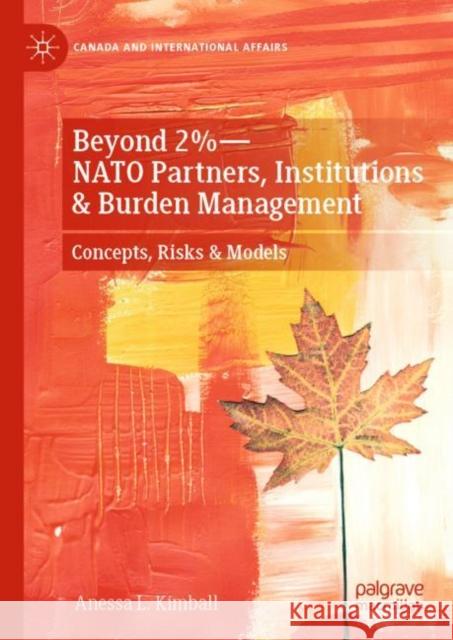
Beyond 2%--NATO Partners, Institutions & Burden Management: Concepts, Risks & Models Kimball, Anessa L. 9783031221576 Palgrave MacMillan - książkaWidoczna okładka, to zdjęcie poglądowe, a rzeczywista szata graficzna może różnić się od prezentowanej.

Beyond 2%--NATO Partners, Institutions & Burden Management: Concepts, Risks & Models

ISBN-13: 9783031221576 / Angielski / Twarda / 2023 / 231 str.

Anessa Kimball
cena 522,07
(netto: 497,21 VAT:  5%)

Najniższa cena z 30 dni: 462,63
Termin realizacji zamówienia:
ok. 22 dni roboczych.

Darmowa dostawa!
inne wydania

This book advances North Atlantic Treaty Organization (henceforth, NATO) burden analysis through a decomposition of the political, financial, social, and defense burdens members take on for the institution. The overemphasis of committing a minimum of 2% of member state Gross Domestic Product (GDP) to defense spending, as a proxy indicator of alliance commitment does not properly reflect how commitments reduce risks should Article V be invoked through attack (i.e., 2% is a political & symbolic target adopted by Defense Ministers in 2006 at Riga). Considering defense burdens multi-dimensionally explains why some members overcontribute, as well as, why burden sharing negotiations cause friction among 30 diverse members with differing threats and risks. In creating a comprehensive institutional burden management model and focusing on risks to members, the book explores the weaknesses of major theories on the study and division of collective burdens and institutional assets. It argues that member risks and threats are essential to understanding how burdens are distributed across a set of overlapping institutions within NATO’s structure providing its central goods. The importance of the USA, as a defense underwriter for some, affects negotiations despite its absence from research empirically; new data permit testing the argument (Kavanaugh 2014). This book contributes conceptual innovation and theoretical analysis to advance student, researcher, and policymaker understanding of burden management, strategic bargaining, and defense cooperation. The contribution is a generalizable risk management model of IO burden sharing using NATO as the case for scientific study due to its prominence.


  This book advances North Atlantic Treaty Organization (henceforth, NATO) burden analysis through a decomposition of the political, financial, social, and defense burdens members take on for the institution. The overemphasis of committing a minimum of 2% of member state Gross Domestic Product (GDP) to defense spending, as a proxy indicator of alliance commitment does not properly reflect how commitments reduce risks should Article V be invoked through attack (i.e., 2% is a political & symbolic target adopted by Defense Ministers in 2006 at Riga). Considering defense burdens multi-dimensionally explains why some members overcontribute, as well as, why burden sharing negotiations cause friction among 30 diverse members with differing threats and risks. In creating a comprehensive institutional burden management model and focusing on risks to members, the book explores the weaknesses of major theories on the study and division of collective burdens and institutional assets. It argues that member risks and threats are essential to understanding how burdens are distributed across a set of overlapping institutions within NATO’s structure providing its central goods. The importance of the USA, as a defense underwriter for some, affects negotiations despite its absence from research empirically; new data permit testing the argument (Kavanaugh 2014). This book contributes conceptual innovation and theoretical analysis to advance student, researcher, and policymaker understanding of burden management, strategic bargaining, and defense cooperation. The contribution is a generalizable risk management model of IO burden sharing using NATO as the case for scientific study due to its prominence.

Kategorie:
Nauka, Polityka
Kategorie BISAC:
Political Science > International Relations - Diplomacy
Political Science > Globalization
Political Science > Public Policy - General
Wydawca:
Palgrave MacMillan
Seria wydawnicza:
Canada and International Affairs
Język:
Angielski
ISBN-13:
9783031221576
Rok wydania:
2023
Dostępne języki:
Numer serii:
000827388
Ilość stron:
231
Oprawa:
Twarda
Dodatkowe informacje:
Wydanie ilustrowane

Introduction

Cooperation, sharing defense burdens, and defense institutions

Complexity and burden sharing: member risks and threats

“Measuring” NATO member defense burdens—Beyond 2%

Theoretical perspectives on collective (defense & security) burden sharing

Risk management model of institutional burden sharing

Support for the Risk management model of institutional burdens

Contributions, future plans, implications, & conclusions

Subject Index

References        

Anessa L. Kimball is Director of the Center for International Security at the École supérieur D’études Internationales and Professor in the Department of Political Science at Université Laval, Québec City. Professor Kimball is also the Co-Director of Security for the Canadian Defence and Security Network, a SSHRC partnership network.


This book advances North Atlantic Treaty Organization (henceforth, NATO) burden analysis through a decomposition of the political, financial, social, and defense burdens members take on for the institution. The overemphasis of committing a minimum of 2% of member state Gross Domestic Product (GDP) to defense spending, as a proxy indicator of alliance commitment does not properly reflect how commitments reduce risks should Article V be invoked through attack (i.e., 2% is a political & symbolic target adopted by Defense Ministers in 2006 at Riga). Considering defense burdens multi-dimensionally explains why some members overcontribute, as well as, why burden sharing negotiations cause friction among 30 diverse members with differing threats and risks. In creating a comprehensive institutional burden management model and focusing on risks to members, the book explores the weaknesses of major theories on the study and division of collective burdens and institutional assets. It argues that member risks and threats are essential to understanding how burdens are distributed across a set of overlapping institutions within NATO’s structure providing its central goods. The importance of the USA, as a defense underwriter for some, affects negotiations despite its absence from research empirically; new data permit testing the argument (Kavanaugh 2014). This book contributes conceptual innovation and theoretical analysis to advance student, researcher, and policymaker understanding of burden management, strategic bargaining, and defense cooperation. The contribution is a generalizable risk management model of IO burden sharing using NATO as the case for scientific study due to its prominence.

Anessa L. Kimball is Director of the Center for International Security at the École supérieur D’études Internationales and Professor in the Department of Political Science at Université Laval, Québec City. Professor Kimball is also the Co-Director of Security for the Canadian Defence and Security Network, a SSHRC partnership network.


Udostępnij

Facebook - konto krainaksiazek.pl


Opinie o Krainaksiazek.pl na Opineo.pl

Partner Mybenefit

Krainaksiazek.pl w programie rzetelna firma Krainaksiaze.pl - płatności przez paypal

Czytaj nas na:

Facebook - krainaksiazek.pl
  • książki na zamówienie
  • granty
  • książka na prezent
  • kontakt
  • pomoc
  • opinie
  • regulamin
  • polityka prywatności

Zobacz:

  • Księgarnia czeska

  • Wydawnictwo Książkowe Klimaty

1997-2026 DolnySlask.com Agencja Internetowa

© 1997-2022 krainaksiazek.pl
     
KONTAKT | REGULAMIN | POLITYKA PRYWATNOŚCI | USTAWIENIA PRYWATNOŚCI
Zobacz: Księgarnia Czeska | Wydawnictwo Książkowe Klimaty | Mapa strony | Lista autorów
KrainaKsiazek.PL - Księgarnia Internetowa

Polityka prywatnosci - link
Krainaksiazek.pl - płatnośc Przelewy24
Przechowalnia Przechowalnia




