Termin realizacji zamówienia: ok. 22 dni roboczych Bez gwarancji dostawy przed świętami
Darmowa dostawa!
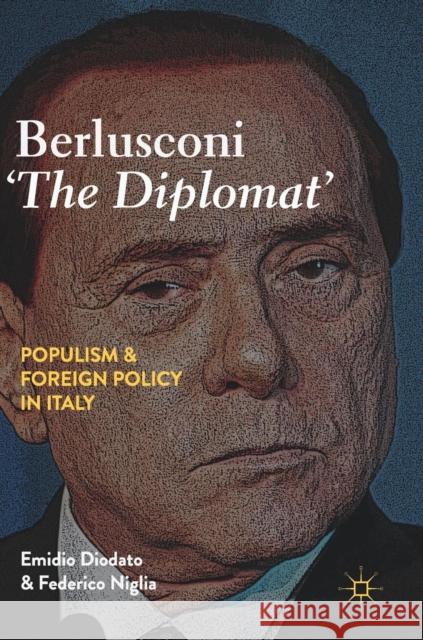
This book analyses the foreign policy of Silvio Berlusconi, Italian media tycoon and politician who served as Prime Minister of Italy in four governments.
Chapter 1: Italy in the post-Cold War landscape: in search of a new identity
1.1. Craxi’s children: 1980s neo-nationalism and its legacy
1.2. Cold War nostalgia
1.3. Paving the way for the Cavaliere
Chapter 2: Populism and foreign policy in Italy: an overview
2.1. In the promised land of populism?
2.2. What international relations means for Berlusconi’s populism
2.3. The challenge of Italian populism to foreign policy in Europe
Chapter 3: (Re-)Public Diplomacy. Silvio the storyteller
3.1. From institutional to personal diplomacy
3.2. Foreign policy explained to the Italians
3.3. Berlusconi’s intellighenzia
Chapter 4. The ‘new diplomatic look’. Silvio the reformer
4.1. Branding Italy
4.2. The Farnesina besieged
4.3. Berlusconi the European?
Chapter 5: Security policy and the global finance crisis
5.1. The politics of Berlusconi’s foreign policy
5.2. From Afghanistan to Libya: Italian dilemmas on war and peace
5.3. Sailing into the storm: Italy and the global financial crisis
Chapter 6: Berlusconi and the EU
6.1. Between enthusiasm for Europe and Euroscepticism
6.2. Assessing the peculiarities of Berlusconi’s Euroscepticism
6.3. Concluding remarks
Chapter 7: Populism and foreign policy in Italy: the legacy
7.1. The diplomat beyond the Cavaliere
7.2. Turning back the clock: populism in the post-Cold War period
7.3. Ready to throw in the towel?
Chapter 8: Epilogue
Emidio Diodato is Associate Professor of International Politics and Political Science in the Department of Humanities and Social Sciences at University ‘per Stranieri’ of Perugia, Italy.
Federico Niglia is Adjunct Professor of International History in the Department of Political Sciences of the LUISS Guido Carli in Rome, Italy.
This book analyses the foreign policy of Silvio Berlusconi, Italian media tycoon and politician who served as Prime Minister of Italy in four governments. The authors examine the Italian position in the international arena and its foreign policy tradition, as well as Berlusconi’s general political stance, Berlusconi’s foreign policy strategies and the impact of those strategies in Italy. Given that Berlusconi is considered a populist leader, the volume considers his foreign policy as an instance of populist foreign policy – an understudied but increasingly relevant topic.
Emidio Diodato is Associate Professor of International Politics and Political Science in the Department of Humanities and Social Sciences at University ‘per Stranieri’ of Perugia, Italy.
Federico Niglia is Adjunct Professor of International History in the Department of Political Sciences of the LUISS Guido Carli in Rome, Italy.