• Wyszukiwanie zaawansowane
  • Kategorie
  • Kategorie BISAC
  • Książki na zamówienie
  • Promocje
  • Granty
  • Książka na prezent
  • Opinie
  • Pomoc
  • Załóż konto
  • Zaloguj się

Beginning Breadboarding: Physical Computing and the Basic Building Blocks of Computers » książka


zaloguj się | załóż konto
Logo Krainaksiazek.pl

koszyk

konto

szukaj
topmenu
Księgarnia internetowa
Szukaj
Książki na zamówienie
Promocje
Granty
Książka na prezent
Moje konto
Pomoc
 
 
Wyszukiwanie zaawansowane
Pusty koszyk
Bezpłatna dostawa dla zamówień powyżej 20 złBezpłatna dostawa dla zamówień powyżej 20 zł

Kategorie główne

• Nauka
 [2950116]
• Literatura piękna
 [1816336]

  więcej...
• Turystyka
 [70365]
• Informatyka
 [151382]
• Komiksy
 [36157]
• Encyklopedie
 [23168]
• Dziecięca
 [611655]
• Hobby
 [135936]
• AudioBooki
 [1800]
• Literatura faktu
 [225852]
• Muzyka CD
 [388]
• Słowniki
 [2970]
• Inne
 [446238]
• Kalendarze
 [1179]
• Podręczniki
 [166839]
• Poradniki
 [469514]
• Religia
 [507394]
• Czasopisma
 [506]
• Sport
 [61426]
• Sztuka
 [242327]
• CD, DVD, Video
 [3461]
• Technologie
 [219652]
• Zdrowie
 [98967]
• Książkowe Klimaty
 [123]
• Zabawki
 [2482]
• Puzzle, gry
 [3735]
• Literatura w języku ukraińskim
 [264]
• Art. papiernicze i szkolne
 [7903]
Kategorie szczegółowe BISAC

Beginning Breadboarding: Physical Computing and the Basic Building Blocks of Computers

ISBN-13: 9781484292174 / Angielski
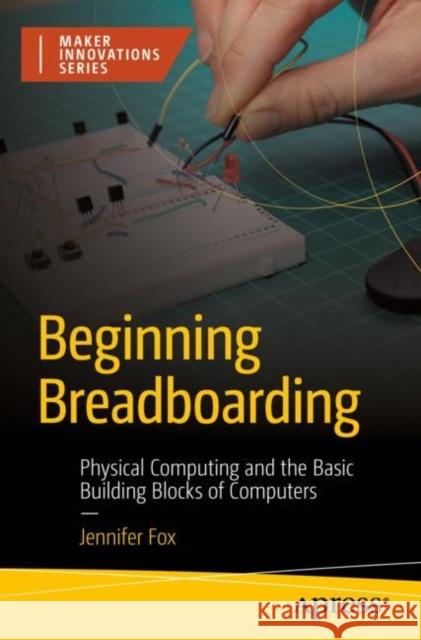
Jennifer Fox
Beginning Breadboarding: Physical Computing and the Basic Building Blocks of Computers Jennifer Fox 9781484292174 APress - książkaWidoczna okładka, to zdjęcie poglądowe, a rzeczywista szata graficzna może różnić się od prezentowanej.

Beginning Breadboarding: Physical Computing and the Basic Building Blocks of Computers

ISBN-13: 9781484292174 / Angielski

Jennifer Fox
cena 227,39
(netto: 216,56 VAT:  5%)

Najniższa cena z 30 dni: 226,76
Termin realizacji zamówienia:
ok. 16-18 dni roboczych.

Darmowa dostawa!

Using fun, hands-on projects, learn what a circuit is and how it works! This book uses a common tool in electronics, the breadboard, to build your way to an understanding of circuits, circuit components, and the basics of computers.You'll master current, voltage, and resistance. With that you can control outputs like lights and motors as well as inputs like switches and sensors. You'll also discover the difference between analog and digital electrical signals while studying both electricity and computers. Dabble in electrical engineering, whether you are interested in building things with electronics or learning to program simple, physical systems. Build your own electronic projects to learn how electronics work. And also how computers store information and process requests. You'll work with simple, low-cost tools like conductive tape before developing up to working with breadboards and discovering the components to build more complex systems.WithBeginning Breadboarding, makers of all ages and backgrounds can learn to build real-life physical computing systems and projects. Have fun building something with tangible results while learning all the theory you need to make new projects of your own!What You'll LearnRapidly prototype circuits with breadboardsUse common components to make simple electronic devicesShare electrical energy and control the flow of electricity through componentsWho This Book Is ForMakers, seeking a fun, hands-on introduction to technology, electronics, and computers. Those who have little to no knowledge of the subject, but want to learn electronics or know more about computers.

Using fun, hands-on projects, learn what a circuit is and how it works! This book uses a common tool in electronics, the breadboard, to build your way to an understanding of circuits, circuit components, and the basics of computers. 


You'll master current, voltage, and resistance. With that you can control outputs like lights and motors as well as inputs like switches and sensors. You'll also discover the difference between analog and digital electrical signals while studying both electricity and computers. Dabble in electrical engineering, whether you are interested in building things with electronics or learning to program simple, physical systems. Build your own electronic projects to learn how electronics work. And also how computers store information and process requests. You'll work with simple, low-cost tools like conductive tape before developing up to working with breadboards and discovering the components to build more complex systems.
      
With Beginning Breadboarding, makers of all ages and backgrounds can learn to build real-life physical computing systems and projects. Have fun building something with tangible results while learning all the theory you need to make new projects of your own!What You'll Learn
  • Rapidly prototype circuits with breadboards
  • Use common components to make simple electronic devices
  • Share electrical energy and control the flow of electricity through components
Who This Book Is ForMakers, seeking a fun, hands-on introduction to technology, electronics, and computers. Those who have little to no knowledge of the subject, but want to learn electronics or know more about computers. 

Kategorie:
Informatyka, Sprzęt komputerowy
Kategorie BISAC:
Computers > Hardware - General
Wydawca:
APress
Język:
Angielski
ISBN-13:
9781484292174

Chapter 1: Introduction, Supplies, and Circuit Diagrams

●             Introduction

o             Safety considerations (note: all projects run off coin cell batteries which have minimal risk) 

●             Tools and Materials

o             Master supply list

●             Reading Circuit Diagrams


Chapter 2: Paper Circuits

●             What is electricity?

○             An overview of electricity, including AC vs DC 

○             Current and Voltage

●             Make a circuit

○             Project: coin cell + LED

○             Basic parts of a circuit: power source, power sink, conductors 

○             Electrical Flow and Polarity

○             Project: coin cell + LED + conductive tape

●             Series and Parallel Circuits

○             How current and voltage behave in series and in parallel circuits

○             Project: coin cell + 2 LEDs + conductive tape in series

○             Project: coin cell + 2 LEDs + conductive tape in parallel

●             Electromagnetic Spectrum

○             Project: coin cell + 2 or more LEDs of different colors

●             Going Further

○             Ideas on how to apply these concepts to projects, like light-up greeting cards and adding lights to dollhouses or model trains 


Bonus Project 1: Using a Multimeter

●             Overview of multimeters

●             Measuring Voltage

●             Measuring Current 

●             Measuring continuity


Chapter 3: Breadboards and Outputs

●             Brief history of breadboards -- why we use them and where they came from

●             Breadboard anatomy 

●             Breadboarding: Lights on!

o             Project: coin cell + LED on breadboard

o             Project: coin cell + 2 LEDs on breadboard

▪              In series

▪              In parallel

●             Making Sounds

○             Overview of how speakers and buzzers work

○             Project: coin cell + buzzer on breadboard

●             Digging into motors

○             Overview of how different types of DC motors work

○             Project: coin cell + motor on breadboard

○             Project: Motor (in reverse) + LED

●             Going Further

○             Project: coin cell +2 different output devices on breadboard 

○             Ideas for how to apply these concepts to projects, like Brush Bots, a mini alarm system, or a mini lamp 


Chapter 4: Passive Components

●             Resistance: How to limit electricity

○             General overview of resistance 

○             Project: coin cell + LED + resistor 1

○             Project: coin cell + LED + resistor 2

●             Varying resistance with potentiometers

○             Project: coin cell + LED + potentiometer (wiring option 1)

○             Project: coin cell + LED + potentiometer (wiring option 2)

○             How potentiometers work (inner diagram)

●             Capacitors: quick bursts of current

○             General overview of capacitors

○             Project: coin cell + LED + capacitor 1

○             Project: coin cell + LED + capacitor 2

○             Safety considerations for large capacitors (note: educational only, readers will NOT be using large capacitors) 

●             Going Further

○             Project: coin cell + 2 LEDs + potentiometer

○             Project: coin cell + LED + 2 or more resistors

○             How to apply these findings to projects, like long-lasting wearables, motor speed control, and volume control


Bonus Project 2: Ohm’s Law

●             Introduction to Ohm’s Law

●             Using a multimeter to measure resistance

●             Example Projects (readers guided through the procedure)

●             Practice Projects (answers provided in back of the book)


Chapter 5: Electromechanical Components 

●             Turning electricity on and off

●             Temporary switches: 2-Legged Pushbuttons

○             Overview of how pushbuttons work

○             Project: coin cell + LED + pushbutton

●             Permanent Switches: Slide switches

○             Overview of how slide switches work

○             Project: coin cell + LED + pushbutton

○             Project: coin cell + 2 LEDs + pushbutton

●             Going Further

○             Digging deeper into switches

■             4-legged pushbuttons

■             Electrical contact terminology: contact states (Normally Closed, NC, and Normally Open, NO)

○             How to apply these findings to projects, like a mini stop light, a simple Morse code system, or hand-made custom switches with household objects


Chapter 6: Logic Gates, Pt. 1

●             Analog and Digital signals: Records vs CDs

●             AND Logic Gate

○             Project: coin cell + LED + 2 pushbuttons

●             OR Logic Gate

○             Project: coin cell + LED + 2 pushbuttons

●             Using Binary Numbers to analyze logic gates

●             NOT Logic Gate

○             Project: coin cell + LED + pushbutton

●             Going Further

○             Using logic gates to explore the flow of electricity

○             NAND and NOR gates

○             How to apply these findings to projects, like using switches to make decisions


Chapter 7: Simple Sensors

●             Overview of sensors

○             Common types of inputs

●             Light Sensors: Photoresistors

○             Overview on photoresistors

○             Project: coin cell + LED + photoresistor

○             Project: coin cell + 

●             Force Sensing Resistors (FSRs)

○             Overview on FSRs

○             Project: coin cell + LED + FSR

●             IR “Breakbeam” sensors

○             Overview on IR sensors 

○             Project: coin cell + LED + IR 

●             Tilt Sensors

○             Overview on tilt sensors

○             Project: coin cell + LED + tilt sensor

●             Going Further

○             Other types of simple sensors

○             How to apply these findings to project, like touch-sensitive sounds and light displays, simple security systems, and simple orientation detectors


Chapter 8: Transistors

●             Overview of Transistors

○             Intro to semiconductors

○             Overview of common transistor types

○             Pin Overview

●             Transistor Switch Circuit

○             Project: coin cell + LED + resistor + transistor

○             Project: coin cell + motor + resistor + transistor

●             Transistor Amplifier Circuit

○             Project: 2 coin cells + LED + resistor + transistor

○             Project: 2 coin cells + motor + resistor + transistor

●             Going Further

○             Connecting a potentiometer

○             Connecting a switch

○             How to apply these findings to project, like a dark detecting circuit 


Chapter 9: Logic Gates, Pt. 2

●             Introduction to Physical Computing

○             Truth Tables

●             AND Logic Gate with Transistors

○             Project: coin cell, LED, 2 pushbuttons, 3 resistors, 2 transistors

○             Truth Table

●             OR Logic Gate with Transistors

○             Project: coin cell, LED, 2 pushbuttons, 3 resistors, 2 transistors

○             Truth Table

●             NOT Logic Gate with Transistors

○             Project: coin cell, LED, pushbutton, resistor, transistor

●             Going Further

○             NAND. NOR, XOR, and XNOR Logic Gates

■             Truth Tables

○             Two or more Logic Gates

○             How to apply these findings to project, like a 2-, 3-, or 4-bit adder


Bonus Project 3:  PCB Component Identification

●             Introduction to Printed Circuit Boards (PCBs)

●             Electronic and tool safety

●             Recommended electronics to explore

○             Electronic toys, keyboards, old desktop or laptop computers, remote controls, etc.

○             What to avoid

○             What kinds of parts are reasonable to harvest and repurpose

●             Look Inside: Electronic Toy

●             Look Inside: Keyboard

●             Going Further

○             How to apply these findings to projects, like toy mash ups, electronic instruments, and as an affordable source for motors


Chapter 10: Electromagnetic Components

●             Overview of Electromagnets

○             Faraday’s Law

○             Project: Build a simple electromagnet 

●             Motors

○             Overview

○             Project: Build a simple motor

●             Speaker

○             Overview

○             Project: Build a simple speaker

●             Going Further

○             How to incorporate these findings to projects, like using a motor to generate electricity, using a speaker as a microphone, and creating wireless electrical transmission


Chapter 11: Topics for Further Exploration

●             Integrated Circuits

●             Other types of electromechanical components

○             Relays, Solenoids

●             Microcontrollers and microprocessors


Appendix I: Circuit Component Technical Specifications

Goal: This appendix provides technical specifications for all electronic components used for projects outlined in this book. 

●             Example technical specification for coin cell battery: 


Appendix II: Ohm’s Law and the Power Law


Audience: Beginner

​Jen Fox is an engineer, educator, and maker. After dabbling in dark matter (Occidental College, B.A. Physics) , Fox studied engineering (UCLA, M.S. Mechanical Engineering) where she blended electronics, art, and education to tackle problems related to environmental and social justice. Fox founded her company, FoxBot Industries, in 2015 to provide an arts-based approach to STEM education and current leads a team at Microsoft doing maker-related work.  

Using fun, hands-on projects, learn what a circuit is and how it works! This book uses a common tool in electronics, the breadboard, to build your way to an understanding of circuits, circuit components, and the basics of computers. 


You'll master current, voltage, and resistance. With that you can control outputs like lights and motors as well as inputs like switches and sensors. You'll also discover the difference between analog and digital electrical signals while studying both electricity and computers. Dabble in electrical engineering, whether you are interested in building things with electronics or learning to program simple, physical systems. Build your own electronic projects to learn how electronics work. And also how computers store information and process requests. You'll work with simple, low-cost tools like conductive tape before developing up to working with breadboards and discovering the components to build more complex systems.
      
With Beginning Breadboarding, makers of all ages and backgrounds can learn to build real-life physical computing systems and projects. Have fun building something with tangible results while learning all the theory you need to make new projects of your own!

You will:

  • Rapidly prototype circuits with breadboards
  • Use common components to make simple electronic devices
  • Share electrical energy and control the flow of electricity through components



Udostępnij

Facebook - konto krainaksiazek.pl


Opinie o Krainaksiazek.pl na Opineo.pl

Partner Mybenefit

Krainaksiazek.pl w programie rzetelna firma Krainaksiaze.pl - płatności przez paypal

Czytaj nas na:

Facebook - krainaksiazek.pl
  • książki na zamówienie
  • granty
  • książka na prezent
  • kontakt
  • pomoc
  • opinie
  • regulamin
  • polityka prywatności

Zobacz:

  • Księgarnia czeska

  • Wydawnictwo Książkowe Klimaty

1997-2026 DolnySlask.com Agencja Internetowa

© 1997-2022 krainaksiazek.pl
     
KONTAKT | REGULAMIN | POLITYKA PRYWATNOŚCI | USTAWIENIA PRYWATNOŚCI
Zobacz: Księgarnia Czeska | Wydawnictwo Książkowe Klimaty | Mapa strony | Lista autorów
KrainaKsiazek.PL - Księgarnia Internetowa

Polityka prywatnosci - link
Krainaksiazek.pl - płatnośc Przelewy24
Przechowalnia Przechowalnia






