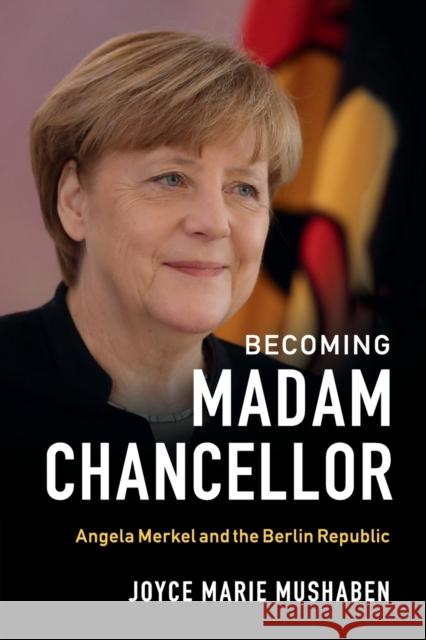
'Becoming Madame Chancellor is the first comprehensive study of how Angela Merkel inhabited the German Chancellery and in the process profoundly shaped society as well as Germany's role in Europe. Meticulously researched and superbly written, the book follows Merkel's trajectory from being a pastor's daughter in former East Germany to becoming arguably the most powerful woman in the world. Ambitiously unpacking the 'Method Merkel' in domestic and international politics, this book is essential reading for anyone seeking to understand contemporary German politics as well as those interested in gender, power, and political representation.' Sabine Lang, University of Washington
Introduction: 'Becoming Madam Chancellor'; Part I. 'The Personal is the Political': 1. The extreme make-over of Angela Merkel: gender, style and substance; 2. A Pastor's daughter in a 'difficult Fatherland': reconciling East and West German identities; 3. From Staatsräson to Realpolitik: reconfiguring German-Israeli relations; Part II. From understudy to leading lady: Angela Merkel on the global stage: 4. Checkmate: Angela Merkel, Vladimir Putin and the dilemmas of regional hegemony; 5. Madam non and the euro-crisis: shaping economic integration and governance; Part III. 'Method Merkel' and the Push for Domestic Reforms: 6. Fukushima, mon Amour: Merkel and the (supra)national energy turn-around; 7. Germany as a land of immigration: citizenship, refugees and the welcoming culture; 8. 'Misunderestimating' the world's most powerful woman, or why gender still matters; Bibliography.
Mushaben, Joyce Marie Joyce Marie Mushaben is Professor of Global Studies and the Curators' Distinguished Professor of Comparative Politics and Gender Studies at the University of Missouri, St. Louis. She has spent seventeen years living in Germany, researching East-West identities, EU policies, citizenship, migration and asylum reforms, women's leadership, social movements, and welfare states. Mushaben has received grants from the Ford Foundation, the German Academic Exchange Service, the Fulbright Foundation, the German Marshall Fund, and the Alexander von Humboldt Foundation.