• Wyszukiwanie zaawansowane
  • Kategorie
  • Kategorie BISAC
  • Książki na zamówienie
  • Promocje
  • Granty
  • Książka na prezent
  • Opinie
  • Pomoc
  • Załóż konto
  • Zaloguj się

Augmenting Employee Trust and Cooperation » książka


zaloguj się | załóż konto
Logo Krainaksiazek.pl

koszyk

konto

szukaj
topmenu
Księgarnia internetowa
Szukaj
Książki na zamówienie
Promocje
Granty
Książka na prezent
Moje konto
Pomoc
 
 
Wyszukiwanie zaawansowane
Pusty koszyk
Bezpłatna dostawa dla zamówień powyżej 20 złBezpłatna dostawa dla zamówień powyżej 20 zł

Kategorie główne

• Nauka
 [2946912]
• Literatura piękna
 [1852311]

  więcej...
• Turystyka
 [71421]
• Informatyka
 [150889]
• Komiksy
 [35717]
• Encyklopedie
 [23177]
• Dziecięca
 [617324]
• Hobby
 [138808]
• AudioBooki
 [1671]
• Literatura faktu
 [228371]
• Muzyka CD
 [400]
• Słowniki
 [2841]
• Inne
 [445428]
• Kalendarze
 [1545]
• Podręczniki
 [166819]
• Poradniki
 [480180]
• Religia
 [510412]
• Czasopisma
 [525]
• Sport
 [61271]
• Sztuka
 [242929]
• CD, DVD, Video
 [3371]
• Technologie
 [219258]
• Zdrowie
 [100961]
• Książkowe Klimaty
 [124]
• Zabawki
 [2341]
• Puzzle, gry
 [3766]
• Literatura w języku ukraińskim
 [255]
• Art. papiernicze i szkolne
 [7810]
Kategorie szczegółowe BISAC

Augmenting Employee Trust and Cooperation

ISBN-13: 9789811623424 / Angielski / Twarda / 2021 / 133 str.
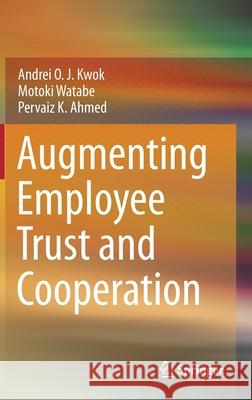
Andrei O. J. Kwok; Motoki Watabe; Pervaiz K. Ahmed
Augmenting Employee Trust and Cooperation Andrei O. J. Kwok Motoki Watabe Pervaiz K. Ahmed 9789811623424 Springer - książkaWidoczna okładka, to zdjęcie poglądowe, a rzeczywista szata graficzna może różnić się od prezentowanej.

Augmenting Employee Trust and Cooperation

ISBN-13: 9789811623424 / Angielski / Twarda / 2021 / 133 str.

Andrei O. J. Kwok; Motoki Watabe; Pervaiz K. Ahmed
cena 484,18
(netto: 461,12 VAT:  5%)

Najniższa cena z 30 dni: 462,63
Termin realizacji zamówienia:
ok. 22 dni roboczych
Bez gwarancji dostawy przed świętami

Darmowa dostawa!
Kategorie:
Nauka, Ekonomia i biznes
Kategorie BISAC:
Business & Economics > Zarządzenie zasobami ludzkimi
Psychology > Industrial & Organizational Psychology
Business & Economics > Zarządzenie i techniki zarządzania
Wydawca:
Springer
Język:
Angielski
ISBN-13:
9789811623424
Rok wydania:
2021
Wydanie:
2021
Ilość stron:
133
Waga:
0.40 kg
Wymiary:
23.39 x 15.6 x 1.12
Oprawa:
Twarda
Wolumenów:
01

Chapter 1: Rewards: An intersection between psychology and management

1.1.1 Psychological contract theory in the study of trust and cooperation
1.1.2 Understanding individual differences in personality: the interaction effects
1.1.3 Addressing the role of rewards in psychological contract fulfillment
1.2 Overview of chapters

Chapter 2: Excessive extrinsic rewards in workplace relationships
2.1 Workplace relationships
2.1.1 Excessive extrinsic rewards in the workplace
2.1.2 Trust and cooperation in the workplace
2.1.3 Individual differences in personality in the workplace
2.2 The mechanism of rewards on employee cooperation and differences in personality in the workplace.

Chapter 3: Psychological contract and rewards
3.1 The increasing importance of psychological contract research
3.2 The psychological contract theory
3.2.1 The salience of promises in the psychological contract
3.2.2 Psychological contract fulfillment
3.2.3 Employer-employee perceptions 
3.2.4 Psychological contract views
3.3 The effects of rewards
3.3.1 Positive effects
3.3.2 Negative effects
3.4 Individual differences in personality
3.4.1 Locus of control 
3.4.2 General trust

Chapter 4: Individual differences in cooperation 

4.1 Individual differences in personality and cooperation  
4.2 Conceptual model and hypotheses development
4.2.1 Excessive extrinsic rewards 
4.2.2 Locus of control as a moderator 
4.2.3 General trust as a moderator 
4.2.4 Reward-effort valence 
4.3 Method
4.3.1 Sample and procedure
4.3.2 Measures  
4.3.3     Reliability analysis
4.3.4     Manipulation checks
4.3.5     Discriminant and convergent validity
4.4     Data analysis
4.4.1     Locus of control
4.4.2     General trust
4.4.3     Individual differences in personality analysis
4.5.4     Post-experiment extended analysis
4.4.5     Relationship between rewards, psychological contract fulfillment, locus of control and cooperation analysis
4.4.6     Post-hoc analysis

Chapter 5: Does trust matter?
5.1 Trust development
5.2 Conceptual model and hypotheses development
5.3.1 Organizational trust
5.3.2 General trust as a mediator
5.3.3 Locus of control as a moderator
5.4 Method
5.4.1 Sample and procedure
5.4.2 Measures
5.4.3 Discriminant and convergent validity
5.5 Data analysis
5.5.1 Relationship between rewards, general trust, organizational trust, and cooperation analysis
5.5.2 Relationship between rewards, locus of control and organizational trust analysis
5.5.3 Relationship between psychological contract fulfillment, locus of control and organizational trust analysis

Chapter 6: Strategic organizational decision-making

Dr. Andrei O. J. Kwok is a Senior Lecturer at the Department of Management, Sunway University Business School. He holds a Ph.D. in Management from Monash University Malaysia. His research focuses on decision-making behavior (trust and cooperation) and emerging/frontier technologies. Andrei has published multidisciplinary and interdisciplinary papers in several leading international journals. Currently, he serves on the editorial board of SN Business & Economics. Before joining academia, he managed international cross-functional teams in several global technology MNCs, such as Seagate, delivering high-complexity R&D projects, coaching and training high-performance teams to meet organizational goals, and client partnership development. Andrei is also professionally certified as PMI-Agile Certified Practitioner®, Certified Scrum Master®, and Project Management Professional®. He is also a member of the Chartered Management Institute.

Associate Professor Motoki Watabe, at the Department of Management, is the Director of Neurobusiness Behavioural Laboratory (NBL) at the School of Business, Monash University Malaysia. Motoki has been working on the emergence of trust, fairness, and cooperation in organization and society with behavioral experimental and neuroscientific methods. He obtained Ph.D. in sociology at the University of California, Los Angeles. Specific major was social psychology and organizational behavior. He started his academic career at Kyoto University, Japan, and moved to Waseda University in 2007. He joined Monash in 2013 as an Associate Professor. He has been the Vice-Director of Neurobusiness from 2014-2018 and the Director of Graduate Research from 2015-2018. He has published papers in psychology, economics, political science, sociology, and neuroscience journals. His co-authored book “Unpleasant Workplace” became a best-seller book of 2008 in Japan.

Professor Pervaiz K. Ahmed is the Head of School (School of Business), Monash University Malaysia, Director of the Global Asia in the 21st Century (G21) and also Director of the Enterprise and Innovation Hub (eiHub). Pervaiz held a number of senior academic positions in the UK. Pervaiz has published extensively in international journals. He is a regular keynote speaker and won numerous academic awards for his research. He has served as editor and sat on the editorial boards of several international journals. His research interests cut across entrepreneurship, religion, ethics, and social responsibility. He has extensive experience working with and advising blue chip companies and public sector organizations, such as Unilever, Ford, AT&T, NCR, British Telecommunications, and the NHS in Europe. He has also been involved with corporate clients in Asia such as Malaysia Airlines, CELCOM, Sunway Group as well as government agencies such as the Singapore National Productivity Council. He has also been involved with the Islamic Development Bank as well as the Government of Dubai’s Public Sector Innovation and Improvement Initiative. Recently, he has served on projects commissioned by Economic Planning Unit (EPU), Ministry of International Trade (MITI) and APEC secretariat.

This book is an essential guide for academics and practitioners to understand employees’ differences in personality and how best to motivate them accordingly. The authors provide an in-depth perspective of how organizations can better prepare for the new realities of the workplace. Amidst the war for talent and a continually evolving workplace that has reduced employee psychological attachment, employees prefer to be treated as individuals with the expectation of individual recognition and reward. The authors draw from their personal, corporate, and research experience by combining interdisciplinary perspectives (organizational behavior, human resource management, psychology, sociology, economics) to offer holistic insights into individual expectancy and motivation integral to a successful employer-employee interaction.

Interestingly, research remains lacking on the effects of excessive extrinsic rewards on trust and cooperation. Hence, this book fulfills significant gaps in vital areas that existing studies have not yet sufficiently addressed. These areas are psychological contract, excessive extrinsic rewards, and individual differences in personality (locus of control and general trust). The authors use scenario-based laboratory experiments to examine the moderating effects of locus of control and general trust that underscore employee expectations. The differential effects contribute to insight on behavioral outcomes in the workplace that result from employee perception, personality, and intention towards the provision of rewards.

Consequently, the book dispels the discrepancies between economists and psychologists about the efficacy of rewards. Findings demonstrate that although excessive extrinsic rewards augment all employees’ trust and cooperation, it is vital for employers to reward selectively those who are most deserving. Findings offer a deeper understanding of the saliency, efficacy, and judiciousness of excessive extrinsic rewards. Employers will benefit by understanding how best to tailor rewards to motivate each employee.



Udostępnij

Facebook - konto krainaksiazek.pl


Opinie o Krainaksiazek.pl na Opineo.pl

Partner Mybenefit

Krainaksiazek.pl w programie rzetelna firma Krainaksiaze.pl - płatności przez paypal

Czytaj nas na:

Facebook - krainaksiazek.pl
  • książki na zamówienie
  • granty
  • książka na prezent
  • kontakt
  • pomoc
  • opinie
  • regulamin
  • polityka prywatności

Zobacz:

  • Księgarnia czeska

  • Wydawnictwo Książkowe Klimaty

1997-2025 DolnySlask.com Agencja Internetowa

© 1997-2022 krainaksiazek.pl
     
KONTAKT | REGULAMIN | POLITYKA PRYWATNOŚCI | USTAWIENIA PRYWATNOŚCI
Zobacz: Księgarnia Czeska | Wydawnictwo Książkowe Klimaty | Mapa strony | Lista autorów
KrainaKsiazek.PL - Księgarnia Internetowa

Polityka prywatnosci - link
Krainaksiazek.pl - płatnośc Przelewy24
Przechowalnia Przechowalnia



