• Wyszukiwanie zaawansowane
  • Kategorie
  • Kategorie BISAC
  • Książki na zamówienie
  • Promocje
  • Granty
  • Książka na prezent
  • Opinie
  • Pomoc
  • Załóż konto
  • Zaloguj się

Attention and Cognitive Development » książka


zaloguj się | załóż konto
Logo Krainaksiazek.pl

koszyk

konto

szukaj
topmenu
Księgarnia internetowa
Szukaj
Książki na zamówienie
Promocje
Granty
Książka na prezent
Moje konto
Pomoc
 
 
Wyszukiwanie zaawansowane
Pusty koszyk
Bezpłatna dostawa dla zamówień powyżej 20 złBezpłatna dostawa dla zamówień powyżej 20 zł

Kategorie główne

• Nauka
 [2944077]
• Literatura piękna
 [1814251]

  więcej...
• Turystyka
 [70679]
• Informatyka
 [151074]
• Komiksy
 [35590]
• Encyklopedie
 [23169]
• Dziecięca
 [611005]
• Hobby
 [136031]
• AudioBooki
 [1718]
• Literatura faktu
 [225599]
• Muzyka CD
 [379]
• Słowniki
 [2916]
• Inne
 [443741]
• Kalendarze
 [1187]
• Podręczniki
 [166463]
• Poradniki
 [469211]
• Religia
 [506887]
• Czasopisma
 [481]
• Sport
 [61343]
• Sztuka
 [242115]
• CD, DVD, Video
 [3348]
• Technologie
 [219293]
• Zdrowie
 [98602]
• Książkowe Klimaty
 [124]
• Zabawki
 [2385]
• Puzzle, gry
 [3504]
• Literatura w języku ukraińskim
 [260]
• Art. papiernicze i szkolne
 [7151]
Kategorie szczegółowe BISAC

Attention and Cognitive Development

ISBN-13: 9781461329879 / Angielski / Miękka / 2011 / 366 str.
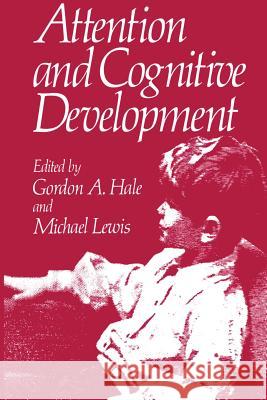
G. Hale
Attention and Cognitive Development G. Hale 9781461329879 Springer - książkaWidoczna okładka, to zdjęcie poglądowe, a rzeczywista szata graficzna może różnić się od prezentowanej.

Attention and Cognitive Development

ISBN-13: 9781461329879 / Angielski / Miękka / 2011 / 366 str.

G. Hale
cena 201,24
(netto: 191,66 VAT:  5%)

Najniższa cena z 30 dni: 192,74
Termin realizacji zamówienia:
ok. 22 dni roboczych.

Darmowa dostawa!

"My experience is what I agree to attend to," wrote William James (1890) nearly a century ago in his Principles of Psychology. Although certainly not the first to recognize the importance of attention in man's experience--poets and philosophers throughout history have touched upon the concept in one way or another-James deserves credit for having accorded attention a central role in the systematic study of the mind. With the advancement of psychology since that time, except during the behaviorist digression, the concept of attention has been an integral part of many prominent theories dealing with learning, thinking, and other aspects of cognitive functioning. Indeed, attention is an important determinant of experience from birth throughout development. This has been an implicit assumption underlying our view of cognition since the writings of Charles Darwin (1897) and Wilhelm Preyer (1888) as well as James, all of whom offered provocative insights about the developing child's commerce with the environment. Al though systematic research on attention in children was slow to pick up during the early part of this century, interest in the developmental study of attention has expanded enormously in recent years."


Kategorie:
Nauka, Psychologia
Kategorie BISAC:
Psychology > Psychotherapy - Child & Adolescent
Psychology > Cognitive Psychology & Cognition
Wydawca:
Springer
Język:
Angielski
ISBN-13:
9781461329879
Rok wydania:
2011
Wydanie:
Softcover Repri
Ilość stron:
366
Waga:
0.59 kg
Wymiary:
23.5 x 15.5
Oprawa:
Miękka
Wolumenów:
01
Dodatkowe informacje:
Wydanie ilustrowane

1 Attention: The Perceiver as Performer.- Some Examples of Attending.- What Is Attention?.- What Attention Is Not.- Restatement of the Theme.- Classic Variables of Attention.- Expectation.- How Does Attention Develop?.- Specificity.- Flexibility.- Preparedness.- Economy.- Conclusion.- References.- 2 The Concept of Identity and Children’s Selective Attention.- The Task.- Extent of Visual Scanning.- Do Young Children Scan Only Part of the Stimuli?.- What Factors Affect the Extent of Ocular Scanning?.- Can Insufficient Scanning Explain Poor Performance in Differentiation Tasks?.- Relevance of Perceived Differences to Judgments of Identity.- Criteria of Identity Judgments and Scanning Strategies.- Conclusion.- References.- 3 Development of Children’s Attention to Stimulus Components.- The Component Selection Task.- Development of Children’s Disposition toward Selectivity.- Age Trends in Component Selection.- Overtraining Effects.- Stimulus Integration and Integrality.- Development of Flexibility in Attention to Components.- Variation in Task Structure.- Instructional Effects.- Manipulation of Component Salience.- Related Literature.- General Conclusions on Development of Flexibility.- A Further Issue in Measuring Attention to Components: Dimension Preferences.- Concluding Remarks.- References.- 4 A Constructivist Account of the Development of Perception, Attention, and Memory.- The Thesis.- Nonconscious versus Conscious Perception.- Two Qualitative Transitions of Development: From Nonconscious to Focal Processing.- Empirical and Theoretical Underpinnings.- Motor Efference as the Key to the Conscious Experience of Perception.- Accommodative Imitation as the Key to Efference.- A General, Unified Cognitive System?.- Concluding Remarks.- References.- 5 Stimulus Dimensions, Problem Solving, and Piaget.- Developmental Relationships between Conservation and Attention to Dimensions.- Piaget’s Model of Conservation.- An Attentional Interpretation of Piaget’s Model.- The Role of Attention to Quantity.- How Attention to Dimensions Affects Conservation Performance.- Implications for an Understanding of the Development of Dimensionalization.- Levels of Dimensionalization.- Relationships between Dimensions.- Dimensionalization of Changing Stimuli.- Implications for Research on Dimensionalization.- Summary.- References.- 6 Developmental Aspects of Selective Orientation.- From Selective Orienting to Mental Representation.- Orienting Asymmetry and the Development of Handedness.- Effect of Rightward Response Bias on Lateral Attending.- Task-Related Attentional Biases.- References.- 7 Attentional Processes and Individual Differences.- A Review of Models of Attention and Memory.- Sokolov.- Lewis.- McCall.- Cohen,.- Jeffrey.- Olson.- Fagan.- Individual Differences in Information Processing.- Developmental Variation.- Individual Variation in Habituation.- Clinical Applications of Individual Differences in Habituation.- Conclusion.- References.- 8 Toward a Clearer Definition of the Attentional Deficit of Hyperactive Children.- Confusion Caused by Current Diagnostic Labels.- Description of Samples Used in the McGill Studies.- Confusion Caused by Definitions of Attention.- Selective Attention as Defined in Studies of Stimulus Reduction, Distraction, and Incidental Learning.- Stimulus Reduction Studies with Hyperactive Children.- Studies of Distractibility with Hyperactive Children.- Studies of Distractibility with Learning-Disabled Children.- Summary and Critique of Distractibility Studies with Hyperactive and Learning-Disabled Children.- Incidental Learning Studies with Hyperactive Children.- Incidental Learning Studies with Learning-Disabled Children.- Summary and Critique of Incidental Learning Studies with Hyperactive and Learning-Disabled Children.- Sustained Attention as Defined in Vigilance Studies.- Vigilance Studies with Hyperactive Children.- Vigilance Studies with Learning-Disabled Children.- Studies with Hyperactives on Reaction Time Tasks Making Less Stringent Demands on Sustained Attention.- Psychophysiological Concomitants of Vigilance Task Performance in Hyperactive Children.- The Effects of Stimulant Drugs on Vigilance Task Performance of Hyperactive Children.- The Effects of Reinforcement on Vigilance Task Performance of Hyperactive Children.- Summary and Critique of Vigilance Studies with Hyperactive and Learning-Disabled Children.- Sustained Attention as Defined in Studies of More Complex Perceptual and Conceptual Processes: A Brief Review.- Studies with Hyperactives Using Tasks Requiring Perceptual and Logical Search Strategies.- Arousal and Performance on More Complex Problem-Solving Tasks.- Higher Order Schemata, Search Strategies, and Meta Processes.- Summary and Critique: An Attempt to Conceptualize the Development and Consequences of Attentional Problems in Hyperactive and Learning-Disabled Children.- References.- 9 The Cognitive Effects of Stimulant Drugs on Hyperactive Children.- Definition of the Disorder.- The Clinical Population.- Magnitude of the Problem.- Background Information on Drug Treatment.- Evaluation of Diagnostic Drug Trials.- Subjective Evaluation of Response to Questionnaire.- Laboratory Tests.- Experiments Using Paired-Associate Learning.- Other Laboratory Tests.- Tasks That Overdiagnose Stimulant Responsivity.- Tasks with Complex Response Patterns.- Problems with Drug Treatment.- Directions for Future Research.- References.- 10 Attention and Cognitive Style in Children.- The Confounding of Cognitive Style and Development.- Attention and Cognitive Style: A Developmental Lag Approach.- Style: Individual Differences in Attention Deployment.- Data in Support of Individual Differences in Attention Deployment.- Attention Deployment and Task Demands.- Breadth of Attention and Cognitive Style.- Attention and Cognitive Style: The Developmental Lag Interpretation Reevaluated.- Cognitive Styles: Separate but Unequal?.- An Effort Dimension of Cognitive Style.- A Word of Caution.- References.- 11 Attention in the Classroom.- Commonsense Ideas of Attention.- Components of Attention.- Alertness.- Maintaining Alertness in the Classroom.- Selectivity.- External Sources of Influence on Selectivity.- Internal Influences on Selectivity.- Developmental and Individual Differences in Selective Attention.- Central Processing.- Automaticity.- Monitoring and Fostering Attention in the Classroom.- Visual Measures of Attentiveness.- Verbal Measures of Attentiveness.- Special Problems of Attention.- Summary.- References.- 12 Watching Children Watch Television.- When Children Begin to Watch Television.- Amount of Television Viewing.- Factors Related to Amount of Home Viewing.- Visual Attention to Television.- Distractors.- Characteristics of the Child That Affect Attention to Television.- A General Pattern of Attention to Television.- Attributes of Television Programs That Influence Visual Attention.- A New Attribute Analysis.- Discussion of the Attribute Effects.- Meaningful Units.- Camera Techniques.- Adult Males.- Women.- Children.- Other Characters.- Visual Techniques.- Activity.- Music.- Other Sound Attributes.- Summary of Attribute Effects.- Auditory Attention to Television.- A Possible Theoretical Direction for Future Research on Attention to Television.- Final Comments.- References.


Udostępnij

Facebook - konto krainaksiazek.pl


Opinie o Krainaksiazek.pl na Opineo.pl

Partner Mybenefit

Krainaksiazek.pl w programie rzetelna firma Krainaksiaze.pl - płatności przez paypal

Czytaj nas na:

Facebook - krainaksiazek.pl
  • książki na zamówienie
  • granty
  • książka na prezent
  • kontakt
  • pomoc
  • opinie
  • regulamin
  • polityka prywatności

Zobacz:

  • Księgarnia czeska

  • Wydawnictwo Książkowe Klimaty

1997-2026 DolnySlask.com Agencja Internetowa

© 1997-2022 krainaksiazek.pl
     
KONTAKT | REGULAMIN | POLITYKA PRYWATNOŚCI | USTAWIENIA PRYWATNOŚCI
Zobacz: Księgarnia Czeska | Wydawnictwo Książkowe Klimaty | Mapa strony | Lista autorów
KrainaKsiazek.PL - Księgarnia Internetowa

Polityka prywatnosci - link
Krainaksiazek.pl - płatnośc Przelewy24
Przechowalnia Przechowalnia






