• Wyszukiwanie zaawansowane
  • Kategorie
  • Kategorie BISAC
  • Książki na zamówienie
  • Promocje
  • Granty
  • Książka na prezent
  • Opinie
  • Pomoc
  • Załóż konto
  • Zaloguj się

Atmospheric Ammonia: Detecting Emission Changes and Environmental Impacts. Results of an Expert Workshop Under the Convention on Long-Range » książka


zaloguj się | załóż konto
Logo Krainaksiazek.pl

koszyk

konto

szukaj
topmenu
Księgarnia internetowa
Szukaj
Książki na zamówienie
Promocje
Granty
Książka na prezent
Moje konto
Pomoc
 
 
Wyszukiwanie zaawansowane
Pusty koszyk
Bezpłatna dostawa dla zamówień powyżej 20 złBezpłatna dostawa dla zamówień powyżej 20 zł

Kategorie główne

• Nauka
 [2946600]
• Literatura piękna
 [1856966]

  więcej...
• Turystyka
 [72221]
• Informatyka
 [151456]
• Komiksy
 [35826]
• Encyklopedie
 [23190]
• Dziecięca
 [619653]
• Hobby
 [140543]
• AudioBooki
 [1577]
• Literatura faktu
 [228355]
• Muzyka CD
 [410]
• Słowniki
 [2874]
• Inne
 [445822]
• Kalendarze
 [1744]
• Podręczniki
 [167141]
• Poradniki
 [482898]
• Religia
 [510455]
• Czasopisma
 [526]
• Sport
 [61590]
• Sztuka
 [243598]
• CD, DVD, Video
 [3423]
• Technologie
 [219201]
• Zdrowie
 [101638]
• Książkowe Klimaty
 [124]
• Zabawki
 [2473]
• Puzzle, gry
 [3898]
• Literatura w języku ukraińskim
 [254]
• Art. papiernicze i szkolne
 [8170]
Kategorie szczegółowe BISAC

Atmospheric Ammonia: Detecting Emission Changes and Environmental Impacts. Results of an Expert Workshop Under the Convention on Long-Range

ISBN-13: 9781402091209 / Angielski / Twarda / 2008 / 464 str.
Mark Sutton; Stefan Reis; Samantha Baker
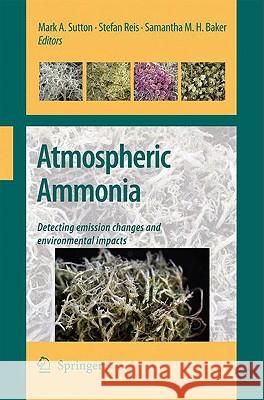
Atmospheric Ammonia: Detecting Emission Changes and Environmental Impacts. Results of an Expert Workshop Under the Convention on Long-Range Sutton, Mark 9781402091209 Springer - książkaWidoczna okładka, to zdjęcie poglądowe, a rzeczywista szata graficzna może różnić się od prezentowanej.

Atmospheric Ammonia: Detecting Emission Changes and Environmental Impacts. Results of an Expert Workshop Under the Convention on Long-Range

ISBN-13: 9781402091209 / Angielski / Twarda / 2008 / 464 str.

Mark Sutton; Stefan Reis; Samantha Baker
cena 605,23 zł
(netto: 576,41 VAT:  5%)

Najniższa cena z 30 dni: 578,30 zł
Termin realizacji zamówienia:
ok. 22 dni roboczych
Bez gwarancji dostawy przed świętami

Darmowa dostawa!

Anthropogenic emissions of ammonia cause a host of environmental impacts, including loss of biodiversity, soil acidification and formation of particulate matter in the atmosphere. Under the auspices of the UNECE Convention on Long Range Transboundary Air Pollution, around 80 international experts met to review the state of scientific knowledge. This book reports their analysis. It concludes that threshold levels for ammonia effects have been underestimated and sets new values, it assesses the independent evidence to verify reported reductions in regional ammonia emissions, and it reviews the uncertainties in modelling ammonia, both in "hot spots" and at the regional scale.


Kategorie:
Nauka, Biologia i przyroda
Kategorie BISAC:
Science > Environmental Science (see also Chemistry - Environmental)
Law > Environmental
Nature > Environmental Conservation & Protection - General
Wydawca:
Springer
Język:
Angielski
ISBN-13:
9781402091209
Rok wydania:
2008
Wydanie:
2009. Corr. 2nd
Ilość stron:
464
Waga:
0.90 kg
Wymiary:
23.5 x 15.5
Oprawa:
Twarda
Wolumenów:
01
Dodatkowe informacje:
Bibliografia
Wydanie ilustrowane

1. Introduction PART I: AMMONIA CRITICAL THRESHOLDS 2. Reassessment of critical levels for atmospheric ammonia 3. Potential for the further development and application of critical levels to assess the environmental impacts of ammonia. 4. Long-term cumulative exposure exacerbates the effects of atmospheric ammonia on an ombrotrophic bog: Implications for Critical Levels. 5. The application of transects to assess the effects of ammonia on woodland groundflora. 6. Estimation of the ammonia critical level for epiphytic lichens based on observations at farm, landscape and national scales. 7. Mapping ammonia emissions and concentrations for Switzerland – effects on lichen vegetation. 8. Over which averaging period is the ammonia critical level most precautionary? 9. Machrolichens on twigs and trunks as indicators of ammonia concentrations across the UK – a practical method. 10. Assessment of critical levels of atmospheric ammonia for lichen diversity in cork-oak woodland, Portugal. PART II: TEMPORAL TRENDS IN ATMOSPHERIC AMMONIA 11. Linking ammonia emission trends to measured concentrations and deposition of reduced nitrogen at different scales. 12. Long-term record (1981-2005) of ammonia and ammonium concentrations at K-puszta Hungary and the effect of SO2 emission change on measured and modelled concentrations. 13. Assessment of NH3 and NH4+ trends and relationship to critical levels in the UK National Ammonia Monitoring Network (NAMN). 14. Review of published studies estimating the abatement efficacy of reduced-emission slurry spreading techniques. PART III: ANALYSIS OF AMMONIA HOTSPOTS 15. Ammonia deposition near hot spots: processes, models and monitoring methods. 16. Standardised grasses as biomonitors ofammonia pollution around agricultural point sources. 17. Soluble ammonium in plants as a bioindicator for atmospheric nitrogen deposition: refinement and testing of a practical method. 18. Spatial planning as a complementary tool to abate the effects of atmospheric NH# deposition at the landscape scale. PART IV: REGIONAL MODELLING OF ATMOSPHERIC AMMONIA 19. Modelling of the atmospheric transport and deposition of ammonia at a national and regional scale. 20. Application of a Lagrangian model FRAME to estimate reduced nitrogen deposition and ammonia concentrations in Poland. 21. Application of the EMEP Unified Model to the UK with a horizontal resolution of 5 x 5 km2. PART V: CONCLUSIONS AND OUTLOOK 22. Critical Levels for NH3. 23. Detecting change in atmospheric ammonia following emission changes. 24. Assessment methods for ammonia hot-spots. ( 25. Modelling the national and regional transport and deposition of ammonia. 26. Reliability of ammonia emission estimates and abatement efficiencies. 27. Ammonia policy context and future challenges. 28. Synthesis and summary for policy makers.

Mark Sutton

Is a specialist in the behaviour of ammonia in the atmosphere, based at the NERC Centre for Ecology and Hydrology, Edinburgh. He is the coordinator of the NitroEurope Integrated Project, chairman of the European Centre of the International Nitrogen Initiative and co-chair of the UNECE Task Force on Reactive Nitrogen.

Stefan Reis

Is an expert on emissions of atmospheric pollutants and integrated assessment modelling. Formerly of the Institute of Energy Economics and the Rational Use of Energy at the University of Stuttgart, Germany, he is now the Scientific Project Manager of the NitroEurope Integrated Project.

Samantha Baker

Is a scientific policy analyst at the UK Department for Environment Food and Rural Affairs (Defra), with extensive experience of transboundary air pollution issues. She and a member of the Natural Resource and Rural Affairs (NRRA) Science Division at Defra and co-chairs the Projections Panel of the UNECE Task Force on Emission Inventories and Projections.

Atmospheric ammonia is increasingly being recognized as a pollutant of key environmental concern. Ammonia contributes to several environmental problems, including direct toxic effects on vegetation, atmospheric nitrogen deposition, leading to the eutrophication and acidification of sensitive ecosystem, and to the formation of secondary particulate matter in the atmosphere, with effects on human health, atmospheric visibility and global radiative balance. Ammonia emissions are increasing rapidly in many parts of the world, so that these environmental concerns are expected to grow in future. In Europe, efforts are currently being made to reduce ammonia emissions, alongside reductions in other air pollutants, notably sulphur dioxide and nitrogen oxides. However, reducing ammonia emissions has proved uncertain and challenging, with only modest regional reductions achieved to date. As the emissions of sulphur dioxide and nitrogen oxides are reduced, ammonia is therefore increasingly dominating the air pollution climate of Europe and the consequent environmental impacts.

It was in this context that the leading international experts met in Edinburgh in December 2006 under the auspices of the UN-ECE Convention on Long Range Transboundary Air Pollution to review the current state of the science of ammonia in the atmosphere. Specifically, the international workshop was a joint effort between several bodies of the Convention: the Ammonia Expert Group, the Working Group on Effects and the Task Force on Measurement and Modelling, together with the COST 729 and the NitroEurope Integrated Project. This book reports the underpinning information in the form of several major reviews, combined with supporting chapters on recent research results, to provide an up-to-date scientific synthesis in relation to four key themes:

  1. Re-evaluation of the critical thresholds for ammonia effects on sensitive plants and habitats
  2. Review of approaches for downscaling transboundary assessments to deal with ammonia hotspots in relation to operational modelling and monitoring
  3. Review of regional scale atmospheric transport and chemistry models in relation to their formulation and results for ammonia.

Each of these themes is of fundamental to the quantification of ammonia impacts in the environment and the assessment of possible abatement measures. The reviews highlight how the critical threshold for ammonia concentrations – the "critical level" – has been overestimated in the past, and the book explains the new estimates. Monitoring of atmospheric concentrations and deposition is the only independent way to verify the success of emission abatement policies. The analysis shows how it has been a major challenge to verify the reported reductions in emissions, but that several new datasets now support expected trends in emission reduction, even though total emissions may still be underestimated. Atmospheric models are central to the assessment at both regional and landscape scales. The dynamics within ‘ammonia hotspots’ are particularly important to understand both the fate of ammonia export from source regions and to assess the local environmental impacts. Similarly, modeling at regional scales forms the basis for transboundary assessment of ammonia emissions and deposition. At both scales, the present assessment shows that quantification of ammonia dry deposition remains a key uncertainty. Cross-cutting analyses in the review addressed the reliability of ammonia emissions data and abatement efficiencies, as well as the agricultural and environmental policy context, considering how scientific understanding can help address the challenges to reduce the adverse effects of ammonia in the environment.

This book will be valuable to all those interested in the behaviour of ammonia in the environment, as it explains the current state of knowledge, reports new critical level values, and describes the main scientific uncertainties.

Sutton, Mark In his youth, Mark worked at two pizza parlors, an... więcej >


Udostępnij

Facebook - konto krainaksiazek.pl


Opinie o Krainaksiazek.pl na Opineo.pl

Partner Mybenefit

Krainaksiazek.pl w programie rzetelna firma Krainaksiaze.pl - płatności przez paypal

Czytaj nas na:

Facebook - krainaksiazek.pl
  • książki na zamówienie
  • granty
  • książka na prezent
  • kontakt
  • pomoc
  • opinie
  • regulamin
  • polityka prywatności

Zobacz:

  • Księgarnia czeska

  • Wydawnictwo Książkowe Klimaty

1997-2025 DolnySlask.com Agencja Internetowa

© 1997-2022 krainaksiazek.pl
     
KONTAKT | REGULAMIN | POLITYKA PRYWATNOŚCI | USTAWIENIA PRYWATNOŚCI
Zobacz: Księgarnia Czeska | Wydawnictwo Książkowe Klimaty | Mapa strony | Lista autorów
KrainaKsiazek.PL - Księgarnia Internetowa

Polityka prywatnosci - link
Krainaksiazek.pl - płatnośc Przelewy24
Przechowalnia Przechowalnia






