Assessment and Teaching of 21st Century Skills » książka





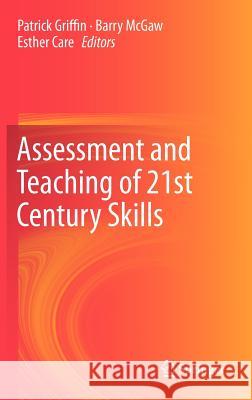
Assessment and Teaching of 21st Century Skills
ISBN-13: 9789400723238 / Angielski / Twarda / 2011 / 348 str.
Assessment and Teaching of 21st Century Skills
ISBN-13: 9789400723238 / Angielski / Twarda / 2011 / 348 str.
(netto: 843,44 VAT: 5%)
Najniższa cena z 30 dni: 771,08
ok. 16-18 dni roboczych.
Darmowa dostawa!
Rapid-and seemingly accelerating-changes in the economies of developed nations are having a proportional effect on the skill sets required of workers in many new jobs. Work environments are often technology-heavy, while problems are frequently ill-defined and tackled by multidisciplinary teams. This book contains insights based on research conducted as part of a major international project supported by Cisco, Intel and Microsoft. It faces these new working environments head-on, delineating new ways of thinking about '21st-century' skills and including operational definitions of those skills. The authors focus too on fresh approaches to educational assessment, and present methodological and technological solutions to the barriers that hinder ICT-based assessments of these skills, whether in large-scale surveys or classrooms. Equally committed to defining its terms and providing practical solutions, and including international perspectives and comparative evaluations of assessment methodology and policy, this volume tackles an issue at the top of most educationalists' agendas.
Changes in the developed economies have changed the skill demands of most new jobs. Work environments are generally technology-rich, problems are frequently ill-defined and people often work in multidisciplinary teams to deal with them. Skills labelled 21st century have always been important but they have some new characteristics and a special salience in the 21st century. Based on work completed as part of a large international project, this book offers ways of thinking about 21st century skills and focuses on new approaches to assessment. It proposes operational definitions of the skills, and presents methodological and technological solutions to barriers to ICT-based assessments of the skills in large scale surveys and in classrooms. It also proposes ways to improve individual and group development of 21st century skills and draws on international comparisons to identify policy frameworks needed for innovative assessment. The book contains insights from work completed as part of a large, international, multi-year project: Assessment and Teaching of 21st Century Skills . The project received input from over 200 academics and was supported by Cisco, Intel and Microsoft, and governed by UNESCO, World Bank, Inter American Bank, National Academy of Sciences, OECD, IEA, and the governments of Portugal, UK, Australia, Finland, USA and Singapore.




Czytaj nas na:
KrainaKsiazek.PL - Księgarnia Internetowa


