Assembly Votes Concealed Athenian Power Structures » książka





Assembly Votes Concealed Athenian Power Structures
ISBN-13: 9783565205561 / Angielski / Miękka / 172 str.
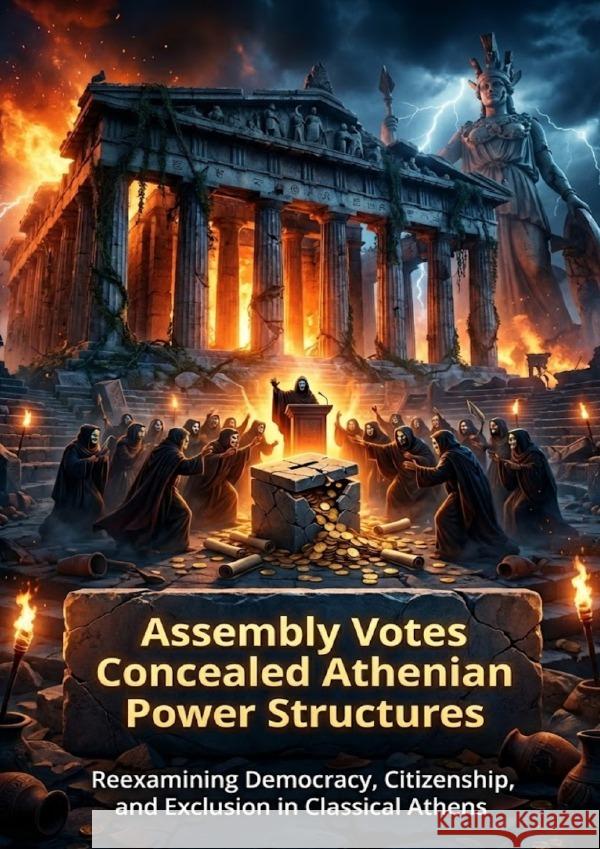
Athenian democracy is celebrated as the birthplace of political participation. Yet this narrative overlooks a fundamental reality: only adult male citizens could vote, representing roughly 10-15% of the population. Women, enslaved people, and foreign residents-the majority who sustained the city's economy-had no voice in the Assembly that governed their lives.This book traces how Athenian democracy actually functioned through archaeological evidence, citizen lists, court records, and legislative documents. It examines who counted as a citizen and why, how wealth influenced political outcomes despite claims of equality, and what democratic participation meant when your neighbor's labor subsidized your freedom to attend Assembly meetings.By analyzing the mechanisms of inclusion and exclusion, this work reveals the gap between democratic ideals and institutional reality. It explores how Athens managed this tension through legal frameworks, social hierarchies, and civic rituals-offering insight into both the achievements and contradictions of the world's first experiment in democratic governance.
Democracy thrived on the labor of those who could never cast a vote.




Czytaj nas na:
KrainaKsiazek.PL - Księgarnia Internetowa


