• Wyszukiwanie zaawansowane
  • Kategorie
  • Kategorie BISAC
  • Książki na zamówienie
  • Promocje
  • Granty
  • Książka na prezent
  • Opinie
  • Pomoc
  • Załóż konto
  • Zaloguj się

As the Witnesses Fall Silent: 21st Century Holocaust Education in Curriculum, Policy and Practice » książka


zaloguj się | załóż konto
Logo Krainaksiazek.pl

koszyk

konto

szukaj
topmenu
Księgarnia internetowa
Szukaj
Książki na zamówienie
Promocje
Granty
Książka na prezent
Moje konto
Pomoc
 
 
Wyszukiwanie zaawansowane
Pusty koszyk
Bezpłatna dostawa dla zamówień powyżej 20 złBezpłatna dostawa dla zamówień powyżej 20 zł

Kategorie główne

• Nauka
 [2949965]
• Literatura piękna
 [1857847]

  więcej...
• Turystyka
 [70818]
• Informatyka
 [151303]
• Komiksy
 [35733]
• Encyklopedie
 [23180]
• Dziecięca
 [617748]
• Hobby
 [139972]
• AudioBooki
 [1650]
• Literatura faktu
 [228361]
• Muzyka CD
 [398]
• Słowniki
 [2862]
• Inne
 [444732]
• Kalendarze
 [1620]
• Podręczniki
 [167233]
• Poradniki
 [482388]
• Religia
 [509867]
• Czasopisma
 [533]
• Sport
 [61361]
• Sztuka
 [243125]
• CD, DVD, Video
 [3451]
• Technologie
 [219309]
• Zdrowie
 [101347]
• Książkowe Klimaty
 [123]
• Zabawki
 [2362]
• Puzzle, gry
 [3791]
• Literatura w języku ukraińskim
 [253]
• Art. papiernicze i szkolne
 [7933]
Kategorie szczegółowe BISAC

As the Witnesses Fall Silent: 21st Century Holocaust Education in Curriculum, Policy and Practice

ISBN-13: 9783319154183 / Angielski / Twarda / 2015 / 512 str.
Zehavit Gross; E. Doyle Stevick
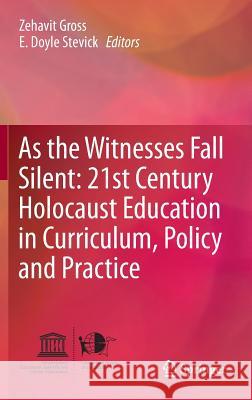
As the Witnesses Fall Silent: 21st Century Holocaust Education in Curriculum, Policy and Practice Zehavit Gross E. Doyle Stevick 9783319154183 Springer - książkaWidoczna okładka, to zdjęcie poglądowe, a rzeczywista szata graficzna może różnić się od prezentowanej.

As the Witnesses Fall Silent: 21st Century Holocaust Education in Curriculum, Policy and Practice

ISBN-13: 9783319154183 / Angielski / Twarda / 2015 / 512 str.

Zehavit Gross; E. Doyle Stevick
cena 564,88 zł
(netto: 537,98 VAT:  5%)

Najniższa cena z 30 dni: 539,74 zł
Termin realizacji zamówienia:
ok. 22 dni roboczych
Bez gwarancji dostawy przed świętami

Darmowa dostawa!

This volume represents the most comprehensive collection ever produced of empirical research on Holocaust education around the world. It comes at a critical time, as the world observes the 70th anniversary of the liberation of Auschwitz.We are now at a turning point, as the generations that witnessed and survived the Shoah are slowly passing on. Governments are charged with ensuring that this defining event of the 20th century takes its rightful place in the schooling and the historical consciousness of their peoples.The policies and practices of Holocaust education around the world are as diverse as the countries that grapple with its history and its meaning. Educators around the globe struggle to reconcile national histories and memories with the international realities of the Holocaust and its implications for the present. These efforts take place at a time when scholarship about the Holocaust itself has made great strides.In this book, these issues are framed by some of the leading voices in the field, including Elie Wiesel and Yehuda Bauer, and then explored by many distinguished scholars who represent a wide range of expertise.Holocaust education is of such significance, so rich in meaning, so powerful in content, and so diverse in practice that the need for extensive, high-quality empirical research is critical. Th is book provides exactly that.


Kategorie:
Nauka, Ekonomia i biznes
Kategorie BISAC:
Education > Comparative
Social Science > Socjologia
Education > Educational Policy & Reform
Wydawca:
Springer
Język:
Angielski
ISBN-13:
9783319154183
Rok wydania:
2015
Wydanie:
2015
Ilość stron:
512
Waga:
9.10 kg
Wymiary:
23.5 x 15.5
Oprawa:
Twarda
Wolumenów:
01
Dodatkowe informacje:
Wydanie ilustrowane

Preface: Mmantsetsa Marope, Director, UNESCO IBE.- Editors’ notes and acknowledgements.- Part I: Introduction.- Holocaust education in the 21st century: Curriculum, policy and practice.  E. Doyle Stevick and Zehavit Gross.- Part II: Framing the issues for a new millennium.- Address to the German Bundestag, 27 January 2000. Elie Wiesel.- “Why does the way of the wicked prosper?” Teaching the Holocaust in the land of Jim Crow: Ted Rosengarten.- Is teaching and learning about the Holocaust relevant for human rights education? Monique Eckmann.- Shoah, antisemitism, war and genocide: Text and context. Yehuda Bauer.- Learning from eyewitnesses: Examining the history and future of personal encounters with Holocaust survivors and resistance fighters. Dienke Hondius.- Teaching about and teaching through the Holocaust: Insights from (social) psychology. Barry van Driel.- Part III Reckoning with the Holocaust in Israel, Germany and Poland.- Between involuntary and voluntary memories: A case study of Holocaust education in Israel. Zehavit Gross.- Domesticating the difficult past: Polish students narrate the Second World War. Magdalena Gross.-  Mind the gap: Holocaust education in Germany, between pedagogical intentions and classroom interactions. Wolfgang Meseth and Matthias Proske.- Part IV  Holocaust education in diverse classrooms.- Holocaust education and critical citizenship in an American fifth grade: Expanding repertoires of meanings, language and action. Louise B. Jennings.- “They think it is funny to call us Nazis”: Holocaust education and multicultural education in a diverse Germany. Debora Hinderliter Ortloff.- Genocide or Holocaust education: Exploring different Australian approaches for Muslim school children. Suzanne D. Rutland.- Part V: International dynamics, global trends and comparative research in Holocaust education. A global mapping of the Holocaust in textbooks and curricula. Peter Carrier, Eckhardt Fuchs, and Torben Messinger.- International organisations in the globalisation of Holocaust education. Karel Fracapane.- Compliant policy and multiple meanings: Conflicting Holocaust discourses in Estonia. E. Doyle Stevick.- The Holocaust as history and human rights: A cross-national analysis of Holocaust education in social science textbooks, 1970–2008. Patricia Bromley and Susan Garnett Russell.- Measuring Holocaust knowledge and its relationship to attitudes towards diversity in Spain, Canada, Germany and the United States. Jack Jedwab.- Part VI  Holocaust education in national and regional contexts.- Holocaust history, memory and citizenship education: The case of Latvia. Tom Misco.- Mastering the past? Nazism and the Holocaust in West German history textbooks of the 1960s. Brian Puaca.- Informed pedagogy on the Holocaust: A survey of educators trained by leading Holocaust organizations in the United States. Corey Harbaugh.- "Unless they have to": Power, politics and institutional hierarchy in Lithuanian Holocaust education. Christine Beresniova.-  Holocaust education in Austria: A (hi)story of complexity and prospects for the future. Herbert Bastel, Christian Matzka, and Helene Miklas.- “Thanks to Scandinavia” and beyond: Nordic Holocaust education in the 21st century. Fred Dervin.-  Holocaust education in Scotland: Taking the lead or falling behind? Paula Cowan and Henry Maitles.- Part VII To know, to remember, to act.- Failing to learn from the Holocaust. Geoffrey Short.- Towards a new theory of Holocaust remembrance in Germany: Education, preventing antisemitism and advancing human rights. Reinhold Boschki, Bettina Reichmann, and Wilhelm Schwendemann.- Epistemological aspects of Holocaust education: Between ideologies and  interpretations. Zehavit Gross and Doyle Stevick.- Notes on contributors.


This volume represents the most comprehensive collection ever produced of empirical research on Holocaust education around the world. It comes at a critical time, as the world observes the 70th anniversary of the liberation of Auschwitz.

We are now at a turning point, as the generations that witnessed and survived the Shoah are slowly passing on. Governments are charged with ensuring that this defining event of the 20th century takes its rightful place in the schooling and the historical consciousness of their peoples.

The policies and practices of Holocaust education around the world are as diverse as the countries that grapple with its history and its meaning. Educators around the globe struggle to reconcile national histories and memories with the international realities of the Holocaust and its implications for the present. These efforts take place at a time when scholarship about the Holocaust itself has made great strides.

In this book, these issues are framed by some of the leading voices in the field, including Elie Wiesel and Yehuda Bauer, and then explored by many distinguished scholars who represent a wide range of expertise.

Holocaust education is of such significance, so rich in meaning, so powerful in content, and so diverse in practice that the need for extensive, high-quality empirical research is critical. This book provides exactly that.

This volume represents the most comprehensive collection ever produced of empirical research on Holocaust education around the world. It comes at a critical time, as the world approaches the 70th anniversary of the liberation of Auschwitz.

We are now at a turning point as the generations that witnessed and survived the Shoah are slowly passing on. Governments are charged with ensuring that this defining event of the 20th century should take its rightful place in the historical consciousness of the world's peoples and their education.

The policies and practices of Holocaust education around the world are as diverse as the countries that grapple with its history and its meaning.The effort to reconcile national histories and memories with the international realities of the Holocaust and its implications for the present persists. These efforts take place at a time when scholarship about the Holocaust itself has made great strides.

In this book, these issues are framed by some of the leading voices in the field, including Elie Wiesel and Yehuda Bauer, and then explored by many distinguished scholars who represent a wide range of expertise.

Holocaust education is of such significance, so rich in meaning, so powerful in content, and so diverse in practice that the need for extensive, high-quality empirical research is critical. This book provides exactly that.


Udostępnij

Facebook - konto krainaksiazek.pl


Opinie o Krainaksiazek.pl na Opineo.pl

Partner Mybenefit

Krainaksiazek.pl w programie rzetelna firma Krainaksiaze.pl - płatności przez paypal

Czytaj nas na:

Facebook - krainaksiazek.pl
  • książki na zamówienie
  • granty
  • książka na prezent
  • kontakt
  • pomoc
  • opinie
  • regulamin
  • polityka prywatności

Zobacz:

  • Księgarnia czeska

  • Wydawnictwo Książkowe Klimaty

1997-2025 DolnySlask.com Agencja Internetowa

© 1997-2022 krainaksiazek.pl
     
KONTAKT | REGULAMIN | POLITYKA PRYWATNOŚCI | USTAWIENIA PRYWATNOŚCI
Zobacz: Księgarnia Czeska | Wydawnictwo Książkowe Klimaty | Mapa strony | Lista autorów
KrainaKsiazek.PL - Księgarnia Internetowa

Polityka prywatnosci - link
Krainaksiazek.pl - płatnośc Przelewy24
Przechowalnia Przechowalnia






