• Wyszukiwanie zaawansowane
  • Kategorie
  • Kategorie BISAC
  • Książki na zamówienie
  • Promocje
  • Granty
  • Książka na prezent
  • Opinie
  • Pomoc
  • Załóż konto
  • Zaloguj się

Artificial Rearing of Reduviid Predators for Pest Management » książka


zaloguj się | załóż konto
Logo Krainaksiazek.pl

koszyk

konto

szukaj
topmenu
Księgarnia internetowa
Szukaj
Książki na zamówienie
Promocje
Granty
Książka na prezent
Moje konto
Pomoc
 
 
Wyszukiwanie zaawansowane
Pusty koszyk
Bezpłatna dostawa dla zamówień powyżej 20 złBezpłatna dostawa dla zamówień powyżej 20 zł

Kategorie główne

• Nauka
 [2949965]
• Literatura piękna
 [1857847]

  więcej...
• Turystyka
 [70818]
• Informatyka
 [151303]
• Komiksy
 [35733]
• Encyklopedie
 [23180]
• Dziecięca
 [617748]
• Hobby
 [139972]
• AudioBooki
 [1650]
• Literatura faktu
 [228361]
• Muzyka CD
 [398]
• Słowniki
 [2862]
• Inne
 [444732]
• Kalendarze
 [1620]
• Podręczniki
 [167233]
• Poradniki
 [482388]
• Religia
 [509867]
• Czasopisma
 [533]
• Sport
 [61361]
• Sztuka
 [243125]
• CD, DVD, Video
 [3451]
• Technologie
 [219309]
• Zdrowie
 [101347]
• Książkowe Klimaty
 [123]
• Zabawki
 [2362]
• Puzzle, gry
 [3791]
• Literatura w języku ukraińskim
 [253]
• Art. papiernicze i szkolne
 [7933]
Kategorie szczegółowe BISAC

Artificial Rearing of Reduviid Predators for Pest Management

ISBN-13: 9789811025211 / Angielski / Twarda / 2016 / 180 str.
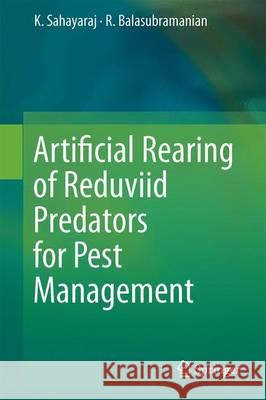
K. Sahayaraj; R. Balasubramanian
Artificial Rearing of Reduviid Predators for Pest Management K. Sahayaraj R. Balasubramanian 9789811025211 Springer - książkaWidoczna okładka, to zdjęcie poglądowe, a rzeczywista szata graficzna może różnić się od prezentowanej.

Artificial Rearing of Reduviid Predators for Pest Management

ISBN-13: 9789811025211 / Angielski / Twarda / 2016 / 180 str.

K. Sahayaraj; R. Balasubramanian
cena 403,47
(netto: 384,26 VAT:  5%)

Najniższa cena z 30 dni: 385,52
Termin realizacji zamówienia:
ok. 22 dni roboczych
Bez gwarancji dostawy przed świętami

Darmowa dostawa!

This eye-opening book focuses on the development of techniques to mass-produce reduviid predators and important generalist predators, an endeavor that won t prove sufficient if the cost of commercialization is prohibitive. Advancing mass production to the level of economic feasibility is critical, so that these new technologies can compete in the open market. This book commences with a review of the diversity of reduviid predators in agro-ecosystems world-wide, followed by chapters on their feeding behavior, biology, gut microbiota, their enzyme profile, body protein and genomics, and DNA and field evaluation reports. The field evaluation of reduviids, a worldwide undertaking, is addressed in the last chapter. Each chapter includes a separate conclusion and future recommendations. Detailed information is also included on ingredients and artificial diet preparation, storage and the impact on predators. The artificial rearing of reduviid predator for crop pest management is an essential reference and teaching tool for teachers, researchers and extension workers in developed and developing countries alike, allowing them to produce reduviid predators and important natural enemies in biocontrol and bio-intensive integrated pest management programs. The book offers an excellent resource for all those who are working on beneficial arthropod mass production. It is also an essential reference guide for agricultural and biological sciences scientists, entomologists, crop protection specialists, extension workers, and consultants."


Kategorie:
Nauka, Biologia i przyroda
Kategorie BISAC:
Science > Botanika
Science > Zoologia i nauki o zwierzętach
Science > Life Sciences - Ecology
Wydawca:
Springer
Język:
Angielski
ISBN-13:
9789811025211
Rok wydania:
2016
Wydanie:
2016
Ilość stron:
180
Waga:
0.54 kg
Wymiary:
23.37 x 15.75 x 1.78
Oprawa:
Twarda
Wolumenów:
01

Chapter 1 Reduviid: an important Biological Control Agent

1.1. Current scenario of crop damage due to insect attack

1.2. Reduviid in agro-ecosystems

1.3. Other agro-ecosystems

1.4. Reasons for consideration of reduviids in pest control

1.5. Routine methods for laboratory rearing

1.6. Devices used for reduviid mass production 

1.7. Constraints in rearing

1.8. Artificial rearing: needs and benefits
1.9. Conclusion

1.10. Future recommendations

Chapter 2 Feeding behaviour against Meridic Artificial diet

2.1. Background for the chapter

2.2. Importance of Rhynocoris marginatus in biological control

2.3. Meridic diet (MD) development

2.4. Feeding Behavioral on meridic diet

2.5. Best Strain selection

2.6. Insect prey preference after fed with meridic diet

2.7. Conclusion

2.8. Future recommendations

Chapter 3 Biology

3.1. Meridic diet for rearing hemipteran predators 

3.2. Meridic diet on chosen Reduviidae Biology

3.3. Meridic diet on Rhynocoris marginatus Biology

3.4. Demerits of the artificial diets

3.5. Conclusion

3.6. Future recommendations

Chapter 4 Gut-Autochthonous Microbes and their enzyme profile

4.1. Microbial Diversity in Insect Gut

4.2. Microbial Diversity in Heteropteran Predators Gut

4.3. Artificial Diet and Reduviid gut Microbiology 

4.4. Total heterotrophic bacterial population

4.5. Gut autochthonous microbes

4.6. Hydrolytic Extra Cellular Enzyme

4.7. Conclusion

4.8. Future recommendations

Chapter 5 Gut Enzyme Profile

5.1. Enzyme Activity of hemipteran predators

5.2. Reduviid Predators enzymology

5.3. Qualitative enzyme profile Methodology

5.4. Quantitative Enzyme Bioassays

5.5. Salivary gland enzyme profile

5.6. Conclusion

5.7. Future recommendations

Chapter 6 Body total Protein and genomic DNA

6.1. Introduction

6.2. Total Macromolecule Content 

6.3. Protein profiling 

6.4. Genomic DNA profiling  6.5. Genetic analysis

6.6. PCR for gut content analyses

6.7. Immunology

6.7.1. Effect of Meal on Antigen and Antibody Interaction

6.7.2. Indirect ELISA (Enzyme-linked immunosorbent assay)

6.7.3. Effect of predator protein content on ELISA sensitivity

6.8. Conclusions

6.9. Future recommendations

Chapter 7 Field Evaluation

7.1. Biological control and overview

7.2. Commercially available entomophagous insects

7.3. Field evaluation of reduviids a world-wide scenario

7.4. Bioefficacy of reduviid reared artificially

7.5. Conclusions

7.6. Future recommendations

General Recommendations

Species index

Subject index

Dr. K. Sahayaraj is an Associate Professor of Department of Zoology and Director of the Crop Protection Research Centre, St. Xavier’s College, Palaymkottai affiliated to Manonmaniam Sundaranar University, Tirunelveli. He is a recognized Fellow of six national societies/academic bodies. Dr. Sahayaraj has published six books and one proceeding on Ecofriendly Insect Pest Management. He has more than 200 publications to his credit, including original research papers, book chapters, and popular articles in insect ecology, behavior, biology and physiology, as well as numerous papers on the biological control efficacy of reduviids, botanicals, fungal pathogens and bionanoparticles. He has been honored with several awards from regional (Best Researcher in Science, St. Xavier’s College), national (Scientists of the Year–2008, NESA, New Delhi; Young Achievers Award-2010 by SADHNA, Solan; Bharat Seva Ratan Gold Medal Award-2014 by GEPRA, New Delhi; Bharat Seven Rethan Gold Medel by GEPBRA, New Delhi) and international agencies (Hyoshi Environmentalist Award, Japan; YOUNG IOBC travel grant awardee).

He has guided more than 19 Ph.D. scholars and supervised two researchers. He has consistently worked to transfer laboratory findings to neighborhood farmers and to offer them guidance on BIPM. To this end, he has brought out five manuals/books in Tamil. Most recently, he has been engaged in publishing an international journal, the Journal of Biopesticides.

Dr. R. Balasubramanian received his Bachelor’s and postgraduate degrees in Zoology from Madurai Kamaraj University, India in 2000 and 2003 respectively. His research career began in year 2004 at Fisheries College and Research Institute, Thoothukudi, Tamilnadu, as a technical assistant, where he carried out research in shrimp culture with different diets. In 2005, Dr. Balasubramanian went on to pursue his Ph.D. at St. Xavier’s College, Palayamkottai (Manonmaniam Sundaranar University) on the synthesis of artificial diet for mass production of hemipteran predators. Here, he learned about agricultural entomology, especially biological control, the bioecology of insects, advanced technologies in modern biological science, and the artificial rearing of predator insects. He has published a number of research papers on biocontrol, bioecology of insects and oligidic diet preparation for reduviid mass production. In March 2009, Dr. Balasubramanian joined the Department of Medical Entomology and Zoology, National Institute of Virology, Pune, where he began conducting research on Medical Entomology. More recently he has served as a scientist at the National Institute in Kerala field unit, Alappuzha, Kerala.

This eye-opening book focuses on the development of techniques to mass-produce reduviid predators and important generalist predators, an endeavor that won’t prove sufficient if the cost of commercialization is prohibitive. Advancing mass production to the level of economic feasibility is critical, so that these new technologies can compete in the open market.

This book commences with a review of the diversity of reduviid predators in agro-ecosystems world-wide, followed by chapters on their feeding behavior, biology, gut microbiota, their enzyme profile, body protein and genomics, and DNA and field evaluation reports. The field evaluation of reduviids, a worldwide undertaking, is addressed in the last chapter.

Each chapter includes a separate conclusion and future recommendations. Detailed information is also included on ingredients and artificial diet preparation, storage and the impact on predators. The artificial rearing of reduviid predator for crop pest management is an essential reference and teaching tool for teachers, researchers and extension workers in developed and developing countries alike, allowing them to produce reduviid predators and important natural enemies in biocontrol and bio-intensive integrated pest management programs.

The book offers an excellent resource for all those who are working on beneficial arthropod mass production. It is also an essential reference guide for agricultural and biological sciences scientists, entomologists, crop protection specialists, extension workers, and consultants.


Udostępnij

Facebook - konto krainaksiazek.pl


Opinie o Krainaksiazek.pl na Opineo.pl

Partner Mybenefit

Krainaksiazek.pl w programie rzetelna firma Krainaksiaze.pl - płatności przez paypal

Czytaj nas na:

Facebook - krainaksiazek.pl
  • książki na zamówienie
  • granty
  • książka na prezent
  • kontakt
  • pomoc
  • opinie
  • regulamin
  • polityka prywatności

Zobacz:

  • Księgarnia czeska

  • Wydawnictwo Książkowe Klimaty

1997-2025 DolnySlask.com Agencja Internetowa

© 1997-2022 krainaksiazek.pl
     
KONTAKT | REGULAMIN | POLITYKA PRYWATNOŚCI | USTAWIENIA PRYWATNOŚCI
Zobacz: Księgarnia Czeska | Wydawnictwo Książkowe Klimaty | Mapa strony | Lista autorów
KrainaKsiazek.PL - Księgarnia Internetowa

Polityka prywatnosci - link
Krainaksiazek.pl - płatnośc Przelewy24
Przechowalnia Przechowalnia





