• Wyszukiwanie zaawansowane
  • Kategorie
  • Kategorie BISAC
  • Książki na zamówienie
  • Promocje
  • Granty
  • Książka na prezent
  • Opinie
  • Pomoc
  • Załóż konto
  • Zaloguj się

Artificial Intelligence and International Relations Theories » książka


zaloguj się | załóż konto
Logo Krainaksiazek.pl

koszyk

konto

szukaj
topmenu
Księgarnia internetowa
Szukaj
Książki na zamówienie
Promocje
Granty
Książka na prezent
Moje konto
Pomoc
 
 
Wyszukiwanie zaawansowane
Pusty koszyk
Bezpłatna dostawa dla zamówień powyżej 20 złBezpłatna dostawa dla zamówień powyżej 20 zł

Kategorie główne

• Nauka
 [2949965]
• Literatura piękna
 [1857847]

  więcej...
• Turystyka
 [70818]
• Informatyka
 [151303]
• Komiksy
 [35733]
• Encyklopedie
 [23180]
• Dziecięca
 [617748]
• Hobby
 [139972]
• AudioBooki
 [1650]
• Literatura faktu
 [228361]
• Muzyka CD
 [398]
• Słowniki
 [2862]
• Inne
 [444732]
• Kalendarze
 [1620]
• Podręczniki
 [167233]
• Poradniki
 [482388]
• Religia
 [509867]
• Czasopisma
 [533]
• Sport
 [61361]
• Sztuka
 [243125]
• CD, DVD, Video
 [3451]
• Technologie
 [219309]
• Zdrowie
 [101347]
• Książkowe Klimaty
 [123]
• Zabawki
 [2362]
• Puzzle, gry
 [3791]
• Literatura w języku ukraińskim
 [253]
• Art. papiernicze i szkolne
 [7933]
Kategorie szczegółowe BISAC

Artificial Intelligence and International Relations Theories

ISBN-13: 9789811948763 / Angielski / Twarda / 2023 / 205 str.
Tshilidzi Marwala; Bhaso Ndzendze
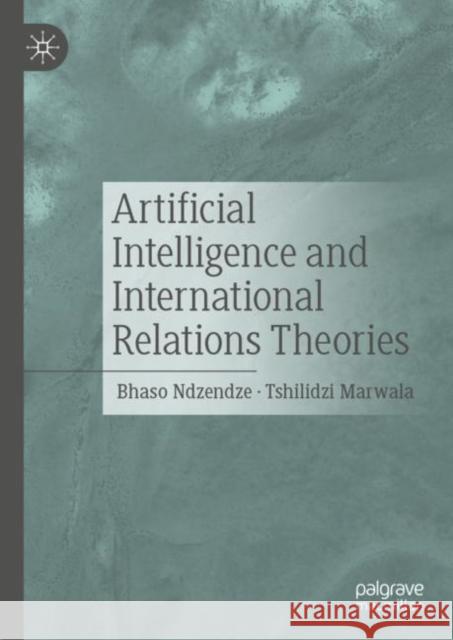
Artificial Intelligence and International Relations Theories Tshilidzi Marwala Bhaso Ndzendze 9789811948763 Palgrave MacMillan - książkaWidoczna okładka, to zdjęcie poglądowe, a rzeczywista szata graficzna może różnić się od prezentowanej.

Artificial Intelligence and International Relations Theories

ISBN-13: 9789811948763 / Angielski / Twarda / 2023 / 205 str.

Tshilidzi Marwala; Bhaso Ndzendze
cena 564,88 zł
(netto: 537,98 VAT:  5%)

Najniższa cena z 30 dni: 501,19 zł
Termin realizacji zamówienia:
ok. 22 dni roboczych
Bez gwarancji dostawy przed świętami

Darmowa dostawa!

This book discusses the impact of artificial intelligence (AI) on international relations theories. As a phenomenon, AI is everywhere in the real world and growing. Through its transformative nature, it is simultaneously simplifying and complicating processes. Importantly, it also overlooks and “misunderstands”. Globally, leaders, diplomats and policymakers have had to familiarise themselves and grapple with concepts such asalgorithms,automation,machinelearning, andneuralnetworks. These and other features of modern AI are redefining our world, and with it, the long-held assumptions scholars of IR have relied on for their theoretical accounts of our universe.The book takes a historic, contemporary and long-term approach to explain and anticipate AI’s impact on IR – and vice versa – through a systematic treatment of 9 theoretical paradigms and schools of thought including realism, liberalism, feminism, postcolonial theory and green theory. This book draws on original datasets, innovative empirical case studies and in-depth engagement with the core claims of the traditional and critical theoretical lenses to reignite debates on the nature and patterns of power, ethics, conflict, and systems among states and non-state actors.


This book discusses the impact of artificial intelligence (AI) on international relations theories. As a phenomenon, AI is everywhere in the real world and growing. Through its transformative nature, it is simultaneously simplifying and complicating processes. Importantly, it also overlooks and “misunderstands”. Globally, leaders, diplomats and policymakers have had to familiarise themselves and grapple with concepts such as algorithms, automation, machine learning, and neural networks. These and other features of modern AI are redefining our world, and with it, the long-held assumptions scholars of IR have relied on for their theoretical accounts of our universe. The book takes a historic, contemporary and long-term approach to explain and anticipate AI’s impact on IR – and vice versa – through a systematic treatment of 9 theoretical paradigms and schools of thought including realism, liberalism, feminism, postcolonial theory and green theory. This book draws on original datasets, innovative empirical case studies and in-depth engagement with the core claims of the traditional and critical theoretical lenses to reignite debates on the nature and patterns of power, ethics, conflict, and systems among states and non-state actors.

Kategorie:
Nauka, Polityka
Kategorie BISAC:
Political Science > International Relations - General
Political Science > History & Theory - General
Computers > Artificial Intelligence - General
Wydawca:
Palgrave MacMillan
Język:
Angielski
ISBN-13:
9789811948763
Rok wydania:
2023
Dostępne języki:
Ilość stron:
205
Oprawa:
Twarda
Dodatkowe informacje:
Wydanie ilustrowane

Chapter 1 Introduction.- Chapter 2 Theory in International Relations.- Chapter 3 Artificial Intelligence and International Relations.- Chapter 4 Liberalism.- Chapter 5 Realism.- Chapter 6 Hegemonic Stability Theory.- Chapter 7 Dependency Theory.- Chapter 8 Constructivism.- Chapter 9 The English School.- Chapter 10 Rational International Relations.

Bhaso Ndzendze is Senior Lecturer and Head of Department: Politics and International Relations at the University of Johannesburg where he lectures a postgraduate course on technology dynamics in international relations. His recent books include The Political Economy of Sino-South African Trade and Regional Competition (Palgrave Macmillan) Artificial Intelligence and International Relations with Professor Tshilidzi Marwala, and is the editor-in-chief of the journal Digital Policy Studies.

Tshilidzi Marwala is the Vice-Chancellor and Principal of the University of Johannesburg, South Africa. From 2013 to 2017 he was the Deputy Vice-Chancellor for Research and Internationalization. He is the Deputy Chairperson of the Presidential Commission on the Fourth Industrial Revolution (South Africa). His research interests are multi-disciplinary, and they include the theory and application of artificial intelligence to engineering, computer science, finance, social science and medicine. His publication track-record includes more than 24 books and 350 articles in leading academic journals and the popular press.


This book discusses the impact of artificial intelligence (AI) on international relations theories. As a phenomenon, AI is everywhere in the real world and growing. Through its transformative nature, it is simultaneously simplifying and complicating processes. Importantly, it also overlooks and 'misunderstands'. Globally, leaders, diplomats and policymakers have had to familiarise themselves and grapple with concepts such as algorithms, automation, machine learning, and neural networks. These and other features of modern AI are redefining our world, and with it, the long-held assumptions of IR held by the scholars for their theoretical accounts of our universe.

The book takes a historic, contemporary and long-term approach to explain and anticipate AI’s impact on IR – and vice versa – through a systematic treatment of nine theoretical paradigms and schools of thought including realism, liberalism, feminism, postcolonial theory and green theory. This book draws on original datasets, innovative empirical case studies and in-depth engagement with the core claims of the traditional and critical theoretical lenses to reignite debates on the nature and patterns of power, ethics, conflict, and systems among states and non-state actors.

Bhaso Ndzendze is Senior Lecturer and Head of Department: Politics and International Relations at the University of Johannesburg where he lectures a postgraduate course on technology dynamics in international relations. His recent books include The Political Economy of Sino-South African Trade and Regional Competition (Palgrave Macmillan) and Artificial Intelligence and International Relations with Professor Tshilidzi Marwala. He is also editor-in-chief of the journal Digital Policy Studies.

Tshilidzi Marwala is the Vice-Chancellor and Principal of the University of Johannesburg, South Africa. From 2013 to 2017 he was the Deputy Vice-Chancellor for Research and Internationalization. He is the Deputy Chairperson of the Presidential Commission on the Fourth Industrial Revolution (South Africa). His research interests are multi-disciplinary and they include the theory and application of artificial intelligence to engineering, computer science, finance, social science and medicine. His publication track-record includes more than 24 books and 350 articles in leading academic journals and the popular press.


Udostępnij

Facebook - konto krainaksiazek.pl


Opinie o Krainaksiazek.pl na Opineo.pl

Partner Mybenefit

Krainaksiazek.pl w programie rzetelna firma Krainaksiaze.pl - płatności przez paypal

Czytaj nas na:

Facebook - krainaksiazek.pl
  • książki na zamówienie
  • granty
  • książka na prezent
  • kontakt
  • pomoc
  • opinie
  • regulamin
  • polityka prywatności

Zobacz:

  • Księgarnia czeska

  • Wydawnictwo Książkowe Klimaty

1997-2025 DolnySlask.com Agencja Internetowa

© 1997-2022 krainaksiazek.pl
     
KONTAKT | REGULAMIN | POLITYKA PRYWATNOŚCI | USTAWIENIA PRYWATNOŚCI
Zobacz: Księgarnia Czeska | Wydawnictwo Książkowe Klimaty | Mapa strony | Lista autorów
KrainaKsiazek.PL - Księgarnia Internetowa

Polityka prywatnosci - link
Krainaksiazek.pl - płatnośc Przelewy24
Przechowalnia Przechowalnia




