• Wyszukiwanie zaawansowane
  • Kategorie
  • Kategorie BISAC
  • Książki na zamówienie
  • Promocje
  • Granty
  • Książka na prezent
  • Opinie
  • Pomoc
  • Załóż konto
  • Zaloguj się

Artificial Intelligence Oceanography » książka


zaloguj się | załóż konto
Logo Krainaksiazek.pl

koszyk

konto

szukaj
topmenu
Księgarnia internetowa
Szukaj
Książki na zamówienie
Promocje
Granty
Książka na prezent
Moje konto
Pomoc
 
 
Wyszukiwanie zaawansowane
Pusty koszyk
Bezpłatna dostawa dla zamówień powyżej 20 złBezpłatna dostawa dla zamówień powyżej 20 zł

Kategorie główne

• Nauka
 [2950560]
• Literatura piękna
 [1849509]

  więcej...
• Turystyka
 [71097]
• Informatyka
 [151150]
• Komiksy
 [35848]
• Encyklopedie
 [23178]
• Dziecięca
 [617388]
• Hobby
 [139064]
• AudioBooki
 [1657]
• Literatura faktu
 [228597]
• Muzyka CD
 [383]
• Słowniki
 [2855]
• Inne
 [445295]
• Kalendarze
 [1464]
• Podręczniki
 [167547]
• Poradniki
 [480102]
• Religia
 [510749]
• Czasopisma
 [516]
• Sport
 [61293]
• Sztuka
 [243352]
• CD, DVD, Video
 [3414]
• Technologie
 [219456]
• Zdrowie
 [101002]
• Książkowe Klimaty
 [124]
• Zabawki
 [2311]
• Puzzle, gry
 [3459]
• Literatura w języku ukraińskim
 [254]
• Art. papiernicze i szkolne
 [8079]
Kategorie szczegółowe BISAC

Artificial Intelligence Oceanography

ISBN-13: 9789811963773 / Angielski / Miękka / 2023 / 344 str.
Xiaofeng Li; Fan Wang
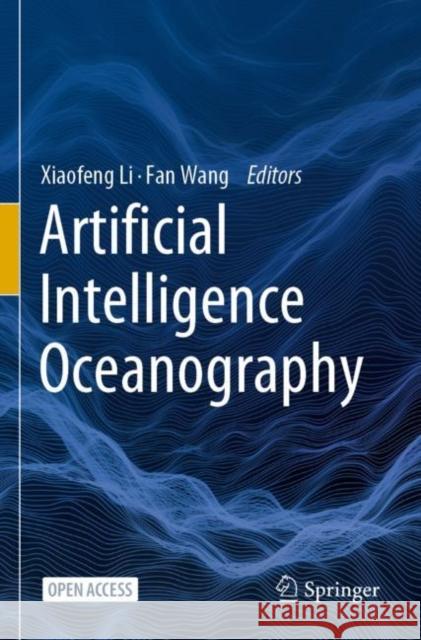
Artificial Intelligence Oceanography Xiaofeng Li Fan Wang 9789811963773 Springer - książkaWidoczna okładka, to zdjęcie poglądowe, a rzeczywista szata graficzna może różnić się od prezentowanej.

Artificial Intelligence Oceanography

ISBN-13: 9789811963773 / Angielski / Miękka / 2023 / 344 str.

Xiaofeng Li; Fan Wang
cena 160,99
(netto: 153,32 VAT:  5%)

Najniższa cena z 30 dni: 154,18
Termin realizacji zamówienia:
ok. 22 dni roboczych
Dostawa w 2026 r.

Darmowa dostawa!
inne wydania

This open access book invites readers to learn how to develop artificial intelligence (AI)-based algorithms to perform their research in oceanography. Various examples are exhibited to guide details of how to feed the big ocean data into the AI models to analyze and achieve optimized results. The number of scholars engaged in AI oceanography research will increase exponentially in the next decade. Therefore, this book will serve as a benchmark providing insights for scholars and graduate students interested in oceanography, computer science, and remote sensing.


This open access book invites readers to learn how to develop artificial intelligence (AI)-based algorithms to perform their research in oceanography. Various examples are exhibited to guide details of how to feed the big ocean data into the AI models to analyze and achieve optimized results. The number of scholars engaged in AI oceanography research will increase exponentially in the next decade. Therefore, this book will serve as a benchmark providing insights for scholars and graduate students interested in oceanography, computer science, and remote sensing. 

Kategorie:
Nauka, Geografia
Kategorie BISAC:
Science > Earth Sciences - Oceanography
Computers > Data Science - General
Computers > Artificial Intelligence - General
Wydawca:
Springer
Język:
Angielski
ISBN-13:
9789811963773
Rok wydania:
2023
Dostępne języki:
Ilość stron:
344
Oprawa:
Miękka

Theory and technology of artificial intelligence for oceanography.- Satellite data-driven internal wave forecast model based on machine learning techniques.- Detection and analysis of marine macroalgae based on artificial intelligence.- Tropical cyclone intensity estimation from geostationary satellite imagery.- Reconstructing marine environmental data based on deep learning.- Detecting oceanic processes from space-borne sar imagery using machine learning.- Deep convolutional neural networks-based coastal inundation mapping for un-defined least developed countries: taking madagascar and mozambique as examples.- Ai- based mesoscale eddy study.- Classifying sea ice types from sar images based on deep fully convolutional networks.- Detecting ships and extracting ship's size from SAR images based on deep learning.- Quality control of ocean temperature and salinity data based on machine learning technology.- automatic extraction of internal wave signature from multiple satellite sensors based on deep convolutional neural networks.- Automatic extraction of waterlines from large-scale tidal flats on SAR images and applications based on deep convolutional neural networks.- Forecast of tropical instability waves using deep learning.- Sea surface height prediction based on artificial intelligence.

Prof. Xiaofeng Li, IEEE Fellow, graduated from Zhejiang University in 1985. Later, he received a master's and a Ph.D. in physical oceanography from the First Institute of Oceanography, China, and North Carolina State University (North Carolina State University), USA. 

From 1997 to 2019, Xiaofeng Li worked for the National Oceanic and Atmospheric Administration (NOAA), mainly engaged in satellite oceanography, artificial intelligence, and big data research. Xiaofeng Li is the associated editor of IEEE Transactions on Geoscience and Remote Sensing, International Journal of Remote Sensing, and the Executive Editor-in-Chief of the Journal of Remote Sensing. He is also an editorial board member of the International Journal of Digital Earth, Big Earth Data, and the Journal of Limnology and Oceanography. In addition, he has lectured nearly 100 times in more than 50 Chinese and foreign universities and scientific research institutions.

He is currently a scientist at the Institute of Oceanology, Chinese Academy of Sciences, a Doctoral Student/Postdoctoral Supervisor, the Chief Scientist of artificial intelligence oceanography, and the Chief Engineer of the big data center.

Dr. Li published a book with Springer before:

Hurricane Monitoring With Spaceborne Synthetic Aperture Radar (Springer Natural Hazards) 

ISBN-13: 978-9811028922

Fan Wang, Ph.D., Director of Institute of Oceanology, Chinese Academy of Sciences. From 1985 to 1995, he studied at Ocean University of China, majoring in Physical Oceanography, and obtained a Ph.D. degree; from 1995 to 1997, he did postdoctoral research in Institute of Oceanology, Chinese Academy of Sciences. Visiting Scholar at Texas A&M University in 2000 and National Oceanography Centre in UK in 2004. Dr. Wang started working at the Institute of Oceanology, Chinese Academy of Sciences since 1998.

He is mainly working on ocean circulation dynamics, including the low-latitude western boundary currents and tropical circulation in the Pacific Ocean, and shelf circulations in the China Seas, etc. Since 1998, he has presided over 30 scientific research topics including projects of National Basic Research Program, major and key projects of the National Natural Science Foundation, and strategic pilot science and technology project of the Chinese Academy of Sciences; published more than 250 papers (including More than 150 SCI and EI papers) and 3 monographs. He was awarded as the National Outstanding Scientist and Engineer, won the Outstanding Award of Science & Technology of CAS, the First Prize of Science and Technology Award of Shandong Province, and the First Prize of Ocean Engineering Science and Technology Award.

Dr. Wang serves as the Chairman of the International Northwest Pacific Ocean Circulation and Climate Experiment (NPOCE) science steering committee, the member of Climate and Ocean - Variability, Predictability, and Change Pacific Region Panel (CLIVAR/PRP), the member of the North Pacific Ocean Science Organization Physical Oceanography and Climate Committee (PICES/POC); Executive vice president of the Chinese Society for Oceanology and Limnology, the vice president of the Chinese Society for Oceanography, the vice chair of Chinese Committee for Marine Science Research (SCOR); the editor in chief of "Oceanology and Limnology"; Dean of College of Marine Science, University of Chinese Academy of Sciences.

This open access book invites readers to learn how to develop artificial intelligence (AI)-based algorithms to perform their research in oceanography. Various examples are exhibited to guide details of how to feed the big ocean data into the AI models to analyze and achieve optimized results. The number of scholars engaged in AI oceanography research will increase exponentially in the next decade. Therefore, this book will serve as a benchmark providing insights for scholars and graduate students interested in oceanography, computer science, and remote sensing. 



Udostępnij

Facebook - konto krainaksiazek.pl


Opinie o Krainaksiazek.pl na Opineo.pl

Partner Mybenefit

Krainaksiazek.pl w programie rzetelna firma Krainaksiaze.pl - płatności przez paypal

Czytaj nas na:

Facebook - krainaksiazek.pl
  • książki na zamówienie
  • granty
  • książka na prezent
  • kontakt
  • pomoc
  • opinie
  • regulamin
  • polityka prywatności

Zobacz:

  • Księgarnia czeska

  • Wydawnictwo Książkowe Klimaty

1997-2025 DolnySlask.com Agencja Internetowa

© 1997-2022 krainaksiazek.pl
     
KONTAKT | REGULAMIN | POLITYKA PRYWATNOŚCI | USTAWIENIA PRYWATNOŚCI
Zobacz: Księgarnia Czeska | Wydawnictwo Książkowe Klimaty | Mapa strony | Lista autorów
KrainaKsiazek.PL - Księgarnia Internetowa

Polityka prywatnosci - link
Krainaksiazek.pl - płatnośc Przelewy24
Przechowalnia Przechowalnia



