• Wyszukiwanie zaawansowane
  • Kategorie
  • Kategorie BISAC
  • Książki na zamówienie
  • Promocje
  • Granty
  • Książka na prezent
  • Opinie
  • Pomoc
  • Załóż konto
  • Zaloguj się

Arthropod Management in Vineyards:: Pests, Approaches, and Future Directions » książka


zaloguj się | załóż konto
Logo Krainaksiazek.pl

koszyk

konto

szukaj
topmenu
Księgarnia internetowa
Szukaj
Książki na zamówienie
Promocje
Granty
Książka na prezent
Moje konto
Pomoc
 
 
Wyszukiwanie zaawansowane
Pusty koszyk
Bezpłatna dostawa dla zamówień powyżej 20 złBezpłatna dostawa dla zamówień powyżej 20 zł

Kategorie główne

• Nauka
 [2948695]
• Literatura piękna
 [1824038]

  więcej...
• Turystyka
 [70868]
• Informatyka
 [151073]
• Komiksy
 [35227]
• Encyklopedie
 [23181]
• Dziecięca
 [621575]
• Hobby
 [138961]
• AudioBooki
 [1642]
• Literatura faktu
 [228651]
• Muzyka CD
 [371]
• Słowniki
 [2933]
• Inne
 [445341]
• Kalendarze
 [1243]
• Podręczniki
 [164416]
• Poradniki
 [479493]
• Religia
 [510449]
• Czasopisma
 [502]
• Sport
 [61384]
• Sztuka
 [243086]
• CD, DVD, Video
 [3417]
• Technologie
 [219673]
• Zdrowie
 [100865]
• Książkowe Klimaty
 [124]
• Zabawki
 [2168]
• Puzzle, gry
 [3372]
• Literatura w języku ukraińskim
 [260]
• Art. papiernicze i szkolne
 [7838]
Kategorie szczegółowe BISAC

Arthropod Management in Vineyards:: Pests, Approaches, and Future Directions

ISBN-13: 9789400740310 / Angielski / Twarda / 2012 / 508 str.
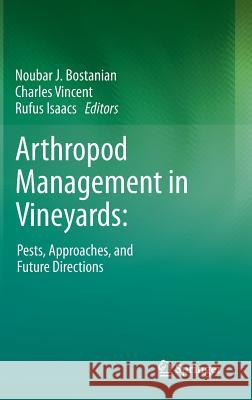
Noubar J. Bostanian; Charles Vincent; Rufus Isaacs
Arthropod Management in Vineyards:: Pests, Approaches, and Future Directions Bostanian, Noubar J. 9789400740310 SPRINGER NETHERLANDS - książkaWidoczna okładka, to zdjęcie poglądowe, a rzeczywista szata graficzna może różnić się od prezentowanej.

Arthropod Management in Vineyards:: Pests, Approaches, and Future Directions

ISBN-13: 9789400740310 / Angielski / Twarda / 2012 / 508 str.

Noubar J. Bostanian; Charles Vincent; Rufus Isaacs
cena 1124,51
(netto: 1070,96 VAT:  5%)

Najniższa cena z 30 dni: 1079,53
Termin realizacji zamówienia:
ok. 22 dni roboczych.

Darmowa dostawa!
inne wydania

Provides a state-of-the-science overview of arthropods affecting grape production around the world. Vineyard pest management is a dynamic and evolving field, and the contributed chapters provide insights into arthropods that limit this important crop and its products. Written by international experts from the major grape-growing regions, it provides a global overview of arthropods affecting vines and the novel strategies being used to prevent economic losses, including invasive pests affecting viticulture. The book contains reviews of the theoretical basis of integrated pest management, multiple chapters on biological control, current status of chemical control, as well as in-depth and well-illustrated reviews of the major arthropod pests affecting grape production and how they are being managed worldwide. This text will serve as a primary resource for applied entomologists, students, growers, and consultants with interests at the intersection of viticulture and applied entomology.


Kategorie:
Nauka, Biologia i przyroda
Kategorie BISAC:
Technology & Engineering > Agriculture - General
Science > Biologia i przyroda
Science > Life Sciences - Ecology
Wydawca:
SPRINGER NETHERLANDS
Język:
Angielski
ISBN-13:
9789400740310
Rok wydania:
2012
Wydanie:
2012
Ilość stron:
508
Waga:
1.15 kg
Wymiary:
23.11 x 15.49 x 3.3
Oprawa:
Twarda
Wolumenów:
01

From the reviews:

"This book is an impressive and indispensable volume for its target audience, applied entomologists, students, growers and consultants working in viticulture. In more than 500 pages, almost every aspect of arthropod pest management in grapes is covered, including an invaluable resource of often extensive reference lists at the end of each chapter. It will serve as a starting point for researchers and growers for many years to come." (David G. James, Journal of Wine Research, Vol. 25 (2), 2014)

Foreword.- Preface.- 1. Principles of Arthropod Pest Management in Vineyards.- Charles Vincent, Rufus Isaacs, Noubar J. Bostanian and Jacques Lasnier.- 1.1 Introduction.- 1.2 The vine.- 1.3 Arthropod biodiversity in vineyards.- 1.4 Arthropod pests.- 1.5 New arthropod issues.- 1.6 The foundation of IPM: sampling, thresholds, and modeling.- 1.7 Alternatives to chemical control.- 1.8 Semiochemicals.- 1.9 Chemical control.- 1.10 Regulations.- 1.11 IPM in organic viticulture.- 1.12 IPM program delivery.- 1.13 Challenges.- 1.14 Conclusion.- 2. Pest Thresholds: their Development and Use in Vineyards for Arthropod Management.- Rufus Isaacs, Michael C. Saunders and Noubar J. Bostanian.- 2.1 Introduction.- 2.2 Economic thresholds.- 2.3 Challenges to developing pest thresholds in grapes.- 2.4 Manipulating pest injury to determine thresholds.- 2.5 Measuring effects on grapevines.- 2.6 Examples of pest thresholds developed for use in vineyard management.- 2.7 Integrated thresholds: the future for grape IPM?.- 3. Modeling Arthropods to Support IPM in Vineyards.- John Michael Hardman.- 3.1 Introduction.- 3.2 Phenology models used in vineyard IPM.- 3.3 Population models used in grape IPM.- 3.4 Geographic models used in grape IPM.- 3.5 Conclusion.- 4. Pesticides for Arthropod Control in Vineyards.- Noubar J. Bostanian, John C. Wise and Rufus Isaacs.- 4.1 Introduction.- 4.2 Insecticide formulations.- 4.3 Background neurobiology and transmission of an impulse.- 4.4 Classification of insecticides according to their mode of action.- 4.5 Classification of acaricides according to their mode of action.- 4.6 Insecticide mode of activity-general considerations.- 4.7 Insecticide movement in vines: enhancing plant protection.- 4.8 Pesticide delivery and deposition.- 4.9 Rainfastness.- 4.10 Effects of pesticides on non-target beneficials other than bees.- 4.11 Insecticide resistance.- 4.12 Conclusion.- 5. Biological Control of Arthropods and its Application in Vineyards.- Vaughn M. Walton, Kent M. Daane and Pia Addison.- 5.1 Introduction.- 5.2 Predaceous arthropods.- 5.3 Predaceous insects.- 5.4 Parasitic insects.- 5.5 Pathogens and entomopathogenic nematodes.- 5.6 Pheromones, confusion techniques and sterile male technique.- 5.7 Conclusion.- 6. Chemical Ecology Providing Novel Strategies against Vineyard Pests in Australia.- M. Simpson, V. J. Connick, Y. Guisard, O. L. Reynolds (née Kvedaras), A. Saliba and G. M. Gurr .- 6.1 Introduction.- 6.2 The conservation biological control context.- 6.3 Vineyard pests occurring in Australia and their natural enemies.- 6.4 Plant interactions with the environment and their chemical defence mechanisms.- 6.5 Induced plant defences.- 6.6 The Role of Silicon in plant defence against pests.- 6.7 Novel vineyard pest management strategies in Australia.- 6.8 Conclusion.- 7. Enhancing Ecosystem Services in Australasian Vineyards for Sustainability and Profit.- Jean-Marie Tompkins, Steve D. Wratten and Marja Simpson.- 7.1 Introduction.- 7.2 Ecosystem services in vineyards.- 7.3 Evaluating the potential economic gain of enhancing ES within vineyards.- 7.4 Conclusion.- 8. Habitat Diversity at the Field and Landscape Level: Conservation Biological Control Research in California Viticulture.- Albie Miles, Houston Wilson, Miguel Altieri and Clara Nicholls.- 8.1 Introduction: the need for ecologically based viticulture in California.- 8.2 Key hypotheses informing research in vineyard diversification in California: natural enemies and resource concentration.- 8.3 Vineyard diversification studies in California: field-level research.- 8.4 Landscape ecology and conservation biological control in California vineyards.- 8.5 Current diversification research at UC Berkeley: field-scale Analysis.- 8.6 Current diversification research at UC Berkeley: landscape Analysis.- 8.7 Conclusion: field and Landscape-level diversification for conservation biological control.- 8.8 Proposals and considerations for future research: conservation biological control in California vineyards.- 9.  Management of Phytophagous Mites in European Vineyards.- Carlo Duso, Alberto Pozzebon, Serge Kreiter, Marie-Stéphane Tixier and Marco Candolfi.- 9.1 Problems with mites in vineyards.- 9.2 Biology, ecology and economic importance of spider mites.- 9.3 Biology, behavior and economic importance of eriophyoid mites.- 9.4 Another mite injurious to grapes.- 9.5 Biological control.- 9.6 Predatory mite augmentation: should we prefer to release resistant strains?.- 9.7 Natural vegetation and phytoseiid mite management in neighboring vineyards.- 9.8 Chemical control.- 9.9 Side-effects of pesticides on mite communities.- 10. A Holistic Approach to Future Management of Grapevine Phylloxera.- Kevin S. Powell.- 10.1 Taxonomy and distribution.- 10.2 Life cycle.- 10.3 Genetic diversity.- 10.4 Seasonal abundance and population dynamics.- 10.5 Feeding physiology and anatomy.- 10.6 Environmental conditions and climate change.- 10.7 Fungal interactions.- 10.8 Management options.- 10.9 Future phylloxera management.- 11. Leafhoppers and Planthoppers: Their Bionomics, Pathogen Transmission and Management in Vineyards.- Chrystel Olivier, Charles Vincent, Julien Saguez, Brian Galka, Phyllis G. Weintraub and Michael Maixner.- 11.1 Introduction.- 11.2 Bionomics.- 11.3 Damage to grapevines.- 11.4 Leafhopper management.- 11.5 Future management methods.- 11.6 Conclusion.- 12. Biology and Management of Mealybugs in Vineyards.- Kent M. Daane, Rodrigo P. P. Almeida, Vaughn A. Bell, James T. S. Walker, Marcos Botton, Majid Fallahzadeh, M. Mani, Jose Luis Miano, René Sforza, Vaughn M. Walton and Tania Zaveizo.- 12.1 Introduction.- 12.2 Mealybug biology and development.- 12.3 Conclusion.- 13. Leaf-Eating Lepidoptera in North American Vineyards.- Walter J. Bentley and Richard L. Coviello.- 13.1 Introduction.- 13.2 Grape Leaffolder.- 13.3 Western grapeleaf skeletonizer.- 13.4 Omnivorous leafroller.- 13.5 Achemon and whitelined sphinx Moths.- 13.6 Conclusion.- 14. Grape Berry Moths in Western European Vineyards and their Recent Movement into the New World.- Claudio Ioriatti, Andrea Lucchi and Lucia G. Varela.- 14.1 Introduction.- 14.2 Lobesia botrana and Eupoecilia ambiguella.- 14.3 Cryptoblabes gnidiella. 14.4 Ephestia parasitella unicolorella. 14.5 Argyrotaenia ljungiana.- 14.6 Conclusion. 15. Biology and Management of Grape Berry Moth in North American Vineyard Ecosystems.- Rufus Isaacs, Luís A. F. Teixeira, Paul E. Jenkins, Natalia Botero-Garcés, Greg M. Loeb and Michael C. Saunders.- 15.1 Introduction 15.2 Biology.- 15.3 Management.- 15.4 Conclusion.- 16. Grape Root Borer.- J. Christopher Bergh.- 16.1 Introduction.- 16.2 Grape root borer biology and pest status.- 16.3 Management options for grape root borer.- 16.4 Research on alternative management options for grape root borer.- 16.5 Knowledge gaps and suggestions for future research.- 16.6 Conclusion.- 17. Japanese Beetle and other Coleoptera Feeding on Grapevines in Eastern North America.- Douglas G. Pfeiffer.- 17.1 Introduction.- 17.2 Japanese beetle.- 17.3 Green June beetle.- 17.4 Rose chafer.- 17.5 Grape flea beetle.- 17.6 Grape rootworm.- 17.7 Conclusion.- 18. Ecological Management of Ants in Vineyards of the Cape Floristic Region Biodiversity Hotspot, South Africa.- Pia Addison and Michael J. Samways.- 18.1 Introduction.- 18.2 Ant diversity in the Cape Floristic Region biodiversity hotspot.- 18.3 The ant-mealybug mutualism.- 18.4 Ecological ant management in vineyards.- 18.5 Improving indigenous ant biodiversity in association with vineyards in the Cape Floristic Region.- 18.6 Conclusion.- 19. Threatening the Harvest: the Threat from Three Invasive Insects in Late Season Vineyards.- Douglas G. Pfeiffer, Tracy C. Leskey and Hannah J. Burrack.- 19.1 Introduction.- 19.2 Brown marmorated stink bug.- 19.3 Spotted wing Drosophila.- 19.4 Multicolored Asian lady beetle.- 19.5 Prospects.- 20. Vineyard IPM in a Changing World: Adapting to New Pests, Tactics, and Challenges.- Rufus Isaacs, Charles Vincent and Noubar J. Bostanian.- 20.1 Introduction.- 20.2 Integrated pest management for vineyards.- 20.3 Current situation.- 20.4 What next for vineyard IPM?.

In recent decades, viticulture has undergone a tremendous growth worldwide. Vineyard pest management is a dynamic and evolving field, and the contributed chapters in Arthropod Management in Vineyards: Pests, Approaches, and Future Directions provide insights on the management of insects and mites that limit this important crop and its products. It provides a state-of-the-science overview of insects and mites affecting grape production around the world. Written by international experts from the major grape-growing regions, it provides a global overview of insects/mites affecting vines and the novel strategies being used and in development to prevent economic losses, including  invasive pests affecting viticulture. The book contains reviews of the theoretical basis of integrated pest management, several chapters on biological control, mode of action of pesticides along with the current status of chemical control, as well as in-depth and well-illustrated reviews of the major insect/mite pests affecting grape production and how they are being managed in different grape growing regions in five continents. This text will serve as a primary resource for applied entomologists, students, growers, and consultants with interests in the intersection of viticulture and applied entomology.



Udostępnij

Facebook - konto krainaksiazek.pl


Opinie o Krainaksiazek.pl na Opineo.pl

Partner Mybenefit

Krainaksiazek.pl w programie rzetelna firma Krainaksiaze.pl - płatności przez paypal

Czytaj nas na:

Facebook - krainaksiazek.pl
  • książki na zamówienie
  • granty
  • książka na prezent
  • kontakt
  • pomoc
  • opinie
  • regulamin
  • polityka prywatności

Zobacz:

  • Księgarnia czeska

  • Wydawnictwo Książkowe Klimaty

1997-2026 DolnySlask.com Agencja Internetowa

© 1997-2022 krainaksiazek.pl
     
KONTAKT | REGULAMIN | POLITYKA PRYWATNOŚCI | USTAWIENIA PRYWATNOŚCI
Zobacz: Księgarnia Czeska | Wydawnictwo Książkowe Klimaty | Mapa strony | Lista autorów
KrainaKsiazek.PL - Księgarnia Internetowa

Polityka prywatnosci - link
Krainaksiazek.pl - płatnośc Przelewy24
Przechowalnia Przechowalnia




