• Wyszukiwanie zaawansowane
  • Kategorie
  • Kategorie BISAC
  • Książki na zamówienie
  • Promocje
  • Granty
  • Książka na prezent
  • Opinie
  • Pomoc
  • Załóż konto
  • Zaloguj się

Arctic and Alpine Biodiversity: Patterns, Causes and Ecosystem Consequences » książka


zaloguj się | załóż konto
Logo Krainaksiazek.pl

koszyk

konto

szukaj
topmenu
Księgarnia internetowa
Szukaj
Książki na zamówienie
Promocje
Granty
Książka na prezent
Moje konto
Pomoc
 
 
Wyszukiwanie zaawansowane
Pusty koszyk
Bezpłatna dostawa dla zamówień powyżej 20 złBezpłatna dostawa dla zamówień powyżej 20 zł

Kategorie główne

• Nauka
 [2952079]
• Literatura piękna
 [1850969]

  więcej...
• Turystyka
 [71058]
• Informatyka
 [151066]
• Komiksy
 [35579]
• Encyklopedie
 [23181]
• Dziecięca
 [620496]
• Hobby
 [139036]
• AudioBooki
 [1646]
• Literatura faktu
 [228729]
• Muzyka CD
 [379]
• Słowniki
 [2932]
• Inne
 [445708]
• Kalendarze
 [1409]
• Podręczniki
 [164793]
• Poradniki
 [480107]
• Religia
 [510956]
• Czasopisma
 [511]
• Sport
 [61267]
• Sztuka
 [243299]
• CD, DVD, Video
 [3411]
• Technologie
 [219640]
• Zdrowie
 [100984]
• Książkowe Klimaty
 [124]
• Zabawki
 [2281]
• Puzzle, gry
 [3363]
• Literatura w języku ukraińskim
 [258]
• Art. papiernicze i szkolne
 [8020]
Kategorie szczegółowe BISAC

Arctic and Alpine Biodiversity: Patterns, Causes and Ecosystem Consequences

ISBN-13: 9783642789687 / Angielski / Miękka / 2012 / 332 str.
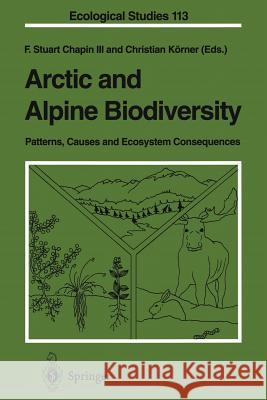
F. Stuart III Chapin; Christian K. Rner
Arctic and Alpine Biodiversity: Patterns, Causes and Ecosystem Consequences F. Stuart III Chapin Christian K 9783642789687 Springer - książkaWidoczna okładka, to zdjęcie poglądowe, a rzeczywista szata graficzna może różnić się od prezentowanej.

Arctic and Alpine Biodiversity: Patterns, Causes and Ecosystem Consequences

ISBN-13: 9783642789687 / Angielski / Miękka / 2012 / 332 str.

F. Stuart III Chapin; Christian K. Rner
cena 402,53
(netto: 383,36 VAT:  5%)

Najniższa cena z 30 dni: 385,52
Termin realizacji zamówienia:
ok. 22 dni roboczych.

Darmowa dostawa!

As human populations expand and have increasing access to technol- ogy, two general environmental concerns have arisen. First, human pop- ulations are having increasing impact on the earth system, such that we are altering the biospheric carbon pools, basic processes of elemental cycling and the climate system of the earth. Because of time lags and feedbacks, these processes are not easily reversed. These alterations are occurring now more rapidly than at any time in the last several million years. Secondly, human activities are causing changes in the earth's biota that lead to species extinctions at a rate and magnitude rivaling those of past geologic extinction events. Although environmental change is potentially reversible at some time scales, the loss of species is irrevo- cable. Changes in diversity at other scales are also cause for concern. Habitat fragmentation and declines in population sizes alter genetic di- versity. Loss or introduction of new functional groups, such as nitro- gen fixers or rodents onto islands can strongly alter ecosystem processes. Changes in landscape diversity through habitat modification and frag- mentation alter the nature of processes within and among vegetation patches. Although both ecological changes altering the earth system and the loss of biotic diversity have been major sources of concern in recent years, these concerns have been largely independent, with little concern for the environmental causes the ecosystem consequences of changes in biodiversity. These two processes are clearly interrelated. Changes in ecological systems cause changes in diversity.


Kategorie:
Nauka, Biologia i przyroda
Kategorie BISAC:
Science > Life Sciences - Ecology
Science > Environmental Science (see also Chemistry - Environmental)
Nature > Environmental Conservation & Protection - General
Wydawca:
Springer
Seria wydawnicza:
Ecological Studies
Język:
Angielski
ISBN-13:
9783642789687
Rok wydania:
2012
Wydanie:
Softcover Repri
Numer serii:
000007171
Ilość stron:
332
Waga:
0.54 kg
Wymiary:
23.5 x 15.5
Oprawa:
Miękka
Wolumenów:
01

I: Patterns and Causes of Diversity.- 1 Patterns and Causes of Arctic Plant Community Diversity.- 1.1 Background and Definitions.- 1.2 Arctic Species Diversity: The First Filter.- 1.3 Biogeographical Patterns Within the Arctic: The Second Set of Filters.- 1.4 Distribution of Species in Communities: The Third Set of Filters.- 1.5 Global Change and Community Dynamics.- 1.6 Conclusions.- References.- 2 Causes of Arctic Plant Diversity: Origin and Evolution.- 2.1 Introduction.- 2.2 Historical Factors of Arctic Plant Diversity.- 2.3 Evolution of Diversity.- 2.4 Breeding Mechanisms.- 2.5 Polyploidy.- 2.6 Ecotypes.- 2.7 Conclusions.- References.- 3 Patterns and Causes of Genetic Diversity in Arctic Plants.- 3.1 Introduction.- 3.2 Present Patterns of Genetic Diversity.- 3.3 Causes of Present Genetic Diversity Patterns.- 3.4 Genetic Response to Future Climate Change.- 3.5 Conclusions.- References.- 4 Alpine Plant Diversity: A Global Survey and Functional Interpretations.- 4.1 Introduction.- 4.2 How Much Land Is Covered by Alpine Ecosystems?.- 4.3 Plant Species Diversity in the Alpine Life Zone.- 4.4 Plant Functional Groups in Alpine Ecosystems.- 4.5 Causes of Alpine Plant Diversity.- 4.6 Effects of Biodiversity on Alpine Ecosystem Functioning.- 4.7 Alpine Biodiversity and Climate Change.- 4.8 Conclusions.- References.- 5 Origin and Evolution of the Mountain Flora in Middle Asia and Neighbouring Mountain Regions.- 5.1 Introduction.- 5.2 Number of Species in the Mountains.- 5.3 Effective Factors for Evolution.- 5.4 Models for Mountain Florogenesis.- 5.5 The History of Vegetation.- 5.6 Conclusions.- References.- 6 Diversity of the Arctic Terrestrial Fauna.- 6.1 Number of Species in the Arctic Fauna.- 6.2 Patterns and Causes of Biodiversity Changes in the Arctic.- 6.3 Taxonomic Composition and Functional Groups.- 6.4 Biotagenesis.- 6.5 Species Structure of Arctic Communities.- 6.6 Intraspecies Diversity.- 6.7 Correlation Between Forms of Diversity in Arctic Biomes.- 6.8 Conclusions.- References.- 7 Animal Diversity at High Altitudes in the Austrian Central Alps.- 7.1 Introduction.- 7.2 Altitudinal Zonation of the Main Groups of Animals.- 7.3 Species Numbers of Invertebrates and Altitudinal Zonation.- 7.4 Animal Communities Above the Timberline.- 7.5 Altitude-Related Changes in Abundance and Biomass of the Soil Fauna.- 7.6 Endemism and Vicariance in the Alpine Fauna.- 7.7 Conclusions.- References.- II: Past, Present, and Future Changes in Diversity.- 8 Arctic Tundra Biodiversity: A Temporal Perspective from Late Quaternary Pollen Records.- 8.1 Introduction.- 8.2 Late Quaternary Climate History.- 8.3 What Were the Composition and Regional Patterns of Tundra During Periods of Different Late Quaternary Climate?.- 8.4 What Were the Patterns of Shrub and Tree Invasions into Tundra When Climate Warmed at the End of the Last Glacial Period?.- 8.5 What Major Changes in Ecosystem Processes Accompanied the Conversion of Tundra to Forest at the End of the Last Glacial Period?.- 8.6 Conclusion.- References.- 9 Effects of Mammals on Ecosystem Change at the Pleistocene-Holocene Boundary.- 9.1 Introduction.- 9.2 Mammahan Effects on Ecosystem Processes.- 9.3 Hypotheses for the Steppe-Tundra Transition.- 9.4 Conclusions.- References.- 10 Palaeorecords of Plant Biodiversity in the Alps.- 10.1 Introduction.- 10.2 Possibilities and Limitations of the Fossil Record.- 10.3 Temporal Changes in Biodiversity in the Alps — Three Examples.- 10.4 Needs for Future Research.- 10.5 Conclusions.- References.- 11 Implications for Changes in Arctic Plant Biodiversity from Environmental Manipulation Experiments.- 11.1 Introduction.- 11.2 Mechanisms of Change in Biodiversity.- 11.3 Responses of Soils to Environmental Manipulations: Implications for Plant Nutrition and Biodiversity.- 11.4 Direct Responses of Plants to Environmental Perturbations and Implications for Changes in Populations, Communities and Biodiversity.- 11.5 Conclusions.- References.- 12 Patterns and Current Changes in Alpine Plant Diversity.- 12.1 Introduction.- 12.2 The Altitudinal Limits of Plant Life.- 12.3 Patterns of Diversity.- 12.4 Effects of Global Warming on Diversity.- 12.5 Conclusions.- References.- 13 Anthropogenic Impacts on Biodiversity in the Arctic.- 13.1 Proximate Causes.- 13.2 Social Drivers.- 13.3 Arctic Interactions.- 13.4 Humans as Components of Arctic Ecosystems.- 13.5 Conclusions.- References.- III: Ecosystem Consequences of Diversity.- 14 Plant Functional Diversity and Resource Control of Primary Production in Alaskan Arctic Tundras.- 14.1 Introduction.- 14.2 Resource Uptake.- 14.3 Effects on Community Productivity.- 14.4 Conclusions.- References.- 15 Direct and Indirect Effects of Plant Species on Biogeochemical Processes in Arctic Ecosystems.- 15.1 Introduction.- 15.2 Direct Influence over Biogeochemistry.- 15.3 Indirect Influence over Biogeochemistry.- 15.4 Predictions of Species’ Effects with Climate Warming.- 15.5 Approaches to Studying the Role of Species in Biogeochemistry.- 15.6 Conclusions.- References.- 16 Causes and Consequences of Plant Functional Diversity in Arctic Ecosystems.- 16.1 Introduction.- 16.2 Predicting Species Response to Global Change.- 16.3 Effects of Species on Ecosystem Processes.- 16.4 Species Diversity as Insurance Against Loss of Function.- 16.5 Conclusions.- References.- 17 Ecosystem Consequences of Microbial Diversity and Community Structure.- 17.1 Introduction.- 17.2 “Broad” Processes.- 17.3 “Narrow” Processes.- 17.4 Stress.- 17.5 Implications for Tundra.- 17.6 Overall Considerations.- 17.7 Conclusions.- References.- 18 Diversity of Biomass and Nitrogen Distribution Among Plant Species in Arctic and Alpine Tundra Ecosystems.- 18.1 Introduction.- 18.2 Concepts of Diversity.- 18.3 Patterns of Diversity of Carbon and Nitrogen Distribution.- 18.4 Experimental Tests of Controls over Diversity.- 18.5 Towards a Dynamic Model of Diversity in Tundra Ecosystems.- 18.6 Conclusions.- References.- 19 The Plant-Vertebrate Herbivore Interface in Arctic Ecosystems.- 19.1 Introduction.- 19.2 Patterns of Vegetation and Vertebrate Herbivory in Arctic Tundra.- 19.3 Vertebrate Herebivory in a Warming Climate: Implications for Tundra Biodiversity.- 19.4 Effects of Anthropogenic Disturbances on Trophic Interactions — A Potential Climatic Change Scenario.- 19.5 Conclusions.- 19.6 Summary.- References.- 20 Insect Diversity, Life History, and Trophic Dynamics in Arctic Streams, with Particular Emphasis on Black Flies (Diptera: Simuliidae).- 20.1 Introduction.- 20.2 Arctic Insect Diversity.- 20.3 Black Fly Life History Features.- 20.4 Trophic Dynamics.- 20.5 Organic Matter Processing by Black Flies in an Arctic Lake Outlet.- 20.6 Summary and Conclusions.- References.- 21 Land-Water Interactions: The Influence of Terrestrial Diversity on Aquatic Ecosystems.- 21.1 Introduction.- 21.2 Inputs from Land and the Regulation of Aquatic Systems.- 21.3 Terrestrial Diversity.- 21.4 Movement of Material from Land to Water.- 21.5 Conclusions.- References.- IV: A Synthesis.- 22 Patterns, Causes, Changes, and Consequences of Biodiversity in Arctic and Alpine Ecosystems.- 22.1 The Arctic and Alpine Biota.- 22.2 Past, Present, and Future Changes in Biodiversity.- 22.3 The Significance of Biodiversity for Ecosystem Function.- 22.4 Conclusions.

Christian Körner was born in 1949 in Salzburg, Austria, got his academic degrees from the University of Innsbruck, and became professor of botany at the University of Basel, Switzerland in 1989. He published over 300 scientific articles on plant-environment interactions and authored and coauthored numerous scientific books, including the leading plant science textbook Strasburger.


Udostępnij

Facebook - konto krainaksiazek.pl


Opinie o Krainaksiazek.pl na Opineo.pl

Partner Mybenefit

Krainaksiazek.pl w programie rzetelna firma Krainaksiaze.pl - płatności przez paypal

Czytaj nas na:

Facebook - krainaksiazek.pl
  • książki na zamówienie
  • granty
  • książka na prezent
  • kontakt
  • pomoc
  • opinie
  • regulamin
  • polityka prywatności

Zobacz:

  • Księgarnia czeska

  • Wydawnictwo Książkowe Klimaty

1997-2026 DolnySlask.com Agencja Internetowa

© 1997-2022 krainaksiazek.pl
     
KONTAKT | REGULAMIN | POLITYKA PRYWATNOŚCI | USTAWIENIA PRYWATNOŚCI
Zobacz: Księgarnia Czeska | Wydawnictwo Książkowe Klimaty | Mapa strony | Lista autorów
KrainaKsiazek.PL - Księgarnia Internetowa

Polityka prywatnosci - link
Krainaksiazek.pl - płatnośc Przelewy24
Przechowalnia Przechowalnia





