• Wyszukiwanie zaawansowane
  • Kategorie
  • Kategorie BISAC
  • Książki na zamówienie
  • Promocje
  • Granty
  • Książka na prezent
  • Opinie
  • Pomoc
  • Załóż konto
  • Zaloguj się

Archean Evolution of the Pilbara Craton and Fortescue Basin » książka


zaloguj się | załóż konto
Logo Krainaksiazek.pl

koszyk

konto

szukaj
topmenu
Księgarnia internetowa
Szukaj
Książki na zamówienie
Promocje
Granty
Książka na prezent
Moje konto
Pomoc
 
 
Wyszukiwanie zaawansowane
Pusty koszyk
Bezpłatna dostawa dla zamówień powyżej 20 złBezpłatna dostawa dla zamówień powyżej 20 zł

Kategorie główne

• Nauka
 [2952079]
• Literatura piękna
 [1850969]

  więcej...
• Turystyka
 [71058]
• Informatyka
 [151066]
• Komiksy
 [35579]
• Encyklopedie
 [23181]
• Dziecięca
 [620496]
• Hobby
 [139036]
• AudioBooki
 [1646]
• Literatura faktu
 [228729]
• Muzyka CD
 [379]
• Słowniki
 [2932]
• Inne
 [445708]
• Kalendarze
 [1409]
• Podręczniki
 [164793]
• Poradniki
 [480107]
• Religia
 [510956]
• Czasopisma
 [511]
• Sport
 [61267]
• Sztuka
 [243299]
• CD, DVD, Video
 [3411]
• Technologie
 [219640]
• Zdrowie
 [100984]
• Książkowe Klimaty
 [124]
• Zabawki
 [2281]
• Puzzle, gry
 [3363]
• Literatura w języku ukraińskim
 [258]
• Art. papiernicze i szkolne
 [8020]
Kategorie szczegółowe BISAC

Archean Evolution of the Pilbara Craton and Fortescue Basin

ISBN-13: 9783031180057 / Angielski / Twarda / 2023 / 461 str.
Arthur H. Hickman
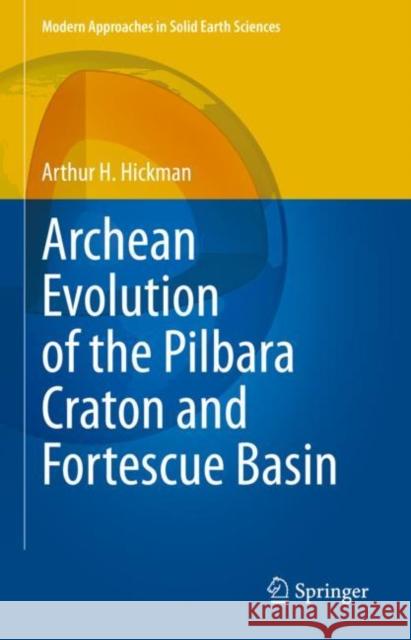
Archean Evolution of the Pilbara Craton and Fortescue Basin Arthur H. Hickman 9783031180057 Springer - książkaWidoczna okładka, to zdjęcie poglądowe, a rzeczywista szata graficzna może różnić się od prezentowanej.

Archean Evolution of the Pilbara Craton and Fortescue Basin

ISBN-13: 9783031180057 / Angielski / Twarda / 2023 / 461 str.

Arthur H. Hickman
cena 605,23
(netto: 576,41 VAT:  5%)

Najniższa cena z 30 dni: 578,30
Termin realizacji zamówienia:
ok. 22 dni roboczych
Dostawa w 2026 r.

Darmowa dostawa!

One of today’s major geoscientific controversies centres on the origin of the Archean granite‒greenstone terranes. Is the geology of these scattered remnants of our planet’s early crust consistent with the theory that modern-style plate-tectonic processes operated from the early Archean, or does it indicate that tectonic and magmatic processes were different in the Archean? Earth has clearly evolved since its initial formation, so at what stage did its processes of crustal growth first resemble those of today? The logical place to seek answers to these intriguing and important questions is within the best-preserved early Archean crust.The Pilbara region of northwest Australia is internationally famous for its abundant and exceptionally well-preserved fossil evidence of early life. However, until recently the area has received much less recognition for the key evidence it provides on early Archean crustal evolution. This book presents and interprets this evidence through a new stage-by-stage account of the development of the Pilbara’s geological record between 3.53 and 2.63 Ga.The Archean Pilbara crust represents one fragment of Earth’s oldest known supercontinent Vaalbara, which also included the Kaapvaal Craton of southern Africa. Recognition of Vaalbara expands the background database for both these areas, allowing us to more fully understand each of them.


One of today’s major geoscientific controversies centres on the origin of the Archean granite‒greenstone terranes. Is the geology of these scattered remnants of our planet’s early crust consistent with the theory that modern-style plate-tectonic processes operated from the early Archean, or does it indicate that tectonic and magmatic processes were different in the Archean? Earth has clearly evolved since its initial formation, so at what stage did its processes of crustal growth first resemble those of today? The logical place to seek answers to these intriguing and important questions is within the best-preserved early Archean crust.
The Pilbara region of northwest Australia is internationally famous for its abundant and exceptionally well-preserved fossil evidence of early life. However, until recently the area has received much less recognition for the key evidence it provides on early Archean crustal evolution. This book presents and interprets this evidence through a new stage-by-stage account of the development of the Pilbara’s geological record between 3.53 and 2.63 Ga.
The Archean Pilbara crust represents one fragment of Earth’s oldest known supercontinent Vaalbara, which also included the Kaapvaal Craton of southern Africa. Recognition of Vaalbara expands the background database for both these areas, allowing us to more fully understand each of them. 

Kategorie:
Nauka, Geografia
Kategorie BISAC:
Science > Geofizyka
Science > Earth Sciences - Geology
Science > Life Sciences - Evolution
Wydawca:
Springer
Seria wydawnicza:
Modern Approaches in Solid Earth Sciences
Język:
Angielski
ISBN-13:
9783031180057
Rok wydania:
2023
Dostępne języki:
Numer serii:
000359142
Ilość stron:
461
Oprawa:
Twarda
Dodatkowe informacje:
Wydanie ilustrowane

Chapter 1

Overview of the Pilbara Craton

1.1 Introduction

1.1.2 Investigations of the Pilbara Craton

1.1.3 Stratigraphy of the northern Pilbara Craton

1.1.4 Tectonic units

1.1.5 Fragment of an Archean continent

1.1.6 Vaalbara continent?

1.1.7 Concept of an ‘ancient nucleus’

1.1.8 Concealed Pilbara Craton


Chapter 2

Eoarchean and early Paleoarchean crust of the Pilbara Craton

2.1 Introduction

2.2 Eoarchean to early Paleoarchean crust (3800–3530 Ma)

2.2.1 U–Pb zircon geochronology

2.2.2 Sm–Nd isotope data

2.2.3 Lu–Hf isotopes in zircon

2.3 Conclusions


Chapter 3

Warrawoona Large Igneous Province, 3530–3427 Ma

3.1 Introduction

3.1.1 Preservation of the Warrawoona Group

3.2 Stratigraphy

3.2.1 Coonterunah Subgroup

3.2.2 Talga Talga Subgroup

3.2.3 Coongan Subgroup

3.2.4 Salgash Subgroup

3.3 Origin of the Warrawoona Group

3.4 Evolution of the Warrawoona Group

3.5 Large Igneous Province

3.6 Granitic supersuites of the Warrawoona LIP

3.6.1 Mulgundoona Supersuite (3530–3490 Ma)

3.6.2 Callina Supersuite (3484–3462 Ma)

3.6.3 Tambina Supersuite (3451–3416 Ma)

3.6.4 Emu Pool Supersuite (3324–3290 Ma)

3.6.5 Cleland Supersuite (3270–3223 Ma)

3.7 Tectonic setting of the Warrawoona LIP

3.7.1 Plate tectonic models

3.7.2 Oceanic plateau?


Chapter 4

Strelley Pool Formation: continental sedimentation between Paleoarchean LIPs

4.1 Introduction

4.2 Stratigraphy

4.2.1 Stratigraphic rank: formation or group?

4.2.2 Relations to the Panorama Formation

4.2.3 Unconformities

4.3 Geochronology

4.4 World’s oldest paleosols

4.5 Suggestion of hydrothermal deposition

4.6 Correlation with the Buck Reef Chert

4.7 Fossil record

4.7.1 Stromatolites

4.7.2 Microfossils

4.7.3 Microbial mats

4.8 Significance to crustal evolution

4.9 Conclusions


Chapter 5

Kelly Large Igneous Province, 3350–3315 Ma

5.1 Introduction

5.1.1 Tectonic setting

5.1.2 Kelly Large Igneous Province

5.2 Stratigraphy

5.2.1 Euro Basalt

5.2.2 Wyman Formation

5.2.3 Charteris Basalt

5.2.4 Unconformities within the Kelly Group

5.3 Komatiite and komatiitic basalt in the Kelly Group

5.4 Tholeiitic basalt in the Kelly Group

5.5 Sm–Nd isotope data

5.6 Relevance to continental deposition of the Warrawoona Group

5.7.1 Emu Pool Supersuite (3324–3290 Ma)

5.8 Emu Pool Event (3325–3290 Ma)


Chapter 6

Paleoarchean continental breakup of the Pilbara Craton

6.1 Introduction

6.2 East Pilbara Terrane Rifting Event

6.3 Stratigraphy

6.3.1 Sulphur Springs Group

6.3.2 Roebourne Group

6.3.3 Cleland Supersuite

6.4 Continental breakup

6.4.1 Evidence

6.4.2 Other fragments of the Paleoarchean plateau?


Chapter 7

Mesoarchean rift and marginal basins of the Pilbara Craton

7.1 Introduction

7.2 Basaltic rift basins

7.2.1 Regal Basin

7.3 Early Mesoarchean passive margins

7.3.1 Soanesville Basin

7.3.2 Nickol River Basin

7.3.3 Early Mosquito Creek Basin


Chapter 8

Mesoarchean subduction in the Pilbara Craton

8.1 Introduction

8.2 Sholl Terrane

8.2.1 Whundo Group

8.2.2 Railway Supersuite

8.3 Ophiolite (3220–3165 Ma Regal Formation)

8.4 Prinsep Orogeny and Elizabeth Hill Supersuite

8.4.1 Elizabeth Hill Supersuite

8.5 Magmatic arcs of the De Grey Superbasin

8.5.1 Orpheus Supersuite

8.5.2 Maitland River Supersuite

8.5.3 Sisters Supersuite


Chapter 9

Mesoarchean basin evolution inland of magmatic arcs

9.1 Introduction

9.2 De Grey Supergroup

9.2.1 Gorge Creek Group

9.2.2 Regional stratigraphic continuity

9.2.3 Conclusions regarding the Gorge Creek Basin

9.2.4 Geochronology

9.2.5 Coonieena Basalt

9.2.6 Croydon Group

9.2.7 Whim Creek Group

9.2.8 Bookingarra Group

9.3 Tectonic evolution of the De Grey Superbasin


Chapter 10

Orogenies, cratonization and post-orogenic granites

10.1 Introduction

10.1.1 North Pilbara Orogeny

10.1.2 Mosquito Creek Orogeny

10.2 Cutinduna Supersuite

10.3 Split Rock Supersuite


Chapter 11

Mineralization in the northern Pilbara

11.1 Paleoarchean mineralization

11.1.1 Sediment-hosted, hydrothermal massive sulfates

11.1.2 Volcanogenic massive sulfides

11.1.3 Black shale-hosted Cu–Zn

11.1.4 Vein and hydrothermal base metals

11.1.5 Copper and molybdenum mineralization

11.1.6 Precious metals

11.2 Mineralization during the EPTRE

11.2.1 Sulphur Springs Group

11.2.2 Roebourne Group

11.2.3 VMS Cu–Zn mineralization, Tabba Tabba Shear Zone

11.2.4 Soanesville Group

11.3 Mesoarchean mineralization

11.3.1 Mineralization during closure of the Regal Basin

11.3.2 Gold and copper north of the Sholl Shear Zone

11.3.3 Mineralization in the De Grey Superbasin

11.3.4 Gold in the Mosquito Creek Basin

11.3.5 Post-orogenic mineralization (2895–2830 Ma)

11.4 Neoarchean mineralization


Chapter 12

Fortescue Group: the Neoarchean breakup of the Pilbara Craton

12.1 Introduction

12.1.1 Re-definition of the Fortescue Group

12.2 Stratigraphy

12.2.1 Tectono-stratigraphic sequences


Arthur Hugh Hickman joined the Geological Survey of Western Australia (GSWA) early in 1972 shortly after being awarded a PhD (Geology) at Birmingham University, England. His interpretations of the stratigraphy, structure, and geochemistry of 800 km2 of the Southwest Highlands of Scotland were subsequently published in UK journals between 1975 and 1983. Parts of his geological mapping were incorporated into maps produced by the British Geological Survey. Arthur’s main aim during his first 20 years at GSWA was to contribute to increasing the geological understanding of parts of the vast state of Western Australia. His initial investigations covered the 100,000 km2 Pilbara region, and after a few years Arthur wrote a book (GSWA Bulletin 127) providing the first comprehensive interpretation of this area’s stratigraphy, crustal evolution, and mineralization. GSWA priorities then moved his investigations to other parts of Western Australia, but in 1993 a project was set up for a more detailed geological study of the Pilbara. The Pilbara Craton Mapping Project was conducted jointly between GSWA and Geoscience Australia between 1994 and 2005. The project was focused on more detailed geological mapping, with the GSWA Pilbara team quickly expanding to eight geoscientists under Arthur’s management. After 2005, members of the Pilbara team were moved to other projects and Arthur commenced follow-up compilation of maps and reports, geological interpretations, and working to make the large volume of data from the project more accessible in digital format. During his 50-year career with GSWA, Arthur has led many local and international geological excursions to the Pilbara and is recognized as a leading authority on the geology of this scientifically important area. He has published widely, and has given presentations to international audiences in Australia, South Africa, Japan, and USA.

One of today’s major geoscientific controversies centres on the origin of the Archean granite‒greenstone terranes. Is the geology of these scattered remnants of our planet’s early crust consistent with the theory that modern-style plate-tectonic processes operated from the early Archean, or does it indicate that tectonic and magmatic processes were different in the Archean? Earth has clearly evolved since its initial formation, so at what stage did its processes of crustal growth first resemble those of today? The logical place to seek answers to these intriguing and important questions is within the best-preserved early Archean crust.
The Pilbara region of northwest Australia is internationally famous for its abundant and exceptionally well-preserved fossil evidence of early life. However, until recently the area has received much less recognition for the key evidence it provides on early Archean crustal evolution. This book presents and interprets this evidence through a new stage-by-stage account of the development of the Pilbara’s geological record between 3.53 and 2.63 Ga.
The Archean Pilbara crust represents one fragment of Earth’s oldest known supercontinent Vaalbara, which also included the Kaapvaal Craton of southern Africa. Recognition of Vaalbara expands the background database for both these areas, allowing us to more fully understand each of them. 



Udostępnij

Facebook - konto krainaksiazek.pl


Opinie o Krainaksiazek.pl na Opineo.pl

Partner Mybenefit

Krainaksiazek.pl w programie rzetelna firma Krainaksiaze.pl - płatności przez paypal

Czytaj nas na:

Facebook - krainaksiazek.pl
  • książki na zamówienie
  • granty
  • książka na prezent
  • kontakt
  • pomoc
  • opinie
  • regulamin
  • polityka prywatności

Zobacz:

  • Księgarnia czeska

  • Wydawnictwo Książkowe Klimaty

1997-2025 DolnySlask.com Agencja Internetowa

© 1997-2022 krainaksiazek.pl
     
KONTAKT | REGULAMIN | POLITYKA PRYWATNOŚCI | USTAWIENIA PRYWATNOŚCI
Zobacz: Księgarnia Czeska | Wydawnictwo Książkowe Klimaty | Mapa strony | Lista autorów
KrainaKsiazek.PL - Księgarnia Internetowa

Polityka prywatnosci - link
Krainaksiazek.pl - płatnośc Przelewy24
Przechowalnia Przechowalnia




