• Wyszukiwanie zaawansowane
  • Kategorie
  • Kategorie BISAC
  • Książki na zamówienie
  • Promocje
  • Granty
  • Książka na prezent
  • Opinie
  • Pomoc
  • Załóż konto
  • Zaloguj się

Aquatic Animal Nutrition: Organic Macro- and Micro-Nutrients » książka


zaloguj się | załóż konto
Logo Krainaksiazek.pl

koszyk

konto

szukaj
topmenu
Księgarnia internetowa
Szukaj
Książki na zamówienie
Promocje
Granty
Książka na prezent
Moje konto
Pomoc
 
 
Wyszukiwanie zaawansowane
Pusty koszyk
Bezpłatna dostawa dla zamówień powyżej 20 złBezpłatna dostawa dla zamówień powyżej 20 zł

Kategorie główne

• Nauka
 [2946600]
• Literatura piękna
 [1856966]

  więcej...
• Turystyka
 [72221]
• Informatyka
 [151456]
• Komiksy
 [35826]
• Encyklopedie
 [23190]
• Dziecięca
 [619653]
• Hobby
 [140543]
• AudioBooki
 [1577]
• Literatura faktu
 [228355]
• Muzyka CD
 [410]
• Słowniki
 [2874]
• Inne
 [445822]
• Kalendarze
 [1744]
• Podręczniki
 [167141]
• Poradniki
 [482898]
• Religia
 [510455]
• Czasopisma
 [526]
• Sport
 [61590]
• Sztuka
 [243598]
• CD, DVD, Video
 [3423]
• Technologie
 [219201]
• Zdrowie
 [101638]
• Książkowe Klimaty
 [124]
• Zabawki
 [2473]
• Puzzle, gry
 [3898]
• Literatura w języku ukraińskim
 [254]
• Art. papiernicze i szkolne
 [8170]
Kategorie szczegółowe BISAC

Aquatic Animal Nutrition: Organic Macro- and Micro-Nutrients

ISBN-13: 9783030872298 / Angielski / Miękka / 2023 / 1084 str.
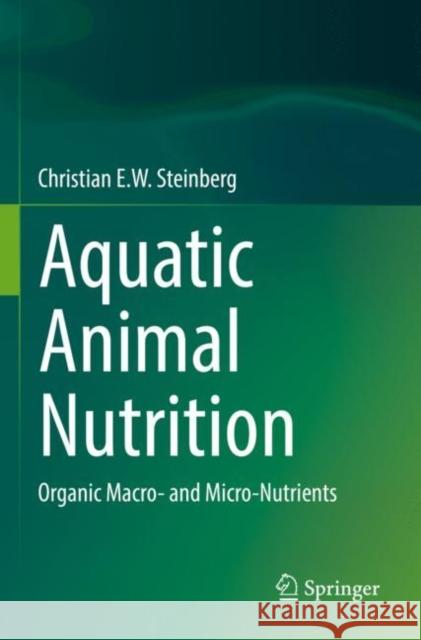
Christian E. W. Steinberg
Aquatic Animal Nutrition: Organic Macro- and Micro-Nutrients Christian E. W. Steinberg 9783030872298 Springer - książkaWidoczna okładka, to zdjęcie poglądowe, a rzeczywista szata graficzna może różnić się od prezentowanej.

Aquatic Animal Nutrition: Organic Macro- and Micro-Nutrients

ISBN-13: 9783030872298 / Angielski / Miękka / 2023 / 1084 str.

Christian E. W. Steinberg
cena 887,69 zł
(netto: 845,42 VAT:  5%)

Najniższa cena z 30 dni: 848,19 zł
Termin realizacji zamówienia:
ok. 22 dni roboczych
Bez gwarancji dostawy przed świętami

Darmowa dostawa!
inne wydania

As sequel toAquatic Animal Nutrition – A Mechanistic Perspective from Individuals to Generations, the present treatise on organic macro- and micronutrients continues the unique cross fertilization of aquatic ecology/ecophysiology and aquaculture. This treatise considers proteins and their constituents, carbohydrates from mono- to polysaccharides, fatty acids from free acids to fat, and waxes. It becomes obvious that these organic nutrients are more than only simple fuel for the metabolism of animals; rather, their constituents have messenger and controlling function for the actual consuming individual and even for succeeding generations. This aspect will become particularly clear by putting the organisms under consideration back into their ecosystem with their interrelationships and interdependencies. Furthermore, micronutrients, such as vitamins and nucleotides as well as exogenous enzymes, are in the focus of this volume with known and still-to-be-discovered controlling physiological and biomolecular functions.Aquatic Animal Nutrition – Organic Macro and Micro Nutrientsaddresses se­veral gaps in nutritional research and practice. One major gap is the lack of com­mon research standards and protocols for nutritional studies so that virtually incomparable approaches have to be compared. This applies also to the studied animals, since most approaches disregard intraspecific variabilities and the existence of epimutations in farmed individuals. Furthermore, recalling theMechanistic Perspective from Individuals to Generations, dietary benefits and deficiencies have effects on succeeding generations. In most studies, this long-term and sustainable aspect is overruled by pure short-term production aspects.By comparing nutritional behavior and success of fishes and invertebrates,Aqua­tic Animal Nutritionpoints out different metabolic pathways in these animal groups and discusses how, for instance, fishes would benefit when having some successful metabolic pathway of invertebrates. Application of novel ge­ne­tic techniques will help turn this vision into reality. However, a widely missing link in the current nutritional research is epigenetics regarding transgenerational heritages of acquired morphological and physiological properties. To in­crease public acceptance, nutritional optimization of farmed animals based on this mechanism, rather than genetical engineering, appears promising.


As sequel to Aquatic Animal Nutrition – A Mechanistic Perspective from Individuals to Generations, the present treatise on organic macro- and micronutrients continues the unique cross fertilization of aquatic ecology/ecophysiology and aquaculture. This treatise considers proteins and their constituents, carbohydrates from mono- to polysaccharides, fatty acids from free acids to fat, and waxes. It becomes obvious that these organic nutrients are more than only simple fuel for the metabolism of animals; rather, their constituents have messenger and controlling function for the actual consuming individual and even for succeeding generations. This aspect will become particularly clear by putting the organisms under consideration back into their ecosystem with their interrelationships and interdependencies. Furthermore, micronutrients, such as vitamins and nucleotides as well as exogenous enzymes, are in the focus of this volume with known and still-to-be-discovered controlling physiological and biomolecular functions.Aquatic Animal Nutrition – Organic Macro and Micro Nutrients addresses se­veral gaps in nutritional research and practice. One major gap is the lack of com­mon research standards and protocols for nutritional studies so that virtually incomparable approaches have to be compared. This applies also to the studied animals, since most approaches disregard intraspecific variabilities and the existence of epimutations in farmed individuals. Furthermore, recalling the Mechanistic Perspective from Individuals to Generations, dietary benefits and deficiencies have effects on succeeding generations. In most studies, this long-term and sustainable aspect is overruled by pure short-term production aspects. By comparing nutritional behavior and success of fishes and invertebrates, Aqua­tic Animal Nutrition points out different metabolic pathways in these animal groups and discusses how, for instance, fishes would benefit when having some successful metabolic pathway of invertebrates. Application of novel ge­ne­tic techniques will help turn this vision into reality. However, a widely missing link in the current nutritional research is epigenetics regarding transgenerational heritages of acquired morphological and physiological properties. To in­crease public acceptance, nutritional optimization of farmed animals based on this mechanism, rather than genetical engineering, appears promising.

Kategorie:
Nauka, Biologia i przyroda
Kategorie BISAC:
Science > Life Sciences - Ecology
Science > Ssaki
Wydawca:
Springer
Język:
Angielski
ISBN-13:
9783030872298
Rok wydania:
2023
Dostępne języki:
Ilość stron:
1084
Waga:
1.63 kg
Wymiary:
23.5 x 15.5
Oprawa:
Miękka
Dodatkowe informacje:
Wydanie ilustrowane


Christian E.W. Steinberg, educated as ecologist, is interested in pure and applied limnology, particularly aquatic organisms and their nutrition as well as the action of natural aquatic xenobiotic substances. Particularly, humic substances and their long-term impact in entire lake systems as well as their short-term and transgenerational effect in fishes and aquatic invertebrates have been and continue to be studied. Consequently, in 2003, he published the highly acclaimed Ecology of Humic Substances in Freshwater with Springer. The continuation of this research in­terest led to the identification of beneficial effects of natural mild environmental stresses, for instance, by dissolved humic substances, as ecological driving force and the publication of the 2012 Springer book Stress Ecology.

In 1995, he was appointed chairholder of freshwater ecology at Humboldt University in Berlin and, for 10 years, director of the Leibniz Institute of Freshwater Ecology and Inland Fisheries, Berlin, Germany. He has published approximately three hundred papers in peer-reviewed journals and was frequently appointed guest professor at Salzburg University (Austria), Universidade Federal do Rio de Janeiro (Brazil), Huazhong Agricultural University Wuhan (China), and, since 2009 permanently, Kunming University of Science and Technology (China).

As sequel to Aquatic Animal Nutrition – A Mechanistic Perspective from Individuals to Generations, the present treatise on organic macro- and micronutrients continues the unique cross fertilization of aquatic ecology/ecophysiology and aquaculture. This treatise considers proteins and their constituents, carbohydrates from mono- to polysaccharides, fatty acids from free acids to fat, and waxes. It becomes obvious that these organic nutrients are more than only simple fuel for the metabolism of animals; rather, their constituents have messenger and controlling function for the actual consuming individual and even for succeeding generations. This aspect will become particularly clear by putting the organisms under consideration back into their ecosystem with their interrelationships and interdependencies. Furthermore, micronutrients, such as vitamins and nucleotides as well as exogenous enzymes, are in the focus of this volume with known and still-to-be-discovered controlling physiological and biomolecular functions.

Aquatic Animal Nutrition – Organic Macro and Micro Nutrients addresses se­veral gaps in nutritional research and practice. One major gap is the lack of com­mon research standards and protocols for nutritional studies so that virtually incomparable approaches have to be compared. This applies also to the studied animals, since most approaches disregard intraspecific variabilities and the existence of epimutations in farmed individuals. Furthermore, recalling the Mechanistic Perspective from Individuals to Generations, dietary benefits and deficiencies have effects on succeeding generations. In most studies, this long-term and sustainable aspect is overruled by pure short-term production aspects.

By comparing nutritional behavior and success of fishes and invertebrates, Aqua­tic Animal Nutrition points out different metabolic pathways in these animal groups and discusses how, for instance, fishes would benefit when having some successful metabolic pathway of invertebrates. Application of novel ge­ne­tic techniques will help turn this vision into reality. However, a widely missing link in the current nutritional research is epigenetics regarding transgenerational heritages of acquired morphological and physiological properties. To in­crease public acceptance, nutritional optimization of farmed animals based on this mechanism, rather than genetical engineering, appears promising.




Udostępnij

Facebook - konto krainaksiazek.pl


Opinie o Krainaksiazek.pl na Opineo.pl

Partner Mybenefit

Krainaksiazek.pl w programie rzetelna firma Krainaksiaze.pl - płatności przez paypal

Czytaj nas na:

Facebook - krainaksiazek.pl
  • książki na zamówienie
  • granty
  • książka na prezent
  • kontakt
  • pomoc
  • opinie
  • regulamin
  • polityka prywatności

Zobacz:

  • Księgarnia czeska

  • Wydawnictwo Książkowe Klimaty

1997-2025 DolnySlask.com Agencja Internetowa

© 1997-2022 krainaksiazek.pl
     
KONTAKT | REGULAMIN | POLITYKA PRYWATNOŚCI | USTAWIENIA PRYWATNOŚCI
Zobacz: Księgarnia Czeska | Wydawnictwo Książkowe Klimaty | Mapa strony | Lista autorów
KrainaKsiazek.PL - Księgarnia Internetowa

Polityka prywatnosci - link
Krainaksiazek.pl - płatnośc Przelewy24
Przechowalnia Przechowalnia




