• Wyszukiwanie zaawansowane
  • Kategorie
  • Kategorie BISAC
  • Książki na zamówienie
  • Promocje
  • Granty
  • Książka na prezent
  • Opinie
  • Pomoc
  • Załóż konto
  • Zaloguj się

Application of Peptide-Based Prodrug Chemistry in Drug Development » książka


zaloguj się | załóż konto
Logo Krainaksiazek.pl

koszyk

konto

szukaj
topmenu
Księgarnia internetowa
Szukaj
Książki na zamówienie
Promocje
Granty
Książka na prezent
Moje konto
Pomoc
 
 
Wyszukiwanie zaawansowane
Pusty koszyk
Bezpłatna dostawa dla zamówień powyżej 20 złBezpłatna dostawa dla zamówień powyżej 20 zł

Kategorie główne

• Nauka
 [2946600]
• Literatura piękna
 [1856966]

  więcej...
• Turystyka
 [72221]
• Informatyka
 [151456]
• Komiksy
 [35826]
• Encyklopedie
 [23190]
• Dziecięca
 [619653]
• Hobby
 [140543]
• AudioBooki
 [1577]
• Literatura faktu
 [228355]
• Muzyka CD
 [410]
• Słowniki
 [2874]
• Inne
 [445822]
• Kalendarze
 [1744]
• Podręczniki
 [167141]
• Poradniki
 [482898]
• Religia
 [510455]
• Czasopisma
 [526]
• Sport
 [61590]
• Sztuka
 [243598]
• CD, DVD, Video
 [3423]
• Technologie
 [219201]
• Zdrowie
 [101638]
• Książkowe Klimaty
 [124]
• Zabawki
 [2473]
• Puzzle, gry
 [3898]
• Literatura w języku ukraińskim
 [254]
• Art. papiernicze i szkolne
 [8170]
Kategorie szczegółowe BISAC

Application of Peptide-Based Prodrug Chemistry in Drug Development

ISBN-13: 9781461448747 / Angielski / Miękka / 2012 / 89 str.
Arnab De
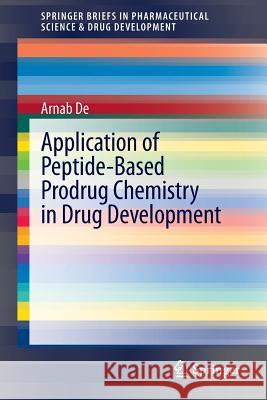
Application of Peptide-Based Prodrug Chemistry in Drug Development Arnab De 9781461448747 Springer - książkaWidoczna okładka, to zdjęcie poglądowe, a rzeczywista szata graficzna może różnić się od prezentowanej.

Application of Peptide-Based Prodrug Chemistry in Drug Development

ISBN-13: 9781461448747 / Angielski / Miękka / 2012 / 89 str.

Arnab De
cena 201,72 zł
(netto: 192,11 VAT:  5%)

Najniższa cena z 30 dni: 192,74 zł
Termin realizacji zamówienia:
ok. 22 dni roboczych
Bez gwarancji dostawy przed świętami

Darmowa dostawa!

Macromolecular (specifically peptide-based) drugs could potentially be highly effective medicines. However they have a relatively short duration of action and variable therapeutic index. An example of such a peptide is Glucagon-like Peptide I which could potentially be used as a revolutionary drug for diabetes. This is because it stimulates insulin only when the blood glucose level is high thereby reducing the risk of hypoglycemia (a significant disadvantage of using insulin is that an insulin overdose is the single most potent cause of life-threatening hypoglycemia). However it s short duration of action (half-life of 2 minutes in plasma) precludes its therapeutic use. In this volume, the use of novel therapeutics like GLP1 as an alternative to tradition insulin-based drugs in diabetes is described. Application of Peptide-Based Prodrug Chemistry in Drug Development elucidates the traditional concept of prodrugs as specialized non-toxic protective groups used in a transient manner to alter or to eliminate certain limiting properties in the parent small molecule (IUPAC definition). It goes on to provide insight into how prodrugs of peptides (with GLP1 as an example) could be appropriately used to extend the biological half life, broaden the therapeutic index of macromolecules and improve the pharmacodynamics of such drugs.Author explains the logic behind designing peptide prodrugs, synthetic procedures and bioassays to examine the conversion of the prodrug to the drug under therapeutic conditions. The prodrugs described slowly convert to the parent drug at physiological conditions of 37C and pH 7.2 driven by their inherent chemical instability without the need of any enzymatic cleavage. The diketopiperazine and diketomorpholine (DKP and DMP) strategies for prodrug conversion are demonstrated in detail with special emphasis on the chemical flexibility that it offers to develop prodrugs with variable time actions.This book will be of useful to chemists, biochemists, medicinal chemists, biologists and people in the medical profession (doctors).It may be used in undergraduate classes but will certainly help post-graduate students and advanced professionals. The author is grateful to Prof. Richard DiMarchi (Standiford H. Cox Professor of Chemistry and the Linda & Jack Gill Chair in Biomolecular Sciences at Indiana University) for valuable suggestions. The foreword for the book has been written by Prof. Jean Martinez, (Legion d'Honneur awarded by the French Republic; Professor of Chemistry and Medicinal Chemistry of the University of Montpellier, France; and Chairman of European Peptide Society, 2002-2010)."


Kategorie:
Technologie
Kategorie BISAC:
Medical > Endokrynologii i metabolizm
Medical > Farmakologia
Medical > Farmacja
Wydawca:
Springer
Seria wydawnicza:
Springerbriefs in Pharmaceutical Science & Drug Development
Język:
Angielski
ISBN-13:
9781461448747
Rok wydania:
2012
Wydanie:
2013
Numer serii:
000439204
Ilość stron:
89
Waga:
0.18 kg
Wymiary:
23.8 x 16.0 x 0.8
Oprawa:
Miękka
Wolumenów:
01
Dodatkowe informacje:
Wydanie ilustrowane

Macromolecular (specifically peptide-based) drugs could potentially be highly effective medicines. However they have a relatively short duration of action and variable therapeutic index. An example of such a peptide is Glucagon-like Peptide I which could potentially be used as a revolutionary drug for diabetes. This is because it stimulates insulin only when the blood glucose level is high thereby reducing the risk of hypoglycemia (a significant disadvantage of using insulin is that an insulin overdose is the single most potent cause of life-threatening hypoglycemia). However it’s short duration of action (half-life of 2 minutes in plasma) precludes its therapeutic use.

In this volume, the use of novel therapeutics like GLP1 as an alternative to tradition insulin-based drugs in diabetes is described. Application of Peptide-Based Prodrug Chemistry in Drug Development elucidates the traditional concept of prodrugs as “specialized non-toxic protective groups used in a transient manner to alter or to eliminate certain limiting properties in the parent small molecule” (IUPAC definition). It goes on to provide insight into how prodrugs of peptides (with GLP1 as an example) could be appropriately used to extend the biological half life, broaden the therapeutic index of macromolecules and improve the pharmacodynamics of such drugs.  Author explains the logic behind designing peptide prodrugs, synthetic procedures and bioassays to examine the conversion of the prodrug to the drug under therapeutic conditions. The prodrugs described slowly convert to the parent drug at physiological conditions of 37C and pH 7.2 driven by their inherent chemical instability without the need of any enzymatic cleavage. The diketopiperazine and diketomorpholine (DKP and DMP) strategies for prodrug conversion are demonstrated in detail with special emphasis on the chemical flexibility that it offers to develop prodrugs with variable time actions.

This book will be of useful to chemists, biochemists, medicinal chemists, biologists and people in the medical profession (doctors). It may be used in undergraduate classes but will certainly help post-graduate students and advanced professionals.

The author is grateful to Prof. Richard DiMarchi (Standiford H. Cox Professor of Chemistry and the Linda & Jack Gill Chair in Biomolecular Sciences at Indiana University) for valuable suggestions. The foreword for the book has been written by Prof. Jean Martinez, (Legion d'Honneur awarded by the French Republic; Professor of Chemistry and Medicinal Chemistry of the University of Montpellier, France; and Chairman of European Peptide Society, 2002-2010).

Table of contents:

Introduction.- Aapplication of Prodrug Chemistry to GLP-1.- Experimental procedures.- Characterization of Prodrugs.- Conclusion.

Arnab De, M.A, M.Phil , is currently a PhD candidate at Columbia University Medical Center. He completed his undergraduate education in Presidency College, Calcutta, India before coming to the Unites States for his higher education. He came to Indiana University, Bloomington where he worked with Prof. Richard DiMarchi (Standiford H. Cox Professor of Chemistry and the Linda & Jack Gill Chair in Biomolecular Sciences) to develop peptide-based prodrugs as therapeutics for diabetes. The work with Prof. DiMarchi resulted in two patents (licensed by Marcadia Biotech, recently acquired by Roche) and multiple publications in peer reviewed journals. He presented his findings in the American Peptide Symposium’2009 and received the Young Investigator’s Award. He subsequently came to Columbia University where he is developing transgenic mice to serve as potential models for autoimmune diseases. He was invited by Carolyn J Honour (Editorial Director, Biomedicine at Springer) to write this book in the Springer Brief series. The foreword has been written by Prof. Jean Martinez (Legion d'Honneur awarded by the French Republic and Chairman of European Peptide Society, 2002-2010).


Udostępnij

Facebook - konto krainaksiazek.pl


Opinie o Krainaksiazek.pl na Opineo.pl

Partner Mybenefit

Krainaksiazek.pl w programie rzetelna firma Krainaksiaze.pl - płatności przez paypal

Czytaj nas na:

Facebook - krainaksiazek.pl
  • książki na zamówienie
  • granty
  • książka na prezent
  • kontakt
  • pomoc
  • opinie
  • regulamin
  • polityka prywatności

Zobacz:

  • Księgarnia czeska

  • Wydawnictwo Książkowe Klimaty

1997-2025 DolnySlask.com Agencja Internetowa

© 1997-2022 krainaksiazek.pl
     
KONTAKT | REGULAMIN | POLITYKA PRYWATNOŚCI | USTAWIENIA PRYWATNOŚCI
Zobacz: Księgarnia Czeska | Wydawnictwo Książkowe Klimaty | Mapa strony | Lista autorów
KrainaKsiazek.PL - Księgarnia Internetowa

Polityka prywatnosci - link
Krainaksiazek.pl - płatnośc Przelewy24
Przechowalnia Przechowalnia





