• Wyszukiwanie zaawansowane
  • Kategorie
  • Kategorie BISAC
  • Książki na zamówienie
  • Promocje
  • Granty
  • Książka na prezent
  • Opinie
  • Pomoc
  • Załóż konto
  • Zaloguj się

Anxiety Disorders: Pathophysiology and Pharmacological Treatment » książka


zaloguj się | załóż konto
Logo Krainaksiazek.pl

koszyk

konto

szukaj
topmenu
Księgarnia internetowa
Szukaj
Książki na zamówienie
Promocje
Granty
Książka na prezent
Moje konto
Pomoc
 
 
Wyszukiwanie zaawansowane
Pusty koszyk
Bezpłatna dostawa dla zamówień powyżej 20 złBezpłatna dostawa dla zamówień powyżej 20 zł

Kategorie główne

• Nauka
 [2949965]
• Literatura piękna
 [1857847]

  więcej...
• Turystyka
 [70818]
• Informatyka
 [151303]
• Komiksy
 [35733]
• Encyklopedie
 [23180]
• Dziecięca
 [617748]
• Hobby
 [139972]
• AudioBooki
 [1650]
• Literatura faktu
 [228361]
• Muzyka CD
 [398]
• Słowniki
 [2862]
• Inne
 [444732]
• Kalendarze
 [1620]
• Podręczniki
 [167233]
• Poradniki
 [482388]
• Religia
 [509867]
• Czasopisma
 [533]
• Sport
 [61361]
• Sztuka
 [243125]
• CD, DVD, Video
 [3451]
• Technologie
 [219309]
• Zdrowie
 [101347]
• Książkowe Klimaty
 [123]
• Zabawki
 [2362]
• Puzzle, gry
 [3791]
• Literatura w języku ukraińskim
 [253]
• Art. papiernicze i szkolne
 [7933]
Kategorie szczegółowe BISAC

Anxiety Disorders: Pathophysiology and Pharmacological Treatment

ISBN-13: 9783034894609 / Angielski / Miękka / 2012 / 298 str.
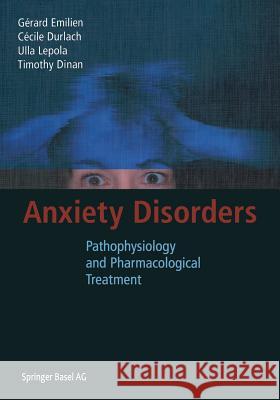
Gerard Emilien; Cecile Durlach; Ulla Lepola
Anxiety Disorders: Pathophysiology and Pharmacological Treatment Emilien, Gerard 9783034894609 Birkhauser - książkaWidoczna okładka, to zdjęcie poglądowe, a rzeczywista szata graficzna może różnić się od prezentowanej.

Anxiety Disorders: Pathophysiology and Pharmacological Treatment

ISBN-13: 9783034894609 / Angielski / Miękka / 2012 / 298 str.

Gerard Emilien; Cecile Durlach; Ulla Lepola
cena 403,47
(netto: 384,26 VAT:  5%)

Najniższa cena z 30 dni: 385,52
Termin realizacji zamówienia:
ok. 22 dni roboczych
Bez gwarancji dostawy przed świętami

Darmowa dostawa!

In this book, the discussion of the normal and pathological aspects of anxiety is critically examined. A chapter on the molecular basis of anxiety is included, outlining the potential of such approach in the discovery of novel effective pharmacological interventions. The face validity, predictability and usefulness of animal models in the design of valid new efficacious products are discussed. Separate chapters dedicated to each particular type of anxiety such as generalized anxiety disorder, social phobia, posttraumatic stress disorder, panic and obsessive-compulive disorder are included. This book should be of benefit to psychiatrists, clinical psychologists, general practitioners, nurses, students and all those engaged in neuropsychiatric research.


Kategorie:
Nauka, Medycyna
Kategorie BISAC:
Psychology > Neuropsychology
Medical > Psychiatry - Psychopharmacology
Medical > Internal Medicine
Wydawca:
Birkhauser
Język:
Angielski
ISBN-13:
9783034894609
Rok wydania:
2012
Wydanie:
Softcover Repri
Ilość stron:
298
Waga:
0.62 kg
Wymiary:
25.4 x 17.8
Oprawa:
Miękka
Wolumenów:
01
Dodatkowe informacje:
Wydanie ilustrowane

1:Normal and pathological anxiety.- 1 What is anxiety?.- 1.1 Anxiety in children.- 1.2 Anxiety in the elderly.- 1.3 Personality and anxiety.- 1.4 Cognitive aspects of anxiety.- 1.4.1 Gray neurophysiological model of anxiety.- 1.5 Comorbidity of anxiety disorders.- 1.6 Anxiety scales.- 2 Relevance of laboratory research on anxiety disorders.- 3 Genetic factors and brain imaging.- 4 Management.- 5 Discussion.- 2:Biological basis of anxiety and strategies for pharmacological innovation.- 1 Introduction.- 2 Neurobiology of anxiety disorders.- 2.1 Generalised anxiety disorder.- 2.2 Panic disorder.- 2.3 Social phobia.- 2.4 Post-traumatic stress disorder.- 2.5 Obsessive-compulsive disorders.- 3 Recent development and future anxiolytics.- 3.1 5-HT receptors.- 3.2 GABA receptors.- 3.3 Neuropeptide (CCK, CRF, NPY and NK) receptors.- 3.4 Glutamatergic pathways.- 3.5 Opioid receptors.- 3.6 Neurosteroids.- 3.7 Equilibrium between GABA-benzodiazepine and other receptors.- 3.8 Use of mutant mice.- 4 Discussion.- 3:Generalised anxiety disorder.- 1 Introduction.- 2 Diagnostic.- 3 The phenomenon of worry.- 4 Neurobiology.- 4.1 Imaging studies.- 4.2 Genetics.- 5 Physiopathology.- 6 Epidemiology and natural course.- 7 Treatment.- 7.1 Psychological.- 7.2 Biofeedback.- 7.3 Pharmacological.- 7.3.1 Benzodiazepines.- 7.3.2 Buspirone.- 7.3.3 Venlafaxine.- 7.3.4 SSRIs.- 7.3.5 Tricyclics.- 7.3.6 Other drugs.- 7.3.7 Algorithm for treatment.- 8 Methodology for clinical investigation.- 9 Discussion.- 4:Social phobia.- 1 Introduction.- 2 Diagnosis and comorbidity.- 2.1 Subtypes.- 2.2 Differential diagnosis.- 2.3 Comorbidity.- 2.4 Epidemiology.- 2.5 Natural history.- 2.6 Childhood and adolescence versus adult social phobia.- 3 Pathophysiology.- 3.1 Genetic.- 3.2 Neurophysiology.- 3.3 Neuroimaging.- 3.4 Environment.- 3.5 Gender and cultural differences.- 4 Treatments.- 4.1 Psychological.- 4.2 Pharmacological.- 4.3 Comparison, combination of drug versus cognitive-behavioral therapy.- 4.4 Algorithm for treatment.- 5 Methodology of clinical investigations.- 5.1 Rating scales.- 5.2 Self-assessment questionnaires.- 5.3 Clinician/computer-administered scales.- 5.4 Health Outcome Assessments.- 5.5 Assessment of recovery.- 6 Discussion.- 5:Panic disorder.- 1 Introduction.- 2 Diagnosis and aetiology.- 2.1 Comorbidity.- 2.2 Epidemiology.- 3 Pathophysiology.- 3.1 Autonomic and central nervous system dysfunctions.- 3.2 Brain imaging.- 3.3 Respiratory function and carbon dioxide sensitivity.- 3.4 Genetic.- 3.5 Impact on cognitive processes.- 4 Treatments.- 4.1 Psychological.- 4.2 Pharmacological.- 4.2.1 Benzodiazepines.- 4.2.2 Tricyclic antidepressants.- 4.2.3 SSRIs.- 4.2.4 Other treatments.- 4.2.5 Algorithm for treatment.- 5 Methodology for clinical investigation.- 5.1 Psychometric scales.- 5.2 Assessing response and remission.- 6 Discussion.- 6:Obsessive-compulsive disorder.- 1 Introduction.- 2 Diagnostic.- 2.1 Comorbidity.- 2.2 Epidemiology.- 2.3 Natural history.- 3 Physiopathology.- 3.1 Neurobiology.- 3.2 Brain imaging.- 3.3 Genetics.- 3.4 Cognitive dysfunctions.- 4 Treatment.- 4.1 Psychological treatment.- 4.2 Pharmacological treatment.- 4.2.1 Clomipramine.- 4.2.2 SSRI and the 5-HT receptors.- 4.2.3 Addition of atypical neuroleptics.- 4.2.4 Course of therapy.- 4.2.5 Children.- 4.2.6 Some cultural differences in treatment practice.- 5 Methodology for clinical investigation.- 5.1 Psychometric scales.- 6 Discussion.- 7:Posttraumatic stress disorder.- 1 Introduction.- 2 Epidemiology.- 3 Comorbidity.- 4 Physiological and neurological abnormalities associated with PTSD.- 4.1 Physiological abnormalities.- 4.2 Neurobiology and brain abnormalities.- 5 Cognitive dysfunction associated with PTSD.- 5.1 Assessment of PTSD.- 5.2 Attentional bias: The emotional Stroop test.- 5.3 Memory.- 6 Treatment of PTSD.- 6.1 Psychotherapeutic approach.- 6.1.1 Exposure therapy.- 6.1.2 Anxiety management programs.- 6.1.3 Cognitive therapy.- 6.1.4 Eye movement and desensitisation reprocessing.- 6.2 Biofeedback.- 6.3 Pharmacological approach.- 6.3.1 Tricyclics.- 6.3.2 Selective serotonin reuptake inhibitors.- 6.3.3 Anticonvulsants.- 6.3.4 ?-blocker and a2-agonist.- 6.3.5 ?l-antagonists.- 6.3.6 Buspirone.- 6.3.7 Other drugs.- 6.3.8 New research strategy in pharmacotherapy of PTSD.- 7 Discussion.- 8:Phobic disorders.- 1 Introduction.- 2 Epidemiology.- 3 Genetics.- 4 Treatment.- 4.1 Psychological.- 4.2 Biofeedback.- 4.3 Pharmacological.- 5 Discussion.- 9:Laboratory models of anxiety.- 1 Introduction.- 2 Biological animal models.- 2.1 GABAergic transmission and benzodiazepine receptor function.- 2.2 5-HT receptor knockouts.- 2.3 Corticotropin-releasing hormone mutation and CRH-receptor knockouts.- 2.4 Genetically selected alcohol-preferring rats.- 3 Behavioural animal models.- 3.1 Anxiety.- 3.1.1 Elevated plus-maze.- 3.1.2 Elevated T-maze.- 3.1.3 The holeboard test.- 3.1.4 Stress-induced hyperthermia.- 3.1.5 Fear potentiated startle.- 3.1.6 Burying behaviour test.- 3.1.7 Stretched attend posture test.- 3.1.8 Light-dark transition test.- 3.1.9 Social interaction.- 3.1.10 Ultrasonic distress vocalisation.- 3.1.11 A primate model.- 3.2 Panic disorder.- 3.2.1 Periaqueductal gray model.- 3.2.2 The mouse defence test battery.- 3.2.3 Other new behavioural models.- 3.3 Generalised anxiety disorder.- 3.4 Obsessive-compulsive disorder.- 3.5 Posttraumatic stress disorder.- 3.6 Effects of the antidepressants in the models.- 4 Human models.- 4.1 Some models of anxiety.- 4.1.1 The video-recorded Stroop colour word test.- 4.1.2 Fear potentiated startle.- 4.2 Generalised anxiety disorder.- 4.3 Panic disorder.- 5 Issues relevant to some non-benzodiazepine anxiolytics.- 5.1 5-HT receptors.- 5.2 Cholecystokinin receptors.- 6 Discussion.- 10:Discussion and perspectives.- Future perspectives.

Anxiety disorders are very common and constitute some of the most frequent psychological problems in medical practice. The term anxiety disorder is used to describe conditions in which pathologic anxiety is the predominant factor. These conditions include phobic disorders, panic disorder, generalized anxiety disorder, posttraumatic stress disorder and obsessive-compulsive disorder.

Management of anxiety disorders may involve physical treatments such as drugs, psychological treatments such as psychotherapy or behavioural cognitive therapy or a combination of both. The development of new drugs with improved safety and tolerability is an important step in the treatment of anxiety.

In this book, the discussion of the normal and pathological aspects of anxiety is critically examined. Particular attention is given to aetiology, differential diagnosis, epidemiology and both cognitive and pharmacological treatments. The book covers most aspects of anxiety disorders which makes it useful for a wide range of clinicians as well as researchers, e.g. psychiatrists, general practitioners, pharmacologists etc.


Udostępnij

Facebook - konto krainaksiazek.pl


Opinie o Krainaksiazek.pl na Opineo.pl

Partner Mybenefit

Krainaksiazek.pl w programie rzetelna firma Krainaksiaze.pl - płatności przez paypal

Czytaj nas na:

Facebook - krainaksiazek.pl
  • książki na zamówienie
  • granty
  • książka na prezent
  • kontakt
  • pomoc
  • opinie
  • regulamin
  • polityka prywatności

Zobacz:

  • Księgarnia czeska

  • Wydawnictwo Książkowe Klimaty

1997-2025 DolnySlask.com Agencja Internetowa

© 1997-2022 krainaksiazek.pl
     
KONTAKT | REGULAMIN | POLITYKA PRYWATNOŚCI | USTAWIENIA PRYWATNOŚCI
Zobacz: Księgarnia Czeska | Wydawnictwo Książkowe Klimaty | Mapa strony | Lista autorów
KrainaKsiazek.PL - Księgarnia Internetowa

Polityka prywatnosci - link
Krainaksiazek.pl - płatnośc Przelewy24
Przechowalnia Przechowalnia





