• Wyszukiwanie zaawansowane
  • Kategorie
  • Kategorie BISAC
  • Książki na zamówienie
  • Promocje
  • Granty
  • Książka na prezent
  • Opinie
  • Pomoc
  • Załóż konto
  • Zaloguj się

Antimicrobial Research and One Health in Africa » książka


zaloguj się | załóż konto
Logo Krainaksiazek.pl

koszyk

konto

szukaj
topmenu
Księgarnia internetowa
Szukaj
Książki na zamówienie
Promocje
Granty
Książka na prezent
Moje konto
Pomoc
 
 
Wyszukiwanie zaawansowane
Pusty koszyk
Bezpłatna dostawa dla zamówień powyżej 20 złBezpłatna dostawa dla zamówień powyżej 20 zł

Kategorie główne

• Nauka
 [2944077]
• Literatura piękna
 [1814251]

  więcej...
• Turystyka
 [70679]
• Informatyka
 [151074]
• Komiksy
 [35590]
• Encyklopedie
 [23169]
• Dziecięca
 [611005]
• Hobby
 [136031]
• AudioBooki
 [1718]
• Literatura faktu
 [225599]
• Muzyka CD
 [379]
• Słowniki
 [2916]
• Inne
 [443741]
• Kalendarze
 [1187]
• Podręczniki
 [166463]
• Poradniki
 [469211]
• Religia
 [506887]
• Czasopisma
 [481]
• Sport
 [61343]
• Sztuka
 [242115]
• CD, DVD, Video
 [3348]
• Technologie
 [219293]
• Zdrowie
 [98602]
• Książkowe Klimaty
 [124]
• Zabawki
 [2385]
• Puzzle, gry
 [3504]
• Literatura w języku ukraińskim
 [260]
• Art. papiernicze i szkolne
 [7151]
Kategorie szczegółowe BISAC

Antimicrobial Research and One Health in Africa

ISBN-13: 9783031237959 / Angielski / Twarda / 2023 / 540 str.
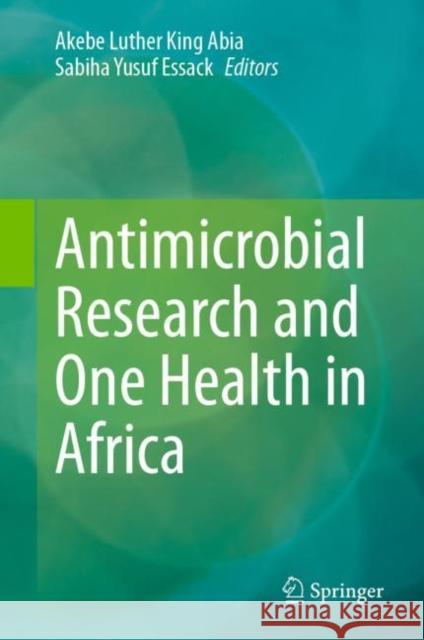
Akebe Luther King Abia; Sabiha Yusuf Essack
Antimicrobial Research and One Health in Africa Akebe Luther King Abia Sabiha Yusuf Essack 9783031237959 Springer - książkaWidoczna okładka, to zdjęcie poglądowe, a rzeczywista szata graficzna może różnić się od prezentowanej.

Antimicrobial Research and One Health in Africa

ISBN-13: 9783031237959 / Angielski / Twarda / 2023 / 540 str.

Akebe Luther King Abia; Sabiha Yusuf Essack
cena 885,61
(netto: 843,44 VAT:  5%)

Najniższa cena z 30 dni: 848,19
Termin realizacji zamówienia:
ok. 22 dni roboczych.

Darmowa dostawa!
inne wydania

Antimicrobial resistance is recognised among the world’s most challenging problems. Despite its global spread, Africa, specifically sub-Saharan Africa, is the most affected by this malaise. Poor living conditions and inadequate access to sanitation and potable water supplies are among contributing factors that have influenced a high disease burden on the continent, requiring extensive antimicrobials. Weak health systems and the absence of firm policies further aggravate the problem, as the use of antimicrobials is mostly unregulated. The increasing demand for animal protein to meet the starving populations’ demands has also influenced the use of these antimicrobials, including those banned on other continents, for food animal production. The ripple effect of indiscriminate use in humans and animals is the massive discharge of antimicrobials, their residues, antimicrobial-resistant microorganisms and their associated genes into the environment.This 14-chapter unique masterpiece presents the AMR problem in African, addressing the various compartments of the One Health – humans, animals, and the environment, to illustrate the need for concerted efforts in the fight against AMR, especially in Africa. Authors from the four cardinal points present diverse aspects of AMR in Africa, starting with behavioural and social drivers of AMR in Africa. Antimicrobial stewardship in an African context is also discussed. AMR in humans is presented through studies on antibiotic-resistant neonates and nontyphoidal Salmonella infections and the clinical relevance of the genetics of viral resistance. Topics on AMR in mastitis, biosecurity in animal farming and the linkage between disinfectants and AMR are discussed. The environmental dimension of AMR is discussed, notably in the aquatic environment, and its implication for aquaculture and irrigation and using nanomaterials to treat polluted waters from such environments are highlighted. Finally, Africa’s rich floral diversity is portrayed as an eco-friendly and cost-effective approach to combat AMR. Hopefully, the work presented will spur greater collaboration between scientists, environmental, animal and human health practitioners, the general population, and policymakers to assimilate and implement the One Health approach to combating AMR, rather than working in silos on their various sectors


Antimicrobial resistance is recognised among the world’s most challenging problems. Despite its global spread, Africa, specifically sub-Saharan Africa, is the most affected by this malaise. Poor living conditions and inadequate access to sanitation and potable water supplies are among contributing factors that have influenced a high disease burden on the continent, requiring extensive antimicrobials. Weak health systems and the absence of firm policies further aggravate the problem, as the use of antimicrobials is mostly unregulated. The increasing demand for animal protein to meet the starving populations’ demands has also influenced the use of these antimicrobials, including those banned on other continents, for food animal production. The ripple effect of indiscriminate use in humans and animals is the massive discharge of antimicrobials, their residues, antimicrobial-resistant microorganisms and their associated genes into the environment. This 14-chapter unique masterpiece presents the AMR problem in African, addressing the various compartments of the One Health – humans, animals, and the environment, to illustrate the need for concerted efforts in the fight against AMR, especially in Africa. Authors from the four cardinal points present diverse aspects of AMR in Africa, starting with behavioural and social drivers of AMR in Africa. Antimicrobial stewardship in an African context is also discussed. AMR in humans is presented through studies on antibiotic-resistant neonates and nontyphoidal Salmonella infections and the clinical relevance of the genetics of viral resistance. Topics on AMR in mastitis, biosecurity in animal farming and the linkage between disinfectants and AMR are discussed. The environmental dimension of AMR is discussed, notably in the aquatic environment, and its implication for aquaculture and irrigation and using nanomaterials to treat polluted waters from such environments are highlighted. Finally, Africa’s rich floral diversity is portrayed as an eco-friendly and cost-effective approach to combat AMR. Hopefully, the work presented will spur greater collaboration between scientists, environmental, animal and human health practitioners, the general population, and policymakers to assimilate and implement the One Health approach to combating AMR, rather than working in silos on their various sectors

Kategorie:
Nauka, Biologia i przyroda
Kategorie BISAC:
Science > Mikrobiologia
Medical > Zdrowie publiczne
Technology & Engineering > Environmental - General
Wydawca:
Springer
Język:
Angielski
ISBN-13:
9783031237959
Rok wydania:
2023
Dostępne języki:
Ilość stron:
540
Oprawa:
Twarda
Dodatkowe informacje:
Wydanie ilustrowane

​Preface


SECTION 1: Food

Chapter 1: Microbiological safety and antimicrobial resistance in fresh produce production in Africa 
Yinka Somorin, PhD and Amara Anyogu, PhD
Queen’s University Belfast, Belfast, UK
University of Westminster, London, UK/NIGERIA

Chapter 2: The current status of antibiotic-resistant bacteria and genes in African aquaculture
Samwel Mchele Limbu, PhD
Department of Aquatic Sciences and Fisheries Technology, College of Agricultural Sciences and Fisheries Technology, University of Dar es Salaam, TANZANIA

Chapter 3: Antibiotic resistance in food animals in Africa: Occurrence, human health risk, socio-economic impact, and mitigation measures
Chioma Achi, PhD
Faculty of Veterinary Medicine, Usmanu Danfodiyo University Sokoto, NIGERIA.
Department of Veterinary Medicine, University of Cambridge, Madingley Road, CB3 0ES, United Kingdom

SECTION 2: Detection

Chapter 4: The era of bacterial genomics in antibiotic research in Africa
Jonathan Asante, PhD
School of Pharmacy, University of Cape Coast, Cape Coast, Ghana
Antimicrobial Research Unit, College of Health Sciences, University of KwaZulu-Natal, SOUTH AFRICA

Chapter 5: Insights Gained Through Genomics and Metagenomics Resistomes Studies in Africa
Daniel Gyamfi Amoako, PhD
Centre for Respiratory Diseases and Meningitis, National Institute for Communicable Diseases, Johannesburg 2131, South Africa
Antimicrobial Research Unit, College of Health Sciences, University of KwaZulu-Natal, Durban 4000, South Africa
Biomedical Resource Unit, College of Health Sciences, University of KwaZulu-Natal, Durban 4000, South Africa

SECTION 3: Environment

Chapter: 6: Occurrence and health risks of antimicrobial resistance in African aquatic systems 
Professor Willis Gwenzi, PhD
Biosystems and Environmental Engineering Research Group, Department of Soil Science and Agricultural Engineering, Faculty of Agriculture, University of Zimbabwe, PO. Box MP 167, Mount Pleasant, Harare, Zimbabwe

Chapter 7: Antibiotics and antibiotic-resistant bacteria in African coastal ecosystems
Professor Moustafa Ahmed El-Shenawy, PhD
National Research Center, Cairo 12311, EGYPT

Chapter 8: Application of nanotechnology for the elimination of antibiotic-resistant bacteria from wastewater
Khalid El-Wakeel, Akebe Luther King Abia, Mohamed Azab El-Liethy
Environmental Science Department, Faculty of Science, Port Said University, Port Said, Egypt
College of Science, Department of Chemistry, University of Jeddah, Jeddah, Saudi Arabia
Antimicrobial Research Unit, College of Health Sciences, University of KwaZulu-Natal, X54001 Durban, South Africa
Environmental Microbiology Lab., Water Pollution Research Department, National Research Centre, Dokki, Giza 12622, Egypt

SECTION 4: Viruses

Chapter 9: Genetics of viral resistance: clinical relevance and role in future disease outbreaks
Juliet. A. Shenge, PhD
Department of Virology, College of Medicine, University of Ibadan, NIGERIA

SECTION 5: One Health

Chapter 10: Antimicrobial resistance of Salmonella enterica in Africa
Professor TOUATI Abdelaziz, PhD
Laboratoire d'Ecologie microbienne, FSNV, Université de Bejaia, ALGERIE

Chapter 11: Antimicrobial resistance patterns of ESKAPE pathogens in humans, animals, and the environment in Africa
Bakoena Hensa
Antimicrobial Research Unit, College of Health Sciences, University of KwaZulu-Natal, SOUTH AFRICA

Chapter 12: Informal settlements and slums: Sinks and sources of antibiotic resistance in Africa
Martina Chukwu, PhD
TB Research Unit, Department of Microbiological Pathology, Sefako Makgatho Health Science University, Molotlegi Roag, Ga-Rankuwa Pretoria 2000, Gautent, South Africa

SECTION 6: Humans

Chapter 13: Antibiotic resistance pattern of bloodstream infections in neonates: reports on Africa
Assia MAIRI, PhD
Laboratoire d'Ecologie Microbienne, FSNV, Université de Bejaia, Algérie

SECTION 7: Antibiotics alternatives

Chapter 14: Natural products in combination with conventional antimicrobial agents – A potential solution to antimicrobial resistance
Z. Booth and S.F. van Vuuren
Department of Pharmacy and Pharmacology, Faculty of Health Sciences, University of the Witwatersrand, 7 York Road, Parktown 2193, South Africa

Chapter 15: Biocidal activity of plant extracts: the case of Algeria
Professor Leila Bendifallah, PhD
Laboratory of Soft technologies, valorization, physico-chemistry of biological materials and biodiversity, Faculty of Sciences, M’hamed Bougara University, Boumerdes, 1 Avenue de l Independance 35000, Algeria
 
SECTION 8: Non-antibiotic-driven antibiotic resistance

Chapter 16: Interconnection between antibiotic resistance and disinfectant resistance
Professor Robert Bragg, PhD
Natural and Agricultural Sciences, University of the Free State, PO Box / Posbus 339, Bloemfontein 9300, Republic of SOUTH AFRICA

Chapter 17: Effects of disinfectant resistance in a post antibiotic era in animal production 
Professor Robert Bragg, PhD
Natural and Agricultural Sciences, University of the Free State, PO Box / Posbus 339, Bloemfontein 9300, Republic of SOUTH AFRICA

SECTION 9: Stewardship and socioeconomic dimension

Chapter 18: Antimicrobial Stewardship in Africa
Mirfin Mpundu
ReAct Africa, Plot 18 Lilayi Road, Lilayi, Lusaka, Zambia

SECTION 10: Socio-cultural and socio-behavioural

Chapter 19: Occurrence, human exposure, and health risks of antibiotic resistance in the funeral industry: A Perspective
Professor Willis Gwenzi, PhD
Biosystems and Environmental Engineering Research Group, Department of Soil Science and Agricultural Engineering, Faculty of Agriculture, University of Zimbabwe, PO. Box MP 167, Mount Pleasant, Harare, ZIMBABWE

Chapter 20: Social structures and assemblages of AMR in African settings
Lenore Manderson and Susan Nayiga
School of Public Health, University of the Witwatersrand, Johannesburg, South Africa Lenore
London School of Hygiene and Tropical Medicine

Bibliography
Index

Akebe Luther King Abia (King) is a Professor of Applied and Environmental Microbiologist at the University of KwaZulu-Natal. He is also the Founder and CEO of the Environmental Research Foundation (ERF). His research focuses on, but is not limited to, antimicrobial resistance in the environment and how this relates to humans and animals through the One Health approach, using culture and molecular techniques, including metagenomics and whole-genome sequencing. He has over 20 years of experience as a microbiologist and is involved in many projects including monitoring water and soil for human pathogens, especially antibiotic-resistant ones, under changing climates. He has published over 80 journal articles, 6 book chapters and 1 book. He has also graduated 7 PhD, 10 MSc students.


Sabiha Essack is the South African Research Chair (SARChI) in Antibiotic Resistance and One Health and Professor in Pharmaceutical Sciences at the University of KwaZulu-Natal (UKZN).  She is a pharmacist by profession and holds the B. Pharm., M. Pharm and PhD degrees, the latter in Pharmaceutical Microbiology. Sabiha is the Vice Chair of the WHO Strategic and Technical Advisory Group for Antimicrobial Resistance (STAG-AMR), Senior Implementation Research Advisor at the International Centre for Antimicrobial Resistance Solutions (ICARS) in Denmark, member of the Scientific Advisory Board of the Joint Programming Initiative on AMR (JPIAMR) and member of the International Pharmacy Federation (FIP) AMR Commission. Her research focuses on the molecular epidemiology of AMR using next generation sequencing and bioinformatics and One Health systems strengthening in the context of AMR.

Antimicrobial resistance is recognised among the world’s most challenging problems. Despite its global spread, Africa, specifically sub-Saharan Africa, is the most affected by this malaise. Poor living conditions and inadequate access to sanitation and potable water supplies are among contributing factors that have influenced a high disease burden on the continent, requiring extensive antimicrobials. Weak health systems and the absence of firm policies further aggravate the problem, as the use of antimicrobials is mostly unregulated. The increasing demand for animal protein to meet the starving populations’ demands has also influenced the use of these antimicrobials, including those banned on other continents, for food animal production. The ripple effect of indiscriminate use in humans and animals is the massive discharge of antimicrobials, their residues, antimicrobial-resistant microorganisms and their associated genes into the environment. 

This 14-chapter text presents the AMR problem in African, addressing the various compartments of One Health – humans, animals, and the environment, to illustrate the need for concerted efforts in the fight against AMR. Authors from the four cardinal points present diverse aspects of AMR in Africa, starting with behavioural and social drivers of AMR in Africa. Antimicrobial stewardship in an African context is also discussed. AMR in humans is presented through studies on antibiotic-resistant neonates and nontyphoidal Salmonella infections and the clinical relevance of the genetics of viral resistance. Topics on AMR in mastitis, biosecurity in animal farming and the linkage between disinfectants and AMR are discussed. The environmental dimension of AMR is discussed, notably in the aquatic environment, and its implication for aquaculture and irrigation and using nanomaterials to treat polluted waters from such environments are highlighted. Finally, Africa’s rich floral diversity is portrayed as an eco-friendly and cost-effective approach to combat AMR. Hopefully, the work presented will spur greater collaboration between scientists, environmental, animal and human health practitioners, the general population, and policymakers to assimilate and implement the One Health approach to combating AMR, rather than working in silos in their various sectors.


Udostępnij

Facebook - konto krainaksiazek.pl


Opinie o Krainaksiazek.pl na Opineo.pl

Partner Mybenefit

Krainaksiazek.pl w programie rzetelna firma Krainaksiaze.pl - płatności przez paypal

Czytaj nas na:

Facebook - krainaksiazek.pl
  • książki na zamówienie
  • granty
  • książka na prezent
  • kontakt
  • pomoc
  • opinie
  • regulamin
  • polityka prywatności

Zobacz:

  • Księgarnia czeska

  • Wydawnictwo Książkowe Klimaty

1997-2026 DolnySlask.com Agencja Internetowa

© 1997-2022 krainaksiazek.pl
     
KONTAKT | REGULAMIN | POLITYKA PRYWATNOŚCI | USTAWIENIA PRYWATNOŚCI
Zobacz: Księgarnia Czeska | Wydawnictwo Książkowe Klimaty | Mapa strony | Lista autorów
KrainaKsiazek.PL - Księgarnia Internetowa

Polityka prywatnosci - link
Krainaksiazek.pl - płatnośc Przelewy24
Przechowalnia Przechowalnia





