• Wyszukiwanie zaawansowane
  • Kategorie
  • Kategorie BISAC
  • Książki na zamówienie
  • Promocje
  • Granty
  • Książka na prezent
  • Opinie
  • Pomoc
  • Załóż konto
  • Zaloguj się

Anticancer Drug Development » książka

zaloguj się | załóż konto
Logo Krainaksiazek.pl

koszyk

konto

szukaj
topmenu
Księgarnia internetowa
Szukaj
Książki na zamówienie
Promocje
Granty
Książka na prezent
Moje konto
Pomoc
 
 
Wyszukiwanie zaawansowane
Pusty koszyk
Bezpłatna dostawa dla zamówień powyżej 20 złBezpłatna dostawa dla zamówień powyżej 20 zł

Kategorie główne

• Nauka
 [2950560]
• Literatura piękna
 [1849509]

  więcej...
• Turystyka
 [71097]
• Informatyka
 [151150]
• Komiksy
 [35848]
• Encyklopedie
 [23178]
• Dziecięca
 [617388]
• Hobby
 [139064]
• AudioBooki
 [1657]
• Literatura faktu
 [228597]
• Muzyka CD
 [383]
• Słowniki
 [2855]
• Inne
 [445295]
• Kalendarze
 [1464]
• Podręczniki
 [167547]
• Poradniki
 [480102]
• Religia
 [510749]
• Czasopisma
 [516]
• Sport
 [61293]
• Sztuka
 [243352]
• CD, DVD, Video
 [3414]
• Technologie
 [219456]
• Zdrowie
 [101002]
• Książkowe Klimaty
 [124]
• Zabawki
 [2311]
• Puzzle, gry
 [3459]
• Literatura w języku ukraińskim
 [254]
• Art. papiernicze i szkolne
 [8079]
Kategorie szczegółowe BISAC

Anticancer Drug Development

ISBN-13: 9780120726516 / Angielski / Twarda / 2001 / 397 str.
David J. Kerr; Bruce C. Baguley; David J. Kerr
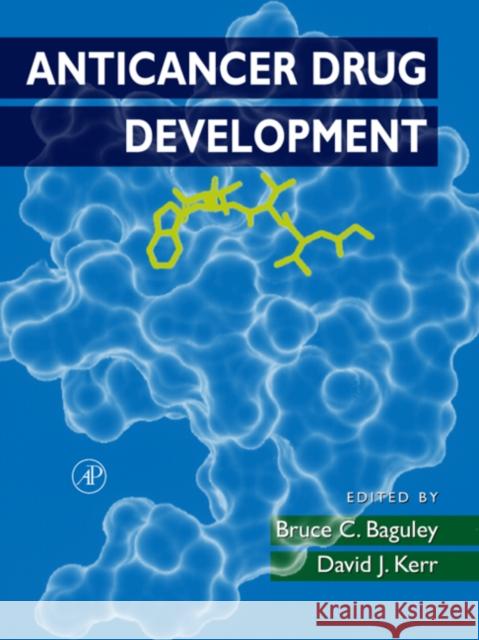
Anticancer Drug Development David J. Kerr Bruce C. Baguley David J. Kerr 9780120726516 Academic Press - książkaWidoczna okładka, to zdjęcie poglądowe, a rzeczywista szata graficzna może różnić się od prezentowanej.

Anticancer Drug Development

ISBN-13: 9780120726516 / Angielski / Twarda / 2001 / 397 str.

David J. Kerr; Bruce C. Baguley; David J. Kerr
cena 558,65
(netto: 532,05 VAT:  5%)

Najniższa cena z 30 dni: 555,21
Termin realizacji zamówienia:
ok. 30 dni roboczych
Dostawa w 2026 r.

Darmowa dostawa!

Here in a single source is a complete spectrum of ideas on the development of new anticancer drugs. Containing concise reviews of multidisciplinary fields of research, this book offers a wealth of ideas on current and future molecular targets for drug design, including signal transduction, the cell division cycle, and programmed cell death. Detailed descriptions of sources for new drugs and methods for testing and clinical trial design are also provided.

  • One work that can be consulted for all aspects of anticancer drug development
  • Concise reviews of research fields, combined with practical scientific detail, written by internationally respected experts
  • A wealth of ideas on current and future molecular targets for drug design, including signal transduction, the cell division cycle, and programmed cell death
  • Detailed descriptions of the sources of new anticancer drugs, including combinatorial chemistry, phage display, and natural products
  • Discussion of how new drugs can be tested in preclinical systems, including the latest technology of robotic assay systems, cell culture, and experimental animal techniques
  • Hundreds of references that allow the reader to access relevant scientific and medical literature
  • Clear illustrations, some in color, that provide both understanding of the field and material for teaching


Kategorie:
Nauka, Medycyna
Kategorie BISAC:
Medical > Farmakologia
Medical > Farmacja
Science > Biologia molekularna
Wydawca:
Academic Press
Język:
Angielski
ISBN-13:
9780120726516
Rok wydania:
2001
Ilość stron:
397
Waga:
1.18 kg
Wymiary:
27.9 x 21.6
Oprawa:
Twarda
Wolumenów:
01
Dodatkowe informacje:
Bibliografia
Wydanie ilustrowane

"..this is a really extensive and comprehensive book on the drug development process. ...There is very little overlap between chapters and all are written by experts in the field. Hundreds of useful references are included for those wanting to go further. ...Very good value...and essential reading for both the scientist and Ph.D. student. Definately one for the library to stock." --Paul Loadman, University of Bradford, UK for BRITISH JOURNAL OF CANCER, 2002

"Well-referenced and indexed...this text would be a useful addition to the clinic, research laboratory and institution library." --P. Parsons, Queensland Institute of Medical Research for CANCER FORUM, 2002

Contributors

Preface

Chapter 1 A Brief History of Cancer Chemotherapy

Summary

1. Introduction

2. Genotoxic (Cytotoxic) Therapy

3. Growth Control Pathways

4. Host-Tumor Interactions

5. Conclusions

References

Chapter 2 Novel Targets in the Cell Cycle and Cell Cycle Checkpoints

Summary

1. Introduction

2. Molecular Regulation of Cell Cycle Progression

3. Molecular Regulation of Cell Cycle Checkpoints

4. Rationale for Targeting Cyclin-Dependent Kinases and Cell Cycle Checkpoint Pathways

5. Agents and Strategies for Therapeutic Interference

6. Conclusions

References

Chapter 3 Growth Factor and Signal Transduction Targets for Cancer Therapy

Summary

1. Introduction

2. The ErbB Family of Receptor Tyrosine Kinases (RTKs)

3. The Ras-Raf-MEK-ERK Signaling Pathway

4. c-Src Kinase, Signal Transduction, Transformation, and Cancer

5. Akt

6. Nuclear Hormone Receptors as Targets for Cancer Therapy

7. Implications for Drug Discovery and Development

References

Chapter 4 Cell Death Pathways as Targets for Anticancer Drugs

Summary

1. Introduction

2. Two Main Pathways for Drug-Induced Apoptosis

3. Modulation of Drug-Induced Cell Death by Bcl-2 and Related Proteins

4. The Central Role of Caspases in Drug-Induced Apoptosis

5. Synergy between Death Receptors and Cytotoxic Drugs

6. The Rel/NF-kB/IkB Proteins

7. Conclusion

References

Chapter 5 Drug Resistance Pathways as Targets

Summary

1. Introduction

2. Targeting Drug Transport

3. Targeting Cellular Stress Responses

4. Targeting DNA Repair Systems

5. Conclusions

References

Chapter 6 Role of Matrix Metalloproteinases and Plasminogen Activators in Cancer Invasion and Metastasis: Therapeutic Strategies

Summary

1. Introduction

2. The Extracellular Matrix

3. Cancer Invasion and Metastasis

4. Cell Adhesion in Cancer

5. Cancer Cell Motility

6. Inflammatory Response to Cancer

7. Proteolytic Enzymes Implicated in Cancer Invasion

8. MMPIs as Novel Anticancer Agents

9. Sheddases

10. The uPA System: Proteolytic Control of MMP Activation

References

Chapter 7 Tumor Vasculature as a Target

Summary

1. Introduction

2. How to Inhibit Tumor Angiogenesis

3. Concluding Remarks

References

Chapter 8 Gene-Directed Enzyme Prodrug Therapy

Summary

1. Introduction

2. Background

3. Enzyme-Prodrug Systems

4. Tailored Prodrugs for GDEPT

5. The Activation Process

6. Augmenting the Effect

7. Exploiting the Bystander Effect and Acquired Immunity

8. Conclusions

References

Chapter 9 Tumor Antigens as Targets for Anticancer Drug Development

Summary

1. Introduction

2. Antigen Targets for Cancer Vaccines

3. Tumor Antigens as Targets for Antibody-Based Therapeutics

References

Chapter 10 Structure-Based Drug Design and its Contributions to Cancer Chemotherapy

Summary

1. Introduction

2. Antimetabolites

3. Protease Inhibitors

4. Protein Kinase Inhibitors

5. Other Targets

6. Novel Methods in Structure-Based Drug Design

7. Conclusions and Current Questions

References

Chapter 11 The Contribution of Synthetic Organic Chemistry to Anticancer Drug Development

Summary

1. Introduction

2. Early Rationality

3. The Random Screening Era: Directly from Screen to Clinic

4. Organic Synthesis Catches Up: Development of National Product Leads

5. Development of Synthetic Compounds: Structure-Activity Relationships

6. Immunotoxins: Synthetic Organic Chemistry Applied to Large Molecules

7. Organic Synthesis in Rational Design: Tumor-Activated Prodrugs of Cytokines

8. Early Genomics: Inhibitors of Transmembrane Tyrosine Kinases

9. The Genomics/Proteomics Era: Combinatorial Chemistry

10. Conclusion

References

Chapter 12 Biosynthetic Products for Anticancer Drug Design and Treatment: The Bryostatins

Summary

1. Introduction

2. Background to the Bryostatins

3. Comprehensive Review of Bryostatin Scientific and Medical Reports

References

Chapter 13 DNA-Encoded Peptide Libraries and Drug Discovery

Summary

1. Introduction

2. Methods for DNA-Encoded Peptide Display

3. Applications for DNA-Encoded Peptide Libraries

4. Conclusions

References

Chapter Mechanism-Based Highthroughput Screening for Novel Anticancer Drug Discovery

Summary

1. Importance of Mechanism-Based Targets in Postgenomic Drug Discovery

2. High-Throughput Screening

3. Assay Technologies

4. Assay Performance and Downstream Evaluation of Bits

5. Compounds for HTS

6. Examples of Compounds Identified Through Screening Approaches

7. Future HTS Developments

8. Concluding Remarks

References

Chapter 15 Tumor Cell Cultures in Drug Development

Summary

1. Introduction

2. Growth Inhibition Assays

3. Clonogenic Assays

4. Three-Dimensional Cell Cultures: Modeling Extravascular Drug Transport

5. Modeling of in Vivo Activity by in Vitro Assays

6. Perspective

References

Chapter 16 Screening Using Animal Systems

Summary

1. Introduction

2. Choice of in Vivo Systems for Large-Scale Drug Development

3. Combined in Vitro/in Vivo Testing Procedure Using Human Tumor Xenografts-The Freiburg Experience

4. Use of Transgenic Animals in the Search for New Drugs

5. Screening for Angiogenesis Inhibitors

References

Chapter 17 Relevance of Preclinical Pharmacology and Toxicology to Phase I Trial Extrapolation Techniques: Elevance of Animal Toxicology

Summary

1. Introduction

2. Historical Perspective

3. Special Toxicity Evaluations

4. Recent Examples of Drug Development at NCI

5. Predictability of Nonclinical Animal Data

6. Conclusions

References

Chapter 18 Clinical Trial Design: Incorporation of Pharmacokinetic, Pharmacodynamic, and Pharmacogenetic Principles

Summary

1. Introduction

2. Rationale for Chemotherapy Optimization

3. Pharmacokinetic-Pharmacodynamic Relationships

4. Pharmacogenetics

5. Strategies to Improve Therapeutic Index

6. Conclusion and Perspectives

References

Chapter 19 Tumor Imaging Applications in the Testing of New Drugs

Summary

1. Introduction

2. Positron Emission Tomography

3. PET in New Drug Evaluation

4. Conclusions

References

Chapter 20 Mechanistic Approaches to Phase I Clinical Trials

Summary

1. Introduction

2. Mechanism-Based Studies of Established Anticancer Agents to Assess Target Inhibition

3. Mechanistic Trial Perspectives on Anticancer Agents with Novel Mechanisms

4. Potential of PET Scanning in the Assessment of Pharmacodynamic End Points

5. Conclusion

References

Index


Udostępnij

Facebook - konto krainaksiazek.pl


Opinie o Krainaksiazek.pl na Opineo.pl

Partner Mybenefit

Krainaksiazek.pl w programie rzetelna firma Krainaksiaze.pl - płatności przez paypal

Czytaj nas na:

Facebook - krainaksiazek.pl
  • książki na zamówienie
  • granty
  • książka na prezent
  • kontakt
  • pomoc
  • opinie
  • regulamin
  • polityka prywatności

Zobacz:

  • Księgarnia czeska

  • Wydawnictwo Książkowe Klimaty

1997-2025 DolnySlask.com Agencja Internetowa

© 1997-2022 krainaksiazek.pl
     
KONTAKT | REGULAMIN | POLITYKA PRYWATNOŚCI | USTAWIENIA PRYWATNOŚCI
Zobacz: Księgarnia Czeska | Wydawnictwo Książkowe Klimaty | Mapa strony | Lista autorów
KrainaKsiazek.PL - Księgarnia Internetowa

Polityka prywatnosci - link
Krainaksiazek.pl - płatnośc Przelewy24
Przechowalnia Przechowalnia






