• Wyszukiwanie zaawansowane
  • Kategorie
  • Kategorie BISAC
  • Książki na zamówienie
  • Promocje
  • Granty
  • Książka na prezent
  • Opinie
  • Pomoc
  • Załóż konto
  • Zaloguj się

Anti-Abrasive Nanocoatings: Current and Future Applications » książka

zaloguj się | załóż konto
Logo Krainaksiazek.pl

koszyk

konto

szukaj
topmenu
Księgarnia internetowa
Szukaj
Książki na zamówienie
Promocje
Granty
Książka na prezent
Moje konto
Pomoc
 
 
Wyszukiwanie zaawansowane
Pusty koszyk
Bezpłatna dostawa dla zamówień powyżej 20 złBezpłatna dostawa dla zamówień powyżej 20 zł

Kategorie główne

• Nauka
 [2944077]
• Literatura piękna
 [1814251]

  więcej...
• Turystyka
 [70679]
• Informatyka
 [151074]
• Komiksy
 [35590]
• Encyklopedie
 [23169]
• Dziecięca
 [611005]
• Hobby
 [136031]
• AudioBooki
 [1718]
• Literatura faktu
 [225599]
• Muzyka CD
 [379]
• Słowniki
 [2916]
• Inne
 [443741]
• Kalendarze
 [1187]
• Podręczniki
 [166463]
• Poradniki
 [469211]
• Religia
 [506887]
• Czasopisma
 [481]
• Sport
 [61343]
• Sztuka
 [242115]
• CD, DVD, Video
 [3348]
• Technologie
 [219293]
• Zdrowie
 [98602]
• Książkowe Klimaty
 [124]
• Zabawki
 [2385]
• Puzzle, gry
 [3504]
• Literatura w języku ukraińskim
 [260]
• Art. papiernicze i szkolne
 [7151]
Kategorie szczegółowe BISAC

Anti-Abrasive Nanocoatings: Current and Future Applications

ISBN-13: 9780857092113 / Twarda / 2014 / 628 str.
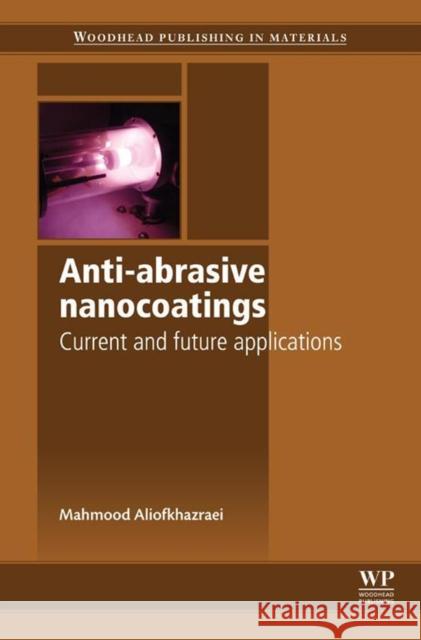
Anti-Abrasive Nanocoatings: Current and Future Applications  9780857092113  - książkaWidoczna okładka, to zdjęcie poglądowe, a rzeczywista szata graficzna może różnić się od prezentowanej.

Anti-Abrasive Nanocoatings: Current and Future Applications

ISBN-13: 9780857092113 / Twarda / 2014 / 628 str.

cena 710,17
(netto: 676,35 VAT:  5%)

Najniższa cena z 30 dni: 701,49
Termin realizacji zamówienia:
ok. 30 dni roboczych.

Darmowa dostawa!

This book provides an overview of the fabrication methods for anti-abrasive nanocoatings. The connections among fabrication parameters, the characteristics of nanocoatings and the resulting properties (i.e. nanohardness, toughness, wear rate, load-bearing ability, friction coefficient, and scratch resistance) are discussed. Size-affected mechanical properties of nanocoatings are examined, including their uses. Anti-abrasive nanocoatings, including metallic-, ceramic-, and polymeric-based layers, as well as different kinds of nanostructures, such as multi-layered nanocomposites and thin films, are reviewed.

  • Provides a comprehensive overview of the fabrication methods for anti-abrasive nanocoatings
  • Discusses the connections among fabrication parameters, the characteristics of nanocoatings and the resulting properties
  • Reviews advantages and drawbacks of fabrication methods for anti-abrasive nanocoatings and clarifies the place of these nanocoatings in the world of nanotechnology


Kategorie:
Inne
Kategorie BISAC:
Technology & Engineering > Materials Science - General
Technology & Engineering > Mechanical
Science > Chemistry - Industrial & Technical
ISBN-13:
9780857092113
Rok wydania:
2014
Ilość stron:
628
Waga:
1.11 kg
Wymiary:
23.11 x 15.49 x 3.56
Oprawa:
Twarda
Wolumenów:
01

  • List of figures
  • List of tables
  • About the editor
  • About the contributors
  • Preface
  • Part One
    • 1. Wear, friction and prevention of tribo-surfaces by coatings/nanocoatings
      • 1.1 Introduction
      • 1.2 Friction of materials
      • 1.3 Wear in metals, alloys and composites
      • 1.4 Materials and their selection for wear and friction applications
      • 1.5 Coatings/nanocoatings and surface treatments
      • 1.6 Conclusion
      • Acknowledgements
      • References
    • 2. An investigation into the tribological property of coatings on micro- and nanoscale
      • 2.1 Drivers of studying the origin of tribology behavior
      • 2.2 Contact at nanometer scale
      • 2.3 Atomic friction with zero separation
      • 2.4 Scratching wear at atomic scale
      • 2.5 Conclusion
      • References
    • 3. Stress on anti-abrasive performance of sol-gel derived nanocoatings
      • 3.1 Classical curvature stress for thin films on plate substrates
      • 3.2 Thermal stress of thin films
      • 3.3 Why do drying films crack?
      • 3.4 Cracks by stress come from constraint of shrinkage by the substrate
      • 3.5 Rapid sol-gel fabrication to confront tensile trailing cracks
      • 3.6 Anti-abrasive SiO2 film in application: self-assembling covalently bonded nanocoating
      • 3.7 Abrasive test
      • 3.8 Anti-abrasive performance of sol-gel nanocoatings
      • 3.9 Conclusion
      • Acknowledgments
      • References
    • 4. Self-cleaning glass
      • 4.1 Introduction
      • 4.2 History of glass
      • 4.3 Self-cleaning glass
      • 4.4 Hydrophilic coating
      • 4.5 Anti-reflective coating
      • 4.6 Porous materials
      • 4.7 Photocatalytic activity of TiO2
      • 4.8 Hydrophobic coatings
      • 4.9 Fabrication of self-cleaning glass
      • 4.10 Application of self-cleaning glasses
      • Acknowledgements
      • References
    • 5. Sol-gel nanocomposite hard coatings
      • 5.1 Introduction
      • 5.2 Sol-gel nanocomposite hard coatings
      • 5.3 Mechanical property studies of sol-gel hard coatings on various substrates
      • 5.4 Possible applications of hard coatings
      • 5.5 Summary
      • Acknowledgments
      • References
    • 6. Process considerations for nanostructured coatings
      • 6.1 Overview
      • 6.2 Anti-reflection coatings
      • 6.3 Fluidized bed method
      • 6.4 Electroplating
      • 6.5 Nanografting
      • 6.6 Plasma spray coating
      • 6.7 Nanostructuring in thin films
      • 6.8 Electrochemical deposition
      • 6.9 Anti-corrosion coating
      • 6.10 Infrared transparent electromagnetic shielding
      • 6.11 Underlying science - self-assembly
      • 6.12 Conclusions
      • References
  • Part Two
    • 7. Nanostructured electroless nickel-boron coatings for wear resistance
      • 7.1 Introduction
      • 7.2 Synthesis of electroless nickel-boron coatings
      • 7.3 Morphology and structure of electroless nickel-boron coatings
      • 7.4 Mechanical and wear properties of nanocrystalline electroless nickel-boron coatings
      • 7.5 Corrosion resistance
      • 7.6 Conclusion
      • References
    • 8. Wear resistance of nanocomposite coatings
      • 8.1 Introduction
      • 8.2 Materials and methods
      • 8.3 Results and discussion
      • 8.4 Conclusions
      • Acknowledgments
      • References
    • 9. Machining medical grade titanium alloys using nonabrasive nanolayered cutting tools
      • 9.1 Metallurgical Aspects
      • 9.2 Machining of titanium alloys
      • 9.3 Machining with coated cutting tools: a case study
      • 9.4 Conclusions
      • Acknowledgments
      • References
    • 10. Functional nanostructured coatings via layer-by-layer self-assembly
      • 10.1 Introduction
      • 10.2 LbL process
      • 10.3 LbL-deposited nanostructured coatings with different functions
      • 10.4 Conclusions
      • Acknowledgment
      • References
    • 11. Theoretical study on an influence of fabrication parameters on the quality of smart nanomaterials
      • 11.1 Introduction
      • 11.2 Literature survey on VO2
      • 11.3 Synthesis techniques description
      • 11.4 Conclusion
      • References
    • 12. Formation of dense nanostructured coatings by microarc oxidation method
      • 12.1 Introduction
      • 12.2 Phenomena of MAO-coating formation
      • 12.3 Voltage-current characteristics
      • 12.4 Discussion about growth mechanism of MAO coating
      • 12.5 Model of fractal growth of the dense wear-resistant layer
      • 12.6 Macro- and microstructure of MAO coatings
      • 12.7 Wear-resistant properties
      • 12.8 Conclusion
      • References
    • 13. Current trends in molecular functional monolayers
      • 13.1 Introduction
      • 13.2 Steps for self-assembly
      • 13.3 Mechanism
      • 13.4 Characterization of SAMs
      • 13.5 Use of SAMs for various applications
      • 13.6 Self-assembled monolayers on gold substrates
      • 13.7 Si-C monolayer formation and C-C bonding
      • 13.8 Supramolecular assembly on surface-host-guest interactions and other non-covalent bonding
      • 13.9 Self-assembled monolayers on other surfaces such as titania nanotubes
      • 13.10 Chemical and electrical biosensors
      • 13.11 Quality improvement
      • 13.12 Conclusions
      • References
    • 14. Surface engineered nanostructures on metallic biomedical materials for anti-abrasion
      • 14.1 Introduction
      • 14.2 Surface technologies on metallic biomedical materials for anti-abrasion
      • 14.3 Future prospects
      • References
    • 15. Theoretical modeling of friction and wear processes at atomic level
      • 15.1 Introduction
      • 15.2 MD method
      • 15.3 Quantum chemistry methods
      • 15.4 Basic types of problems
      • 15.5 Lubrication and one-electron transfers
      • 15.6 Conclusion
      • References
    • 16. Mechanical characterization of thin films by depth-sensing indentation
      • 16.1 Introduction
      • 16.2 Hardness
      • 16.3 Young's modulus
      • 16.4 Conclusion
      • Acknowledgements
      • References
  • Part Three
    • 17. Advanced bulk and thin film materials for harsh environment MEMS applications
      • 17.1 Introduction
      • 17.2 Piezoelectric substrates
      • 17.3 Non-piezoelectric substrates
      • 17.4 Thin piezoelectric films
      • 17.5 Metal electrodes
      • 17.6 Conclusion
      • References
    • 18. Plasma-assisted techniques for growing hard nanostructured coatings: An overview
      • 18.1 Introduction
      • 18.2 Hard nanocoatings: from history to designs and properties
      • 18.3 Main plasma-based techniques for synthesis of hard nanocoatings
      • 18.4 Conclusion
      • Acknowledgments
      • References
    • 19. Thermal spray nanostructured ceramic and metal-matrix composite coatings
      • 19.1 Introduction
      • 19.2 Nanostructured feedstock
      • 19.3 Nanostructured coatings
      • 19.4 Proven applications
      • 19.5 Possible future applications
      • 19.6 Summary
      • Acknowledgements
      • References
    • 20. Thermally sprayed nanostructured coatings for anti-wear and TBC applications: State-of-the-art and future perspectives
      • 20.1 Introduction
      • 20.2 Thermal spraying processes
      • 20.3 Typical nanostructured coatings for technological applications
      • 20.4 Conclusion
      • References
    • 21. Hard thin films: Applications and challenges
      • 21.1 Introduction
      • 21.2 Characterization of thin films
      • 21.3 Challenges
      • 21.4 Summary
      • References
  • Index

Mahmood Aliofkhazraei is a PhD researcher in the Corrosion and Surface Engineering Group at the Tarbiat Modares University in Tehran, Iran. Having obtained his academic degrees from this university, his research has focussed on different aspects of nanocoatings. He is the author of over 50 scientific publications on nanocoatings and has received numerous scientific awards, including the Khwarizmi Award. In 2010, he was selected as the best young nanotechnologist nationwide. Mahmood is also a member of the National Association of Surface Sciences, Iranian Corrosion Association and the National Elite Foundation of Iran.


Udostępnij

Facebook - konto krainaksiazek.pl


Opinie o Krainaksiazek.pl na Opineo.pl

Partner Mybenefit

Krainaksiazek.pl w programie rzetelna firma Krainaksiaze.pl - płatności przez paypal

Czytaj nas na:

Facebook - krainaksiazek.pl
  • książki na zamówienie
  • granty
  • książka na prezent
  • kontakt
  • pomoc
  • opinie
  • regulamin
  • polityka prywatności

Zobacz:

  • Księgarnia czeska

  • Wydawnictwo Książkowe Klimaty

1997-2026 DolnySlask.com Agencja Internetowa

© 1997-2022 krainaksiazek.pl
     
KONTAKT | REGULAMIN | POLITYKA PRYWATNOŚCI | USTAWIENIA PRYWATNOŚCI
Zobacz: Księgarnia Czeska | Wydawnictwo Książkowe Klimaty | Mapa strony | Lista autorów
KrainaKsiazek.PL - Księgarnia Internetowa

Polityka prywatnosci - link
Krainaksiazek.pl - płatnośc Przelewy24
Przechowalnia Przechowalnia







