• Wyszukiwanie zaawansowane
  • Kategorie
  • Kategorie BISAC
  • Książki na zamówienie
  • Promocje
  • Granty
  • Książka na prezent
  • Opinie
  • Pomoc
  • Załóż konto
  • Zaloguj się

Animal Learning & Cognition: An Introduction » książka


zaloguj się | załóż konto
Logo Krainaksiazek.pl

koszyk

konto

szukaj
topmenu
Księgarnia internetowa
Szukaj
Książki na zamówienie
Promocje
Granty
Książka na prezent
Moje konto
Pomoc
 
 
Wyszukiwanie zaawansowane
Pusty koszyk
Bezpłatna dostawa dla zamówień powyżej 20 złBezpłatna dostawa dla zamówień powyżej 20 zł

Kategorie główne

• Nauka
 [2946912]
• Literatura piękna
 [1852311]

  więcej...
• Turystyka
 [71421]
• Informatyka
 [150889]
• Komiksy
 [35717]
• Encyklopedie
 [23177]
• Dziecięca
 [617324]
• Hobby
 [138808]
• AudioBooki
 [1671]
• Literatura faktu
 [228371]
• Muzyka CD
 [400]
• Słowniki
 [2841]
• Inne
 [445428]
• Kalendarze
 [1545]
• Podręczniki
 [166819]
• Poradniki
 [480180]
• Religia
 [510412]
• Czasopisma
 [525]
• Sport
 [61271]
• Sztuka
 [242929]
• CD, DVD, Video
 [3371]
• Technologie
 [219258]
• Zdrowie
 [100961]
• Książkowe Klimaty
 [124]
• Zabawki
 [2341]
• Puzzle, gry
 [3766]
• Literatura w języku ukraińskim
 [255]
• Art. papiernicze i szkolne
 [7810]
Kategorie szczegółowe BISAC

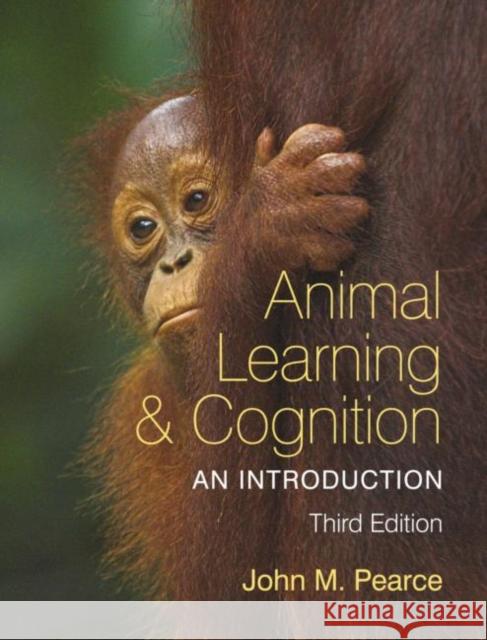
Animal Learning & Cognition: An Introduction

ISBN-13: 9781841696560 / Angielski / Miękka / 2008 / 432 str.
John Pearce
Animal Learning & Cognition: An Introduction Pearce, John M. 9781841696560  - książkaWidoczna okładka, to zdjęcie poglądowe, a rzeczywista szata graficzna może różnić się od prezentowanej.

Animal Learning & Cognition: An Introduction

ISBN-13: 9781841696560 / Angielski / Miękka / 2008 / 432 str.

John Pearce
cena 277,42
(netto: 264,21 VAT:  5%)

Najniższa cena z 30 dni: 275,14
Termin realizacji zamówienia:
ok. 22 dni roboczych
Bez gwarancji dostawy przed świętami

Darmowa dostawa!

Animal Learning and Cognition: An Introduction provides an up-to-date review of the principal findings from more than a century of research into animal intelligence. This new edition has been expanded to take account of the many exciting developments that have occurred over the last ten years.

The book opens with a historical survey of the methods that have been used to study animal intelligence, and follows by summarizing the contribution made by learning processes to intelligent behavior. Topics include Pavlovian and instrumental conditioning, discrimination learning, and categorization. The remainder of the book focuses on animal cognition and covers such topics as memory, navigation, social learning, language and communication, and knowledge representation. Expanded areas include extinction (to which an entire chapter is now devoted), navigation in insects, episodic memory in birds, imitation in birds and primates, and the debate about whether primates are aware of mental states in themselves and others. Issues raised throughout the book are reviewed in a concluding chapter that examines how intelligence is distributed throughout the animal kingdom.

The broad spectrum of topics covered in this book ensures that it will be of interest to students of psychology, biology, zoology, and neuroscience. Since very little background knowledge is required, the book will be of equal value to anyone simply interested in either animal intelligence, or the animal origins of human intelligence.

This textbook is accompanied by online instructor resources which are free of charge to departments who adopt this book as their text. They include chapter-by-chapter lecture slides, an interactive chapter-by-chapter multiple-choice question test bank, and multiple-choice questions in paper and pen format.


Kategorie:
Nauka, Psychologia
Kategorie BISAC:
Psychology > Experimental Psychology
Science > Zoologia i nauki o zwierzętach
Psychology > Cognitive Psychology & Cognition
Język:
Angielski
ISBN-13:
9781841696560
Rok wydania:
2008
Ilość stron:
432
Waga:
0.92 kg
Wymiary:
24.38 x 18.8 x 2.03
Oprawa:
Miękka
Wolumenów:
01
Dodatkowe informacje:
Bibliografia
Wydanie ilustrowane
Podręcznik

Preface. 1. The Study of Animal Intelligence. The Distribution of Intelligence. Defining Animal Intelligence. Why Study Animal Intelligence? Methods for Studying Animal Intelligence. Historical Background. 2. Associative Learning Conditioning Techniques. The Nature of Associative Learning. Stimulus–stimulus Learning. The Nature of us Representations. The Conditioned Response. Concluding Comment: The Reflexive Nature of the Conditioned Response. 3. The Conditions for Learning: Surprise and Attention. Part 1: Surprise and Conditioning. Conditioning with a Single CS. Conditioning with a Compound CS. Evaluation of the Rescorla–Wagner Model. Part 2: Attention and Conditioning Wagner’s Theory. Stimulus Significance. The Pearce–Hall Theory. Concluding Comments. 4. Instrumental Conditioning. The Nature of Instrumental Learning. The Conditions of Learning. The Performance of Instrumental Behavior. The Law of Effect and Problem Solving. 5. Extinction. Extinction as Generalization Decrement. The Conditions for Extinction. Associative Changes During Extinction. Are Trials Important for Pavlovian Extinction? 6. Discrimination Learning. Theories of Discrimination Learning. Connectionist Models of Discrimination Learning. Metacognition and Discrimination Learning. 7. Category Formation. Examples of Categorization. Theories of Categorization. Abstract Categories Relationships as Categories. The Representation of Knowledge. 8. Short-term Retention. Methods of Study. Forgetting. Theoretical Interpretation. Serial Position Effects. Metamemory. 9. Long-term Retention. Capacity. Durability. Theoretical Interpretation. Episodic Memory. 10. Time, Number, and Serial Order. Time. Number. Serial order. Transitive Inference. Concluding Comments. 11. Navigation. Part 1: Short-distance Travel. Methods of Navigation. Part 2: Long-distance Travel. Navigational Cues. Homing. Migration. Concluding Comments. 12. Social Learning. Diet Selection and Foraging. Choosing a Mate. Fear of Predators. Copying Behavior: Mimicry. Copying Behavior: Imitation. Theory of Mind. Self-recognition. Concluding Comments. 13. Animal Communication and Language. Animal Communication. Communication and Language. Can an Ape Create a Sentence? Language Training with Other Species. The Requirements for Learning a Language. 14. The Distribution of Intelligence. Intelligence and Brain Size. The Null Hypothesis. Intelligence and Evolution. References.

John Pearce gained a B.Sc in Psychology from the University of Leeds, and a D. Phil in Experimental Psychology from the University of Sussex. After conducting research at the Universities of York and Cambridge he moved to a lectureship in the Department of Psychology at Cardiff University in 1980, where he is now Professor of Psychology. He was elected as a Fellow of the Royal Society in 2006.


Udostępnij

Facebook - konto krainaksiazek.pl


Opinie o Krainaksiazek.pl na Opineo.pl

Partner Mybenefit

Krainaksiazek.pl w programie rzetelna firma Krainaksiaze.pl - płatności przez paypal

Czytaj nas na:

Facebook - krainaksiazek.pl
  • książki na zamówienie
  • granty
  • książka na prezent
  • kontakt
  • pomoc
  • opinie
  • regulamin
  • polityka prywatności

Zobacz:

  • Księgarnia czeska

  • Wydawnictwo Książkowe Klimaty

1997-2025 DolnySlask.com Agencja Internetowa

© 1997-2022 krainaksiazek.pl
     
KONTAKT | REGULAMIN | POLITYKA PRYWATNOŚCI | USTAWIENIA PRYWATNOŚCI
Zobacz: Księgarnia Czeska | Wydawnictwo Książkowe Klimaty | Mapa strony | Lista autorów
KrainaKsiazek.PL - Księgarnia Internetowa

Polityka prywatnosci - link
Krainaksiazek.pl - płatnośc Przelewy24
Przechowalnia Przechowalnia





