• Wyszukiwanie zaawansowane
  • Kategorie
  • Kategorie BISAC
  • Książki na zamówienie
  • Promocje
  • Granty
  • Książka na prezent
  • Opinie
  • Pomoc
  • Załóż konto
  • Zaloguj się

Animal Biomarkers as Pollution Indicators » książka


zaloguj się | załóż konto
Logo Krainaksiazek.pl

koszyk

konto

szukaj
topmenu
Księgarnia internetowa
Szukaj
Książki na zamówienie
Promocje
Granty
Książka na prezent
Moje konto
Pomoc
 
 
Wyszukiwanie zaawansowane
Pusty koszyk
Bezpłatna dostawa dla zamówień powyżej 20 złBezpłatna dostawa dla zamówień powyżej 20 zł

Kategorie główne

• Nauka
 [2946600]
• Literatura piękna
 [1856966]

  więcej...
• Turystyka
 [72221]
• Informatyka
 [151456]
• Komiksy
 [35826]
• Encyklopedie
 [23190]
• Dziecięca
 [619653]
• Hobby
 [140543]
• AudioBooki
 [1577]
• Literatura faktu
 [228355]
• Muzyka CD
 [410]
• Słowniki
 [2874]
• Inne
 [445822]
• Kalendarze
 [1744]
• Podręczniki
 [167141]
• Poradniki
 [482898]
• Religia
 [510455]
• Czasopisma
 [526]
• Sport
 [61590]
• Sztuka
 [243598]
• CD, DVD, Video
 [3423]
• Technologie
 [219201]
• Zdrowie
 [101638]
• Książkowe Klimaty
 [124]
• Zabawki
 [2473]
• Puzzle, gry
 [3898]
• Literatura w języku ukraińskim
 [254]
• Art. papiernicze i szkolne
 [8170]
Kategorie szczegółowe BISAC

Animal Biomarkers as Pollution Indicators

ISBN-13: 9780412402005 / Angielski / Twarda / 1991 / 291 str.
David B. Peakall;Peakall; David B. Peakall
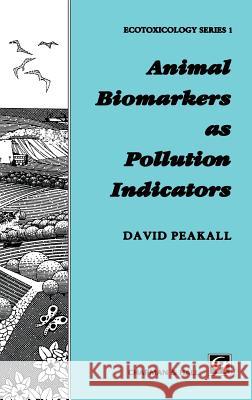
Animal Biomarkers as Pollution Indicators David B. Peakall Peakall                                  David B. Peakall 9780412402005 Chapman & Hall - książkaWidoczna okładka, to zdjęcie poglądowe, a rzeczywista szata graficzna może różnić się od prezentowanej.

Animal Biomarkers as Pollution Indicators

ISBN-13: 9780412402005 / Angielski / Twarda / 1991 / 291 str.

David B. Peakall;Peakall; David B. Peakall
cena 806,99 zł
(netto: 768,56 VAT:  5%)

Najniższa cena z 30 dni: 771,08 zł
Termin realizacji zamówienia:
ok. 22 dni roboczych
Bez gwarancji dostawy przed świętami

Darmowa dostawa!

Ecotoxicology is a relatively new scientific discipline. Indeed, it might be argued that it is only during the last 5-10 years that it has come to merit being regarded as a true science, rather than a collection of procedures for protecting the environment through management and monitoring of pollutant discharges into the environment. The term 'ecotoxicology' was first coined in the late sixties by Prof. Truhaut, a toxicologist who had the vision to recognize the importance of investigating the fate and effects of chemicals in ecosystems. At that time, ecotoxicology was considered a sub-discipline of medical toxicology. Subsequently, several attempts have been made to portray ecotoxicology in a more realistic light. Notably, both F. Moriarty (1988) and F. Ramade (1987) emphasized in their books the broad basis of ecotoxicology, encompassing chemical and radiation effects on all components of ecosystems. In doing so, they and others have shifted concern from direct chemical toxicity to man, to the far more subtle effects that pollutant chemicals exert on natural biota. Such effects potentially threaten the existence of all life on Earth. Although I have identified the sixties as the era when ecotoxicology was first conceived as a coherent subject area, it is important to acknowledge that studies that would now be regarded as ecotoxicological are much older. Wherever people's ingenuity has led them to change the face of nature significantly, it has not escaped them that a number of biological con sequences, often unfavourable, ensue."


Kategorie:
Nauka, Biologia i przyroda
Kategorie BISAC:
Science > Zoologia i nauki o zwierzętach
Science > Environmental Science (see also Chemistry - Environmental)
Science > Life Sciences - Ecology
Wydawca:
Chapman & Hall
Seria wydawnicza:
Natural History Museum Publications
Język:
Angielski
ISBN-13:
9780412402005
Rok wydania:
1991
Wydanie:
1992
Numer serii:
000016045
Ilość stron:
291
Waga:
0.62 kg
Wymiary:
23.39 x 15.6 x 1.91
Oprawa:
Twarda
Wolumenów:
01

1 Scope and limitations of classical hazard assessment.- 1.1 The exposure side of the equation.- 1.1.1 Surveys and monitoring programmes.- 1.1.2 Wildlife health considerations.- 1.1.3 Human health considerations.- 1.1.4 Environmental quality.- 1.1.5 Design of monitoring programmes.- 1.2 The toxicity side of the equation.- 1.2.1 Broad studies of lethal levels.- 1.2.2 Tissue levels associated with mortality or indices of harm.- 1.3 Hazard assessment.- 2 Biomarkers of the nervous system.- 2.1 Esterase inhibition.- 2.1.1 Classification of esterases.- 2.1.2 Mode of action.- 2.1.3 Factors affecting activity.- 2.1.4 Direct mortality caused by Cholinesterase inhibitors.- 2.1.5 Summary of experimental studies.- 2.1.6 Relationship to other biomarkers.- 2.1.7 Use of esterases as biomarkers.- 2.2 Biogenic amines.- 2.2.1 Introduction.- 2.2.2 Summary of experimental studies.- 2.2.3 Factors influencing activity.- 2.2.4 Relationship to other biomarkers.- 2.2.5 Use of biogenic amines as a biomarker.- 3 Biomarkers of the reproductive system.- 3.1 Studies of the breeding cycle.- 3.1.1 Introduction.- 3.1.2 Laboratory experiments.- 3.1.3 Experimental field studies.- 3.1.4 Observations on untreated individuals.- 3.2 Studies on embryos.- 3.3 Hormones.- 3.3.1 Effects of polyhalogenated aromatic hydrocarbons.- 3.3.2 Effects of organophosphates.- 3.3.3 Effects of oil.- 3.3.4 Receptors.- 3.3.5 Summary.- 4 Studies on genetic material.- 4.1 Introduction.- 4.2 RNA/DNA ratio.- 4.3 DNA adducts.- 4.4 DNA strand breakage.- 4.5 Degree of methylation of DNA.- 4.6 Sister chromatid exchange.- 4.7 Use of genetic material in monitoring.- 5 Mixed function oxidases.- 5.1 Introduction.- 5.2 Nomenclature.- 5.3 General description of the system.- 5.4 Factors influencing activity.- 5.5 Interactions with other biomarkers.- 5.6 Mechanism of action, receptors and dioxin equivalents.- 5.7 Use of mixed function oxidases as biomarkers.- 6 Thyroid function, retinols, haem and regulatory enzymes.- 6.1 Thyroid function.- 6.1.1 Introduction.- 6.1.2 Summary of experimental data.- 6.1.3 Factors influencing activity.- 6.1.4 Interactions with (or relationship to) other biomarkers.- 6.1.5 Use of thyroid function as a biomarker.- 6.2 Vitamin A (retinoids).- 6.2.1 Introduction.- 6.2.2 Summary of experimental data.- 6.2.3 Factors influencing activity.- 6.2.4 Interactions with other biomarkers.- 6.2.5 Use of retinoids as biomarkers.- 6.3 Haem, porphyrins and inhibition of aminolevulinic acid dehydratase (ALAD) by lead.- 6.3.1 Porphyrins: an introduction.- 6.3.2 Summary of experimental studies.- 6.3.3 Interrelationship with other biomarkers.- 6.3.4 Use of porphyrins as biomarkers.- 6.3.5 Inhibition of ALAD by lead.- 6.3.6 Factors affecting ALAD activity.- 6.3.7 Interaction with other biomarkers.- 6.3.8 Use of ALAD as a biomarker.- 6.4 Enzyme activity.- 6.4.1 Introduction.- 6.4.2 Amino acid metabolism.- 6.4.3 Carbohydrate metabolism: glycolysis.- 6.4.4 Oxidative phosphorylation.- 6.4.5 Phosphatases.- 6.4.6 Use of enzyme activity as a biomarker.- 7 Behavioural effects: their relationship to physiological changes.- 7.1 Introduction.- 7.2 Types of tests used.- 7.3 Behavioural effects of polyhalogenated aromatic hydrocarbons.- 7.4 Behavioural effects of organophosphates.- 7.5 Behavioural effects of heavy metals and other pollutants.- 7.6 Relationship of behavioural effects to biomarkers.- 8 Environmental immunotoxicology.- 8.1 Introduction.- 8.2 The immune system as a target for xenobiotic interaction.- 8.2.1 Immunodeficiency and immunosuppression.- 8.2.2 Altered host resistance to infections.- 8.2.3 Hypersensitivity, allergy and pseudoallergy.- 8.2.4 Autoimmunity.- 8.2.5 Immunopotentiation.- 8.3 Relationship of immunotoxicology and other toxic effects.- 8.3.1 Immunotoxicity and hepatotoxicity.- 8.3.2 Immunotoxicity and nephrotoxicity.- 8.3.3 Immunotoxicity and neurotoxicity.- 8.3.4 Immunotoxicity and impairment of metabolism/ detoxification.- 8.3.5 Immunosuppression and mutagenicity/carcinogenicity.- 8.4 Immunotoxic chemicals.- 8.4.1 Immunotoxicology of heavy metals, organometals and metalloids.- 8.4.2 Immunotoxicology of aromatic hydrocarbons.- 8.4.3 Immunotoxicology of halogenated hydrocarbons.- 8.4.4 Immunotoxicology of carbamates and organophosphates.- 8.5 Assessment and prediction of immunotoxicity.- 8.6 Application of immunoassays in environmental studies.- 8.7 Conclusions.- 9 The use of animals in wildlife toxicology.- 9.1 Introduction.- 9.2 The LD50 and related tests.- 9.3 Comparison of measurements in blood to organs.- 9.4 The role of tissue culture experiments.- 9.5 Statistical considerations.- 10 The role of biomarkers in environmental assessment.- 10.1 Biomarkers and the epidemiological approach.- 10.2 Current status of monitoring based on biomarkers.- 10.3 Relationship between chemical exposure and biomarker response.- 10.3.1 Availability of biomarkers that respond to major classes of pollutants.- 10.3.2 Sensitivity of response of biomarkers.- 10.4 Relationship between responses of biomarkers to adverse effects.- 10.4.1 Extrapolation to harm at the individual level.- 10.4.2 Extrapolation to harm at the population and community level.- 10.5 Strategy for using biomarkers.- Appendix 1 Latin names of species referred to in text.- Appendix 2 Abbreviations.- References.


Udostępnij

Facebook - konto krainaksiazek.pl


Opinie o Krainaksiazek.pl na Opineo.pl

Partner Mybenefit

Krainaksiazek.pl w programie rzetelna firma Krainaksiaze.pl - płatności przez paypal

Czytaj nas na:

Facebook - krainaksiazek.pl
  • książki na zamówienie
  • granty
  • książka na prezent
  • kontakt
  • pomoc
  • opinie
  • regulamin
  • polityka prywatności

Zobacz:

  • Księgarnia czeska

  • Wydawnictwo Książkowe Klimaty

1997-2025 DolnySlask.com Agencja Internetowa

© 1997-2022 krainaksiazek.pl
     
KONTAKT | REGULAMIN | POLITYKA PRYWATNOŚCI | USTAWIENIA PRYWATNOŚCI
Zobacz: Księgarnia Czeska | Wydawnictwo Książkowe Klimaty | Mapa strony | Lista autorów
KrainaKsiazek.PL - Księgarnia Internetowa

Polityka prywatnosci - link
Krainaksiazek.pl - płatnośc Przelewy24
Przechowalnia Przechowalnia





