• Wyszukiwanie zaawansowane
  • Kategorie
  • Kategorie BISAC
  • Książki na zamówienie
  • Promocje
  • Granty
  • Książka na prezent
  • Opinie
  • Pomoc
  • Załóż konto
  • Zaloguj się

Analog VLSI Circuits for the Perception of Visual Motion » książka


zaloguj się | załóż konto
Logo Krainaksiazek.pl

koszyk

konto

szukaj
topmenu
Księgarnia internetowa
Szukaj
Książki na zamówienie
Promocje
Granty
Książka na prezent
Moje konto
Pomoc
 
 
Wyszukiwanie zaawansowane
Pusty koszyk
Bezpłatna dostawa dla zamówień powyżej 20 złBezpłatna dostawa dla zamówień powyżej 20 zł

Kategorie główne

• Nauka
 [2946600]
• Literatura piękna
 [1856966]

  więcej...
• Turystyka
 [72221]
• Informatyka
 [151456]
• Komiksy
 [35826]
• Encyklopedie
 [23190]
• Dziecięca
 [619653]
• Hobby
 [140543]
• AudioBooki
 [1577]
• Literatura faktu
 [228355]
• Muzyka CD
 [410]
• Słowniki
 [2874]
• Inne
 [445822]
• Kalendarze
 [1744]
• Podręczniki
 [167141]
• Poradniki
 [482898]
• Religia
 [510455]
• Czasopisma
 [526]
• Sport
 [61590]
• Sztuka
 [243598]
• CD, DVD, Video
 [3423]
• Technologie
 [219201]
• Zdrowie
 [101638]
• Książkowe Klimaty
 [124]
• Zabawki
 [2473]
• Puzzle, gry
 [3898]
• Literatura w języku ukraińskim
 [254]
• Art. papiernicze i szkolne
 [8170]
Kategorie szczegółowe BISAC

Analog VLSI Circuits for the Perception of Visual Motion

ISBN-13: 9780470854914 / Angielski / Twarda / 2006 / 242 str.
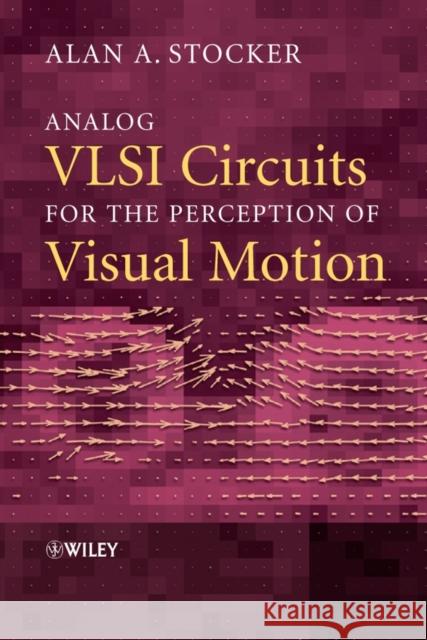
Alan A. Stocker
Analog VLSI Circuits for the Perception of Visual Motion Alan A. Stocker 9780470854914 John Wiley & Sons - książkaWidoczna okładka, to zdjęcie poglądowe, a rzeczywista szata graficzna może różnić się od prezentowanej.

Analog VLSI Circuits for the Perception of Visual Motion

ISBN-13: 9780470854914 / Angielski / Twarda / 2006 / 242 str.

Alan A. Stocker
cena 610,75 zł
(netto: 581,67 VAT:  5%)

Najniższa cena z 30 dni: 604,51 zł
Termin realizacji zamówienia:
ok. 30 dni roboczych
Bez gwarancji dostawy przed świętami

Darmowa dostawa!

Although it is now possible to integrate many millions of transistors on a single chip, traditional digital circuit technology is now reaching its limits, facing problems of cost and technical efficiency when scaled down to ever-smaller feature sizes. The analysis of biological neural systems, especially for visual processing, has allowed engineers to better understand how complex networks can effectively process large amounts of information, whilst dealing with difficult computational challenges. Analog and parallel processing are key characteristics of biological neural networks. Analog VLSI circuits using the same features can therefore be developed to emulate brain-style processing. Using standard CMOS technology, they can be cheaply manufactured, permitting efficient industrial and consumer applications in robotics and mobile electronics. This book explores the theory, design and implementation of analog VLSI circuits, inspired by visual motion processing in biological neural networks. Using a novel approach pioneered by the author himself, Stocker explains in detail the construction of a series of electronic chips, providing the reader with a valuable practical insight into the technology. Analog VLSI Circuits for the Perception of Visual Motion

  • analyses the computational problems in visual motion perception;
  • examines the issue of optimization in analog networks through high level processes such as motion segmentation and selective attention;
  • demonstrates network implementation in analog VLSI CMOS technology to provide computationally efficient devices;
  • sets out measurements of final hardware implementation;
  • illustrates the similarities of the presented circuits with the human visual motion perception system;
  • includes an accompanying website with video clips of circuits under real-time visual conditions and additional supplementary material.
With a complete review of all existing neuromorphic analog VLSI systems for visual motion sensing, Analog VLSI Circuits for the Perception of Visual Motion is a unique reference for advanced students in electrical engineering, artificial intelligence, robotics and computational neuroscience. It will also be useful for researchers, professionals, and electronics engineers working in the field.

Kategorie:
Technologie
Kategorie BISAC:
Computers > Artificial Intelligence - Computer Vision & Pattern Recognition
Technology & Engineering > Electronics - Circuits - VLSI & ULSI
Wydawca:
John Wiley & Sons
Język:
Angielski
ISBN-13:
9780470854914
Rok wydania:
2006
Ilość stron:
242
Waga:
0.63 kg
Wymiary:
24.99 x 17.22 x 1.96
Oprawa:
Twarda
Wolumenów:
01
Dodatkowe informacje:
Bibliografia
Wydanie ilustrowane

"This new book provides unconventional and fresh perspectives on how to understand perception and build simple artificial perceptual systems using VLSI circuits." ( The Neurimorphic Engineer, March 2007 

Foreword.

Preface.

1 Introduction.

1.1 Artificial Autonomous Systems.

1.2 Neural Computation and Analog Integrated Circuits.

2 Visual Motion Perception.

2.1 Image Brightness.

2.2 Correspondence Problem.

2.3 Optical Flow.

2.4 Matching Models.

2.4.1 Explicit matching.

2.4.2 Implicit matching.

2.5 FlowModels.

2.5.1 Global motion.

2.5.2 Local motion.

2.5.3 Perceptual bias.

2.6 Outline for a Visual Motion Perception System.

2.7 Review of aVLSI Implementations.

3 Optimization Networks.

3.1 AssociativeMemory and Optimization.

3.2 Constraint Satisfaction Problems.

3.3 Winner–takes–all Networks.

3.3.1 Network architecture.

3.3.2 Global convergence and gain.

3.4 Resistive Network.

4 Visual Motion Perception Networks.

4.1 Model for Optical Flow Estimation.

4.1.1 Well–posed optimization problem.

4.1.2 Mechanical equivalent.

4.1.3 Smoothness and sparse data.

4.1.4 Probabilistic formulation.

4.2 Network Architecture.

4.2.1 Non–stationary optimization.

4.2.2 Network conductances.

4.3 Simulation Results for Natural Image Sequences.

4.4 Passive Non–linear Network Conductances.

4.5 Extended Recurrent Network Architectures.

4.5.1 Motion segmentation.

4.5.2 Attention and motion selection.

4.6 Remarks.

5 Analog VLSI Implementation.

5.1 Implementation Substrate.

5.2 Phototransduction.

5.2.1 Logarithmic adaptive photoreceptor.

5.2.2 Robust brightness constancy constraint.

5.3 Extraction of the Spatio–temporal Brightness Gradients.

5.3.1 Temporal derivative circuits.

5.3.2 Spatial sampling.

5.4 Single Optical Flow Unit.

5.4.1 Wide–linear–range multiplier.

5.4.2 Effective bias conductance.

5.4.3 Implementation of the smoothness constraint.

5.5 Layout.

6 Smooth Optical Flow Chip.

6.1 Response Characteristics.

6.1.1 Speed tuning.

6.1.2 Contrast dependence.

6.1.3 Spatial frequency tuning.

6.1.4 Orientation tuning.

6.2 Intersection–of–constraints Solution.

6.3 Flow Field Estimation.

6.4 DeviceMismatch.

6.4.1 Gradient offsets.

6.4.2 Variations across the array.

6.5 Processing Speed.

6.6 Applications.

6.6.1 Sensor modules for robotic applications.

6.6.2 Human machine interface.

7 Extended Network Implementations.

7.1 Motion Segmentation Chip.

7.1.1 Schematics of the motion segmentation pixel.

7.1.2 Experiments and results.

7.2 Motion Selection Chip.

7.2.1 Pixel schematics.

7.2.2 Non–linear diffusion length.

7.2.3 Experiments and results.

8 Comparison to Human Motion Vision.

8.1 Human vs. Chip Perception.

8.1.1 Contrast–dependent speed perception.

8.1.2 Bias on perceived direction of motion.

8.1.3 Perceptual dynamics.

8.2 Computational Architecture.

8.3 Remarks.

Appendix.

A Variational Calculus.

B Simulation Methods.

C Transistors and Basic Circuits.

D Process Parameters and Chips Specifications.

References.

Index.

Although it is now possible to integrate many millions of transistors on a single chip, traditional digital circuit technology is now reaching its limits, facing problems of cost and technical efficiency when scaled down to ever–smaller feature sizes. The analysis of biological neutral systems, especially for visual processing, has allowed angineers to better understand how complex network can effictively process large amounts of information, whilst dealing with difficult computational challenges.

Analog and parallel processing are key characteristics of biological neutral networks. Analog VLSI circuits using the same features can therefore be developed to emulate brain–style processing. Using standard CMOS technology, they can be cheaply manufactured, permitting efficient industrial and consumer applications in robotics and mobile electronics.

This book explores the theory, design and implementation of analog VLSI circuits, inspired by visual motion processing in biological neutral networks. Using a novel approach pioneered by the author himself, Stocker explains in detail the construction of a series of electronic chips, providing the reader with a valuable practical insight into the technology.

Analog VLSI Circuits for the Perception of Visual Motion: 

  • analyzes the computational problems in visual motion perception;
  • examines the issue of optimization in analog networks through high level processes such as motion segmentation and selective attention;
  • demonstrates network implementation in anallog VLSI CMOS technology to provide computationally efficient devices;
  • sets out measurements of final hardware implementation;
  • illustrates the similarities of the presented circuits with the human visual motion perception system;
  • includes an accompanying website with video clips of circuits under real–time visual conditions and additional supplementary material.

With a complete review of all existing neuromorphic analog VLSI systems for visual motion sensing, Analog VLSI Circuits for the Perception of Visual Motion is a unique reference for advanced students in electrical engineering, artificial intelligence, robotics and computational neuroscience. It will also be useful for researcher, professionals, and electronics engineers working in the field.


Udostępnij

Facebook - konto krainaksiazek.pl


Opinie o Krainaksiazek.pl na Opineo.pl

Partner Mybenefit

Krainaksiazek.pl w programie rzetelna firma Krainaksiaze.pl - płatności przez paypal

Czytaj nas na:

Facebook - krainaksiazek.pl
  • książki na zamówienie
  • granty
  • książka na prezent
  • kontakt
  • pomoc
  • opinie
  • regulamin
  • polityka prywatności

Zobacz:

  • Księgarnia czeska

  • Wydawnictwo Książkowe Klimaty

1997-2025 DolnySlask.com Agencja Internetowa

© 1997-2022 krainaksiazek.pl
     
KONTAKT | REGULAMIN | POLITYKA PRYWATNOŚCI | USTAWIENIA PRYWATNOŚCI
Zobacz: Księgarnia Czeska | Wydawnictwo Książkowe Klimaty | Mapa strony | Lista autorów
KrainaKsiazek.PL - Księgarnia Internetowa

Polityka prywatnosci - link
Krainaksiazek.pl - płatnośc Przelewy24
Przechowalnia Przechowalnia





