• Wyszukiwanie zaawansowane
  • Kategorie
  • Kategorie BISAC
  • Książki na zamówienie
  • Promocje
  • Granty
  • Książka na prezent
  • Opinie
  • Pomoc
  • Załóż konto
  • Zaloguj się

An Interpersonal Pragmatic Study of Professional Identity Construction in Chinese Televised Debating Discourse » książka

zaloguj się | załóż konto
Logo Krainaksiazek.pl

koszyk

konto

szukaj
topmenu
Księgarnia internetowa
Szukaj
Książki na zamówienie
Promocje
Granty
Książka na prezent
Moje konto
Pomoc
 
 
Wyszukiwanie zaawansowane
Pusty koszyk
Bezpłatna dostawa dla zamówień powyżej 20 złBezpłatna dostawa dla zamówień powyżej 20 zł

Kategorie główne

• Nauka
 [2946350]
• Literatura piękna
 [1816154]

  więcej...
• Turystyka
 [70666]
• Informatyka
 [151172]
• Komiksy
 [35576]
• Encyklopedie
 [23172]
• Dziecięca
 [611458]
• Hobby
 [135995]
• AudioBooki
 [1726]
• Literatura faktu
 [225763]
• Muzyka CD
 [378]
• Słowniki
 [2917]
• Inne
 [444280]
• Kalendarze
 [1179]
• Podręczniki
 [166508]
• Poradniki
 [469467]
• Religia
 [507199]
• Czasopisma
 [496]
• Sport
 [61352]
• Sztuka
 [242330]
• CD, DVD, Video
 [3348]
• Technologie
 [219391]
• Zdrowie
 [98638]
• Książkowe Klimaty
 [124]
• Zabawki
 [2382]
• Puzzle, gry
 [3525]
• Literatura w języku ukraińskim
 [259]
• Art. papiernicze i szkolne
 [7107]
Kategorie szczegółowe BISAC

An Interpersonal Pragmatic Study of Professional Identity Construction in Chinese Televised Debating Discourse

ISBN-13: 9789811675041 / Angielski / Twarda / 2021 / 204 str.
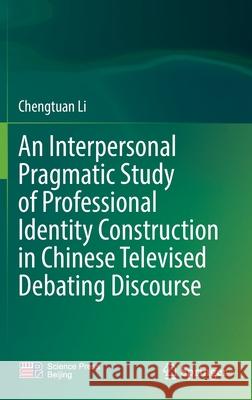
Chengtuan Li
An Interpersonal Pragmatic Study of Professional Identity Construction in Chinese Televised Debating Discourse Chengtuan Li 9789811675041 Springer Singapore - książkaWidoczna okładka, to zdjęcie poglądowe, a rzeczywista szata graficzna może różnić się od prezentowanej.

An Interpersonal Pragmatic Study of Professional Identity Construction in Chinese Televised Debating Discourse

ISBN-13: 9789811675041 / Angielski / Twarda / 2021 / 204 str.

Chengtuan Li
cena 483,04
(netto: 460,04 VAT:  5%)

Najniższa cena z 30 dni: 462,63
Termin realizacji zamówienia:
ok. 22 dni roboczych.

Darmowa dostawa!
inne wydania

This book explores debaters’ professional identity construction through implicit negation in televised debates from an interpersonal pragmatic perspective. It reveals the linguistic strategies used to indirectly negate the identity of others, and highlights three pairs of professional identity constructed through implicit negation: (1) expert vs. non-expert identity, (2) outsider vs. insider identity, (3) authentic vs. false identity. Furthermore, it proposes the Inter-relationality Principle, self-through-other identity and other-through-self identity, which contribute to Bucholtz and Hall’s theory of identity construction. Lastly, the book discusses the relations between professional identity construction through implicit negation and im/politeness, and builds a model of professional identity construction through implicit negation based on interpersonal pragmatics. By focusing on the interpersonal pragmatics of professional identity construction, the book advances the interpersonal pragmatic study of identity construction, im/politeness and implicit negation. As such, it is a valuable resource for a broad readership, including graduate students, and scholars who are interested in professional identity construction, implicit negation and im/politeness research.


Kategorie:
Nauka, Językoznawstwo
Kategorie BISAC:
Language Arts & Disciplines > Linguistics - Pragmatics
Wydawca:
Springer Singapore
Język:
Angielski
ISBN-13:
9789811675041
Rok wydania:
2021
Ilość stron:
204
Waga:
0.46 kg
Wymiary:
23.39 x 15.6 x 1.27
Oprawa:
Twarda
Wolumenów:
01
Dodatkowe informacje:
Wydanie ilustrowane

Abstract
Figures and Tables
Contents
Chapter One Introduction
1.1 The object of the study
1.2 Rationale of the study
1.3 Objectives of the study
1.4 The outline of the study
Chapter Two Methodology of the Study
2.1 Introduction
2.2 Data collection and transcription conventions
2.2.1 Data collection
2.2.2 The transcription conventions
2.2.3 Advantages and disadvantages of the data
2.3 Features of televised debating programmes
2.3.1 Institutional roles and their respective tasks
2.3.2 Topic of current affairs of televised debating programmes
2.3.3 Institution-specific goals of televised debating programmes
2.4. Analytical tools and procedures of the data
Chapter Three Literature Review
3.1 Introduction
3.2 Approaches to identity construction
3.2.1 Identity study following the sociolinguistic approach
3.2.1.1 The social constructionism approach
3.2.1.2 The narrative approach
3.2.2 Identity study in conversation analysis
3. 2. 3 Identity study from a psychological perspective
3.2.3.1 Social identity theory
3.2.3.2 Positioning theory and positioning analysis
3.2.3.2.1 Positioning theory
3.2.3.2.2 Positioning analysis
3.2.4 Identity study using the pragmatic approach
3.2.4.1 Identity construction and its markers
3.2.4.2 Identity, face and im/politeness
3.3 Implicit negation
3.4 Achievements and limitations in the prior studies
3.5 Summary
Chapter Four The Conceptual Framework
4.1 Introduction
4.2 Working definition of professional identity construction
4.2.1 Intentionality
4.2.2 Multiplicity
4.2.3 Relationality
4.3 Delimitation of professional identity construction via implicit negation
4.3.1 Identity construction and positioning
4.3.2 Identity construction and facework
4.3.3 Identity construction and category
4.4 Theoretical Support
4.4.1 Giles & Powesland’s Accommodation Theory
4.4.2 Spencer-Oatey’s Rapport Management Theory
4.4.2.1 Components of rapport management
4.4.2.2 Rapport orientations
4.4.3 Bucholtz & Hall’s Theory of Identity and Interaction
4.5 The conceptual framework of the present research
4.5.1 Implicit negation of other-identity in interaction
4.5.2 Categorization of professional identity construction via implicit negation
4.5.3 Professional identity construction via implicit negation and im/politeness
4.6 Summary
Chapter Five Implicit Negation of Other-Identity in Interaction
5.1 Introduction
5.2 The accommodative strategies for implicit negation
5. 2.1 Convergences for implicit negation
5.2.1.1 Positive convergences for implicit negation
5.2.1.1.1 Deprecating self-identity
5.2.1.1.2 Token acknowledgement of other-identity
5.2.1.2 Negative convergences for implicit negation
5.2.1.2.1 Re-defining other-identity
5.2.1.2.2 Innuendo of other-identity
5.2.2 Divergence strategies for implicit negation
5.2.2.1 Positive divergences for implicit negation
5.2.2.1.1 Drawing an analogy
5.2.2.1.2Turning to the 3rd non/present party
5.2.2.1.3 Explicit self-identification
5.2.2.1.4 Utilizing indexical shifts or depersonalization
5.2.2.2 Negative divergences for implicit negation
5.2.2.2.1 Drawing an analogy via improper vocatives
5.2.2.2.2 Rhetorical questions
5.2.2.2.3 Using a tautology
5.3 A model of implicit negation of other-identity
5.4 Conclusion
Chapter Six Professional Identity Construction via Implicit Negation
6.1 Introduction
6.2 Expert identity versus non-expert identity construction
6.2.1 Overt mention of identity categories and labels
6.2.2. Projecting self-professional competence
6.2.2.1 Projecting self-professional competence with rhetorical strategies
6.2.2.2 Challenging the other’s professional competence
6.2.2.3 Presenting hypothetical roles/situations
6.3 Insider identity versus outsider identity construction
6.3.1 Outsider identity construction
6.3.2 Insider identity construction
6.4. Authentic identity versus false identity construction
6.4.1 Crafted identity construction
6.4.2 Problematic identity construction
6.4.3 Fragmented identity construction
6.5 A model of professional identity construction via implicit negation
6.6 Summary
Chapter Seven Professional identity construction via implicit negation and im/politeness
7.1 Introduction
7.2 Identity and im/politeness
7.3 Identity construction and im/politeness in institutional discourse
7.4 Professional identity construction and im/politeness in institutional discourse
7.4.1 Verification of the other-identity and politeness-enhancement via positive convergences
7.4.2 Partial verification of the other’s identity and politeness-maintenance via negative convergences
7.4.3 Non-verification of other-identity and politeness-maintenance via positive divergences
7.4.3.1 Non-verification of the other’s quality face and politeness
7.4.3.2 Non-verification of the other’s social identity face and politeness
7.4.4 Non-recognition of the other’s sociality rights and impoliteness via negative divergences
7.5 Mechanism for professional identity construction via implicit negation and im/politeness in institutional discourse
7.6 Summary
Chapter Eight Conclusion
8.1 Introduction
8.2 Major findings
8.2.1 Categories of professional identity constructed via implicit negation
8.2.2 Implicit strategies of negating other-identity
8.2.3 Relationships of professional identity construction via implicit negation and im/politeness
8.4 Implications
8.5 Limitations
8. 6 Suggestions for future research
Reference

Li Chengtuan is a professor of linguistics at the Faculty of English Language and Culture, and a researcher at the Center of Linguistics and Applied Linguistics, Guangdong University of Foreign Studies, P. R. China. His recent research covers pragmatics and discourse analysis, especially identity construction, im/politeness, moral norm and cross-cultural communication. He has published papers in the Journal of Pragmatics, Text & Talk, Intercultural Pragmatics, and Pragmatics & Society, as well as book chapters with Routledge.

This book explores debaters’ professional identity construction through implicit negation in televised debates from an interpersonal pragmatic perspective. It reveals the linguistic strategies used to indirectly negate the identity of others, and highlights three pairs of professional identity constructed through implicit negation: (1) expert vs. non-expert identity, (2) outsider vs. insider identity, (3) authentic vs. false identity. Furthermore, it proposes the Inter-relationality Principle, self-through-other identity and other-through-self identity, which contribute to Bucholtz and Hall’s theory of identity construction. Lastly, the book discusses the relations between professional identity construction through implicit negation and im/politeness, and builds a model of professional identity construction through implicit negation based on interpersonal pragmatics.

By focusing on the interpersonal pragmatics of professional identity construction, the book advances the interpersonal pragmatic study of identity construction, im/politeness and implicit negation. As such, it is a valuable resource for a broad readership, including graduate students, and scholars who are interested in professional identity construction, implicit negation and im/politeness research.




Udostępnij

Facebook - konto krainaksiazek.pl


Opinie o Krainaksiazek.pl na Opineo.pl

Partner Mybenefit

Krainaksiazek.pl w programie rzetelna firma Krainaksiaze.pl - płatności przez paypal

Czytaj nas na:

Facebook - krainaksiazek.pl
  • książki na zamówienie
  • granty
  • książka na prezent
  • kontakt
  • pomoc
  • opinie
  • regulamin
  • polityka prywatności

Zobacz:

  • Księgarnia czeska

  • Wydawnictwo Książkowe Klimaty

1997-2026 DolnySlask.com Agencja Internetowa

© 1997-2022 krainaksiazek.pl
     
KONTAKT | REGULAMIN | POLITYKA PRYWATNOŚCI | USTAWIENIA PRYWATNOŚCI
Zobacz: Księgarnia Czeska | Wydawnictwo Książkowe Klimaty | Mapa strony | Lista autorów
KrainaKsiazek.PL - Księgarnia Internetowa

Polityka prywatnosci - link
Krainaksiazek.pl - płatnośc Przelewy24
Przechowalnia Przechowalnia





