• Wyszukiwanie zaawansowane
  • Kategorie
  • Kategorie BISAC
  • Książki na zamówienie
  • Promocje
  • Granty
  • Książka na prezent
  • Opinie
  • Pomoc
  • Załóż konto
  • Zaloguj się

Amputation, Prosthesis Use, and Phantom Limb Pain: An Interdisciplinary Perspective » książka


zaloguj się | załóż konto
Logo Krainaksiazek.pl

koszyk

konto

szukaj
topmenu
Księgarnia internetowa
Szukaj
Książki na zamówienie
Promocje
Granty
Książka na prezent
Moje konto
Pomoc
 
 
Wyszukiwanie zaawansowane
Pusty koszyk
Bezpłatna dostawa dla zamówień powyżej 20 złBezpłatna dostawa dla zamówień powyżej 20 zł

Kategorie główne

• Nauka
 [2950560]
• Literatura piękna
 [1849509]

  więcej...
• Turystyka
 [71097]
• Informatyka
 [151150]
• Komiksy
 [35848]
• Encyklopedie
 [23178]
• Dziecięca
 [617388]
• Hobby
 [139064]
• AudioBooki
 [1657]
• Literatura faktu
 [228597]
• Muzyka CD
 [383]
• Słowniki
 [2855]
• Inne
 [445295]
• Kalendarze
 [1464]
• Podręczniki
 [167547]
• Poradniki
 [480102]
• Religia
 [510749]
• Czasopisma
 [516]
• Sport
 [61293]
• Sztuka
 [243352]
• CD, DVD, Video
 [3414]
• Technologie
 [219456]
• Zdrowie
 [101002]
• Książkowe Klimaty
 [124]
• Zabawki
 [2311]
• Puzzle, gry
 [3459]
• Literatura w języku ukraińskim
 [254]
• Art. papiernicze i szkolne
 [8079]
Kategorie szczegółowe BISAC

Amputation, Prosthesis Use, and Phantom Limb Pain: An Interdisciplinary Perspective

ISBN-13: 9780387874616 / Angielski / Twarda / 2009 / 203 str.
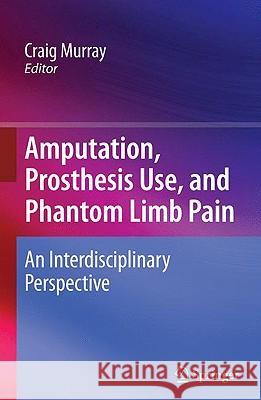
Craig Murray
Amputation, Prosthesis Use, and Phantom Limb Pain: An Interdisciplinary Perspective Murray, Craig 9780387874616 Springer - książkaWidoczna okładka, to zdjęcie poglądowe, a rzeczywista szata graficzna może różnić się od prezentowanej.

Amputation, Prosthesis Use, and Phantom Limb Pain: An Interdisciplinary Perspective

ISBN-13: 9780387874616 / Angielski / Twarda / 2009 / 203 str.

Craig Murray
cena 321,26
(netto: 305,96 VAT:  5%)

Najniższa cena z 30 dni: 308,41
Termin realizacji zamówienia:
ok. 22 dni roboczych
Dostawa w 2026 r.

Darmowa dostawa!

The main objective in the rehabilitation of people following amputation is to restore or improve their functioning, which includes their return to work. Full-time employment leads to beneficial health effects and being healthy leads to increased chances of full-time employment (Ross and Mirowskay 1995). Employment of disabled people enhances their self-esteem and reduces social isolation (Dougherty 1999). The importance of returning to work for people following amputation the- fore has to be considered. Perhaps the first article about reemployment and problems people may have at work after amputation was published in 1955 (Boynton 1955). In later years, there have been sporadic studies on this topic. Greater interest and more studies about returning to work and problems people have at work following amputation arose in the 1990s and has continued in recent years (Burger and Marinc ?ek 2007). These studies were conducted in different countries on all the five continents, the greatest number being carried out in Europe, mainly in the Netherlands and the UK (Burger and Marinc ?ek 2007). Owing to the different functions of our lower and upper limbs, people with lower limb amputations have different activity limitations and participation restrictions compared to people with upper limb amputations. Both have problems with driving and carrying objects. People with lower limb amputations also have problems standing, walking, running, kicking, turning and stamping, whereas people with upper limb amputations have problems grasping, lifting, pushing, pulling, writing, typing, and pounding (Giridhar et al. 2001).


Kategorie:
Nauka, Medycyna
Kategorie BISAC:
Medical > Physical Medicine & Rehabilitation
Medical > Biotechnology
Medical > Surgery - General
Wydawca:
Springer
Język:
Angielski
ISBN-13:
9780387874616
Rok wydania:
2009
Wydanie:
2010
Ilość stron:
203
Waga:
0.48 kg
Wymiary:
23.39 x 15.6 x 1.42
Oprawa:
Twarda
Wolumenów:
01
Dodatkowe informacje:
Bibliografia
Wydanie ilustrowane

From the reviews:

"The book consists of 12 chapters divided into 3 main sections that outline the multidisciplinary developments in the understanding and treatment of phantom limb pain. Each chapter is well written and provides references to key sources in the field. ... This book is written for a variety of professionals and draws attention to the increased need for additional research in the area of phantom limb pain. The book has accomplished its goal of updating current understanding and identifying optimal, multidisciplinary treatments of phantom limb pain." (Brian M. Kelly, Journal of the American Medical Association, December, 2010)

Developing an Interdisciplinary Perspective on Amputation, Prosthesis Use, and Phantom Limb Pain: An Introduction.- Need-Directed Design of Prostheses and Enabling Resources.- Ethical and Medico-Legal Issues in Amputee Prosthetic Rehabilitation.- Monitoring of Upper Limb Prosthesis Activity in Trans-Radial Amputees.- Adaptation to Amputation and Prosthesis Use.- Understanding Adjustment and Coping to Limb Loss and Absence through Phenomenologies of Prosthesis Use.- Return to Work After Amputation.- Gender, Sexuality and Prosthesis Use: Implications for Rehabilitation.- Post Amputation Chronic Pain Profile and Management.- Phantom Limb Pain; Prevalence, Mechanisms and Associated Factors.- Management of Phantom Limb Pain.- Virtual Solutions to Phantom Problems: Using Immersive Virtual Reality to Treat Phantom Limb Pain.

Craig Murray is a Senior Lecturer at Lancaster University with research specialization in health, clinical psychology, and embodiment. He has more than 100 journal, book, and conference publications. These include papers in key Health Psychology (British Journal of Health Psychology; Health Informatics; Health Psychology; Health, Risk and Society; Qualitative Health Research, Psychology, Health and Medicine; Social Science and Medicine) Mental Health (Journal of Nervous and Mental Disease; Journal of Mental Health) and Rehabilitation (CyberPsychology and Behavior; Disability and Rehabilitation; International Journal on Disability and Human Development) journal titles. He has published widely on the topic of amputation, prosthesis use and phantom limb pain and led funded research programmes on these topics. This work has received international media attention (including television: Canadian Discovery Channel, Australian Broadcasting Corporation radio and television, and America’s CNN; and press: e.g. The Times, Australia’s Sydney Morning Herald, China’s People Daily, Russian Newsweek, New Yorker magazine). He is editor of ‘Psychological Scientific Perspectives on out-of-body experiences’ (2009, Nova Science Publishers, New York).

Amputation, Prosthesis Use, and Phantom Limb Pain

An Interdisciplinary Perspective

Edited by Craig D. Murray


For the millions of patients adjusting to life with one or more missing limbs, adaptation involves an intricate network of physical, psychological, social, and existential factors.

It is with this complex scenario in mind that Amputation, Prosthesis Use, and Phantom Limb Pain: An Interdisciplinary Perspective has been developed. Unlike other books that deal exclusively with one or another of these topics, this volume unites the three to return the experiential to what is often treated in the literature—and too often in the clinic—as a solely medical condition. Written by top specialists in areas ranging from psychology and neuroscience to biomedical engineering and computer science (and including material applicable to those with congenital missing limbs as well as to amputees), this volume provides up-to-date knowledge with wide appeal to a variety of professional readers. In addition, the book’s accessibility ensures that practitioners working in teams understand each other’s work as well as client needs. Among the leading-edge topics:

  • Ethical and medico-legal issues in providing assistive technology.
  • Psychosocial assessment of adaptation to amputation and prosthesis use.
  • Congenital limb deficiencies and experiences of prosthesis use.
  • Prothesis use relating to the formation and maintenance of romantic relationships.
  • Biopsychosocial approaches to postoperative pain.
  • Phenomenology of phantom limb experience and prosthesis use.
  • Relationship between coping style and phantom limb pain.
  • Virtual-reality treatments for phantom limb pain.

Must reading for clinical and health psychologists, neuropsychologists, prostheticians, orthopedists, neurologists, professionals in rehabilitation and rehabilitative medicine, and designers of assistive technologies, Amputation, Prosthesis Use, and Phantom Limb Pain is dedicated to the goal of encouraging proper fit and alignment—not only between patients and devices, but between healing professionals and their clients.

Murray, Craig CRAIG MURRAY was British ambassador at the embassy... więcej >


Udostępnij

Facebook - konto krainaksiazek.pl


Opinie o Krainaksiazek.pl na Opineo.pl

Partner Mybenefit

Krainaksiazek.pl w programie rzetelna firma Krainaksiaze.pl - płatności przez paypal

Czytaj nas na:

Facebook - krainaksiazek.pl
  • książki na zamówienie
  • granty
  • książka na prezent
  • kontakt
  • pomoc
  • opinie
  • regulamin
  • polityka prywatności

Zobacz:

  • Księgarnia czeska

  • Wydawnictwo Książkowe Klimaty

1997-2025 DolnySlask.com Agencja Internetowa

© 1997-2022 krainaksiazek.pl
     
KONTAKT | REGULAMIN | POLITYKA PRYWATNOŚCI | USTAWIENIA PRYWATNOŚCI
Zobacz: Księgarnia Czeska | Wydawnictwo Książkowe Klimaty | Mapa strony | Lista autorów
KrainaKsiazek.PL - Księgarnia Internetowa

Polityka prywatnosci - link
Krainaksiazek.pl - płatnośc Przelewy24
Przechowalnia Przechowalnia





