Agricultural Residue Management in Developing Countries » książka





Agricultural Residue Management in Developing Countries
ISBN-13: 9783639145663 / Angielski / Miękka / 2009 / 120 str.
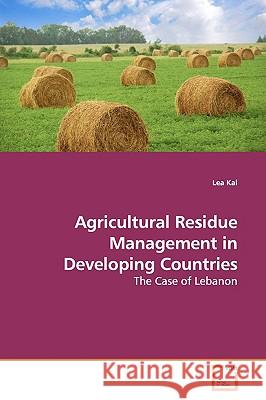
As a result of economic growth, development and increased consumption, waste generation has globally increased over the last decades. Although waste management has traditionally relied on disposal, the trend is currently shifting towards resource recovery. Consequently, new approaches for waste recovery such as agricultural residue management have become a main interest among researchers. This book offers a first attempt to examine the feasibility of agricultural residue management in developing countries as an approach to minimize waste disposal and optimize resources use. Lebanon is taken as a case study in which residue generation is estimated and current management practices described. Various commonly used methods such as composting, combustion, gasification, fermentation, ethanol conversion and animal feed are assessed and compared using MCDA and a management plan is proposed within the Lebanese institutional, legislative and operational framework related to waste management. This book can be of particular interest to professionals as well as decision makers willing to explore unconventional methods for waste management and resource recovery.




Czytaj nas na:
KrainaKsiazek.PL - Księgarnia Internetowa


