Aftermyths: Hysteria, Colloquialism, and Caricature in the Age of Doubt » książka





Aftermyths: Hysteria, Colloquialism, and Caricature in the Age of Doubt
ISBN-13: 9780820486970 / Angielski / Twarda / 2006 / 255 str.
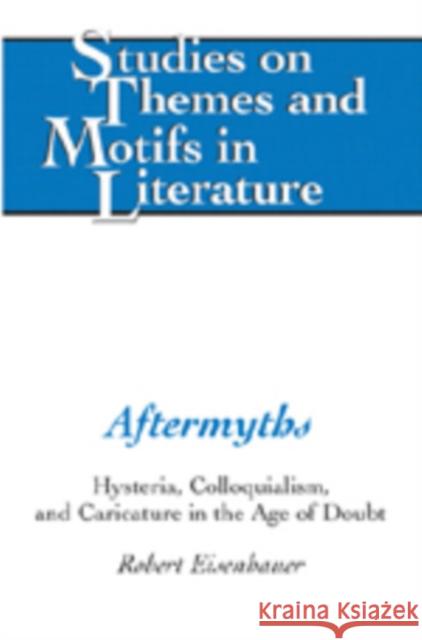
Aftermyths: Hysteria, Colloquialism, and Caricature in the Age of Doubt
ISBN-13: 9780820486970 / Angielski / Twarda / 2006 / 255 str.
(netto: 362,07 VAT: 5%)
Najniższa cena z 30 dni: 378,13
ok. 10-14 dni roboczych
Bez gwarancji dostawy przed świętami
Darmowa dostawa!
Aftermyths investigates fault-lines in literary and visual representation from 1870 to the early twentieth century as they range from a faux essentialism, often with ethnic overtones, to a -cadence of decadence- reflecting the dissensions of modernity. Reading Henry James and Mark Twain with side-glances to the cartoon revolution of Rudolf Dirks and Richard Felton Outcault, Robert Eisenhauer delves into the archive of frontier or histrionic -decadence, - -Americanness, - and -Germanness.- Pastoral idiom and foreign words, -incomprehensible to us as so many dead languages, - reflect Hesperian micrology on the part of the Ubergossiper James, a discursive -katzenjammer- effect, while Twain s difficulties with German exemplify a strategy of emancipation informed by minstrel-like showmanship and a river or streetwise skepticism. In addition, Eisenhauer applies key concepts of Walter Benjamin s Arcades Project to New York City after 1920. Mayor Jimmy Walker and urban planner Robert Moses are seen as Dionysian and Apollonian instances contesting the meta-arcades of Manhattan at the intersection of epic, lyric, and drama. Outcault s -Opera in Ryan s Arcade- vernacularizes the difference between uptown and downtown, high art and low -un-art.- With the premise that Freud s definition of caricature in Totem and Taboo remains valid, Aftermyths goes on to investigate the bear as a mimetic paradigm for Nietzsche s -not yet determined animal- homo sapiens. Finally, Eisenhauer suggests affinities between two fictions of immortality, Grass s Flounder and Hamill s Forever, before returning to the downtown scene for remarks on Richard Foreman s Ontological-Hysteric Theatre."




Czytaj nas na:
KrainaKsiazek.PL - Księgarnia Internetowa


