• Wyszukiwanie zaawansowane
  • Kategorie
  • Kategorie BISAC
  • Książki na zamówienie
  • Promocje
  • Granty
  • Książka na prezent
  • Opinie
  • Pomoc
  • Załóż konto
  • Zaloguj się

African Security in the Anthropocene » książka


zaloguj się | załóż konto
Logo Krainaksiazek.pl

koszyk

konto

szukaj
topmenu
Księgarnia internetowa
Szukaj
Książki na zamówienie
Promocje
Granty
Książka na prezent
Moje konto
Pomoc
 
 
Wyszukiwanie zaawansowane
Pusty koszyk
Bezpłatna dostawa dla zamówień powyżej 20 złBezpłatna dostawa dla zamówień powyżej 20 zł

Kategorie główne

• Nauka
 [2952079]
• Literatura piękna
 [1850969]

  więcej...
• Turystyka
 [71058]
• Informatyka
 [151066]
• Komiksy
 [35579]
• Encyklopedie
 [23181]
• Dziecięca
 [620496]
• Hobby
 [139036]
• AudioBooki
 [1646]
• Literatura faktu
 [228729]
• Muzyka CD
 [379]
• Słowniki
 [2932]
• Inne
 [445708]
• Kalendarze
 [1409]
• Podręczniki
 [164793]
• Poradniki
 [480107]
• Religia
 [510956]
• Czasopisma
 [511]
• Sport
 [61267]
• Sztuka
 [243299]
• CD, DVD, Video
 [3411]
• Technologie
 [219640]
• Zdrowie
 [100984]
• Książkowe Klimaty
 [124]
• Zabawki
 [2281]
• Puzzle, gry
 [3363]
• Literatura w języku ukraińskim
 [258]
• Art. papiernicze i szkolne
 [8020]
Kategorie szczegółowe BISAC

African Security in the Anthropocene

ISBN-13: 9783031251504 / Angielski
Hussein Solomon; Jude Cocodia
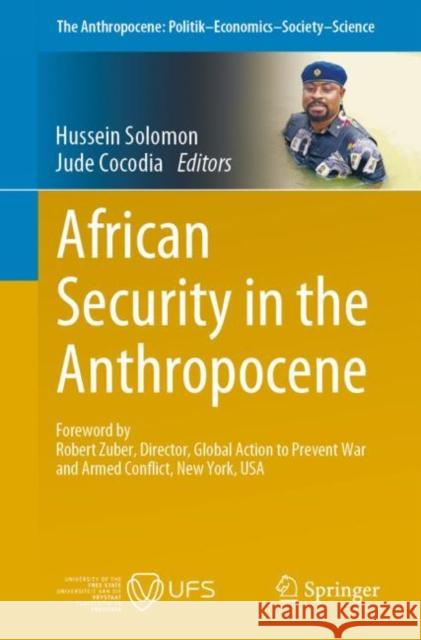
African Security in the Anthropocene Hussein Solomon Jude Cocodia 9783031251504 Springer - książkaWidoczna okładka, to zdjęcie poglądowe, a rzeczywista szata graficzna może różnić się od prezentowanej.

African Security in the Anthropocene

ISBN-13: 9783031251504 / Angielski

Hussein Solomon; Jude Cocodia
cena 402,53
(netto: 383,36 VAT:  5%)

Najniższa cena z 30 dni: 346,96
Termin realizacji zamówienia:
ok. 22 dni roboczych
Dostawa w 2026 r.

Darmowa dostawa!

Much has been written on security in Africa—its democratic deficit, poor civil-military relations, and myriad conflicts—but these are often treated in isolation from one another. This book takes a different approach, as it links all of these issues to the dynamics of the Anthropocene. Penned by African scholars on the continent and in the diaspora, it examines the different challenges not as separate entities but as outcomes of the Anthropocene Age. In this geological epoch, humans have become a global force—unfortunately, not necessarily for good. The interaction between humans and the climate, the effects of waste, the impact of pollution on marine and terrestrial ecosystems, the loss of biodiversity, and the change in the chemical composition of the soil, oceans and atmosphere are key identifiers of the age of the Anthropocene. This has fueled conflict and instability from the vast swathes of the Sahel to Somalia. Responding to these issues of insecurity without understanding their inter-connectedness and how this relates to the environment can only result in failure. From this perspective, the current structures in place are inadequate for the task of confronting insecurity at the state and continental levels, as represented by the African Union. What is needed is a radical reevaluation of Africa’s security architecture and approach to security. This necessitates pooling sovereignty on a continental and global level. It necessitates less state-centric responses that include civil society and the business community as equal partners of states in order to collectively confront insecurity in the age of the Anthropocene.• The authors are  academics, policy makers and military veterans who have worked in building capacity on the African continent• The book is comprehensive in scope, strong on theory, pragmatic in policy and reflects experience from the field.• The authors approach makes the book easy, interesting and intriguing.


Much has been written on security in Africa—its democratic deficit, poor civil-military relations, and myriad conflicts—but these are often treated in isolation from one another. This book takes a different approach, as it links all of these issues to the dynamics of the Anthropocene. Penned by African scholars on the continent and in the diaspora, it examines the different challenges not as separate entities but as outcomes of the Anthropocene Age. In this geological epoch, humans have become a global force—unfortunately, not necessarily for good. The interaction between humans and the climate, the effects of waste, the impact of pollution on marine and terrestrial ecosystems, the loss of biodiversity, and the change in the chemical composition of the soil, oceans and atmosphere are key identifiers of the age of the Anthropocene. This has fueled conflict and instability from the vast swathes of the Sahel to Somalia. Responding to these issues of insecurity without understanding their inter-connectedness and how this relates to the environment can only result in failure. From this perspective, the current structures in place are inadequate for the task of confronting insecurity at the state and continental levels, as represented by the African Union. What is needed is a radical reevaluation of Africa’s security architecture and approach to security. This necessitates pooling sovereignty on a continental and global level. It necessitates less state-centric responses that include civil society and the business community as equal partners of states in order to collectively confront insecurity in the age of the Anthropocene.

• The authors are  academics, policy makers and military veterans who have worked in building capacity on the African continent
• The book is comprehensive in scope, strong on theory, pragmatic in policy and reflects experience from the field.
• The authors approach makes the book easy, interesting and intriguing.

Kategorie:
Nauka, Polityka
Kategorie BISAC:
Political Science > Security (National & International)
Political Science > International Relations - General
Science > Earth Sciences - Geography
Wydawca:
Springer
Seria wydawnicza:
Anthropocene: Politik--Economics--Society--Science
Język:
Angielski
ISBN-13:
9783031251504

Introduction

Cocodia and Hussein

Contending Conceptions of African Security      
Bianca Naude

Homer-Dixon’s Environmental Scarcity Theory and Potential for Conflict   
in the Nile River Basin (NRB)
M.K Mahlakeng and Hussein Solomon

Climate-Security and the Anthropocene: The Case of Mali    
Sanet Madonsela

The State, African Security and the African Union in the Anthropocene Age 49-64
Hussein Solomon and Jude Cocodia

Resource-Based Conflicts in Africa       
Omololu Fagbadebo, and Mzikayise S. Binza 

Democratization vs Authoritarianism including coups in Africa   
Abel Esterhuyse

Identity and Security         
Jude Cocodia and Ibaba Ibaba

The Role of Foreign Actors in African Security     
Dauda Abubakar

Insecurity and Regional Actors’ Role in Securing African Security:   
An Analysis of the Role of ECOWAS, SADC and IGAD 
Isaac Owusu-Mensah  and Abdul-Jalilu Ateku   

The Future of African Security: Final Thoughts
Hussein & Cocodia

Much has been written on security in Africa—its democratic deficit, poor civil-military relations, and myriad conflicts—but these are often treated in isolation from one another. This book takes a different approach, as it links all of these issues to the dynamics of the Anthropocene. Penned by African scholars on the continent and in the diaspora, it examines the different challenges not as separate entities but as outcomes of the Anthropocene Age. In this geological epoch, humans have become a global force—unfortunately, not necessarily for good. The interaction between humans and the climate, the effects of waste, the impact of pollution on marine and terrestrial ecosystems, the loss of biodiversity, and the change in the chemical composition of the soil, oceans and atmosphere are key identifiers of the age of the Anthropocene. This has fueled conflict and instability from the vast swathes of the Sahel to Somalia. Responding to these issues of insecurity without understanding their inter-connectedness and how this relates to the environment can only result in failure. From this perspective, the current structures in place are inadequate for the task of confronting insecurity at the state and continental levels, as represented by the African Union. What is needed is a radical reevaluation of Africa’s security architecture and approach to security. This necessitates pooling sovereignty on a continental and global level. It necessitates less state-centric responses that include civil society and the business community as equal partners of states in order to collectively confront insecurity in the age of the Anthropocene.

• The authors are  academics, policy makers and military veterans who have worked in building capacity on the African continent
• The book is comprehensive in scope, strong on theory, pragmatic in policy and reflects experience from the field.
• The authors approach makes the book easy, interesting and intriguing.



Udostępnij

Facebook - konto krainaksiazek.pl


Opinie o Krainaksiazek.pl na Opineo.pl

Partner Mybenefit

Krainaksiazek.pl w programie rzetelna firma Krainaksiaze.pl - płatności przez paypal

Czytaj nas na:

Facebook - krainaksiazek.pl
  • książki na zamówienie
  • granty
  • książka na prezent
  • kontakt
  • pomoc
  • opinie
  • regulamin
  • polityka prywatności

Zobacz:

  • Księgarnia czeska

  • Wydawnictwo Książkowe Klimaty

1997-2025 DolnySlask.com Agencja Internetowa

© 1997-2022 krainaksiazek.pl
     
KONTAKT | REGULAMIN | POLITYKA PRYWATNOŚCI | USTAWIENIA PRYWATNOŚCI
Zobacz: Księgarnia Czeska | Wydawnictwo Książkowe Klimaty | Mapa strony | Lista autorów
KrainaKsiazek.PL - Księgarnia Internetowa

Polityka prywatnosci - link
Krainaksiazek.pl - płatnośc Przelewy24
Przechowalnia Przechowalnia



