African Handbook of Climate Change Adaptation » książka





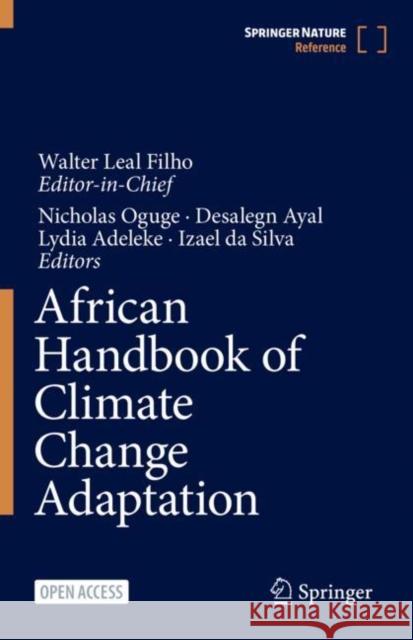
African Handbook of Climate Change Adaptation
ISBN-13: 9783030451059 / Angielski / Twarda / 2021 / 2838 str.
African Handbook of Climate Change Adaptation
ISBN-13: 9783030451059 / Angielski / Twarda / 2021 / 2838 str.
(netto: 3067,16 VAT: 5%)
Najniższa cena z 30 dni: 3084,44
ok. 16-18 dni roboczych.
Darmowa dostawa!
Climate Change, Agriculture and Food Security
- Adaptation of Seaweed Farmers in Zanzibar to the Impacts of Climate Change
- Adaptation of Small-Scale Tea and Coffee Farmers in Kenya to Climate Change
- Adaptive Capacity to Mitigate Climate Variability and Food Insecurity of Rural Communities Along River Tana Basin, Kenya
- Agricultural Interventions to Enhance Climate Change Adaptation of Underutilized Root and Tuber Crops
- Farmers’ Adaptive Capacity to Climate Change in Africa: Small-Scale Farmers in Cameroon
- Assessment of Farmers’ Indigenous Technology Adoptions for Climate Change Adaptation in Nigeria
- Case for Climate Smart Agriculture in Addressing the Threat of Climate Change
- Sorghum Farmers’ Climate Change Adaptation Strategies in the Semiarid Region of Cameroon- Attaining Food Security in the Wake of Climatic Risks: Lessons from the Delta State of Nigeria
- Tied Ridges and Better Cotton Breeds for Climate Change Adaptation
- Determinants of Cattle Farmers’ Perception of Climate Change in the Dry and Sub-humid Tropical Zones of Benin (West Africa)
- Drivers of Level of Adaptation to Climate Change in Smallholder Farming Systems in Southern Africa: A Multi-Level Modelling Approach
- Economic Analysis of Climate-Smart Agriculture Technologies in Maize Production in Smallholder Farming Systems
- Role of Cassava and Sweetpotato in Mitigating Drought in Semi-Arid Makueni County in Kenya
- Food Security Concerns, Climate Change and Sea Level Rise in Coastal Cameroon
- Impacts of Climate Change to Poultry Production in Africa: Adaptation Options for Broiler Chickens- Climate Change Adaptation Options in Farming Communities of Selected Nigerian Ecological Zones
- Plants and Plant Products in Local Markets Within Benin City and Environs
- Retooling Smallholder Farming Systems for Climate Change Resilience Across Botswana Arid Zones
- Agroecology and Climate Change Adaptation: Farmers’ Experiences in the South African Lowveld
- Climate Change and Variability on Food Security of Rural Household: Central Highlands, Ethiopia
- Intangible and Indirect Costs of Adaptation to Climate Variability among Maize Farmers: Chirumanzu District, Zimbabwe
- Climate Variability and Rural Livelihood Security: Impacts and Implications
- Climate Change Impact on Soil Moisture Variability: Health Effects of Radon Flux Density Within Ogbomoso, Nigeria- African Yam Bean the Choice for Climate Change Resilience: Need for Conservation and Policy
- Underutilised Indigenous Vegetables’ (UIVs) Business in Southwestern Nigeria: Climate Adaptation Strategies
- Farmers’ Adoption of Climate Smart Practices for Increased Productivity in Nigeria
- Climate Change Adaptation Strategies Among Cereal Farmers in Kwara State, Nigeria
- Dual Pathway Model of Responses between Climate Change and Livestock Production
- Corona Virus, Climate Change and Food Security
- Role of Small Grains in Adapting to Climate Change: Zvishavane District, Zimbabwe
- Constraints to Farmers’ Choice of Climate Change Adaptation Strategies in Ondo State of Nigeria
- Maize, Cassava, and Sweet Potato Yield on Monthly Climate in Malawi- Addressing Climate Change Vulnerability Through Small Livestock Rearing in Matobo, Zimbabwe
- Barriers to Climate Change Adaptation Among Pastoralists: Rwenzori Region, Western Uganda
- Rethinking Climate-Smart Agriculture Adoption for Resilience-Building Among Smallholder Farmers: Gender-Sensitive Adoption Framework
- Rainfall Variability and Adaptation of Tomatoes Farmers in Santa: Northwest Region of Cameroon
- Rainfall Variability and Quantity of Water Supply in Bamenda I, Northwest Region of Cameroon
- Climate Change Adaptation: Implications for Food Security and Nutrition
- Brachiaria Grass for Climate Resilient and Sustainable Livestock Production in Kenya
- Climate Change Adaptation Through Sustainable Water Resources Management in Kenya: Challenges and Opportunities
- Impacts of Environmental Change on Fish Production in Egypt and Nigeria: Technical Characteristics and Practice
Climate Change, Technologies and Resources Management
- Sustainable Urban Drainage Practices and their Effects on Aquifer Recharge
- Building Livelihoods Resilience in the Face of Climate Change: Case Study of Small-Holder Farmers in Tanzania
- Climate Change Adaptation: Opportunities for Increased Material Recycling Facilities in African Cities
- Farm-Level Impacts of Greenhouse Gas Reductions for the Predominant Production Systems in Northern Nigeria
- GIS-Based Assessment of Solar Energy Harvesting Sites and Electricity Generation Potential in Zambia
- Panel Analysis of the Relationship Between Weather Variability and Sectoral Output in Kenya
- Agro-ecological Lower Midlands Zone IV and V in Kenya using GIS and Remote Sensing for Climate-Smart Crop Management
- Water Resource Management Frameworks in Water Related Adaptation to Climate Change
- Retracing the Economic Impact of Climate Change Disasters in Africa: Case Study of Drought Episodes and Adaptation in Kenya
- Rural Farmers’ Approach to Drought Adaptation: Lessons from Crop Farmers in Ghana
- Smart Climate Resilient and Efficient Integrated Waste to Clean Energy System in a Developing Country: Industry 4.0
- Greenhouse Gases Emissions in Agricultural Systems and Climate Change Effects in sub-Saharan Africa
- Use and Impact of Artificial Intelligence on Climate Change Adaptation in Africa
- Impact of Moisture Flux and Vertical Wind Shear on Forecasting Extreme Rainfall Events in Nigeria- Plastic Pollution and Climate Change: Role of Bioremediation as a Tool to Achieving Sustainability
- Climate Change, Rural Livelihoods and Ecosystem Nexus: Forest Communities in Agro-ecological zones of Nigeria
- Climate Change, Biodiversity and Tipping Points in Botswana
- Access to water resources and household vulnerability to malaria in the Okavango Delta, Botswana
- Digital platforms in Climate Information Service Delivery for Farming in Ghana
- Clean Energy Technology for the Mitigation of Climate Change: African Traditional Myth
- Green Technology Approaches to Solid Waste Management in the Developing Economies
- Pyrolysis Bio-oil and Bio-char Production from Firewood Tree Species for Energy and Carbon Storage in Rural Wooden Houses of Southern Ethiopia
- “Conservation Agriculture,” Possible Climate Change Adaptation Option in Taita Hills, Kenya- Do-It-Yourself Flood Risk Adaptation Strategies in the Neighborhoods of Kano City, Nigeria
- Global Strategy, Local Action with Biogas Production for Rural Energy Climate Change Impact Reduction
- Biochar for Climate Change Adaptation: Effect on Heavy Metal Composition of Telfairia Occidentalis Leaves
- Sustaining a Cleaner Environment by Curbing Down Biomass Energy Consumption
- Resetting the African Smallholder Farming System: Potentials to Cope with Climate Change
- Sustainable Food Production Systems for Climate Change Mitigation: Indigenous Rhizobacteria for Potato Bio-fertilization in Tanzania
- Climate Change Adaptation among Smallholder Farmers in Rural Ghana
- Biomass Burning Effects on the Climate over Southern West Africa During the Summer Monsoon- Precipitation Variability in West Africa in the Context of Global Warming and Adaptation Recommendations
- Socioeconomically Informed use of Geostatistics to Track Adaptation of Resource-Poor Communities to Climate Change
- Risks of Indoor Overheating in Low-Cost Dwellings on the South African Lowveld
- Smallholders Use of Weather Information as Smart Adaptation Strategy in the Savannah Area of Ondo State, Nigeria
- ECMWF Subseasonal to Seasonal Precipitation Forecast for Use as a Climate Adaptation Tool Over Nigeria
- Agropastoralists’ Climate Change Adaptation Strategy Modeling: Software and Coding Method Accuracies for Best-Worst Scaling Data
- Barriers to the Adoption of Improved Cooking Stoves for Rural Resilience and Climate Change Adaptation and Mitigation in Kenya- Improving Food Security by Adapting and Mitigating Climate Change-Induced Crop Pest: The Novelty of Plant-Organic Sludge in Southern Nigeria
- Indigenous and Scientific Forecasts on Climate Change Perceptions of Arable Farmers: Rwenzori Region, Western Uganda
- Thermodynamic Environment During the 2009 Burkina Faso and 2012 Nigeria Flood Disasters: Case Study
- Differential Impact of Land Use Types on Soil Productivity Components in Two Agro-Ecological Zones of Southern Ghana
- Data Collection Using Wireless Sensor Networks and Online Visualization for Kitui Kenya
Interdisciplinary Aspects of Climate Change
- Climate Change Adaptation in Southern Africa: Universalistic Science or Indigenous Knowledge or Hybrid
- Equity and Justice in Climate Change Adaptation: Policy and Practical Implication in Nigeria
- Climate-Induced Food Crisis in Africa: Integrating Policy and Adaptation
- Gender Implications of Farmers’ Indigenous Climate Change Adaptation Strategies Along Agriculture Value Chain in Nigeria
- Impact of Climate Change on Animal Health, Emerging and Re-emerging Diseases in Africa
- Livestock Breeders’ Adaptation to Climate Variability and Change in Morocco’s Arid Rangelands
- Triple Helix as a Strategic Tool to Fast-Track Climate Change Adaptation in Rural Kenya: Case Study of Marsabit County
- Climate Change Adaptation Mechanism for Sustainable Development Goal 1 in Nigeria: Legal Imperative
- Climate Variability on Fishing Activities in Inland Waters: Case of Owena River in Ondo and Osun States, Nigeria- Climate Change Impacts on Climate Extremes and Adaptation Strategies in the Vea catchment, Ghana
- Climate Change Resistant Energy Sources for Global Adaptation
- Uncertainties in Rainfall and Water Resources in Maghreb Countries under Climate Change
- Hydrological Dynamics Assessment of Basin Upstream–Downstream Linkages Under Seasonal Climate Variability
- Adaptation to Climate Change: Opportunities and Challenges from Zambia
- Gendered vulnerability to climate change impacts in selected counties in Kenya
- Unlocking Climate Finance Potential for Climate Adaptation: Case of Climate Smart Agricultural Financing in Sub Saharan Africa
- Africa–European Union Climate Change Partnership
- Gender and Climate Change Adaptation among Rural Households in Nigeria
- Local Institutions, Collective Action, and Divergent Adaptation: Case from Agro-pastoral Niger
- Climatepreneurship: Adaptation Strategy for Climate Change Impacts on Rural Women Entrepreneurship Development in Nigeria
- Intersectional Perspective of Strengthening Climate Change Adaptation of Agrarian Women in Cameroon
- Multi-Functional Landscape Transformation of Urban Idle Spaces for Climate Resilience in Sub-Saharan Africa
- Climate Change Impact and Adaptation: Lagoonal Fishing Communities in West Africa
- Climate Change Implications and Mitigation in a Hyper-Arid Country: Case of Namibia
- Social Vulnerability of Rural Dwellers to Climate Variability: Akwa Ibom State, Nigeria
- Menace and Mitigation of Health and Environmental Hazards of Charcoal Production in Nigeria
- Managing Current Climate Variability can Ensure Water Security under Climate Change- Community Adaptation to Climate Change: Case of Gumuz People, Metekel Zone, Northwest Ethiopia
- Impacts of Climate Change on the Hydro-Climatology and Performances of Bin El Ouidane Reservoir: Morocco, Africa
- Urban Flooding, Adaptation Strategies and Resilience: Case Study of Accra, Ghana
- Barriers to Effective Climate Change Management in Zimbabwe’s Rural Communities
- Dichrostachys cinerea Growth Rings as Natural Archives for Climatic Variation in Namibia
- Just Societal Transformation: Perspectives of Pastoralists in the Lower Omo Valley in Ethiopia
- Impacts of Global Warming on West African Monsoon Rainfall
- Transformative Adaptations for Health Impacts of Climate Change in Burkina Faso and Kenya
- Sustainable Climate Change Adaptation in Developing Countries: Role of Perception Among Rural Households
- Bioeconomy as Climate Action: How ready are African Countries?
- Flood, Livelihood Displacement, and Poverty in Nigeria: Plights of Flood Victims, 2012–2018
- Evidence-Based Policy Development: National Adaptation Strategy and Plan of Action on Climate Change for Nigeria (NASPA-CCN)
- Using Inclusive Finance to Significantly Scale Climate Change Adaptation
- Pathways to Enhance Climate Change Resilience among Pastoral Households in Northern Tanzania
- Building Capacity to Cope with Climate Change-Induced Resource-Based Conflicts Among Grassroots Communities in Kenya
- Mainstreaming Climate Adaptation in Mozambican Urban Water, Sanitation, and Drainage Sector
- Primary Versus High School Students’ Environmental Attitudes and Pro-environmental Behavior: The Case of Embu County, Kenya- Identifying and Overcoming Barriers to Climate Change Adaptation in the Seychelles
- Linking Adaptation and Mitigation Toward a Resilient and Robust Infrastructure Sector in Kenya
- Integrating Climate Adaptation, Poverty Reduction, and Environmental Conservation in Kwale County, Kenya
- Land Use Cover Types and Forest Management Options for Carbon in Mabira Central Forest Reserve
- Women Participation in Farmer Managed Natural Regeneration for Climate Resilience: Laisamis, Marsabit County, Kenya
- Climate Change Adaptation and Community Development in Port Harcourt, Nigeria




Czytaj nas na:
1997-2026 DolnySlask.com Agencja Internetowa
KrainaKsiazek.PL - Księgarnia Internetowa


