• Wyszukiwanie zaawansowane
  • Kategorie
  • Kategorie BISAC
  • Książki na zamówienie
  • Promocje
  • Granty
  • Książka na prezent
  • Opinie
  • Pomoc
  • Załóż konto
  • Zaloguj się

African American Voices: A Documentary Reader from Emancipation to the Present » książka


zaloguj się | załóż konto
Logo Krainaksiazek.pl

koszyk

konto

szukaj
topmenu
Księgarnia internetowa
Szukaj
Książki na zamówienie
Promocje
Granty
Książka na prezent
Moje konto
Pomoc
 
 
Wyszukiwanie zaawansowane
Pusty koszyk
Bezpłatna dostawa dla zamówień powyżej 20 złBezpłatna dostawa dla zamówień powyżej 20 zł

Kategorie główne

• Nauka
 [2946600]
• Literatura piękna
 [1856966]

  więcej...
• Turystyka
 [72221]
• Informatyka
 [151456]
• Komiksy
 [35826]
• Encyklopedie
 [23190]
• Dziecięca
 [619653]
• Hobby
 [140543]
• AudioBooki
 [1577]
• Literatura faktu
 [228355]
• Muzyka CD
 [410]
• Słowniki
 [2874]
• Inne
 [445822]
• Kalendarze
 [1744]
• Podręczniki
 [167141]
• Poradniki
 [482898]
• Religia
 [510455]
• Czasopisma
 [526]
• Sport
 [61590]
• Sztuka
 [243598]
• CD, DVD, Video
 [3423]
• Technologie
 [219201]
• Zdrowie
 [101638]
• Książkowe Klimaty
 [124]
• Zabawki
 [2473]
• Puzzle, gry
 [3898]
• Literatura w języku ukraińskim
 [254]
• Art. papiernicze i szkolne
 [8170]
Kategorie szczegółowe BISAC

African American Voices: A Documentary Reader from Emancipation to the Present

ISBN-13: 9781444339413 / Angielski / Miękka / 2014 / 344 str.
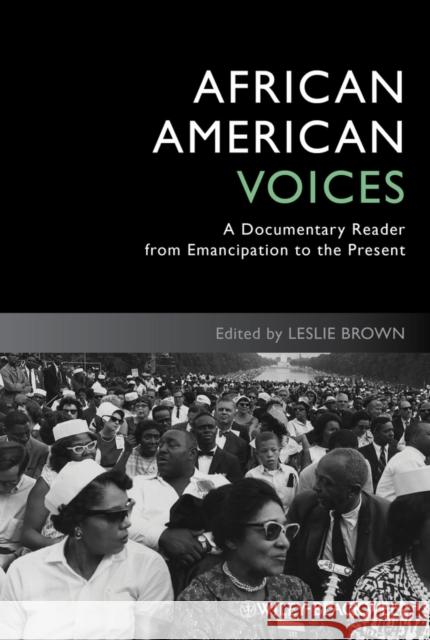
Leslie Brown
African American Voices: A Documentary Reader from Emancipation to the Present Brown, Leslie 9781444339413 John Wiley & Sons - książkaWidoczna okładka, to zdjęcie poglądowe, a rzeczywista szata graficzna może różnić się od prezentowanej.

African American Voices: A Documentary Reader from Emancipation to the Present

ISBN-13: 9781444339413 / Angielski / Miękka / 2014 / 344 str.

Leslie Brown
cena 194,86 zł
(netto: 185,58 VAT:  5%)

Najniższa cena z 30 dni: 192,86 zł
Termin realizacji zamówienia:
ok. 30 dni roboczych
Bez gwarancji dostawy przed świętami

Darmowa dostawa!

Compelling and enlightening, this collection of primary source documents allows twenty-first century students to 'direct dial' key figures in African-American history. It includes concise and perceptive commentary along with engaging suggestions for discussion and project work.


- Examines key themes from multiple perspectives
- Features a diverse range of voices that cut across class and political affiliations as well as across regions and generations
- Chronological and thematic coverage from emancipation to the current day
- Primary source documents include everything from letters and speeches to photographs, rap lyrics and newspaper reports
- Incorporates recent as well as traditional historical interpretations
- Classroom-ready text which includes keynotes on documents, differentiated material and engaging discussion questions

Compelling and enlightening, this collection of primary source documents allows twenty–first century students to ‘direct dial’ key figures in African–American history. It includes concise and perceptive commentary along with engaging suggestions for discussion and project work.

Kategorie:
Nauka, Historia
Kategorie BISAC:
History > United States - General
Wydawca:
John Wiley & Sons
Seria wydawnicza:
Uncovering the Past: Documentary Readers in American History
Język:
Angielski
ISBN-13:
9781444339413
Rok wydania:
2014
Ilość stron:
344
Waga:
0.43 kg
Wymiary:
22.86 x 15.24 x 2.03
Oprawa:
Miękka
Wolumenów:
01
Dodatkowe informacje:
Bibliografia

List of Illustrations ix

Series Editors Preface x

Acknowledgments xii

Introduction 1

Chapter 1 Freedom, 1865 1881 8

1 Black Ministers Meet with Representatives of the Federal Government, January 1865 9

2 Frederick Douglass Argues for Black Suffrage, April 1865 12

3 Jourdon Anderson Writes to His Old Master, 1865 15

4 Harriet Simril Testifies Before a Congressional Committee, South Carolina, 1871 18

5 Resolutions of the National Civil Rights Convention, 1873 21

6 The Exodusters, 1878 22

7 Black Washerwomen Demand a Living Wage, 1866 and 1881 24

Chapter 2 Upbuilding, 1893 1910 28

1 Ida B. Wells Speaks Out Against Lynching in the South, 1893 30

2 Booker T. Washington Speaks on Race at Atlanta, 1895 34

3 The National Association of Colored Women, 1897 and 1898 38

4 The Negro National Anthem, 1900 and 1905 44

5 Photographs from the Paris Exposition, 1900 46

6 From W. E. B. Du Bois, The Souls of Black Folk, 1903 47

7 Black Leaders Disagree with Booker T. Washington: The Niagara Movement, 1905 52

8 Jack Johnson, 1910 56

Chapter 3 Migration, 1904 1919 59

1 Voices from The Independent, 1904 and 1912 60

2 Letters of Negro Migrants, 1916 1917 68

3 The East St. Louis Riot, 1917 72

4 Why African Americans Left the South, 1919 77

Chapter 4 Determination, 1917 1925 85

1 W. E. B. Du Bois on African Americans and World War I, 1918 and 1919 87

2 Poet Claude McKay Sets a New Tone, 1919 90

3 Emmett J. Scott Reflects on What the Negro Got Out of the War, 1919 90

4 Program of the NAACP, 1919 94

5 Marcus Garvey Outlines the Rights of Black Peoples, 1920 99

6 Cyril V. Briggs Merges Race Consciousness with Class Consciousness, 1922 106

7 Langston Hughes on Being Black in America, 1925 109

8 Amy Jacques Garvey Calls on Women to Lead, 1925 110

Chapter 5 Resistance, 1927 1939 114

1 The Scottsboro Boys Write to the Workers of the World, 1932 115

2 Angelo Herndon Joins the Communist Party, 1934 117

3 Ella Baker and Marvel Cooke Report on The Bronx Slave Market, 1935 124

4 Richard Wright Observes a Black Response to Joe Louis Victory, 1935 126

5 The Southern Negro Youth Congress on Freedom, Equality, and Opportunity, 1937 129

6 The Coordinating Committee for Employment, New York, 1938 131

7 Marian Anderson at the Lincoln Memorial, 1939 133

Chapter 6 Resolve, 1941 1952 136

1 The March on Washington Movement, 1941 138

2 The Double V Campaign, 1942 142

3 A Black Army Chaplain Protests the Treatment of Black Soldiers, 1944 142

4 Pauli Murray on Student Protests in Washington, DC, 1944 147

5 The Civil Rights Congress Charges the US with Genocide, 1951 151

6 African Americans Petition the President and the American Delegation to the United Nations, 1952 158

Chapter 7 Discontent, 1953 1959 165

1 Thurgood Marshall Reargues Brown v. Board of Education, 1953 167

2 The Montgomery Bus Boycott, 1955 171

3 Rev. Dr. Martin Luther King, Jr., Writes on Non–Violence, 1957 174

4 Robert F. Williams Advocates Armed Self–Defense, 1959 177

Chapter 8 Revolt, 1960 1963 184

1 Young Activists Form the Student Nonviolent Coordinating Committee (SNCC), 1960 186

2 Ella Baker Reports on the Founding of SNCC, 1960 187

3 Robert Moses Writes from Jail in Magnolia, Mississippi, 1961 188

4 The Freedom Rides, 1961 189

5 Diane Nash Recalls the Early Student Movement, 1960 1961 191

6 Rev. Dr. Martin Luther King, Jr., Writes a Letter from Birmingham Jail, 1963 197

7 The March on Washington for Jobs and Freedom, 1963 206

Chapter 9 Power, 1964 1966 210

1 Malcolm X Reflects on the Approaches African Americans Must Use, 1964 211

2 Fannie Lou Hamer Testifies on Behalf of the Mississippi Freedom Democratic Party, 1964 218

3 Bayard Rustin Considers the Future of the Movement, 1965 221

4 Stokely Carmichael Explains Black Power, 1966 227

Chapter 10 Revolution, 1966 1977 234

1 The Black Panther Party Articulates a Platform, 1966 235

2 Rev. Dr. Martin Luther King, Jr., Opposes the War in Vietnam, 1967 238

3 The Poor People s Campaign, 1968 243

4 The Black Panther Party Convenes a Revolutionary People s Constitutional Convention, 1970 245

5 Gil Scott–Heron Warns: The Revolution Will Not Be Televised, 1971 250

6 The Combahee River Collective Statement Explains Black Feminism, 1977 252

Chapter 11 Crosscurrents, 1982 2001 261

1 Activists Call for Americans to Break Ties with South Africa, 1980 262

2 Toxic Wastes and Race in the United States, 1987 266

3 Jesse Jackson Rouses the Democratic National Convention, Atlanta, GA, July 19, 1988 271

4 African American Women in Defense of Ourselves, 1991 278

5 Maxine Waters Explains the Causes of Urban Crises to Congress, 1992 280

6 The Million Man March, 1995 282

7 Angela Davis Describes the Prison Industrial Complex, 1995 284

8 The Hip–Hop Summit Action Network, 2001 289

Chapter 12 Paradox, 2005 Present 293

1 New Orleans Mayor Ray Nagin Addresses His City on Martin Luther King Day, 2006 295

2 Barack Obama Believes in A More Perfect Union, 2008 297

3 Julian Bond Reflects on Race and History in America, 2011 307

Index 316

Leslie Brown is Associate Professor of History at Williams College. An award–winning author and editor, her books include Upbuilding Black Durham: Gender, Class, and Black Community Development in the Jim Crow South (2008), which won the Organization of American Historians 2009 Frederick Jackson Turner Award. Brown also co–edited Liv ing with Jim Crow: African American Women and Memories of the Segregated South (2010), which was awarded the 2011 Oral History Association Book Award.

Compelling and enlightening, this collection of primary source documents allows African–American voices to speak unmediated to today s students. African American Voices includes documents that range from the emancipation to the present day. A vital addition to the Wiley–Blackwell series , Uncovering the Past: Documentary Readers in American History, this collection features a diversity of material revealing much about the evolution of African American history through speeches, photographs, essays, newspaper articles, minutes of meetings, and reports. The skilfully selected documents are supported by concise contextual commentary that includes thematic overviews as well as key notes on the documents and their authors.

Each chapter features a mix of accessible and more challenging documents, making the book suitable for a range of course levels and abilities. Arranged chronologically, it highlights central themes and provides students with opportunities for creative engagement and historical interpretation. As it deepens students appreciation of historical perspectives, it presents African Americans as key players in their own history, co–builders of a rising nation, and combatants in a communal struggle for their rights. In rendering diverse black voices male and female; rural and urban; elite, middle– and working–class; radical and conservative across regions and generations, African American Voices also explores how African Americans shaped, and were shaped by, one of American history s greatest motifs: the realization of fundamental freedoms and rights.

Brown, Leslie Leslie Brown is assistant professor of history at ... więcej >


Udostępnij

Facebook - konto krainaksiazek.pl


Opinie o Krainaksiazek.pl na Opineo.pl

Partner Mybenefit

Krainaksiazek.pl w programie rzetelna firma Krainaksiaze.pl - płatności przez paypal

Czytaj nas na:

Facebook - krainaksiazek.pl
  • książki na zamówienie
  • granty
  • książka na prezent
  • kontakt
  • pomoc
  • opinie
  • regulamin
  • polityka prywatności

Zobacz:

  • Księgarnia czeska

  • Wydawnictwo Książkowe Klimaty

1997-2025 DolnySlask.com Agencja Internetowa

© 1997-2022 krainaksiazek.pl
     
KONTAKT | REGULAMIN | POLITYKA PRYWATNOŚCI | USTAWIENIA PRYWATNOŚCI
Zobacz: Księgarnia Czeska | Wydawnictwo Książkowe Klimaty | Mapa strony | Lista autorów
KrainaKsiazek.PL - Księgarnia Internetowa

Polityka prywatnosci - link
Krainaksiazek.pl - płatnośc Przelewy24
Przechowalnia Przechowalnia





