• Wyszukiwanie zaawansowane
  • Kategorie
  • Kategorie BISAC
  • Książki na zamówienie
  • Promocje
  • Granty
  • Książka na prezent
  • Opinie
  • Pomoc
  • Załóż konto
  • Zaloguj się

Affectivity and Learning: Bridging the Gap Between Neurosciences, Cultural and Cognitive Psychology » książka


zaloguj się | załóż konto
Logo Krainaksiazek.pl

koszyk

konto

szukaj
topmenu
Księgarnia internetowa
Szukaj
Książki na zamówienie
Promocje
Granty
Książka na prezent
Moje konto
Pomoc
 
 
Wyszukiwanie zaawansowane
Pusty koszyk
Bezpłatna dostawa dla zamówień powyżej 20 złBezpłatna dostawa dla zamówień powyżej 20 zł

Kategorie główne

• Nauka
 [2939893]
• Literatura piękna
 [1808953]

  więcej...
• Turystyka
 [70366]
• Informatyka
 [150555]
• Komiksy
 [35137]
• Encyklopedie
 [23160]
• Dziecięca
 [608786]
• Hobby
 [136447]
• AudioBooki
 [1631]
• Literatura faktu
 [225099]
• Muzyka CD
 [360]
• Słowniki
 [2914]
• Inne
 [442115]
• Kalendarze
 [1068]
• Podręczniki
 [166599]
• Poradniki
 [468390]
• Religia
 [506548]
• Czasopisma
 [506]
• Sport
 [61109]
• Sztuka
 [241608]
• CD, DVD, Video
 [3308]
• Technologie
 [218981]
• Zdrowie
 [98614]
• Książkowe Klimaty
 [124]
• Zabawki
 [2174]
• Puzzle, gry
 [3275]
• Literatura w języku ukraińskim
 [260]
• Art. papiernicze i szkolne
 [7376]
Kategorie szczegółowe BISAC

Affectivity and Learning: Bridging the Gap Between Neurosciences, Cultural and Cognitive Psychology

ISBN-13: 9783031317088 / Angielski
Pablo Fossa; Cristian Cortés-Rivera
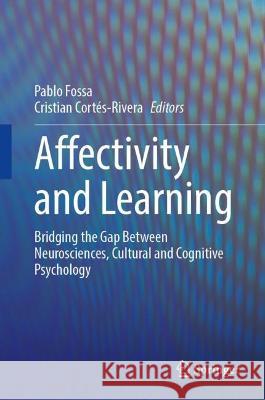
Affectivity and Learning: Bridging the Gap Between Neurosciences, Cultural and Cognitive Psychology Pablo Fossa Cristian Cort?s-Rivera 9783031317088 Springer - książkaWidoczna okładka, to zdjęcie poglądowe, a rzeczywista szata graficzna może różnić się od prezentowanej.

Affectivity and Learning: Bridging the Gap Between Neurosciences, Cultural and Cognitive Psychology

ISBN-13: 9783031317088 / Angielski

Pablo Fossa; Cristian Cortés-Rivera
cena 1127,15
(netto: 1073,48 VAT:  5%)

Najniższa cena z 30 dni: 963,86
Termin realizacji zamówienia:
ok. 22 dni roboczych.

Darmowa dostawa!
inne wydania

This book presents an interdisciplinary approach to the study of affectivity and human learning by bridging the gap between neuroscience, cultural and cognitive psychology. It brings together studies that go beyond the focus on cognitive-intellectual variables involved in learning processes and incorporate the study of the role played by affectivity and emotions in learning not only at educational settings but in all processes of transformation and human development, thus presenting affectivity as a catalyst and mediator of all daily learning processes.Chapters brought together in this contributed volume present both theoretical contributions and results of empirical research from different disciplines, such as neuroscience, cognitive psychology, cultural psychology, educational psychology, developmental psychology and philosophy, and are grouped into five thematic sections. The first part of the book brings together chapters discussing different aspects of the role played by affectivity in learning processes from the perspectives of cultural, educational and developmental psychology. The second part is dedicated to the role of affectivity for teachers during their training as educators and during their pedagogical practice in diverse contexts. The third part focuses on the relationship between affectivity and learning from a neuroscientific point of view. The fourth part discusses affectivity and learning in therapeutic and clinical contexts. Finally, the fifth part brings together chapters about affectivity and learning in everyday life.By bringing together this rich interdisciplinary collection of studies,Affectivity and Learning: Bridging the Gap Between Neurosciences, Cultural and Cognitive Psychologywill be a valuable resource for researchers in the fields of psychology, neuroscience and education, as well as for educators and teachers interested in knowing more about the relationship between affectivity and human learning.


This book presents an interdisciplinary approach to the study of affectivity and human learning by bridging the gap between neuroscience, cultural and cognitive psychology. It brings together studies that go beyond the focus on cognitive-intellectual variables involved in learning processes and incorporate the study of the role played by affectivity and emotions in learning not only at educational settings but in all processes of transformation and human development, thus presenting affectivity as a catalyst and mediator of all daily learning processes.Chapters brought together in this contributed volume present both theoretical contributions and results of empirical research from different disciplines, such as neuroscience, cognitive psychology, cultural psychology, educational psychology, developmental psychology and philosophy, and are grouped into five thematic sections. The first part of the book brings together chapters discussing different aspects of the role played by affectivity in learning processes from the perspectives of cultural, educational and developmental psychology. The second part is dedicated to the role of affectivity for teachers during their training as educators and during their pedagogical practice in diverse contexts. The third part focuses on the relationship between affectivity and learning from a neuroscientific point of view. The fourth part discusses affectivity and learning in therapeutic and clinical contexts. Finally, the fifth part brings together chapters about affectivity and learning in everyday life.By bringing together this rich interdisciplinary collection of studies, Affectivity and Learning: Bridging the Gap Between Neurosciences, Cultural and Cognitive Psychology will be a valuable resource for researchers in the fields of psychology, neuroscience and education, as well as for educators and teachers interested in knowing more about the relationship between affectivity and human learning.

Kategorie:
Nauka, Psychologia
Kategorie BISAC:
Psychology > Cognitive Psychology & Cognition
Psychology > Social Psychology
Education > Educational Psychology
Wydawca:
Springer
Język:
Angielski
ISBN-13:
9783031317088

Chapter 1. Why affectivity in learning? Towards an affectively guided learning .- Chapter 2. Strengths of Character in Well-being and University Learning: A View from Educational Counseling .- Chapter 3. Adults’ Professional education: experiences and expectations of online Chilean students.- Chapter 4. Affective Movement: an Educative and Intuitive Adventure as a Catalyst for Development .- Chapter 5. Dialogical Co-Zone of Proximal Development and Affectivity: Individually and collectively Overcoming Intellectual Limits .- Chapter 6. EFFECTS OF EARLY CHILDHOOD EDUCATION ON ACADEMIC PERFORMANCE AND SOCIAL-EMOTIONAL DEVELOPMENT DURING ADOLESCENCE .- Chapter 7. The writer's affectivity when writing to learn.- Chapter 8. Affectivity from the dialogical perspective of Cultural Psychology: Educational implications s.- Chapter 9. Learning in nature about nature: Two types of affective orientations .- Chapter 10. Learning and affectivity: Pedagogical and cultural dimensions in the inclusion of diversity in university education..- Chapter 11. Usefulness of the perezhivanie construct in affectivity and learning: a systematic review .- Chapter 12. Processes of Social Subjectivity and Pedagogical Action: developments to understanding learning difficulties in the school environment .- Chapter 13. The Unity of Affectivity and Learning: Characteristics in Vocalized Responses of Adolescents and Adults.- Chapter 14. Culturally-Based Interpretations of Motivation and Learning Strategies between the United States and South Korea.- Chapter 15. Educate emotions: Notes for a critical examination of emotional education proposals .- Chapter 16. Trust in Schools in Chile.- Chapter 17. Socio-emotional styles: When affectivity meets learning .- Chapter 18. A Sociocultural Perspective On The Relationship Between Educators’ Emotional Experiences And Professional Learning .- Chapter 19. Teachers’ emotions: their origin and influence on the teaching-learning process  .- Chapter 20. How are socioemotional competencies taught in Initial Teacher Education? Affectivity, learning, and didactics of emotions in the university classroom .- Chapter 21. Affectivity in Science Education: Lived perceptions.- Chapter 22. Learning the Teaching Profession in the Practicum: The Role of the Other, Modalities of Appropriation, and Professional Knowledge .- Chapter 23. Teaching excellence, affectivity and learning.- Chapter 24. LGBTIQ+ inclusive education: The interplay of emotions and cognition in graduate teachers’ narratives of becoming.- Chapter 25. Neuroscience of learning and emotional processing .- Chapter 26. Emotional Salience and Learning .- Chapter 27. Memory distortions: An interdisciplinary framework for cognitive-affective bias .- Chapter 28. Echoes of early experiences on the learning process: implications in interoceptive development and emotional self-regulation.- Chapter 29. The Somatic Roots of Affect. Towards a body-centered education .- Chapter 30. Historical Foundations of Affectivity & Learning Research: C.G. Jung’s Word-Association Experiments .- Chapter 31. Impact of the Transference in the Training of the TFP Therapist: A Proposal on the Affective Echo as a Foundation of Learning .- Chapter 32. Affective processes in the supervisor-supervisee relationship as enhancers of the therapists training: reflections from a scoping review of the psychoanalytic approach .- Chapter 33. Meaningful Social Interactions as a Foundation for Affection and Learning for Autistic Individuals.- Chapter 34. Affectivity and learning at the end of life: Expressive art therapy in palliative patients .- Chapter 35. Impact of affectivity and learning in the construction of occupational identity throughout the course of life and its influence in old age .- Chapter 36. Affective bonding and organizational learning .- Chapter 37. Learning affects, gender roles, and the case of care work.- Chapter 38. Acculturation Learning Process: Affective Quality in Immigrant Women .- Chapter 39. Humorous actions and coexistence .- Chapter 40. Affectivity and Learning: Why we need an interdisciplinary, multilevel, and a first-third-person approach?.

Pablo Fossa is Director of the Cognition & Culture Laboratory (C&C) of Instituto de Bienestar Socioemocional (IBEM) at the Faculty of Psychology, Universidad del Desarrollo, Chile. He received a PhD degree in Psychology from the Pontifical Catholic University of Chile. His doctoral thesis dealt with the expressive dimension of inner language in human experience. He did a postdoctoral fellowship financed by the National Commission for Scientific and Technological Research (CONICYT) of Chile, with a research project on thought trajectories from a microgenetic orientation. His lines of research are related to Cognition, Cultural Psychology and Phenomenology. He is an active member of the Society for Historical Cultural Activity Research (ISCAR), the International Society for Dialogical Self (ISDS), and the International Society for Theoretical Psychology (ISTP). He is the editor of the book Latin American Advances in Subjectivity and Development: Through Vygotsky Route (Springer, 2021), New Perspectives on Inner Speech (Springer, 2022), and the book Inner Speech, Culture & Education (Springer, 2022). Currently, he is PhD candidate in Philosophy at the University of Navarra, Spain.

Cristian Cortés-Rivera is Professor and researcher at The Neuropsychology and Cognitive Neurosciences Research Center (CINPSI Neurocog) at the Faculty of Health Sciences, Universidad Católica del Maule, Chile. He received a Ph.D. in Developmental Sciences and Psychopathology from the Universidad del Desarrollo, Chile. His doctoral thesis addressed the role of emotion in executive functioning, at behavioral and neurophysiological levels. His lines of research address the relationship between Cognition, Affectivity, and Learning. He is also a member of the Cognition & Culture Laboratory (C&C) and the Affective Neurosciences Laboratory of the Instituto de Bienestar Socioemotional (IBEM) at the Faculty of Psychology, Universidad del Desarrollo, Chile.

This book presents an interdisciplinary approach to the study of affectivity and human learning by bridging the gap between neuroscience, cultural and cognitive psychology. It brings together studies that go beyond the focus on cognitive-intellectual variables involved in learning processes and incorporate the study of the role played by affectivity and emotions in learning not only at educational settings but in all processes of transformation and human development, thus presenting affectivity as a catalyst and mediator of all daily learning processes.

Chapters brought together in this contributed volume present both theoretical contributions and results of empirical research from different disciplines, such as neuroscience, cognitive psychology, cultural psychology, educational psychology, developmental psychology and philosophy, and are grouped into five thematic sections. The first part of the book brings together chapters discussing different aspects of the role played by affectivity in learning processes from the perspectives of cultural, educational and developmental psychology. The second part is dedicated to the role of affectivity for teachers during their training as educators and during their pedagogical practice in diverse contexts. The third part focuses on the relationship between affectivity and learning from a neuroscientific point of view. The fourth part discusses affectivity and learning in therapeutic and clinical contexts. Finally, the fifth part brings together chapters about affectivity and learning in everyday life.

By bringing together this rich interdisciplinary collection of studies, Affectivity and Learning: Bridging the Gap Between Neurosciences, Cultural and Cognitive Psychology will be a valuable resource for researchers in the fields of psychology, neuroscience and education, as well as for educators and teachers interested in knowing more about the relationship between affectivity and human learning.




Udostępnij

Facebook - konto krainaksiazek.pl


Opinie o Krainaksiazek.pl na Opineo.pl

Partner Mybenefit

Krainaksiazek.pl w programie rzetelna firma Krainaksiaze.pl - płatności przez paypal

Czytaj nas na:

Facebook - krainaksiazek.pl
  • książki na zamówienie
  • granty
  • książka na prezent
  • kontakt
  • pomoc
  • opinie
  • regulamin
  • polityka prywatności

Zobacz:

  • Księgarnia czeska

  • Wydawnictwo Książkowe Klimaty

1997-2026 DolnySlask.com Agencja Internetowa

© 1997-2022 krainaksiazek.pl
     
KONTAKT | REGULAMIN | POLITYKA PRYWATNOŚCI | USTAWIENIA PRYWATNOŚCI
Zobacz: Księgarnia Czeska | Wydawnictwo Książkowe Klimaty | Mapa strony | Lista autorów
KrainaKsiazek.PL - Księgarnia Internetowa

Polityka prywatnosci - link
Krainaksiazek.pl - płatnośc Przelewy24
Przechowalnia Przechowalnia




