• Wyszukiwanie zaawansowane
  • Kategorie
  • Kategorie BISAC
  • Książki na zamówienie
  • Promocje
  • Granty
  • Książka na prezent
  • Opinie
  • Pomoc
  • Załóż konto
  • Zaloguj się

Advances in Clinical Child Psychology: Volume 4 » książka


zaloguj się | załóż konto
Logo Krainaksiazek.pl

koszyk

konto

szukaj
topmenu
Księgarnia internetowa
Szukaj
Książki na zamówienie
Promocje
Granty
Książka na prezent
Moje konto
Pomoc
 
 
Wyszukiwanie zaawansowane
Pusty koszyk
Bezpłatna dostawa dla zamówień powyżej 20 złBezpłatna dostawa dla zamówień powyżej 20 zł

Kategorie główne

• Nauka
 [2946600]
• Literatura piękna
 [1856966]

  więcej...
• Turystyka
 [72221]
• Informatyka
 [151456]
• Komiksy
 [35826]
• Encyklopedie
 [23190]
• Dziecięca
 [619653]
• Hobby
 [140543]
• AudioBooki
 [1577]
• Literatura faktu
 [228355]
• Muzyka CD
 [410]
• Słowniki
 [2874]
• Inne
 [445822]
• Kalendarze
 [1744]
• Podręczniki
 [167141]
• Poradniki
 [482898]
• Religia
 [510455]
• Czasopisma
 [526]
• Sport
 [61590]
• Sztuka
 [243598]
• CD, DVD, Video
 [3423]
• Technologie
 [219201]
• Zdrowie
 [101638]
• Książkowe Klimaty
 [124]
• Zabawki
 [2473]
• Puzzle, gry
 [3898]
• Literatura w języku ukraińskim
 [254]
• Art. papiernicze i szkolne
 [8170]
Kategorie szczegółowe BISAC

Advances in Clinical Child Psychology: Volume 4

ISBN-13: 9781461398103 / Angielski / Miękka / 2012 / 380 str.
Benjamin B. Lahey; Alan E. Kazdin; Benjamin B. Lahey
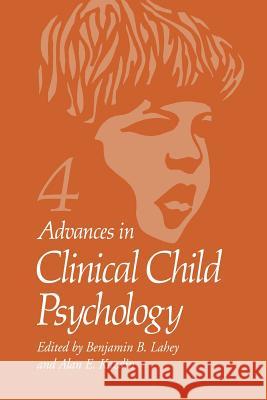
Advances in Clinical Child Psychology: Volume 4 Lahey, Benjamin B. 9781461398103 Springer - książkaWidoczna okładka, to zdjęcie poglądowe, a rzeczywista szata graficzna może różnić się od prezentowanej.

Advances in Clinical Child Psychology: Volume 4

ISBN-13: 9781461398103 / Angielski / Miękka / 2012 / 380 str.

Benjamin B. Lahey; Alan E. Kazdin; Benjamin B. Lahey
cena 201,72 zł
(netto: 192,11 VAT:  5%)

Najniższa cena z 30 dni: 192,74 zł
Termin realizacji zamówienia:
ok. 22 dni roboczych
Bez gwarancji dostawy przed świętami

Darmowa dostawa!

Advances in Clinical Child Psychology is a serial publication designed to provide researchers and clinicians with a medium for discussing new and innovative approaches to the problems of children. In this fourth volume, a group of highly distinguished authors have described advanc ing knowledge in a number of critical areas of applied child psychology. These include childhood depression, drug abuse, social skills deficits, community-living skills, the genetics of childhood behavior disorders, and affective states in children. In addition, major statements on new approaches to the assessment of dysfunctional family systems and the social skills of children, as well as the increasingly important methodol ogy of epidemiology, are included in this volume. These chapters pro vide a synopsis of many of the most important advances in the field of clinical child psychology. The quality of a series of this sort is, of course, due to the quality of the contributing authors. We feel very fortunate indeed, therefore, to have been able to entice such a distinguished group of authors to con tribute to this volume. We are also most appreciative of the guidance and assistance of the consulting editors who provided us with ideas for chapter topics and authors and who carefully reviewed and edited each chapter. We also express our hearty thanks to Leonard R. Pace of Plenum whose expertise and support has always been generously given. BENJAMIN B. LAHEY ALAN E. KAZDIN ix Contents The Epidemiology of Child Psychopathology 1 William Yule 1. Introduction ............................................ .


Kategorie:
Nauka, Psychologia
Kategorie BISAC:
Psychology > Clinical Psychology
Psychology > Cognitive Psychology & Cognition
Medical > Ginekologia i położnictwo
Wydawca:
Springer
Seria wydawnicza:
Advances in Clinical Child Psychology
Język:
Angielski
ISBN-13:
9781461398103
Rok wydania:
2012
Wydanie:
Softcover Repri
Numer serii:
000042702
Ilość stron:
380
Waga:
0.51 kg
Wymiary:
22.86 x 15.24 x 2.01
Oprawa:
Miękka
Wolumenów:
01
Dodatkowe informacje:
Wydanie ilustrowane

1 The Epidemiology of Child Psychopathology.- 1. Introduction.- 1.1. Definition of Epidemiology.- 1.2. Incidence and Prevalence.- 2. What Is a “Case?”.- 2.1. A Developmental Perspective.- 2.2. Situation Specificity.- 2.3. Defect, Disability, and Handicap.- 2.4. The Perspective of Significant Others.- 2.5. One Working Solution.- 3. Classification and Categorization.- 3.1. Characteristics of a Good System of Classification.- 3.2. Development of Systems of Classification.- 3.3. The World Health Organization’s International Classification of Diseases—9.- 3.4. Diagnostic and Statistical Manual, Third Edition (DSM-III).- 3.5. Critique of ICD-9 and DSM-III.- 3.6. Multivariate Approaches.- 4. Results of Epidemiological Studies.- 4.1. The Isle of Wight Studies.- 4.2. Studies of Adolescents.- 4.3. The Inner-London Comparative Study.- 4.4. Preschool Behavior Problems.- 5. Prevalence Rates of Clinical Psychiatric Syndromes.- 5.1. Attention Deficit Disorder with Hyperactivity or Hyperkinesis.- 5.2. Conduct Disorders.- 5.3. Emotional Disorders.- 5.4. Other Disorders.- 5.5. Eating Disorders.- 5.6. Stereotyped Movement Disorders.- 5.7. Other Disorders with Physical Manifestations.- 5.8. Pervasive Development Disorders.- 5.9. Specific Development Disorders.- 5.10. Comment.- 6. Methodological Problems.- 6.1. Sampling.- 6.2. Data Gathering.- 6.3. Correlation and Causality.- 7. Toward a Psychological Approach to Childhood Psychopathology.- 8. References.- 2 Cognitive-Behavioral Interventions with Children.- 1. Relation to Adult Cognitive-Behavioral Therapy.- 2. A Definition?.- 3. Cognitive-Behavioral Strategies for Teaching Self-Control.- 3.1. Training Tasks.- 3.2. Verbal Self-Instructions.- 3.3. Modeling.- 3.4. Contingencies: Response-Cost, Self-Reward, and Earning Rewards.- 3.5. Role-Playing and Self-Evaluation.- 3.6. Research Evaluations.- 4. Social Perspective-Taking (Role-Taking) Training.- 4.1. Research Outcomes.- 5. Interpersonal Problem-Solving Training.- 5.1. Research Outcomes.- 6. Consistencies across Cognitive-Behavioral Interventions with Children.- 7. Issues.- 8. Closing Concerns.- 9. References.- 3 Experimental Studies of Affective States in Children.- 1. Introduction.- 2. Theories of Emotion.- 3. Procedures for the Experimental Induction of Emotional Cognitive States in Children and Adults.- 4. Validation of Experimental Affect Induction Procedures.- 5. Experiential Determinants of Affective States.- 5.1. Success/Failure.- 5.2. Experiences of Nurturance.- 5.3. Reward/Reinforcement and Punishment.- 5.4. Vicarious Experience: The Observation of Emotion in Others.- 5.5. Summary: Understanding Affect-Inducing Experiences.- 6. Behavioral and Cognitive Consequences of Affective States.- 6.1. Generosity.- 6.2. Self-Gratification.- 6.3. Self-Control.- 6.4. Aggression.- 6.5. Spontaneous Coping Responses.- 6.6. Cognitive Processing.- 7. Factors Mediating the Relation between Affect and Behavior.- 8. Experimental Studies of Self-Implemented and Externally-Implemented Cognitive and Behavioral Procedures to Alter Affective States.- 9. References.- 4 Social-Skills Assessment of Children.- 1. Introduction.- 2. Definitions of Social Skills.- 3. Dimensions of Analysis.- 3.1. Behavior.- 3.2. Situations.- 3.3. Subject Characteristics.- 3.4. Outcome.- 4. Methods of Assessment.- 4.1. Role-Play Assessment.- 4.2. Ratings by Significant Others.- 4.3. Self-Report Measures.- 4.4. Naturalistic Observation.- 5. Conclusions and Future Directions.- 6. References.- 5 Peers as Behavior Change Agents for Withdrawn Classmates.- 1. Introduction.- 2. Behavioral Treatment of Preschool Social Withdrawal.- 3. Peer-Mediated Intervention Strategies.- 3.1. Prompting and Reinforcement.- 3.2. Peer Social Initiations.- 3.3. Peer Modeling.- 3.4. Incidental Peer Influence.- 3.5. Conclusions.- 4. Systematic Training of Peers.- 5. Assessment and Treatment Evaluation.- 6. Generalization of Treatment Effects.- 7. References.- 6 The Assessment of Dysfunctional Family Systems.- 1. Overview.- 1.1. Behavioral Assessment.- 1.2. Systems Analysis.- 2. Couple Relationships.- 2.1. The Oregon Studies.- 2.2. The Illinois and Indiana Studies.- 2.3. Discussion and Conclusions.- 3. The Problem Child.- 3.1. The Oregon Studies.- 3.2. The Georgia Studies.- 3.3. The Tennessee Studies.- 3.4. Discussion and Conclusions.- 4. The Problem Parent.- 4.1. The Oregon Studies.- 4.2. The Pennsylvania Studies.- 4.3. Discussion and Conclusions.- 5. Looking to the Future.- 6. References.- 7 Behavioral Community Psychology: Strategies and Tactics for Teaching Community Skills to Children and Adolescents.- 1. Representative Contemporary Research.- 1.1. Nutrition.- 1.2. Medical Care.- 1.3. Safety.- 1.4. Literacy.- 1.5. Ecology.- 1.6. Work Skills.- 1.7. Developing Relationships.- 1.8. Leisure and Recreation.- 1.9. Consumerism.- 1.10. Summary.- 2. Choice of Treatment.- 2.1. Conceptual Relevance of Treatment.- 2.2. Effectiveness of Treatment.- 2.3. Utilization of Treatment.- 3. A Successive-Stage Strategy.- 3.1. Identify and Conceptualize the Problem.- 3.2. Formulate the Dependent Variables.- 3.3. Collect Data.- 3.4. Formulate the Independent Variables.- 3.5. Disseminate Treatment.- 4. Summary.- 4.1. A Dissemination Technology: Two Choices?.- 5. References.- 8 Drug Abuse by Children and Adolescents: Perspectives on Incidence, Etiology, Assessment, and Prevention Programming.- 1. The Shifting Priorities of Drug Education.- 2. Prevalence of the Drug Problem.- 2.1. Nicotine.- 2.2. Alcohol.- 2.3. Marijuana.- 2.4. Hallucinogens.- 2.5. Cocaine.- 2.6. Inhalants.- 2.7. Amphetamines.- 2.8. Sedatives and Tranquilizers.- 2.9. Opioids.- 2.10. Concluding Observations on Usage Data.- 3. Etiological Factors.- 3.1. Behavior Variables.- 3.2. Classical Decision Theory and Drug Use.- 4. Assessing the Outcomes of Drug Education: Conceptual and Methodological Issues.- 4.1. Purpose I: Knowledge Gain.- 4.2. Purpose II: Attitude Change.- 4.3. Purpose III: Behavior Change.- 5. Prevention Programming.- 5.1. Information-Based Programming.- 5.2. Induced Cognitive Dissonance.- 5.3. Behavioral Group Counseling.- 5.4. Future Directions.- 6. References.- 9 Genetics of Childhood Behavior Disorders.- 1. Introduction.- 2. Etiologic Heterogeneity: A Possible Complication.- 2.1. Selecting Homogeneous Groups by Inheritance Pattern..- 2.2. Greater Homogeneity through Increased Diagnostic Precision.- 2.3. Greater Homogeneity through Sample Definition.- 3. Genetic Analyses.- 3.1. Methods.- 3.2. Examples of Genetic Analyses.- 4. Conclusion.- 5. References.


Udostępnij

Facebook - konto krainaksiazek.pl


Opinie o Krainaksiazek.pl na Opineo.pl

Partner Mybenefit

Krainaksiazek.pl w programie rzetelna firma Krainaksiaze.pl - płatności przez paypal

Czytaj nas na:

Facebook - krainaksiazek.pl
  • książki na zamówienie
  • granty
  • książka na prezent
  • kontakt
  • pomoc
  • opinie
  • regulamin
  • polityka prywatności

Zobacz:

  • Księgarnia czeska

  • Wydawnictwo Książkowe Klimaty

1997-2025 DolnySlask.com Agencja Internetowa

© 1997-2022 krainaksiazek.pl
     
KONTAKT | REGULAMIN | POLITYKA PRYWATNOŚCI | USTAWIENIA PRYWATNOŚCI
Zobacz: Księgarnia Czeska | Wydawnictwo Książkowe Klimaty | Mapa strony | Lista autorów
KrainaKsiazek.PL - Księgarnia Internetowa

Polityka prywatnosci - link
Krainaksiazek.pl - płatnośc Przelewy24
Przechowalnia Przechowalnia





