Advanced Structural Safety Studies: With Extreme Conditions and Accidents » książka





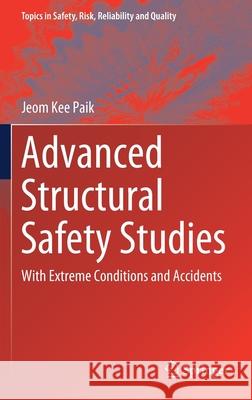
Advanced Structural Safety Studies: With Extreme Conditions and Accidents
ISBN-13: 9789811382444 / Angielski / Twarda / 2019 / 664 str.
Advanced Structural Safety Studies: With Extreme Conditions and Accidents
ISBN-13: 9789811382444 / Angielski / Twarda / 2019 / 664 str.
(netto: 191,66 VAT: 5%)
Najniższa cena z 30 dni: 192,74
ok. 16-18 dni roboczych.
Darmowa dostawa!
Table of Contents
Preface
Computer Programs Used
Abbreviations
1. Principles of Structural Safety Studies
1.1 Types of Extreme and Accidental Events
1.2 Volatile, Uncertain, Complex, and Ambiguous Environments
1.3 Modeling of Random Parameters Affecting Structural Safety
1.4 Limit States and Risks
1.5 Future Trends Toward Advanced Structural Safety Studies
References
2. Probabilistic Selection of Event Scenarios
2.1 Introduction
2.2 Procedure for Event Scenarios Selection
2.3 Random Parameters Affecting an Event
2.4 Data Sources
2.5 Probability Density Functions
2.6 Latin Hypercube Sampling
2.7 Exercises to Select Event Scenarios
References
3. Limit State-Based Safety Studies
3.1 Introduction
3.2 Ultimate Limit States
3.3 Accidental Limit States
3.4 Fatigue Limit States
3.5 Serviceability Limit States
3.6 Health Condition Monitoring, Assessment, and Prediction
References
4. Risk-Based Safety Studies
4.1 Introduction
4.2 Types of Risk
4.3 Main Tasks for Risk-Based Safety Studies
4.4 Planning a Risk-Based Safety Study
4.5 Defining the Structural System
4.6 Identifying Hazards
4.7 Selecting Scenarios
4.8 Conducting Frequency Analyses
4.9 Conducting Consequence Analyses
4.11 Frequency Exceedance Diagrams
4.12 Risk Acceptance Criteria
4.13 Defining Risk Mitigation OptionsReferences
5. Safety Assessment of Damaged Structures
5.1 Introduction
5.2 Residual Strength-Damage Index Diagram
5.3 Hull Collapse-Based Safety Assessment of Ships Damaged by Grounding
5.4 Rapid Planning of Rescue and Salvage Operations
References
6. Computational Models for Ship Structural Load Analysis in Ocean Waves
6.1 Introduction
6.2 Methods for Determining the Structural Loads of Ships in Ocean Waves
6.3 Design Wave Loads of a Very Large Crude Oil Carrier
6.4 Design Wave Loads of a 9,300-TEU Containership
6.5 Design Wave Loads of a 22,000-TEU Containership
6.6 Design Wave Loads of a 25,000-TEU Containership
6.7 Comparison of Design Wave Loads Between Ships of Different Sizes
References
7. Computational Models for Offshore Structural Load Analysis in Collisions
7.1 Introduction
7.2 Methods for Determining the Structural Loads of Offshore Platforms in Collisions
7.3 Structural Collision Loads of a Fixed Type Offshore Platform
References
8. Computational Models for Gas Cloud Temperature Analysis in Fires
8.1 Introduction
8.2 Industry Fire Curves
8.3 Gas Cloud Temperatures of Steel and Concrete Tubular Members in Jet Fire
8.4 Gas Cloud Temperatures in Jet Fire Caused by the Combustion of Propane Gases
8.5 Convergence Study in Fire Computational Fluid Dynamics Modeling Techniques
References
9. Computational Models for Blast Pressure Load Analysis in Explosions
9.1 Introduction
9.2 Industry Practices of Blast Pressure Loads
9.3 Analysis of Gas Dispersion
9.4 Analysis of Gas Explosions
9.5 Effects of Structural Congestion and Surrounding Obstacles
References
10. Computational Models for Nonlinear Structural Response Analysis in Extreme Loads
10.1 Introduction
10.2 Incremental Galerkin Method
10.3 Intelligent Supersize Finite Element Method
10.4 Nonlinear Finite Element Method
References
11. Computational Models for Structural Crashworthiness Analysis in Collisions and Grounding
11.1 Introduction
11.2 Material Property Modeling
11.3 Type of Finite Elements
11.4 Size of Finite Elements
11.5 Strain-Rate Effect Modeling
11.6 Contact Problem Modeling
11.7 Friction Effect Modeling
11.8 Surrounding Water Effect Modeling
11.9 Modeling the Interaction Effects between Striking and Struck Bodies
11.10 Impact Response Modeling at Low Temperatures
References
12. Computational Models for Structural Crashworthiness Analysis in Fires
12.1 Introduction
12.2 Nonlinear Finite Element Method Modeling
12.3 Automated Export of Computational Fluid Dynamics Simulations to Heat Transfer Analysis
12.4 Heat Transfer Analysis Models Without Passive Fire Protection
12.5 Heat Transfer Analysis Models with Passive Fire Protection
12.6 Combined Thermal and Structural Response Analysis Models
12.7 Effects of Heating Rate
12.8 Effects of Fire Loading Path
12.9 Effects of the Interaction Between Heat Transfer and Structural Response
References
13. Computational Models for Structural Crashworthiness Analysis in Explosions
13.1 Introduction
13.2 Nonlinear Finite Element Method Modeling
13.3 Topside Module of a Floating, Production, Storage, and Offloading Unit
13.4 Further Considerations
References
14. Quantitative Collision Risk Assessment and Management
14.1 Introduction
14.2 Procedure for Assessing Collision Risk
14.3 Selection of Collision Scenarios
14.4 Analysis of Collision Frequency
14.5 Analysis of Collision Consequence
14.6 Calculation of Collision Risk
14.7 Collision Risk Exceedance Diagrams
14.8 Risk of Hull Collapse Followed by Total Loss
14.9 Collision Risk Management
References
15. Quantitative Grounding Risk Assessment and Management
15.1 Introduction
15.2 Procedure for Assessing Grounding Risk
15.3 Methods for Assessing Ship Grounding Risk
15.4 Analysis of Grounding Frequency
15.5 Analysis of Grounding Consequence
15.6 Calculation of Grounding Risk
15.7 Grounding Risk Exceedance Diagrams
15.8 Risk to Hull Collapse Followed by Total Loss
15.9 Grounding Risk Management
References
16. Quantitative Fire Risk Assessment and Management
16.1 Introduction
16.2 Fundamentals of Fire Safety Engineering
16.3 Procedure for Assessing Fire Risk
16.4 Selection of Fire Scenarios
16.5 Analysis of Fire Frequency
16.6 Analysis of Fire Loads
16.7 Analysis of Fire Consequences
16.8 Calculation of Fire Risk\
16.9 Fire Risk Exceedance Diagrams
16.10 Fire Risk Management
References
17. Quantitative Explosion Risk Assessment and Management
17.1 Introduction
17.2 Procedure for Assessing Explosion Risk
17.3 Selection of Gas Dispersion Scenarios
17.4 Analysis of Gas Dispersion
17.5 Selection of Explosion Scenarios
17.6 Analysis of Explosion Frequency
17.7 Analysis of Explosion Loads
17.8 Analysis of Explosion Consequences
17.9 Calculation of Explosion Risk
17.10 Explosion Risk Management
References
18. Facilities for Physical Model Testing
18.1 Introduction
18.2 Similarity Laws for Structural Mechanics Model Testing
18.3 Scaling Laws for Hydrodynamic Model Testing
18.4 Experimental Definition of Material Properties
18.5 Measurements of Fabrication-Related Initial Imperfections
18.6 Structural Failure Tests
18.7 Dropped Object Testing
18.8 Furnace Fire Tests
18.9 Fire Collapse Tests
18.10 Indoor Fire Tests
18.11 Outdoor Fire/Explosion Tests
18.12 Blast Wall Tests
18.13 Hyperbaric Pressure Tests
References
Appendices
A.1 Latin Hypercube Sampling Program
A.2 Passive Fire Protection Materials
A.3 SI Units
A.3.1 SI Unit Prefixes
A.3.2 Conversion Factors
Index
This book describes principles, industry practices and evolutionary methodologies for advanced safety studies, which are helpful in effectively managing volatile, uncertain, complex, and ambiguous (VUCA) environments within the framework of quantitative risk assessment and management and associated with the safety and resilience of structures and infrastructures with tolerance against various types of extreme conditions and accidents such as fires, explosions, collisions and grounding. It presents advanced computational models for characterizing structural actions and their effects in extreme and accidental conditions, which are highly nonlinear and non-Gaussian in association with multiple physical processes, multiple scales, and multiple criteria. Probabilistic scenario selection practices and applications are presented. Engineering practices for structural crashworthiness analysis in extreme conditions and accidents are described. Multidisciplinary approaches involving advanced computational models and large-scale physical model testing are emphasized. The book will be useful to students at a post-graduate level as well as researchers and practicing engineers.




Czytaj nas na:
1997-2026 DolnySlask.com Agencja Internetowa
KrainaKsiazek.PL - Księgarnia Internetowa


