• Wyszukiwanie zaawansowane
  • Kategorie
  • Kategorie BISAC
  • Książki na zamówienie
  • Promocje
  • Granty
  • Książka na prezent
  • Opinie
  • Pomoc
  • Załóż konto
  • Zaloguj się

Advanced Crop Improvement, Volume 2: Case Studies of Economically Important Crops » książka


zaloguj się | załóż konto
Logo Krainaksiazek.pl

koszyk

konto

szukaj
topmenu
Księgarnia internetowa
Szukaj
Książki na zamówienie
Promocje
Granty
Książka na prezent
Moje konto
Pomoc
 
 
Wyszukiwanie zaawansowane
Pusty koszyk
Bezpłatna dostawa dla zamówień powyżej 20 złBezpłatna dostawa dla zamówień powyżej 20 zł

Kategorie główne

• Nauka
 [2946912]
• Literatura piękna
 [1852311]

  więcej...
• Turystyka
 [71421]
• Informatyka
 [150889]
• Komiksy
 [35717]
• Encyklopedie
 [23177]
• Dziecięca
 [617324]
• Hobby
 [138808]
• AudioBooki
 [1671]
• Literatura faktu
 [228371]
• Muzyka CD
 [400]
• Słowniki
 [2841]
• Inne
 [445428]
• Kalendarze
 [1545]
• Podręczniki
 [166819]
• Poradniki
 [480180]
• Religia
 [510412]
• Czasopisma
 [525]
• Sport
 [61271]
• Sztuka
 [242929]
• CD, DVD, Video
 [3371]
• Technologie
 [219258]
• Zdrowie
 [100961]
• Książkowe Klimaty
 [124]
• Zabawki
 [2341]
• Puzzle, gry
 [3766]
• Literatura w języku ukraińskim
 [255]
• Art. papiernicze i szkolne
 [7810]
Kategorie szczegółowe BISAC

Advanced Crop Improvement, Volume 2: Case Studies of Economically Important Crops

ISBN-13: 9783031266683 / Angielski
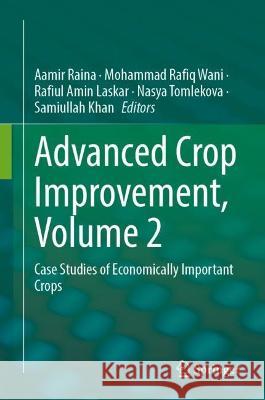
Aamir Raina; Mohammad Rafiq Wani; Rafiul Amin Laskar
Advanced Crop Improvement, Volume 2: Case Studies of Economically Important Crops Aamir Raina Mohammad Rafiq Wani Rafiul Amin Laskar 9783031266683 Springer - książkaWidoczna okładka, to zdjęcie poglądowe, a rzeczywista szata graficzna może różnić się od prezentowanej.

Advanced Crop Improvement, Volume 2: Case Studies of Economically Important Crops

ISBN-13: 9783031266683 / Angielski

Aamir Raina; Mohammad Rafiq Wani; Rafiul Amin Laskar
cena 887,69
(netto: 845,42 VAT:  5%)

Najniższa cena z 30 dni: 848,19
Termin realizacji zamówienia:
ok. 22 dni roboczych
Bez gwarancji dostawy przed świętami

Darmowa dostawa!
inne wydania

As per the reports of FAO, the human population will rise to 9 billion by the end of 2050 and 70% of more food must be produced over the next three decades to feed the additional population. The breeding approaches for crop improvement programs are dependent on the availability and accessibility of genetic variation, either spontaneous or induced by the mutagens. Plant breeders, agronomists, and geneticists are under constant pressure to expand food production by employing innovative breeding strategies to enhance yield, adaptability, nutrition, resistance to biotic and abiotic stresses. In conventional breeding approaches, introgression of genes in crop varieties is laborious and time-consuming. Nowadays, new innovative plant breeding techniques such as molecular breeding and plant biotechnology, supplement the traditional breeding approaches to achieve the desired goals of enhanced food production. With the advent of recent molecular tools like genomics, transgenics, molecular marker-assisted back-crossing, TILLING, Eco-TILLING, gene editing, CRISPR CAS, non-targeted protein abundant comparative proteomics, genome wide association studies have made possible mapping of important QTLs, insertion of transgenes, reduction of linkage drags, and manipulation of genome. In general, conventional and modern plant breeding approaches would be strategically ideal for developing new elite crop varieties to meet the feeding requirement of the increasing world population.This book highlights the latest progress in the field of plant breeding, and their applicability in crop improvement. The basic concept of this 2-volume work is to assess the use of modern breeding strategies in supplementing the conventional breeding toward the development of elite crop varieties, for obtaining desired goals of food production.


As per the reports of FAO, the human population will rise to 9 billion by the end of 2050 and 70% of more food must be produced over the next three decades to feed the additional population. The breeding approaches for crop improvement programs are dependent on the availability and accessibility of genetic variation, either spontaneous or induced by the mutagens. Plant breeders, agronomists, and geneticists are under constant pressure to expand food production by employing innovative breeding strategies to enhance yield, adaptability, nutrition, resistance to biotic and abiotic stresses. In conventional breeding approaches, introgression of genes in crop varieties is laborious and time-consuming. Nowadays, new innovative plant breeding techniques such as molecular breeding and plant biotechnology, supplement the traditional breeding approaches to achieve the desired goals of enhanced food production. With the advent of recent molecular tools like genomics, transgenics, molecular marker-assisted back-crossing, TILLING, Eco-TILLING, gene editing, CRISPR CAS, non-targeted protein abundant comparative proteomics, genome wide association studies have made possible mapping of important QTLs, insertion of transgenes, reduction of linkage drags, and manipulation of genome. In general, conventional and modern plant breeding approaches would be strategically ideal for developing new elite crop varieties to meet the feeding requirement of the increasing world population.This book highlights the latest progress in the field of plant breeding, and their applicability in crop improvement. The basic concept of this 2-volume work is to assess the use of modern breeding strategies in supplementing the conventional breeding toward the development of elite crop varieties, for obtaining desired goals of food production.

Kategorie:
Nauka, Biologia i przyroda
Kategorie BISAC:
Science > Biotechnology
Science > Botanika
Technology & Engineering > Agriculture - General
Wydawca:
Springer
Język:
Angielski
ISBN-13:
9783031266683

Section II: Advanced, Classical and Mutation Breeding Approaches for Main Crops Improvement. Case study of economically important crops.


1.        

Prof. Nasya Tomlekova


Molecular Selection of Beneficial Mutations for Vegetable Crops Improvement

Bulgaria

nasia.tomlekova@gmail.com

Head of Molecular Biology Laboratory, Breeding Department, Maritsa Vegetable Crops Research Institute, Plovdiv, Bulgaria

2.        

Dr. Aamir Raina


Improvement of Yield in Cowpea Varieties using Different Breeding Approaches

India

aamir854@gmail.com

Botany Section, Women’s College, Aligarh Muslim University, Aligarh, India

3.        

Dr. Rafiul Amin Laskar


Germplasm Diversity and Breeding Approaches for Genetic Improvement of Mungbean

India

rafihkd@gmail.com

Department of Botany, Bahona College, Jorhat, Assam, India

4.        

Dr. Joy Gilbert Manjaya


Mutation Breeding for Adaptation to Climate Change in Seed Propagated Crops

India

jgmanjaya@rediffmail.com

Bhabha Atomic Research Centre, (BARC), Trombay, Mumbai, India

5.        

Dr. Jankowicz-Cieslak


Mutation Breeding for Ornamental and Vegetatively Propagated Crops


Austria

j.jankowicz@iaea.org

Plant Breeding and Genetics Laboratory, Joint FAO/IAEA Division on Nuclear Techniques in Food and Agriculture, Department of Nuclear Applications, International Atomic Energy Agency, Vienna, Austria

6.        

Dr. Petko Mladenov


Proteome Profiling of Bulgarian Pepper Breeding Lines with Beneficial Mutations

Bulgaria

rubisko@abv.bg

Department of Abiotic Stress Group, AgroBioInstitute, Sofia, Bulgaria

7.        

Dr. Mohammad Rafiq Wani


Induced Mutational Studies in Lentil (Lens culinaris Medik)

India

botanyrafiq@gmail.com

Department of Botany, Abdul Ahad Azad Memorial Degree College, Srinagar, Jammu and Kashmir, India

8.        

Dr. Dida Iserliyska


Mutation Breeding in Quality Improvement of Pepper and Tomato


Bulgaria

dida_isser@yahoo.com

Department of Food Technologies, Institute of Food Preservation and Quality, Plovdiv, Bulgaria

9.        

Dr. Nurmansyah


Application of Molecular Markers on Assessing Genetic Diversity in Faba Bean


Indonesia

nurmansyah@ugm.ac.id

Department of Agronomy, Faculty of Agriculture, Universitas Gadjah Mada, Yogyakarta, Indonesia

10.     

Dr. Dragana Miladinović


Conventional and Molecular Breeding for Sunflower Nutrition Quality Improvement

Serbia

dragana.miladinovic@ifvcns.ns.ac.rs

Institute of Field and Vegetable Crops, Novi Sad, Serbia

11.     

Dr. Mukesh Choudhary


Conventional and Molecular Breeding for Genetic Improvement of Maize


India

mukesh.agri08@gmail.com

Scientist (Genetics and Plant Breeding), ICAR-Indian Institute of Maize Research, PAU campus, Ludhiana-141001, (Ministry of Agriculture and Farmer's Welfare, GoI)

12.     

Dr. Parmeshwar K. Sahu


Breeding Approaches to Generate Biofortified Crops


India

parmeshwarsahu1210@gmail.com

Department of Genetics and Plant Breeding, Indira Gandhi Agriculture University, Raipur, Chhattisgarh, India

13.     

Dr. Jankowicz-Cieslak


Genetic Improvement of Neglected and Underutilized Crops through Mutation Breeding Techniques


Austria

j.jankowicz@iaea.org

Plant Breeding and Genetics Laboratory, Joint FAO/IAEA Division on Nuclear Techniques in Food and Agriculture, Department of Nuclear Applications, International Atomic Energy Agency, Vienna, Austria

14.     

Prof. Yeşim Yalҫin Mendi


Induced Mutations - Technological Advancement for Development of New Ornamental Varieties


Turkey

yaprak.taner@taek.gov.tr

Turkish Atomic Energy Authority, Department of Radiation and Accelerator Technologies, Research and Development Projects Division, Kahramankazan, Ankara, Turkey

15.     

Prof. Samiullah Khan

CRISPR/Cas Mediated Genome Editing for improvement of food crops

India

khan_drsami@yahoo.co.in

Head of Mutation Breeding Laboratory, Department of Botany, Aligarh Muslim University, Aligarh, India

16.     

Dr. Samuel Amiteye

Sustainable Crop Production in West Africa: The Application of Mutagenesis and In Vitro Techniques

Ghana

samiteye@gmail.com

Biotechnology Centre, Biotechnology and Nuclear Agricultural Research Institute (BNARI), Ghana Atomic Energy Commission (GAEC), P. O. Box AE 50, Accra, Ghana,

and

Department of Nuclear Agriculture and Radiation Processing. School of Nuclear and Allied Sciences, College of Basic and Applied Sciences, University of Ghana, Accra, Ghana


Aamir Raina is currently working as Assistant Professor in Department of Botany, at Aligarh Muslim University, Aligarh, India. Dr. Raina obtained his Masters in Botany in 2013 with specialization in Genetics and Plant Breeding from the University of Kashmir, Srinagar, Jammu and Kashmir, India. Dr. Raina earned the Degree of Doctorate in 2018 for his research work on “Induced Mutagenesis in Cowpea” from the Aligarh Muslim University, Aligarh, India. His current research interests are the selection for novel mutations induced by mutagens in pulses, medicinal and aromatic plants and elucidation of physiological and molecular mechanisms in response to mutagens and looking for suitable germplasm donors for breeding purpose. Working on the mutagenesis of plants, Dr. Raina has found a significant role of mutagens in the regulation of plant growth and development and have suggested that mutagens could play an important role in improving the yield and yield attributing traits of crops. Recognizing the contribution of Dr. Raina in the field of mutation breeding, International Atomic Energy Agency (IAEA), Vienna, Austria appointed Dr. Raina as Technical Corporation Expert and Lecturer to conduct National level mutation breeding training in Sudan. The successful conduct of Dr. Raina in different IAEA proj¬ects as an expert supported his research in mutation breeding of crops and proved his ability to work in a multicultural environment. Considering all his achieve¬ments and outstanding contributions in the field of Plant Science, he has been conferred with various research fellowships including CSIR JRF, DBT-SRF, GATE, ICAR NET, JKSET and Nuffic OKP (recieved from Dutch Ministry of foreign Affairs, The Netherlands) and awards including National Environmental Science Academy (NESA) Young scientist and Bharat Vikas Award. He has been recognized as Young Scientist of the Year 2018, receiving the award from President of NESA, India. Dr. Raina has published more than 40 journal articles and 25 book chapters. Dr. Raina has edited special issues on research topic entitled “Legume Breeding in Transition: Innovation and Outlook” in Frontiers in Genetics and “Emerging Talents in Horticulture Breeding and Genetics 2022” in Frontiers in Horticulture. He is among the editorial board mem¬bers of many scientific journals such as Frontiers in Plant Science, Frontiers in Genetics, Scientific Reports, PLOS One, and BMC Plant Biology. Dr. Raina has par¬ticipated and presented several research papers in dif¬ferent national and international conferences. Dr. Raina has also attended many workshops, trainings, and short courses under scholarships from national and interna¬tional funding agencies.

Mohammad Rafiq Wani is currently working as Assistant Professor (Selection Grade) in the Department of Botany at Abdul Ahad Azad Memorial Degree College Bemina, Cluster University Srinagar, Jammu and Kashmir, India. Dr. Wani did his Masters’ degree in Botany in 2003 with a specialization in Genetics and Plant Breeding from Aligarh Muslim University (AMU), Aligarh, Uttar Pradesh, India. After obtaining the Degree of Doctorate in 2008 for his research work on “Chemical Mutagenesis in Mungbean” from the same university, he joined the Department of Higher Education, Jammu and Kashmir Government in 2009. He teaches a range of bioscience-related subjects at undergraduate and postgraduate levels. Dr. Wani’s research interests are primarily focused on induced mutagenesis and molecular biology in food crops more particularly in pulse crops. As a part of his research endeavor, Dr. Wani has extensively researched and writ¬ten on the issues of induced mutagenesis in food crops, with special reference to pulses. He has published more than 65 research papers in peer-reviewed journals and 20 book chapters in various research-oriented volumes. Dr. Wani, while constantly working for his academic and research interests, has so far edited six volumes of books on the subjects of Plant Stress Physiology, Induced Plant Mutagenesis, and Crop Improvement with reputed international publishers like Springer and Wageningen Academic Publishers, the Netherlands.

Rafiul Amin Laskar is Assistant Professor of Plant Sciences affiliated with the Department of Botany, Pandit Deendayal Upadhyaya Adarsha Mahavidyalaya (PDUAM), Eraligool, Karimganj, Assam, India. He received his M.Sc. in Botany with specialization in Genetics and Plant Breeding in 2012 and DBT-PDTC in Plant Tissue Culture and Micropropagation in 2013 from the Aligarh Muslim University, Aligarh, India. Dr. Laskar has obtained his Ph.D. in 2018 from the Faculty of Life Sciences, Aligarh Muslim University, Aligarh, India, for his work on Induced Mutagenesis. After completing his Ph.D., he worked as a Guest Faculty at Nagaland University, Lumami for over 1 year and as an Assistant Professor at Bahona College, Jorhat for over 3 year. Dr. Laskar is actively engaged in research on mutation breeding in grain legumes for genetic improvement of qualitative and quantitative traits. He is a life member of the various educative societies and associations and had been active member of the interdisciplinary societies. To his credit are edited book, 10 book chapters published by reputed publishing companies like Springer and more than 50 other publications as research papers, editorials, popu¬lar science articles, review papers, and other reports. He has edited a special issue entitled “Legume Breeding in Transition: Innovation and Outlook” in Frontiers in Genetics and is serving as Editorial Board Member of many journals. He has presented a number of research papers in various national and international conferences and symposiums. He has attended many workshops and short courses under scholarship from national and international bodies. He has acted as the co-coordinator of the Institutional Biotech Hub, Bahona College funded by Department of Biotechnology, India. Dr. Laskar has served as the Co-Principal Investigator for the project titled “DBT-NER Institutional Biotech Hubs at Bahona College, Jorhat, Assam with a Focused Area of “Development of Infrastructure and Skilled Human Resources Through Science & Technology Intervention”. Currently he is maintaining an active student research program on induced mutagenesis of food crops, cyto¬genetics, and in vitro tissue culture of economically important plants focusing on plant genetic resources of North East India.

Nasya Tomlekova is Professor and Head of Molecular Biology Laboratory in the Department of Breeding at the Maritsa Vegetable Crops Research Institute, Plovdiv, Bulgaria. She graduated from Sofia University “St. Kliment Ohridski” in Biology and did her Masters with specialization in Genetics and Biochemistry. She has been employed in the Institute in 1990; trained in the area of her research interests by 12 international fellow¬ships; and she has a long postgraduate experience in research on the application of induced mutagenesis, molecular and in vitro techniques, and other relevant biotechnologies related to crop improvement. Mrs. Tomlekova obtained the Degree of Doctorate at the Commission on Plant-Growing and Biotechnologies and her Habilitation was at the Commission on Breeding and Seed Production. She has published 5 books, including a methodological recommendation, and 11 book chapters, 121 scientific papers in peer reviewed journals and 43 international conference proceedings. Prof. Tomlekova teaches on several topics related to biotechnology and she has trained many students and fellows from different countries at Ph.D. and post- and undergraduate levels. She conducted dozens expert mis¬sions as a lecturer in different countries from Asia and Africa. Dr. Tomlekova acted as lead editor of 2 books by Wageningen Publisher, and she is a member of 3 journal editorial boards, a reviewer of more than 30 international bioscience-related journals and projects, and a member of 5 professional scientific societies, like EUCARPIA, International Carotenoid Society, and International Pepper Network. The successful participa¬tion of Prof. Tomlekova in nine different IAEA and an EU projects as coordinator/scientific holder, and sup¬ported her research in mutation breeding of vegetable crops and potato and proved her ability for a work in a multicultural and multilanguage environment from and outside Europe. Also, she has managed projects and participated in many research teams of national and international projects. Her research focuses on the field of molecular biology with applications in agriculture, induced mutagenesis, genetics, biochemistry, and molecular marker selection.

Samiullah Khan is currently working as Professor and Head of Genetics and Plant Breeding, and Plant Biotechnology in the Department of Botany at the Aligarh Muslim University, Aligarh, India. Dr. Khan obtained his Ph.D. in 1990 from Aligarh Muslim University, specializing in Genetics and Plant Breeding. He has 29 years of teaching experience in Embryology of Angiosperms, Genetics and Plant Breeding and supervised a number of Ph.D., M. Phil., and M.Sc. proj¬ects. He has edited several books and published more than 100 research papers in journals of national and international repute. He has attended many conferences in India and abroad including XVIth International Congress of Genetics at Toronto, Canada. He is a mem¬ber of editorial board of many scientific journals. He is a fellow of the Indian Society of Genetics and Plant Breeding.

As per the reports of FAO, the human population will rise to 9 billion by the end of 2050 and 70% of more food must be produced over the next three decades to feed the additional population. The breeding approaches for crop improvement programs are dependent on the availability and accessibility of genetic variation, either spontaneous or induced by the mutagens. Plant breeders, agronomists, and geneticists are under constant pressure to expand food production by employing innovative breeding strategies to enhance yield, adaptability, nutrition, resistance to biotic and abiotic stresses. In conventional breeding approaches, introgression of genes in crop varieties is laborious and time-consuming. Nowadays, new innovative plant breeding techniques such as molecular breeding and plant biotechnology, supplement the traditional breeding approaches to achieve the desired goals of enhanced food production. With the advent of recent molecular tools like genomics, transgenics, molecular marker-assisted back-crossing, TILLING, Eco-TILLING, gene editing, CRISPR CAS, non-targeted protein abundant comparative proteomics, genome wide association studies have made possible mapping of important QTLs, insertion of transgenes, reduction of linkage drags, and manipulation of genome. In general, conventional and modern plant breeding approaches would be strategically ideal for developing new elite crop varieties to meet the feeding requirement of the increasing world population.

This book highlights the latest progress in the field of plant breeding, and their applicability in crop improvement. The basic concept of this 2-volume work is to assess the use of modern breeding strategies in supplementing the conventional breeding toward the development of elite crop varieties, for obtaining desired goals of food production.




Udostępnij

Facebook - konto krainaksiazek.pl


Opinie o Krainaksiazek.pl na Opineo.pl

Partner Mybenefit

Krainaksiazek.pl w programie rzetelna firma Krainaksiaze.pl - płatności przez paypal

Czytaj nas na:

Facebook - krainaksiazek.pl
  • książki na zamówienie
  • granty
  • książka na prezent
  • kontakt
  • pomoc
  • opinie
  • regulamin
  • polityka prywatności

Zobacz:

  • Księgarnia czeska

  • Wydawnictwo Książkowe Klimaty

1997-2025 DolnySlask.com Agencja Internetowa

© 1997-2022 krainaksiazek.pl
     
KONTAKT | REGULAMIN | POLITYKA PRYWATNOŚCI | USTAWIENIA PRYWATNOŚCI
Zobacz: Księgarnia Czeska | Wydawnictwo Książkowe Klimaty | Mapa strony | Lista autorów
KrainaKsiazek.PL - Księgarnia Internetowa

Polityka prywatnosci - link
Krainaksiazek.pl - płatnośc Przelewy24
Przechowalnia Przechowalnia



