• Wyszukiwanie zaawansowane
  • Kategorie
  • Kategorie BISAC
  • Książki na zamówienie
  • Promocje
  • Granty
  • Książka na prezent
  • Opinie
  • Pomoc
  • Załóż konto
  • Zaloguj się

Advanced AI and Internet of Health Things for Combating Pandemics » książka


zaloguj się | załóż konto
Logo Krainaksiazek.pl

koszyk

konto

szukaj
topmenu
Księgarnia internetowa
Szukaj
Książki na zamówienie
Promocje
Granty
Książka na prezent
Moje konto
Pomoc
 
 
Wyszukiwanie zaawansowane
Pusty koszyk
Bezpłatna dostawa dla zamówień powyżej 20 złBezpłatna dostawa dla zamówień powyżej 20 zł

Kategorie główne

• Nauka
 [2949965]
• Literatura piękna
 [1857847]

  więcej...
• Turystyka
 [70818]
• Informatyka
 [151303]
• Komiksy
 [35733]
• Encyklopedie
 [23180]
• Dziecięca
 [617748]
• Hobby
 [139972]
• AudioBooki
 [1650]
• Literatura faktu
 [228361]
• Muzyka CD
 [398]
• Słowniki
 [2862]
• Inne
 [444732]
• Kalendarze
 [1620]
• Podręczniki
 [167233]
• Poradniki
 [482388]
• Religia
 [509867]
• Czasopisma
 [533]
• Sport
 [61361]
• Sztuka
 [243125]
• CD, DVD, Video
 [3451]
• Technologie
 [219309]
• Zdrowie
 [101347]
• Książkowe Klimaty
 [123]
• Zabawki
 [2362]
• Puzzle, gry
 [3791]
• Literatura w języku ukraińskim
 [253]
• Art. papiernicze i szkolne
 [7933]
Kategorie szczegółowe BISAC

Advanced AI and Internet of Health Things for Combating Pandemics

ISBN-13: 9783031286308 / Angielski
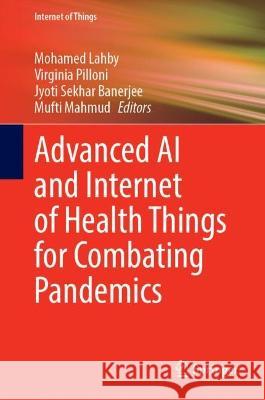
Mohamed Lahby; Virginia Pilloni; Jyoti Sekhar Banerjee
Advanced AI and Internet of Health Things for Combating Pandemics Mohamed Lahby Virginia Pilloni Jyoti Sekhar Banerjee 9783031286308 Springer - książkaWidoczna okładka, to zdjęcie poglądowe, a rzeczywista szata graficzna może różnić się od prezentowanej.

Advanced AI and Internet of Health Things for Combating Pandemics

ISBN-13: 9783031286308 / Angielski

Mohamed Lahby; Virginia Pilloni; Jyoti Sekhar Banerjee
cena 645,58 zł
(netto: 614,84 VAT:  5%)

Najniższa cena z 30 dni: 616,85 zł
Termin realizacji zamówienia:
ok. 22 dni roboczych
Bez gwarancji dostawy przed świętami

Darmowa dostawa!
inne wydania

This book presents the latest research, theoretical methods, and novel applications in the field of Health 5.0. The authors focus on combating COVID-19 or other pandemics through facilitating various technological services. The authors discuss new models, practical solutions, and technological advances related to detecting and analyzing COVID-19 or other pandemic based on machine intelligence models and communication technologies. The aim of the coverage is to help decision-makers, managers, professionals, and researchers design new paradigms considering the unique opportunities associated with computational intelligence and Internet of Medical Things (IoMT). This book emphasizes the need to analyze all the information through studies and research carried out in the field of computational intelligence, communication networks, and presents the best solutions to combat COVID and other pandemics.


This book presents the latest research, theoretical methods, and novel applications in the field of Health 5.0. The authors focus on combating COVID-19 or other pandemics through facilitating various technological services. The authors discuss new models, practical solutions, and technological advances related to detecting and analyzing COVID-19 or other pandemic based on machine intelligence models and communication technologies. The aim of the coverage is to help decision-makers, managers, professionals, and researchers design new paradigms considering the unique opportunities associated with computational intelligence and Internet of Medical Things (IoMT). This book emphasizes the need to analyze all the information through studies and research carried out in the field of computational intelligence, communication networks, and presents the best solutions to combat COVID and other pandemics.

Kategorie:
Technologie
Kategorie BISAC:
Technology & Engineering > Telecommunications
Medical > Preventive Medicine
Computers > Artificial Intelligence - General
Wydawca:
Springer
Seria wydawnicza:
Internet of Things
Język:
Angielski
ISBN-13:
9783031286308

Part I State-of-the-art


Chapter 1 
Knowledge Graphs for COVID-19: A Survey
Madhupa Minoli and Thanuja D. Ambegoda, University of Moratuwa, Moratuwa, Sri Lanka

Chapter 2
Mapping effective practices and frameworks during the AEC industry’s combat with COVID-19: scientometric analysis
Khalil Idrissi Gartoumi,  Mohamed Aboussaleh , Smail Zaki, Moulay Ismail University, Mekness, Morocco

Chapter 3
Deep Learning for Combating COVID-19 Pandemic in Internet of Medical Things (IoMT) Networks: A Comprehensive Review
Ali Kadhum Idrees, Balqees Talal Hasan and Sara Kadhum Idrees, University of Babylon, Iraq

Part II. Machine Learning and COVID-19 Pandemic

Chapter 4
Machine Learning Algorithms for Classification of COVID-19 using Chest X-Ray Images 
Shah Hussain Badshah, Muhammad Imad,  Abasyn University Peshawar, Pakistan
Irfan Ullah Khan,Iqra National University, Pakistan
Muhammad Abul Hassan,  Abasyn University Peshawar, Pakistan

Chapter 5
Forecasting of COVID-19 cases Using AI and Real-time DataSet 
Nabeel Khan, Norah K. AlRusayni, Reem K. Alkhodhairi, and Sulaiman Aladhadh, Qassim University, Saudi Arabia

Chapter 6
Predicting Covid-19 Using Cough Audio Recordings 
Nursen Keleş and Mete Yağanoğlu, Atatürk University, Turkey 

Chapter 7
Computational Linguistics Techniques in Measuring Genetic Distance of Living Organisms.
Iskander Akhmetov, Alexander Gelbukh, Institute of Information and Computational Technologies MSc Information Technology,Almaty,Kazakhstan

Chapter 8
Explainable Artificial Intelligence (XAI) Based Analysis of Stress Among Tech Workers amidst COVID-19 Pandemic
Jyoti Sekhar Banerjee, Bengal Institute of Technology, Kolkata, India 
Arpita Chakraborty, Bengal Institute of Technology, Kolkata, India
Mufti Mahmud, Trent University, Nottingham, UK 
Ujjal Kar, Bengal Institute of Technology, Kolkata, India
Mohamed Lahby, University Hassan II, Higher Normal School of Casablanca, Morocco 
Gautam SahaClinic Brain Neuropsychiatric Institute and Research Center, Kolkata, India

Part III. Deep Learning and COVID-19 Pandemic

Chapter 9
COVID-19 Disease Segmentation using Deep Learning Techniques in CT Scan Images
Mouna Afif, Riadh Ayachi, University of Monastir, Tunisia
Yahia Said, Northern Border University, Arar, Saudi Arabia
 Mohamed Atri, King Khalid University, Abha, Saudi Arabia

Chapter 10
Multimodal Diagnosis of COVID-19 Using Deep Wavelet Scattering Networks
Rami Zewail, EGYPT-JAPAN UNIVERSITY FOR SCIENCE AND TECHNOLOGY , EGYPT

Chapter 11
Development of a Computer Aided Diagnosis System For Detection of COVID-19 Using Transfer Learning 
Oluwadare Adepeju ADEBISI, John Adedapo OJO, Oluwole Abiodun ADEGBOLA, Olasunkanmi Fatai
OSENI, University of Technology, Ogbomoso, Nigeria.
Oluwashina Akinloye OYENIRAN, Kings University, Ode Omu, Nigeria

Part IV. Internet of Health Things, Blockchain and COVID-19 Pandemic

Chapter 12
COVID-19 Detection System in a Smart Hospital Setting using Transfer Learning and IoT-based Model
Roseline Oluwaseun Ogundokun, Kaunas University of Technology, 44249 Kaunas, Lithuania
Sanjay Misra, Østfold University College, 1757 Halden, Norway
Abdulwasiu Bolakale Adelodun, ECWA College of Nursing and Midwifery Egbe, Kogi State, Nigeria
Manju Khari, Jawaharlal Nehru University, New Delhi, India

Chapter 13
A Blockchain-based Secure Framework for Homomorphic AI in IoHT for Tackling COVID-19 Pandemic
Hossain Kordestani, Maidis SAS,Chatou,France
Roghayeh Mojarad, Abdelghani Chibani, UniversityParis-EstCre ́teil, France
Kamel Barkaoui,,ConservatoireNational des Arts et Meétiers, Paris, France
Wagdy Zahran, Maidis SAS Chatou,France

Chapter 14
Blockchain-Based Solution for Patient Controlled Health Records Sharing for Private Decentralized Storage
Meryem Abouali, Kartikeya Sharma, and Tarek Saadawi. City university of NewYork, USA

Part V. Case Studies and Frameworks

Chapter 15
On Natural Language Processing to Attack COVID-19 Pandemic: Experiences of Vietnam
Ngoc C. Lê, Hai-Chung Nguyen-Phung, Thuy Thu Tran, Hanoi University of Science and Technology, Viet Nam
Ngoc-Uyen Thi Nguyen, Foreign Trade University,  Viet Nam
Dang-Khoi Pham Nguyen, University of Science and Technology of Hanoi, Viet Nam
Thanh-Huy Nguyen, Hanoi Open University, Viet Nam

Chapter 16
VacciNet: Towards a Reinforcement Learning based Smart Framework for Predicting the Distribution Chain Optimization of Vaccines for a Pandemic
Jayeeta Mondal, Jeet Dutta, Hrishav Bakul Barua, TCS Research, Kolkata, West Bengal, India

Chapter 17
AI-based logistics Solutions to tackle COVID-19 Pandemic and ensure a Sustainable financial Growth
Hanane Allioui,Cadi Ayyad University, Marrakech, Morocco,
Azzeddine Allioui, ESCA School of Management, Casablanca, Morocco
Youssef Mourdi, Cadi Ayyad University, Safi, Morocco,

Chapter 18
A Comparative Modeling and Comprehensive Binding Site Analysis of the South African Beta COVID-19 Variant’s Spike Protein Structure
Taryn Nicole Michael, Ibidun Christiana Obagbuwa, Albert Whata, Kudakwashe Madzima, Sol Plaatje University, Kimberley, South Africa

Mohamed Lahby is Associate Professor at the Higher Normal School (ENS) University Hassan II of Casablanca, Morocco. Currently, he is serving as the Head of the Department in Mathematics and Computers Science at ENS of Casablanca. He was awarded a PhD in Computer Science from Faculty of Sciences and Technology of Mohammedia, University Hassan II of Casablanca, in 2013. His research interests are wireless communication and network, mobility management, QoS/QoE, Internet of things, Smart cities, Optimization and Machine learning. He has published more than 50 papers (book chapters, international journals, and conferences), 7 edited books, and 2 authored book. He has served and continues to serve on executive and technical program committees of numerous international conferences such as IEEE PIMRC, ICC, NTMS, IWCMC, WINCOM, ISNCC. He also serves as a referee of many prestigious Elsevier journals : Ad Hoc Networks, Applied Computing and Informatics and International journal of disaster risk reduction. He organized and participated in more than 40 conferences and workshops. He is the chair of many international workshops and special sessions such as MLNGSN’19, CSPSC’19, MLNGSN’20, MLNGSN’21, AI2SC ’20 and WCTCP’20, CIOT’22. He has also edited many books published in Springer and Taylor.


Virginia Pilloni is an Assistant Professor at the University of Cagliari, Italy. Her main research interests are focused on Internet of Things and Wireless ad-hoc networks, with particular attention to the improvement of their performance through task allocation. She received her PhD in Electronic and Computer Engineering with Doctor Europaeus mention from the University of Cagliari in 2013. She has published more than 50 papers and edited 1 book. She is an expert evaluator of EU H2020 and BELSPO proposals. She has been involved in several national and international research projects. She is an Editor of Elsevier Computer Networks and Frontiers in Communications and Networks. She has served as organization chair and program committee member of several international conferences. She is a member of the IEEE ComSoc Young Professionals and currently is the awards chair for the IEEE ComSoc Best YP Awards.


Dr. Jyoti Sekhar Banerjee is currently serving as the Head of the Department in the Computer Science and Engineering (AI & ML) Department at the Bengal Institute of Technology, Kolkata, India. Additionally, He is also the Professor-in-Charge, R & D and Consultancy Cell of BIT. Dr. Banerjee did his Post-Doctoral Fellowship at Nottingham Trent University, UK, in the Department of Computer Science. He also completed the Post Graduate Diploma in IPR & TBM from MAKAUT, WB. He has teaching and research experience spanning 18 years and completed one IEI funded project. He is a life member of the CSI, IEEE, ISTE, IEI, ISOC, IAENG and fellow of IETE. He is the present honorary Secretary-cum-Treasurer, of the ISTE WB Section. He is the current honorary Secretary of the Computer Society of India, Kolkata Chapter. He is also the Executive Committee Member of the IETE, Kolkata Centre. He has published over Sixty papers in various international journals, conference proceedings, and book chapters. He is the Editor-in-Chief of American Journal of Advanced Computing (AJAC), Smart Society, USA. He is the lead author of “A Text Book on Mastering Digital Electronics: Principle, Devices, and Applications” and co-editor of the three books. He has also co-authored another book and is currently processing four edited books in reputed international publishers like Springer, CRC Press, De Gruyter, etc. Presently he is also processing three more textbooks; those are now in press. Currently, he is serving as the General Chair of ICHCSC 2022, 2023; General Co-Chair of GCAIA 2021. Dr. Banerjee is the Program Chair of the Human 2023, GCAIA 2023. Dr. Banerjee, is served as a Guest Editor of ICAUC_ES 2021 and ICPAS-2021 issues in IOP journal of Earth and Environmental Science, Physics, Scopus indexed proceeding. His areas of research interests include Computational Intelligence, Cognitive Radio, Sensor Networks, AI/ML, Network Security, Different Computing Techniques, IoT, WBAN (e-healthcare), Expert Systems.


Mufti Mahmud is an Associate Professor of Cognitive Computing at the Computer Science Department of Nottingham Trent University (NTU), UK. He has been the recipient of the top 2% cited scientists worldwide in computer science (2020), the NTU VC outstanding research award 2021, and the Marie-Curie postdoctoral fellowship. Dr Mahmud is the coordinator of the Computer Science and Informatics research excellence framework unit of assessment at NTU and the deputy group leader of the Cognitive Computing & Brain Informatics and the Interactive Systems research groups. His research portfolio consists of GBP3.3 million grant capture with expertise that includes brain informatics, computational intelligence, applied data analysis, and big data technologies focusing on healthcare applications. He has over 15 years of academic experience and over 200 peer-reviewed publications. Dr Mahmud is the General Chair of the Brain Informatics conference 2020, 2021, and 2022; Applied Intelligence and Informatics conference 2021 and 2022; Trends in Electronics and Health Informatics 2022; chair of the IEEE CICARE symposium since 2017 and was the local organising chair of the IEEE WCCI 2020. He will serve as one of the General Chairs of the 31st edition of the ICONIP conference to be held in Auckland (NZ) in 2024. He is the Section Editor of the Cognitive Computation, the Regional Editor (Europe) of the Brain informatics journal and an Associate Editor of the Frontiers in Neuroscience. During the year 2021-2022, Dr Mahmud has been serving as the Vice-Chair of the Intelligent System Application and Brain Informatics Technical Committees of the IEEE Computational Intelligence Society (CIS), a member of the IEEE CIS Task Force on Intelligence Systems for Health, an advisor of the IEEE R8 Humanitarian Activities Subcommittee, the Publications Chair of the IEEE UK and Ireland Industry Applications Chapter, and the Project Liaison Officer of the IEEE UK and Ireland SIGHT Committee, the Secretary of the IEEE UK and Ireland CIS Chapter, and the Social Media and Communication Officer of the British Computer Society's Nottingham and Derby Chapter.

This book presents the latest research, theoretical methods, and novel applications in the field of Health 5.0. The authors focus on combating COVID-19 or other pandemics through facilitating various technological services. The authors discuss new models, practical solutions, and technological advances related to detecting and analyzing COVID-19 or other pandemic based on machine intelligence models and communication technologies. The aim of the coverage is to help decision-makers, managers, professionals, and researchers design new paradigms considering the unique opportunities associated with computational intelligence and Internet of Medical Things (IoMT). This book emphasizes the need to analyze all the information through studies and research carried out in the field of computational intelligence, communication networks, and presents the best solutions to combat COVID and other pandemics.



  • Present discoveries in artificial intelligence techniques and machine learning and deep learning models for combating COVID-19;  
  • Provides an overview of practical and simulation concepts of Internet of Medical Things (IoMT) technologies;  
  • Proposes frameworks related to the detection and analysis of COVID-19 based on AI and IoMT;  


Udostępnij

Facebook - konto krainaksiazek.pl


Opinie o Krainaksiazek.pl na Opineo.pl

Partner Mybenefit

Krainaksiazek.pl w programie rzetelna firma Krainaksiaze.pl - płatności przez paypal

Czytaj nas na:

Facebook - krainaksiazek.pl
  • książki na zamówienie
  • granty
  • książka na prezent
  • kontakt
  • pomoc
  • opinie
  • regulamin
  • polityka prywatności

Zobacz:

  • Księgarnia czeska

  • Wydawnictwo Książkowe Klimaty

1997-2025 DolnySlask.com Agencja Internetowa

© 1997-2022 krainaksiazek.pl
     
KONTAKT | REGULAMIN | POLITYKA PRYWATNOŚCI | USTAWIENIA PRYWATNOŚCI
Zobacz: Księgarnia Czeska | Wydawnictwo Książkowe Klimaty | Mapa strony | Lista autorów
KrainaKsiazek.PL - Księgarnia Internetowa

Polityka prywatnosci - link
Krainaksiazek.pl - płatnośc Przelewy24
Przechowalnia Przechowalnia




