• Wyszukiwanie zaawansowane
  • Kategorie
  • Kategorie BISAC
  • Książki na zamówienie
  • Promocje
  • Granty
  • Książka na prezent
  • Opinie
  • Pomoc
  • Załóż konto
  • Zaloguj się

Adhesion Problems in the Recycling of Concrete » książka


zaloguj się | załóż konto
Logo Krainaksiazek.pl

koszyk

konto

szukaj
topmenu
Księgarnia internetowa
Szukaj
Książki na zamówienie
Promocje
Granty
Książka na prezent
Moje konto
Pomoc
 
 
Wyszukiwanie zaawansowane
Pusty koszyk
Bezpłatna dostawa dla zamówień powyżej 20 złBezpłatna dostawa dla zamówień powyżej 20 zł

Kategorie główne

• Nauka
 [2946600]
• Literatura piękna
 [1856966]

  więcej...
• Turystyka
 [72221]
• Informatyka
 [151456]
• Komiksy
 [35826]
• Encyklopedie
 [23190]
• Dziecięca
 [619653]
• Hobby
 [140543]
• AudioBooki
 [1577]
• Literatura faktu
 [228355]
• Muzyka CD
 [410]
• Słowniki
 [2874]
• Inne
 [445822]
• Kalendarze
 [1744]
• Podręczniki
 [167141]
• Poradniki
 [482898]
• Religia
 [510455]
• Czasopisma
 [526]
• Sport
 [61590]
• Sztuka
 [243598]
• CD, DVD, Video
 [3423]
• Technologie
 [219201]
• Zdrowie
 [101638]
• Książkowe Klimaty
 [124]
• Zabawki
 [2473]
• Puzzle, gry
 [3898]
• Literatura w języku ukraińskim
 [254]
• Art. papiernicze i szkolne
 [8170]
Kategorie szczegółowe BISAC

Adhesion Problems in the Recycling of Concrete

ISBN-13: 9781461583141 / Angielski / Miękka / 2012 / 420 str.
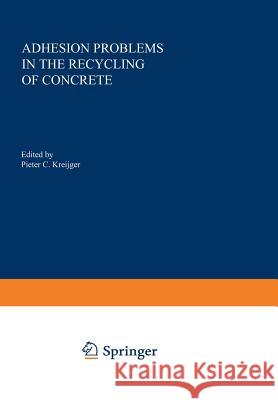
Pieter C. Kreijger; Pieter C. Kreijger
Adhesion Problems in the Recycling of Concrete Pieter C Pieter C. Kreijger 9781461583141 Springer - książkaWidoczna okładka, to zdjęcie poglądowe, a rzeczywista szata graficzna może różnić się od prezentowanej.

Adhesion Problems in the Recycling of Concrete

ISBN-13: 9781461583141 / Angielski / Miękka / 2012 / 420 str.

Pieter C. Kreijger; Pieter C. Kreijger
cena 201,72 zł
(netto: 192,11 VAT:  5%)

Najniższa cena z 30 dni: 192,74 zł
Termin realizacji zamówienia:
ok. 22 dni roboczych
Bez gwarancji dostawy przed świętami

Darmowa dostawa!

The building explosion during the years 1945-1960 will inevitably lead to increased demolition in the next decades since the lifetime distribution of structures no longer fulfills its functional social requirements in an acceptable way. In the building period mentioned there was a great increase in reinforced and prestressed concrete construction. Consequently there is now more and more concrete to be demolished. Increasingly severe demands will be made upon demolition technology, including the demand for human- and environment-friendly techniques. On the other hand, the possibility of disposing of debris by dumping is steadily diminishing, especially close to major cities and generally in countries with a high population density. At the same time in such countries and in such urban areas a shortage of aggregates for making concrete will develop as a result of restrictions on aggregate working because of its effect on the environment and because of the unavailability of aggregate deposits due to urban development. From the foregoing it follows that recycling and re-use of environment- and human-friendly demolished and fragmented building rubble should be considered. The translation of this general problem into terms of materials science is possible by forming clear ideas of adhesion and cohesion: the whole process of demolition, fragmentation, and recycling or re-use of concrete is to break the bonding forces between atoms and molecules and to form new bonds across the interfaces of various particles of either the same nature or a different nature.


Kategorie:
Technologie
Kategorie BISAC:
Gardening > General
Technology & Engineering > Materials Science - General
Wydawca:
Springer
Seria wydawnicza:
NATO Conference Series (Closed) / VI Materials Science
Język:
Angielski
ISBN-13:
9781461583141
Rok wydania:
2012
Wydanie:
1981
Numer serii:
000471448
Ilość stron:
420
Waga:
0.75 kg
Oprawa:
Miękka
Wolumenów:
01
Dodatkowe informacje:
Wydanie ilustrowane

1 Organization.- 1 Introduction.- 2 Program.- 3 Participants.- 4 Proceedings.- 2 Lectures, Discussions, and General Discussion.- 1.1 Introduction and stating the problems.- 1.2 Additional information given during the presentation: Case study of the Netherlands.- 2.1 The structure of concrete: a macroscopic view.- 2.2 Discussion.- 3.1 Principles of adhesion — bonding in cement and concrete.- 3.2 Discussion.- 4.1 Contamination problems in the recycling of concrete.- 4.2 Discussion.- 5.1 Fracture energy of concrete.- 5.2 Discussion.- 6.1 Adsorption sensitive fracture and fragmentation.- 6.2 Discussion.- 7.1 Economics of concrete recycling in the United States.- 7.2 Discussion.- 8. General Discussion.- 3 Introductory Lectures to Workshops, Minutes of Workshops, Workshop Reports, and Contributions to Workshops.- 1. Workshop 1 — Fragmentation of plain and reinforced concrete.- 1.1 Minutes of workshop 1.- 1.2 Contributions.- 1.2.1 Demolition techniques for concrete structures.- 1.2.2 Observed energy — dissipative features of crack propagation in mortar.- 2. Workshop 4 — Fragmentation of prestressed concrete.- 2.1 Introductory lecture: Demolition of prestressed concrete structures.- 2.2 Minutes of workshop 4.- 2.3 Contributions.- 2.3.1 Explosives for localized cutting in concrete.- 3. Workshop 5 — Contamination effects on fragmentation, fibre and polymer concrete.- 3.1 Introductory lecture: Materials characterization for fragmentation.- 3.2 Report on workshop 5.- 3.3 Contributions.- 3.3.1 Correlation between fracture toughness and zeta potential of cementstone.- 4. Workshop 8 — Fragmentation of all types of concrete — research needs.- 4.1 Minutes of workshop 8.- 4.2 Contributions.- 4.2.1 Recommended flow chart for future research activities concerning demolition and fragmentation of concrete.- 5. Workshop 2 — Recycling of concrete (aggregates for use in concrete).- 5.1 Introductory lecture: Crushed concrete as concrete aggregate.- 5.2.1 Minutes of workshop 2.- 5.2.2 Report on workshop 2.- 5.3 Contributions.- 5.3.1 Classification of recycled aggregate, proposed in the Netherlands.- 5.3.2 Fragmentation and recycling of reinforced concrete, some research results.- 5.3.3 The role of a polymeric interlayer in improving mechanical characteristics of recycled concrete.- 6. Workshop 3 — Re-use of concrete (other than as aggregate).- 6.1 Introductory lecture: Recycling of concrete into new applications.- 6.2.1 Minutes of the presentation of the introductory lecture.- 6.2.2 Report on workshop 3.- 6.3 Contributions.- 6.3.1 Example of re-use of concrete in France.- 6.3.2 Reflecting properties of a road surface.- 7. Workshop 7 — Contamination effects on recycling and re-use.- 7.1 Introductory comments.- 7.2.1 Minutes of workshop 7.- 7.2.2 Report on workshop 7.- 7.3 Contributions.- 7.3.1 The effect of gypsum on length change and strength of portland- and portland blastfurnace cementstone specimen.- 7.3.2 The influence of contaminants on the quality and the behaviour of recycled concrete.- 8. Workshop 8 — Future demolition-friendly materials.- 8.1 Introductory comments.- 8.2 Minutes of workshop 6.- 8.3 Contributions.- 8.3.1 Some notes regarding the performance of waste materials and concrete in building components.- 4 Concluding Remarks.- Concluding remarks.- List of Participants.


Udostępnij

Facebook - konto krainaksiazek.pl


Opinie o Krainaksiazek.pl na Opineo.pl

Partner Mybenefit

Krainaksiazek.pl w programie rzetelna firma Krainaksiaze.pl - płatności przez paypal

Czytaj nas na:

Facebook - krainaksiazek.pl
  • książki na zamówienie
  • granty
  • książka na prezent
  • kontakt
  • pomoc
  • opinie
  • regulamin
  • polityka prywatności

Zobacz:

  • Księgarnia czeska

  • Wydawnictwo Książkowe Klimaty

1997-2025 DolnySlask.com Agencja Internetowa

© 1997-2022 krainaksiazek.pl
     
KONTAKT | REGULAMIN | POLITYKA PRYWATNOŚCI | USTAWIENIA PRYWATNOŚCI
Zobacz: Księgarnia Czeska | Wydawnictwo Książkowe Klimaty | Mapa strony | Lista autorów
KrainaKsiazek.PL - Księgarnia Internetowa

Polityka prywatnosci - link
Krainaksiazek.pl - płatnośc Przelewy24
Przechowalnia Przechowalnia






