• Wyszukiwanie zaawansowane
  • Kategorie
  • Kategorie BISAC
  • Książki na zamówienie
  • Promocje
  • Granty
  • Książka na prezent
  • Opinie
  • Pomoc
  • Załóż konto
  • Zaloguj się

Addressing Techniques of Liquid Crystal Displays » książka


zaloguj się | załóż konto
Logo Krainaksiazek.pl

koszyk

konto

szukaj
topmenu
Księgarnia internetowa
Szukaj
Książki na zamówienie
Promocje
Granty
Książka na prezent
Moje konto
Pomoc
 
 
Wyszukiwanie zaawansowane
Pusty koszyk
Bezpłatna dostawa dla zamówień powyżej 20 złBezpłatna dostawa dla zamówień powyżej 20 zł

Kategorie główne

• Nauka
 [2946600]
• Literatura piękna
 [1856966]

  więcej...
• Turystyka
 [72221]
• Informatyka
 [151456]
• Komiksy
 [35826]
• Encyklopedie
 [23190]
• Dziecięca
 [619653]
• Hobby
 [140543]
• AudioBooki
 [1577]
• Literatura faktu
 [228355]
• Muzyka CD
 [410]
• Słowniki
 [2874]
• Inne
 [445822]
• Kalendarze
 [1744]
• Podręczniki
 [167141]
• Poradniki
 [482898]
• Religia
 [510455]
• Czasopisma
 [526]
• Sport
 [61590]
• Sztuka
 [243598]
• CD, DVD, Video
 [3423]
• Technologie
 [219201]
• Zdrowie
 [101638]
• Książkowe Klimaty
 [124]
• Zabawki
 [2473]
• Puzzle, gry
 [3898]
• Literatura w języku ukraińskim
 [254]
• Art. papiernicze i szkolne
 [8170]
Kategorie szczegółowe BISAC

Addressing Techniques of Liquid Crystal Displays

ISBN-13: 9781119940456 / Angielski / Twarda / 2014 / 352 str.
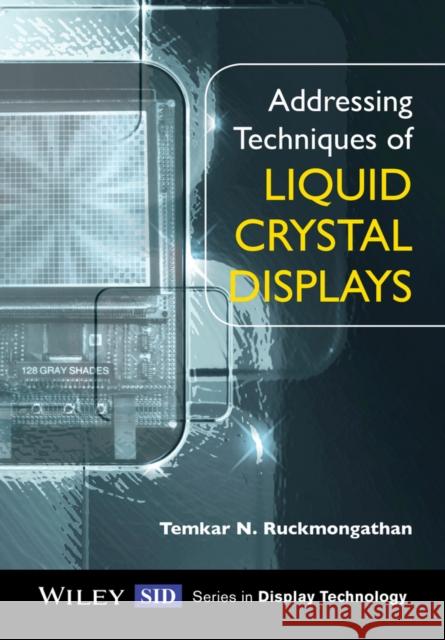
Temkar N. Ruckmongathan
Addressing Techniques of Liquid Crystal Displays Ruckmongathan, Temkar N. 9781119940456 John Wiley & Sons - książkaWidoczna okładka, to zdjęcie poglądowe, a rzeczywista szata graficzna może różnić się od prezentowanej.

Addressing Techniques of Liquid Crystal Displays

ISBN-13: 9781119940456 / Angielski / Twarda / 2014 / 352 str.

Temkar N. Ruckmongathan
cena 501,90 zł
(netto: 478,00 VAT:  5%)

Najniższa cena z 30 dni: 497,78 zł
Termin realizacji zamówienia:
ok. 30 dni roboczych
Bez gwarancji dostawy przed świętami

Darmowa dostawa!

Unique reference source that can be used from the beginning to end of a design project to aid choosing an appropriate LCD addressing technique for a given application This book will be aimed at design engineers who are likely to embed LCD drivers and controllers in many systems including systems on chip. Such designers face the challenge of making the right choice of an addressing technique that will serve them with best performance at minimal cost and complexity. Readers will be able to learn about various methods available for driving matrix LCDs and the comparisons at the end of each chapter will aid readers to make an informed design choice. The book will address the various driving techniques related to LCDs. Due to the non-linear response of the liquid crystal to external voltages, different driving methods such as passive and active matrix driving can be utilized. The associated theoretical basis of these driving techniques is introduced, and this theoretical analysis is supplemented by information on the implementation of drivers and controllers to link the theory to practice.

  • Written by an experienced research scientist with over 30 years in R&D in this field.
  • Acts as an exhaustive review and comparison of techniques developed for passive-matrix addressing of twisted nematic and super-twisted nematic (STN) LCDs.
  • Discusses the trend towards -High Definition- displays and that a hybrid approach to drive matrix LCDs (combination of active and passive matrix addressing) will be the future of LCD addressing.
  • Contains the author's recent work on Bit-Slice Addressing that is useful for fast responding LCDs, as well as a chapter on driving ferroelectric LCDs
  • Provides an objective comparison that will enable designers to make an informed choice of an addressing technique for a specific application.
  • Includes examples of the practical applications of addressing techniques.
  • Organised in a way that each chapter can be read independently; with the basic knowledge and historical background gained from the introductory chapters, adequate for understanding the techniques that are presented in the remaining chapters making it a self-contained reference.

Unique reference source that can be used from the beginning to end of a design project to aid choosing an appropriate LCD addressing technique for a given application This book will be aimed at design engineers who are likely to embed LCD drivers and controllers in many systems including systems on chip.


Kategorie:
Technologie
Kategorie BISAC:
Computers > Hardware - Printers, Scanners & External Accessories
Technology & Engineering > Electronics - General
Wydawca:
John Wiley & Sons
Seria wydawnicza:
Wiley Series in Display Technology
Język:
Angielski
ISBN-13:
9781119940456
Rok wydania:
2014
Ilość stron:
352
Waga:
0.55 kg
Wymiary:
23.88 x 15.75 x 2.29
Oprawa:
Twarda
Wolumenów:
01
Dodatkowe informacje:
Bibliografia

Series Editor s Foreword xiii

Acknowledgements xv

1 Introduction 1

2 Liquid Crystal Displays 3

2.1 Matrix Displays 3

2.2 Display Fonts and Formats 5

2.3 Liquid Crystals 8

2.4 Physical Properties of Liquid Crystals 9

2.5 Basics of Electro–optic Effects with Liquid Crystals 10

2.6 Twisted Nematic Effect 11

2.7 Super Twisted Nematic (STN)–LCD 13

2.8 STN–LCD with a 270 Twist (STN–270) 13

2.9 STN–LCD with a 180 Twist (STN–180) 14

2.10 In–plane Switching 14

2.11 Ferroelectric LCD (FLCD) 14

2.12 Summary 15

3 Review of Addressing Techniques 17

3.1 Addressing Techniques 17

3.2 Matrix Addressing 18

3.3 Nonlinear Characteristics 19

3.4 Cross–Talk in a Matrix LCD 21

3.5 Driving Matrix Displays 22

3.6 Bi–phase Addressing 23

3.7 Line–by–Line Addressing (LLA) 25

3.8 Half–Select Technique 27

3.9 Two–Third–Select Technique (TTST) 29

3.10 Selection Ratio (SR) and the Maximum Selection Ratio 30

3.11 Limitations of Matrix Addressing 37

3.12 Principle of Restricted Pattern Addressing 38

3.13 Pulse Coincidence Technique (PCT) 40

3.14 Pseudo Random Technique (PRT) 42

3.15 Restricted Pattern Addressing Technique (RPAT) 43

3.16 Addressing Technique for Dial Type Displays 47

3.17 Frame Frequency 47

3.18 Large Area Display 48

3.19 Dielectric Relaxation 48

3.20 Supply Voltage of Drivers 49

3.21 Nonuniformity Due to Resistance Mismatches 49

3.22 Need for Multiline Addressing Techniques 51

4 Binary Addressing 53

4.1 Principle 53

4.2 Binary Addressing Technique (BAT) 55

4.3 Analysis of the BAT 58

4.4 Practical Aspects of the BAT 66

4.5 Drivers for Driving the LCD with the BAT 69

5 Orthogonal Functions and Matrix Addressing 71

5.1 Orthogonal Functions 71

5.2 Multiplexing 78

5.3 Matrix Addressing 80

5.4 Line–by–Line Addressing 81

5.5 Multiline Addressing 82

5.6 Discussion 85

6 Active Addressing 87

6.1 Principle 87

6.2 Active Addressing Technique (AAT) 87

6.3 Summary 93

7 Hybrid Addressing 95

7.1 Principle 95

7.2 Hybrid Addressing Technique (HAT) 96

7.3 Analysis of the HAT 98

7.4 Drivers of the Hybrid Addressing Technique 103

7.5 Discussion 103

8 Improved Hybrid Addressing 105

8.1 Principle 105

8.2 Improved Hybrid Addressing Technique (IHAT) 106

8.3 Analysis of IHAT 108

8.4 Discussion 115

9 Improved Hybrid Addressing Special Case 3 119

9.1 Principle 119

9.2 Analysis 120

9.3 Summary 126

10 Improved Hybrid Addressing Special Case 4 127

10.1 Principle 127

10.2 Analysis 127

10.3 Summary 136

11 Sequency Addressing 137

11.1 Principle 137

11.2 Technique 137

11.3 Discussion 141

12 Restricted Pattern Addressing 145

12.1 Principle 145

12.2 Technique 145

12.3 Analysis 149

12.4 Summary 152

13 Review of Methods to Display Greyscales 153

13.1 Greyscales in Liquid Crystal Displays 153

13.2 Basics of Greyscale 153

13.3 Frame Modulation 155

13.4 Pulse Width Modulation 157

13.5 Row Pulse Height Modulation 157

13.6 Data Pulse Height Modulation 159

13.7 Summary 161

14 Amplitude Modulation 163

14.1 Principle 163

14.2 Amplitude Modulation Split Time Interval 164

14.3 Amplitude Modulation in Multiline Addressing 170

14.4 Pulse Height Modulation 172

14.5 Discussion 173

15 Successive Approximation 175

15.1 Principle 175

15.2 Technique 177

15.3 Analysis 179

15.4 Discussion 181

16 Cross–Pair Method 183

16.1 Principle 183

16.2 Technique 186

16.3 Analysis 187

16.4 Cross Pairing with Four Pairs of Data Voltages 190

16.5 Discussion 196

17 Wavelet–Based Addressing 197

17.1 Principle 197

17.2 Line–by–line Addressing with Wavelets 201

17.3 Analysis 207

17.4 Principle of Multiline Addressing with Wavelets 210

17.5 Technique 215

18 Bit Slice Addressing 223

18.1 Principle 224

18.2 Bit Slice Addressing Technique 229

18.3 Bit Slice Addressing with a Light Source 231

18.4 Bit Slice Addressing with Multiple Light Sources 232

18.5 Merits of Bit Slice Addressing 236

18.6 Demerits of Bit Slice Addressing 238

18.7 Discussion 239

19 Multibit Slice Addressing 241

19.1 Principle 241

19.2 Dual Bit Addressing of the LCD 242

19.3 Nibble Slice Addressing 246

19.4 Summary 248

20 Micro Pulse Width Modulation 249

20.1 Principle 249

20.2 Micro Pulse Width Modulation 250

20.3 Results 261

20.4 Summary 266

21 Comparison of Addressing Techniques 267

21.1 Line–by–Line Addressing 267

21.2 Multiline Addressing 268

21.3 Methods to Display Greyscales 271

21.4 Summary 272

22 Low Power Dissipation 273

22.1 Background 273

22.2 Principle 274

22.3 Multistep Waveform for Low Power 275

22.4 Static Drive with a Multistep Waveform 278

22.5 Power Dissipation in a Multiplexed Matrix LCD 278

22.6 Waveforms to Reduce Power Dissipation 281

22.7 Low Power Dissipation in the Successive Approximation Method 283

22.8 Summary 290

23 Low Power Consumption of Backlight 291

23.1 Principle of Backlight Switching 291

23.2 Reduction of Power with White Backlight and Monochrome Images 292

23.3 Power Reduction in the Colour Sequential Mode 300

23.4 Power Reduction of Backlight with Micro Pulse Width Modulation 300

23.5 Power Reduction with Micro PWM in the Colour Sequential Mode 304

23.6 Summary 308

24 Drivers for Liquid Crystal Displays 309

24.1 Basics 309

24.2 Drivers for Direct Drive 310

24.3 Drivers for the Matrix LCD 313

24.4 Drivers for Multiline Addressing Techniques 315

24.5 Summary 317

25 Active and Passive Matrix Addressing 319

25.1 Switched Passive Matrix Addressing (Line–by–Line) 319

25.2 Switched Passive Matrix Addressing (Line–by–Line) with Reduced External Connections 321

25.3 Multiplexed Active Matrix Addressing 322

25.4 An Ideal Active Matrix LCD 323

26 Conclusion 325

Bibliography 329

Index 333

An image is generated by the Simultaneous application of scanning and data waveforms to row and column electrodes in flat panel displays. This book is a comprehensive guide to addressing techniques that are based on the nonlinear response of pixels in LCDs. Addressing techniques are introduced with a strong theoretical basis and supported by detailed analysis and examples, as well as information given on drivers to enable the practical implementation of the techniques discussed in the book.

Key Features:

  • Provides an introduction to liquid crystals and some electro–optic effects based on the properties of liquid crystals.
  • Includes recent work on Bit Slice Addressing, Multibit Slice Addressing and Micro Pulse Width Modulation to drive displays with short response times.
  • Compares the various addressing techniques on offer, enabling designers to make an informed choice of an addressing technique for a specific end use.
  • Presents a range of addressing techniques that are based on line–by–line addressing, multiline addressing and methods to display greyscales.
  • Features an in–depth analysis of hybrid addressing techniques and addressing techniques based on wavelets.
  • Covers the latest research on backlight switching to reduce power consumption of an LCD without any compromise on image quality, as well as recent developments on the cross–pair method to display greyscales.


Udostępnij

Facebook - konto krainaksiazek.pl


Opinie o Krainaksiazek.pl na Opineo.pl

Partner Mybenefit

Krainaksiazek.pl w programie rzetelna firma Krainaksiaze.pl - płatności przez paypal

Czytaj nas na:

Facebook - krainaksiazek.pl
  • książki na zamówienie
  • granty
  • książka na prezent
  • kontakt
  • pomoc
  • opinie
  • regulamin
  • polityka prywatności

Zobacz:

  • Księgarnia czeska

  • Wydawnictwo Książkowe Klimaty

1997-2025 DolnySlask.com Agencja Internetowa

© 1997-2022 krainaksiazek.pl
     
KONTAKT | REGULAMIN | POLITYKA PRYWATNOŚCI | USTAWIENIA PRYWATNOŚCI
Zobacz: Księgarnia Czeska | Wydawnictwo Książkowe Klimaty | Mapa strony | Lista autorów
KrainaKsiazek.PL - Księgarnia Internetowa

Polityka prywatnosci - link
Krainaksiazek.pl - płatnośc Przelewy24
Przechowalnia Przechowalnia





