• Wyszukiwanie zaawansowane
  • Kategorie
  • Kategorie BISAC
  • Książki na zamówienie
  • Promocje
  • Granty
  • Książka na prezent
  • Opinie
  • Pomoc
  • Załóż konto
  • Zaloguj się

Additives for High Performance Applications: Chemistry and Applications » książka

zaloguj się | załóż konto
Logo Krainaksiazek.pl

koszyk

konto

szukaj
topmenu
Księgarnia internetowa
Szukaj
Książki na zamówienie
Promocje
Granty
Książka na prezent
Moje konto
Pomoc
 
 
Wyszukiwanie zaawansowane
Pusty koszyk
Bezpłatna dostawa dla zamówień powyżej 20 złBezpłatna dostawa dla zamówień powyżej 20 zł

Kategorie główne

• Nauka
 [2949965]
• Literatura piękna
 [1857847]

  więcej...
• Turystyka
 [70818]
• Informatyka
 [151303]
• Komiksy
 [35733]
• Encyklopedie
 [23180]
• Dziecięca
 [617748]
• Hobby
 [139972]
• AudioBooki
 [1650]
• Literatura faktu
 [228361]
• Muzyka CD
 [398]
• Słowniki
 [2862]
• Inne
 [444732]
• Kalendarze
 [1620]
• Podręczniki
 [167233]
• Poradniki
 [482388]
• Religia
 [509867]
• Czasopisma
 [533]
• Sport
 [61361]
• Sztuka
 [243125]
• CD, DVD, Video
 [3451]
• Technologie
 [219309]
• Zdrowie
 [101347]
• Książkowe Klimaty
 [123]
• Zabawki
 [2362]
• Puzzle, gry
 [3791]
• Literatura w języku ukraińskim
 [253]
• Art. papiernicze i szkolne
 [7933]
Kategorie szczegółowe BISAC

Additives for High Performance Applications: Chemistry and Applications

ISBN-13: 9781119363613 / Angielski / Twarda / 2016 / 272 str.
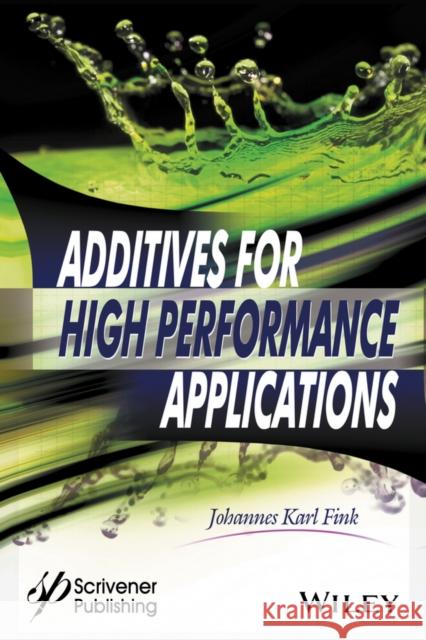
Johannes Karl Fink
Additives for High Performance Applications: Chemistry and Applications Fink, Johannes Karl 9781119363613 John Wiley & Sons - książkaWidoczna okładka, to zdjęcie poglądowe, a rzeczywista szata graficzna może różnić się od prezentowanej.

Additives for High Performance Applications: Chemistry and Applications

ISBN-13: 9781119363613 / Angielski / Twarda / 2016 / 272 str.

Johannes Karl Fink
cena 865,70
(netto: 824,48 VAT:  5%)

Najniższa cena z 30 dni: 858,61
Termin realizacji zamówienia:
ok. 30 dni roboczych
Bez gwarancji dostawy przed świętami

Darmowa dostawa!

This book focuses on the chemistry of additives for high performance applications and a large number of chemical formulas are displayed in the text. The additives applications include:

  • Analysis and separation techniques, such as high performance liquid chromatography, for example ionic liquids.
  • Additives for electrical applications, such as capacitors, electrokinetic micropumps, lithium-ion batteries, and other battery types.
  • Additives for solar cells for control of the active layer nanomorphology are documented as are additives for electrolyte membranes, fuel cells, such as membrane exchange humidifiers and coolant additives.
  • Medical applications include high performance additives for the manufacture of scaffolds, controlled drug release, and nanofibers.
  • Additives for lubricants including the deposit control, anti-wear additives, fluid loss control additives in drilling applications.
  • Additives for concrete uses such as set retarders, curing accelerators, defoamers, permeability control additives, and corrosion protection additives.


Kategorie:
Technologie
Kategorie BISAC:
Science > Chemistry - Industrial & Technical
Technology & Engineering > Chemical & Biochemical
Wydawca:
John Wiley & Sons
Język:
Angielski
ISBN-13:
9781119363613
Rok wydania:
2016
Ilość stron:
272
Waga:
0.56 kg
Wymiary:
23.6 x 15.9 x 2.3
Oprawa:
Twarda
Wolumenów:
01
Dodatkowe informacje:
Bibliografia
Wydanie ilustrowane

Preface xi

1 Analysis and Separation Techniques 1

1.1 High Performance Liquid Chromatography 1

1.1.1 Ionic Liquids as Mobile Phase Additives 1

1.1.2 Food Additives 12

1.1.3 Chaotropicity 14

1.1.4 Cigarette Additives 16

1.1.5 Chiral Separation 20

1.1.6 Peptides and Proteins 31

1.1.7 1,4–Dihydroxy–2–Naphthoic Acid 32

1.1.8 Diesel Lubricating Additives 32

1.1.9 Acidic Drugs 34

1.2 Chelation Ion Chromatography 39

1.3 Membranes 40

1.3.1 Carbon Dioxide Separation 40

1.3.2 Hollow Fiber Membranes 41

References 42

2 Electrical Applications 47

2.1 Capacitors 47

2.1.1 Triethanolamine 47

2.1.2 Supercapacitors 47

2.2 Electrokinetic Micropumps 50

2.3 Lead–Acid Batteries 50

2.3.1 Activated Carbon Additives 51

2.3.2 High Performance Positive Electrode 51

2.4 Lithium–Ion Batteries 53

2.4.1 Ionic Diffusion 56

2.4.2 Functional Electrolytes 56

2.4.3 Synergetic Effect of Conductive Additives 58

2.4.4 In–Situ Coating of Cathode by Electrolyte Additive 58

2.4.5 Bipolar Architectures 59

2.4.6 Janus Separator 63

2.4.7 Synthesis of Vanadium Cathodes 64

2.4.8 Graphite 64

2.4.9 Silicon 67

2.4.10 Carbon Nanotubes 69

2.4.11 Carbonate Additives 70

2.4.12 Borate Additives 73

2.4.13 Tris(pentafluorophenyl) Borane 78

2.4.14 Phosphoric Additives 79

2.4.15 Sulfur Additives 83

2.4.16 Isothiocyanates 90

2.4.17 Other Additive Types 92

2.5 Nickel Batteries 101

2.5.1 High–Rate Discharge Performance 106

2.5.2 Multiphase Nano–Nickel Hydroxide 108

2.5.3 Nickel–Metal Hydride Batteries 108

2.6 Sodium–Ion Batteries 112

2.6.1 Antimony–Based Intermetallic Alloy Anodes 112

2.7 Solar Cells 113

2.7.1 Star–Shaped Molecules 113

2.7.2 Dye–Sensitized Solar Cells 115

2.7.3 Perovskite 119

2.7.4 Control of Active Layer Nanomorphology 120

2.7.5 Phosphonium Halides as Processing Additives and Interfacial Modifiers 121

2.7.6 Polymeric Solar Cells 121

2.8 Fuel Cells 123

2.8.1 Porosity Additive 125

2.8.2 Electrolyte Membranes 126

2.8.3 Molybdenum Oxide 130

2.8.4 Nano–Metal Oxides 131

2.8.5 Coolant Additive 131

2.8.6 Membrane Exchange Humidifier 133

2.8.7 Poly(vinyl alcohol)/Titanium Dioxide Nanocomposites 134

3 Medical Uses 145

3.1 High Performance Additive Manufactured Scaffolds 145

3.1.1 Nanotechnology 145

3.1.2 Poly(caprolactone)Tricalcium Phosphate Scaffolds 146

3.1.3 Silk Fibroin Nanofibers 147

3.1.4 Calcium Phosphate, Hydroxyapatite, and Poly(d,l–lactic acid) 152

3.1.5 Propylene Fumarate Lactic Acid Copolymer 152

3.1.6 Thermosensitive Composite Gel 153

3.1.7 Biomimetic Wet–Stable Fibers 153

3.1.8 Poly(ester urea) from l–Leucine 154

3.1.9 Static Cell Seeding Versus Vacuum Cell Seeding 154

3.1.10 Controlled Drug Release 155

References 156

4 Lubricants 159

4.1 Fuels 159

4.1.1 Graphene Oxide 159

4.1.2 Deposit Control 160

4.2 Lubricant Additives 161

4.2.1 GL Ratings 161

4.2.2 Organophosphates 162

4.2.3 Crankcase Oils 162

4.2.4 Low Sulfur and Low Metal Additive Formulations 163

4.2.5 Lithium Soaps 166

4.2.6 Titanium Complex Grease Composition 171

4.2.7 Improving theWetting Properties of Ionic Liquids 176

4.3 Anti–Wear Additives 179

4.3.1 Ionic Liquids 179

4.3.2 Castor Oil Tris(diphenyl phosphate) 179

4.3.3 Bifunctional Hairy Silica Nanoparticles 180

4.3.4 Boron Thiophosphite 180

4.3.5 Hydroxyaromatic Compounds 181

4.4 Fluid Loss Control Additives 183

4.4.1 Graphene Oxide 183

4.4.2 Montmorillonite 183

4.5 Warm Mix Asphalt Additives 184

5 Concrete Additives 189

5.1 Properties of Concrete 189

5.1.1 Pozzolans 191

5.1.2 Calcium Aluminate Cement 191

5.1.3 Rutting of Bituminous Concrete 193

5.2 Set Retarders 193

5.2.1 Superplasticizers 194

5.3 Accelerators 194

5.3.1 Aqueous Dispersions of Silica 195

5.3.2 Non–Chloride Cement Accelerators 195

5.4 Dispersants and Thinners 196

5.4.1 Xylonic Acid 196

5.4.2 Thixotropy 197

5.4.3 Flowability 198

5.5 Defoamers 199

5.5.1 Ethoxylated Fatty Alcohol Acrylates 200

5.5.2 Hydroxyl Alkyl Acrylate 200

5.5.3 Tributyl Phosphate 202

5.5.4 Silicone Oils 202

5.5.5 Other Additives 202

5.6 Shrinkage Compensation 202

5.7 Permeability 203

5.7.1 Expanded Perlite 204

5.7.2 Pozzolanic Materials 204

5.7.3 Cracking Catalyst 205

5.8 Air Entraining Agents 206

5.8.1 Fluorochemical Surfactants 207

5.8.2 Superabsorbent Polymers 207

5.8.3 Rubber Crumb 208

5.8.4 Autoclaved Aerated Concrete 209

5.9 Corrosion Protection 210

5.9.1 Modified Hydrotalcites 210

5.9.2 Chloride Ion Scavenging 210

5.9.3 Dopamelanin 211

5.10 Superabsorbent Polymers 212

5.11 Fibers 212

5.11.1 Poly(oxymethylene) Fibers 212

5.12 Additives fromWastes 214

5.12.1 Waste Rubber 214

5.12.2 anomodified Concrete Additive 216

References 220

6 Other Uses 225

6.1 High Performance Additive for Powder Coatings 225

6.1.1 Antimicrobial Powder Coatings 225

6.2 Radiation Shielding 226

6.3 Superabsorbent Polymers 229

6.4 Laser Additive Manufacturing of High

Performance Materials 232

6.4.1 Laser Metal Deposition Additive Manufacturing 232

6.4.2 Hybrid Processes 233

6.5 High Temperature Cooling Application 234

References 236

Index 239

Tradenames 239

Acronyms 242

Chemicals 244

General Index 255

Johannes Karl Fink is Professor of Macromolecular Chemistry at Montanuniversität Leoben, Austria. His industry and academic career spans more than 30 years in the fields of polymers, and his research interests include characterization, flame retardancy, thermodynamics and the degradation of polymers, pyrolysis, and adhesives. Professor Fink has published several books on physical chemistry and polymer science including A Concise Introduction to Additives for Thermoplastic Polymers (Wiley–Scrivener 2009), Polymeric Sensors and Actuators (Wiley–Scrivener 2012), and The Chemistry of Biobased Polymers (Wiley–Scrivener 2014).

Fink, Johannes Karl Johannes Fink is professor at Montanuniversitaet L... więcej >


Udostępnij

Facebook - konto krainaksiazek.pl


Opinie o Krainaksiazek.pl na Opineo.pl

Partner Mybenefit

Krainaksiazek.pl w programie rzetelna firma Krainaksiaze.pl - płatności przez paypal

Czytaj nas na:

Facebook - krainaksiazek.pl
  • książki na zamówienie
  • granty
  • książka na prezent
  • kontakt
  • pomoc
  • opinie
  • regulamin
  • polityka prywatności

Zobacz:

  • Księgarnia czeska

  • Wydawnictwo Książkowe Klimaty

1997-2025 DolnySlask.com Agencja Internetowa

© 1997-2022 krainaksiazek.pl
     
KONTAKT | REGULAMIN | POLITYKA PRYWATNOŚCI | USTAWIENIA PRYWATNOŚCI
Zobacz: Księgarnia Czeska | Wydawnictwo Książkowe Klimaty | Mapa strony | Lista autorów
KrainaKsiazek.PL - Księgarnia Internetowa

Polityka prywatnosci - link
Krainaksiazek.pl - płatnośc Przelewy24
Przechowalnia Przechowalnia






