• Wyszukiwanie zaawansowane
  • Kategorie
  • Kategorie BISAC
  • Książki na zamówienie
  • Promocje
  • Granty
  • Książka na prezent
  • Opinie
  • Pomoc
  • Załóż konto
  • Zaloguj się

Adaptive Reuse for Urban Food Provision » książka


zaloguj się | załóż konto
Logo Krainaksiazek.pl

koszyk

konto

szukaj
topmenu
Księgarnia internetowa
Szukaj
Książki na zamówienie
Promocje
Granty
Książka na prezent
Moje konto
Pomoc
 
 
Wyszukiwanie zaawansowane
Pusty koszyk
Bezpłatna dostawa dla zamówień powyżej 20 złBezpłatna dostawa dla zamówień powyżej 20 zł

Kategorie główne

• Nauka
 [2950560]
• Literatura piękna
 [1849509]

  więcej...
• Turystyka
 [71097]
• Informatyka
 [151150]
• Komiksy
 [35848]
• Encyklopedie
 [23178]
• Dziecięca
 [617388]
• Hobby
 [139064]
• AudioBooki
 [1657]
• Literatura faktu
 [228597]
• Muzyka CD
 [383]
• Słowniki
 [2855]
• Inne
 [445295]
• Kalendarze
 [1464]
• Podręczniki
 [167547]
• Poradniki
 [480102]
• Religia
 [510749]
• Czasopisma
 [516]
• Sport
 [61293]
• Sztuka
 [243352]
• CD, DVD, Video
 [3414]
• Technologie
 [219456]
• Zdrowie
 [101002]
• Książkowe Klimaty
 [124]
• Zabawki
 [2311]
• Puzzle, gry
 [3459]
• Literatura w języku ukraińskim
 [254]
• Art. papiernicze i szkolne
 [8079]
Kategorie szczegółowe BISAC

Adaptive Reuse for Urban Food Provision

ISBN-13: 9783031052125 / Angielski / Miękka / 2023
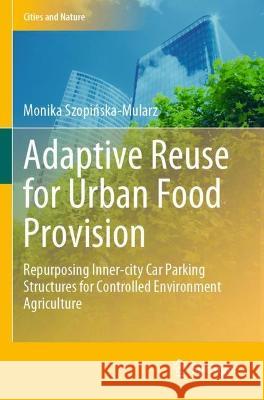
Monika Szopińska-Mularz
Adaptive Reuse for Urban Food Provision Monika Szopińska-Mularz 9783031052125 Springer International Publishing - książkaWidoczna okładka, to zdjęcie poglądowe, a rzeczywista szata graficzna może różnić się od prezentowanej.

Adaptive Reuse for Urban Food Provision

ISBN-13: 9783031052125 / Angielski / Miękka / 2023

Monika Szopińska-Mularz
cena 483,04
(netto: 460,04 VAT:  5%)

Najniższa cena z 30 dni: 462,63
Termin realizacji zamówienia:
ok. 22 dni roboczych
Dostawa w 2026 r.

Darmowa dostawa!
inne wydania

This book analyses the adaptive reuse potential of inner-city modern movement car parking structures for controlled environment agriculture systems and the contribution of such a transformation to urban development. Modern movement garages built over the last 60 years are becoming redundant due to changing mobility trends and growing environmental awareness. Adaptive reuse is one of the scenarios that can reconcile these megastructures with contemporary urban needs. The novel function proposed in this study for multi-storey garages is controlled environment agriculture, which is a food production technique that is now developing in cities as an innovative business and a secondary food source.   First, the study focuses on the theory of repurposing existing buildings for food production, which is then summarised in the form of a guide for the analysis of the adaptive reuse potential of inner-city car parking structures for controlled environment agriculture. Second, the guide is applied to two case studies, which allows exploring their potential to accommodate urban farming from planning, architectural, and environmental perspectives. 
The book aims to inspire and support decision-makers, architects, scholars and students when elaborating novel solutions for repurposing buildings for alternative functions. The publication encourages treating existing building stock as a resource that can become a stimulus for the new design process, which improves urban food provision.


Kategorie:
Nauka, Biologia i przyroda
Wydawca:
Springer International Publishing
Seria wydawnicza:
Cities and Nature
Język:
Angielski
ISBN-13:
9783031052125
Rok wydania:
2023
Waga:
0.30 kg
Wymiary:
23.5 x 15.5
Oprawa:
Miękka
Dodatkowe informacje:
Wydanie ilustrowane

Chapter 1: Introduction
1.1. Scope and study area
1.2. Rationale for the research  
1.3. Aim, objectives and research questions
1.4. Structure of the thesis 
1.5. Limitations of the research
Chapter 2: Methodology
2.1. Introduction to Chapter 2
2.2. Philosophical and theoretical framework  
2.3. Design thinking for addressing the research aims
2.4. Research design
2.5. Guide for the analysis of the adaptive reuse potential of inner-city modern movement car parking structures for controlled environment agriculture
2.6. Initial design scenario for the adaptive reuse of the inner-city modern movement car parking structure for controlled environment agriculture
2.7. Methods of data collection
2.7.1. Literature review
2.7.2. Interviews 
2.7.3. Case study
2.8. Selection and introduction of the cases
2.8.1. Introduction of case studies selected for the exploratory research
2.8.2. Introduction of case studies selected for the explanatory research
2.9. Data analysis 
2.9.1. Literature review
2.9.2. Exploratory case study analysis 
2.9.3. Interviews
2.9.4. Explanatory case study analysis
2.10. Summary of Chapter 2
Chapter 3: Literature review 
3.1. Role and development of the global food supply system
3.1.1. Food supply in the UK
3.1.2. Social impacts of the UK food system
3.1.3. Environmental impacts of the UK food system
3.1.4. Enhancing the local food supply in the UK 
3.2. Urban agriculture as a local secondary food source 
3.2.1. Challenges for urban agriculture posed by the urban environment
3.2.2. Adaptive reuse of buildings for urban agriculture
3.2.3. Controlled environment agriculture
3.2.4. Soilless growing techniques for controlled environment agriculture 
3.2.5. Selection of a soilless growing technique for this thesis 
3.3. Inner-city modern movement car parking structures: adaptive reuse considerations
3.3.1. Traffic-related issues in urban areas
3.3.2. Strategies for reducing private car use in sustainable cities
3.3.3. Car parking in inner-city areas 
3.3.4. Modern movement multi-storey car parking structures
3.3.5. Future scenarios for inner-city modern movement car parking structures 
Chapter 4: Investigation into the planning, architectural and environmental opportunities and limitations for the adaptive reuse of urban structures for controlled environment agriculture
4.1. Introduction to Chapter 4
4.2. Planning considerations
4.2.1. Opportunities and limitations for the implementation of building-based urban agriculture from the stakeholders’ perspective
4.2.2. Planning strategy at the initial stage of design for repurposing buildings for controlled environment agriculture
4.3. Architectural considerations
4.3.1. Architectural form for controlled environment agriculture
4.3.2. Orientation of the architectural form accommodating controlled environment agriculture
4.3.3. Cladding materials to enclose a space for controlled environment agriculture
4.3.4. Structure of the building up-cycled for controlled environment agriculture
4.4. Resource and energy-efficient technologies and alternative energy technology options for controlled environment agriculture 
4.4.1. Water-saving and recycling 
4.4.2. Energy-saving systems 
4.4.3. Alternative energy technology options 
4.5. Case study analysis  
4.5.1. Planning exploration of case studies
4.5.2. Architectural exploration of case studies 
4.5.3. Environmental exploration of case studies
4.6. Summary of Chapter 4 
Chapter 5: Interviews with practitioners 
5.1. Introduction to Chapter 5 
5.2. Interview design 
5.3. Representation of interview participants
5.4. Preliminary analysis of the interviews 
5.4.1. Planning considerations
5.4.2. Architectural considerations  
5.4.3. Environmental considerations 
5.5. Interpretation of the results of the interviews 
5.5.1. Planning category of questions 
5.5.2. Architectural category of questions 
5.5.3. Environmental category of questions
5.6. Summary of Chapter 5
Chapter 6: Guide for the analysis of the adaptive reuse potential of   inner-city modern movement car parking structures for controlled environment agriculture 
6.1. Introduction to Chapter 6
6.2. Goal and scope of the guide
6.3. The relevance of the guide arising from the literature review
6.4. Overview and scope of the guide
6.4.1. Planning phase 
6.4.2. Architectural phase 
6.4.3. Environmental phase
6.5. Guide for the analysis of the adaptive reuse potential of modern movement car parking structures for controlled environment agriculture
6.6. Limits of the guide
6.7. Summary of Chapter 6 
Chapter 7: Application of the guide to the case studies. Investigating the viable adaptive reuse scenario of the three modern movement car parking structures for CEA. 
7.1. Introduction to Chapter 7
7.2. Case study 1: Portsmouth, Isambard Brunel Car Park
7.2.1. Application of the planning phase of the guide
7.2.2. Application of the architectural phase of the guide
7.2.3. Application of the environmental phase of the guide
7.3. Case study 2: Bristol, Prince Street Car Park  
7.3.1. Application of the planning phase of the guide
7.3.2. Application of the architectural phase of the guide
7.3.3. Application of the environmental phase of the guide
7.4. Case study 3: Brighton & Hove, London Road Car Park  
7.4.1. Application of the planning phase of the guide
7.4.2. Application of the architectural phase of the guide
7.4.3. Application of the environmental phase of the guide
7.5. Summary of Chapter 7
Chapter 8: Discussion
8.1. Introduction to Chapter 8
8.2. Role of research for the design of controlled environment agriculture as an alternative use of modern movement car parking structures
8.3. The adaptive reuse potential of inner-city modern movement car parking structures for controlled environment agriculture
8.3.1. Meeting the planning criterion
8.3.2. Meeting the architectural criterion
8.3.3. Meeting the environmental criterion
8.4. Reflections on the application of the guide to the selected cases of inner-city multi-storey garages
8.4.1. Role of research by design in investigating the adaptive reuse potential of modern movement car parking structures for controlled environment agriculture
8.5. Determining the formal structural similarities altering the existing architectural typology for controlled environment agriculture
8.5.1. Synthesis of the alterations of the existing architectural typology for implementing controlled environment agriculture
8.6. Generalisation of the research problem in the architectural and urban context: the potential emergence of an innovative architectural typology
8.7. Summary of Chapter 8
Chapter 9: Conclusions and future research
9.1. Introduction to Chapter 9
9.2. Summary of findings and conclusions from this research
9.3. Significance of the findings and contribution of the thesis
9.4. Challenges encountered in the development of the thesis
9.5. Recommendations for further research

Monika Szopińska-Mularz is an architect, postgraduate researcher and lecturer at the Faculty of Civil and Environmental Engineering and Architecture at Rzeszow University of Technology (Poland). She holds a Ph.D. in Architecture and Urbanism awarded by the University of Portsmouth (UK). After graduating from Wroclaw University of Technology (Poland) in 2010 with a Master of Architecture and Urbanism degree, she practised architecture in KuP Architekten in Frankfurt am Main, Germany and ST Architekci in Rzeszow, Poland. Monika is a registered member of the Polish Chamber of Architects. In 2009, she was awarded special selection praise in the JAD International Design Competition in South Korea for creating a Soft Space as a conceptual reaction to the recent worldwide economic crisis. Her current research focus is on adaptive reuse of buildings, urban agriculture and resilient urban design. In the architectural practice, she mainly works on modernising existing building stock, adaptive reuse and landscape design.

This book analyses the adaptive reuse potential of inner-city modern movement car parking structures for controlled environment agriculture systems and the contribution of such a transformation to urban development. Modern movement garages built over the last 60 years are becoming redundant due to changing mobility trends and growing environmental awareness. Adaptive reuse is one of the scenarios that can reconcile these megastructures with contemporary urban needs. The novel function proposed in this study for multi-storey garages is controlled environment agriculture, which is a food production technique that is now developing in cities as an innovative business and a secondary food source.  

First, the study focuses on the theory of repurposing existing buildings for food production, which is then summarised in the form of a guide for the analysis of the adaptive reuse potential of inner-city car parking structures for controlled environment agriculture. Second, the guide is applied to two case studies, which allows exploring their potential to accommodate urban farming from planning, architectural, and environmental perspectives. 
The book aims to inspire and support decision-makers, architects, scholars and students when elaborating novel solutions for repurposing buildings for alternative functions. The publication encourages treating existing building stock as a resource that can become a stimulus for the new design process, which improves urban food provision.




Udostępnij

Facebook - konto krainaksiazek.pl


Opinie o Krainaksiazek.pl na Opineo.pl

Partner Mybenefit

Krainaksiazek.pl w programie rzetelna firma Krainaksiaze.pl - płatności przez paypal

Czytaj nas na:

Facebook - krainaksiazek.pl
  • książki na zamówienie
  • granty
  • książka na prezent
  • kontakt
  • pomoc
  • opinie
  • regulamin
  • polityka prywatności

Zobacz:

  • Księgarnia czeska

  • Wydawnictwo Książkowe Klimaty

1997-2025 DolnySlask.com Agencja Internetowa

© 1997-2022 krainaksiazek.pl
     
KONTAKT | REGULAMIN | POLITYKA PRYWATNOŚCI | USTAWIENIA PRYWATNOŚCI
Zobacz: Księgarnia Czeska | Wydawnictwo Książkowe Klimaty | Mapa strony | Lista autorów
KrainaKsiazek.PL - Księgarnia Internetowa

Polityka prywatnosci - link
Krainaksiazek.pl - płatnośc Przelewy24
Przechowalnia Przechowalnia




